10 Spring Fence Problems That Get Worse Fast
Spring exposes every shortcut and missed chore your fence has endured over the winter. Ignore the early warning signs now and small issues can turn into safety hazards, privacy gaps, and full replacement bills far sooner than they should. By spotting the fastest-growing problems and acting quickly, you keep your fence working the way you expect and protect the rest of your yard from avoidable damage.
Fences can last 15 to 30 years with consistent care, but that range only holds if you treat spring as a reset moment rather than a cosmetic cleanup. You are not just freshening up curb appeal; you are interrupting problems that accelerate with moisture, movement in the soil, and insects that wake up as temperatures rise. The ten issues below are the ones that worsen fastest once the weather turns mild and wet.
1. Leaning posts after winter thaw
When snow, ice, and saturated soil start to give way in spring, your fence posts often reveal how much punishment they took. Cold weather and moisture can shift the soil around your footings, so a fence that looked straight in January suddenly shows shifting or leaning sections once the ground softens. Brad Joern, writing on Climate, explains that as ice melts, the flow of water carves new pathways into the soil, which can wash out support around posts and create voids you do not see from the surface.
Leave a leaning post through the wet months and the weight of connected rails and panels will keep pulling it farther off plumb, which can crack concrete footings and loosen neighboring posts. Contractors who handle leaning or tilted routinely recommend resetting them in fresh concrete and improving drainage around the base before the tilt worsens. In practical terms, that means checking every post with a level during your spring walk-through and repairing any that move when you push, rather than waiting until a storm takes out an entire run.
2. Rotting wooden posts and rails
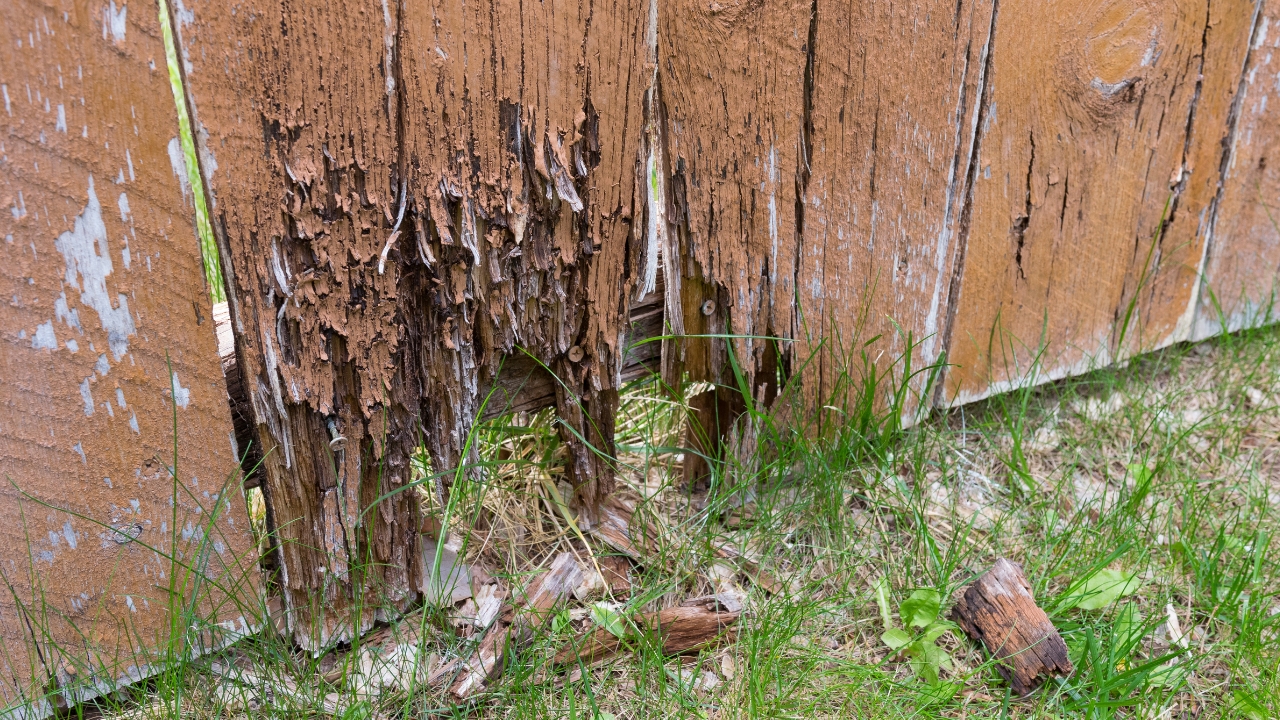
Rot does not announce itself loudly at first, which is why it is one of the most expensive problems to ignore in spring. Excess moisture that has soaked into cracks or unsealed areas over the winter weakens the internal structure of your boards and posts, especially where they meet the ground. Guides on the causes of fence point to water infiltration and poor drainage that allows puddles to sit at the base of your fence as the main drivers of this breakdown.
Rot is described as a silent enemy in advice on common wood problems, because by the time you see crumbling fibers or dark, spongy spots, the damage inside the board is already advanced. In spring, you should probe suspect areas with a screwdriver, especially near the soil line and under rail connections, and replace any sections that give way easily. If you combine those spot repairs with better grading or gravel at the base and a fresh coat of sealer, you slow the cycle that would otherwise turn minor decay into a full fence replacement within a few seasons.
3. Warped, cracked, and waterlogged boards
Continuous rain and freeze-thaw cycles over the colder months leave many wood fences with boards that twist, cup, or split once temperatures climb. As the wood repeatedly absorbs water then dries, the fibers expand and contract at different rates, which leads to visible warping and hairline cracks that widen with each wet period. Specialists who track problems after continuous advise you to examine your fence for soft spots, swelling, or discoloration that signal water damage before the boards start to fail structurally.
Once panels lose their original shape, they put uneven stress on fasteners and rails, which can loosen nails, pull screws through the wood, and create gaps that compromise privacy. Repair guides on warped or cracked recommend replacing the worst boards and then weatherproofing the entire run so the remaining lumber is less vulnerable to the next stretch of nonstop rain. Handle this in spring and you avoid the chain reaction where one misshapen board pulls its neighbors out of alignment all summer.
4. Loose or wobbly posts in saturated soil
Even if your posts still look straight, spring soil conditions can leave them dangerously loose. When the ground stays saturated, the soil that once gripped your posts tightly can erode or settle, so a firm push at shoulder height suddenly makes the structure sway. A repair checklist that covers loose fence posts notes that this usually happens when the soil around the post erodes or when the concrete footing cracks, particularly in shaded areas where sunlight does not land and the ground stays wet longer.
Spring winds then take advantage of that looseness, flexing the fence at the base until fasteners shear off and panels rack out of square. Several contractors list leaning or tilting as one of the most common issues you can prevent by checking posts after the rainy season and adding gravel or concrete collars before the problem spreads. If you catch the movement early, you can brace and reset individual posts instead of rebuilding an entire section that has collapsed under its own weight.
5. Sagging and misaligned gates
Gates concentrate stress in a small area, which is why they often fail faster than the rest of your fence once spring moisture and movement arrive. As posts shift and hinges rust, you start to see dragging, misaligned latches, and hinges that pull loose from their mounting points. Guides that walk through common gate issues describe how a gate that will not open or close smoothly is not just an annoyance, it is often a sign that the supporting structure is moving.
Let a sagging gate scrape along the ground all spring and the extra friction can bend hinges, strip screws, and crack the framing around latch hardware. Specialists who focus on fence gate repair point out that most gates eventually show signs of wear, especially those made from natural materials that swell and shrink with humidity. Your best move is to tighten or upgrade hinges, reset the gate post if it has shifted, and adjust the latch while the misalignment is still small enough to correct with basic carpentry instead of a full rebuild.
6. Insect and pest damage in warming weather
As temperatures rise, insects and other pests become far more active, and your fence can turn into both a food source and a highway into your yard. Termites, beetles, and carpenter ants are singled out in explanations of insects and pests as key culprits that undermine structural stability by tunneling through wood. General guides on fence damage 101 also list insect damage right alongside wood rot and warping, which shows how quickly these small organisms can create big problems once they get established.
Spring is when you are most likely to spot mud tubes, frass, or small exit holes that indicate an active colony. Overlook those signs and pests can hollow out posts from the inside, leaving them looking fine until a storm or a child leaning on the fence reveals how brittle they have become. Reference material on carpenter ants notes that they do not eat wood but excavate it to build nests, which still leads to significant structural loss. You protect your fence by treating or replacing affected sections promptly and by keeping vegetation and debris away from the base so pests have fewer hidden entry points.
7. Rusted hardware and metal components
Even if your fence is mostly wood or vinyl, the metal that holds it together is vulnerable once spring moisture lingers in every joint. Screws, nails, brackets, and hinges that have been exposed to winter rain and snow can start to rust, which weakens their grip and stains surrounding materials. Overviews of rusting on fences explain that corrosion not only looks bad, it can also lead to panels loosening and gates failing when hardware finally snaps.
Wait until summer and the combination of rust and movement from kids, pets, and wind will often enlarge the screw holes and deform the metal, which makes simple replacement harder. Spring is the time to inspect every hinge and bracket, clean off early rust with a wire brush, and swap out failing hardware for galvanized or stainless steel alternatives. Advice on top fence problems frequently pairs rust with loose fasteners, which is your cue to tighten everything as you go so you are not relying on compromised metal to carry structural loads.
8. Soil erosion and drainage around the fence line
Your fence does not fail in isolation; it responds to whatever the surrounding ground is doing, and spring runoff often changes that faster than you expect. When snow piles up and ice strains boards over winter, the meltwater that follows can scour channels under your fence and wash away supporting soil. A spring inspection checklist for the Pacific Northwest urges you to check those fence after the rainy season because soft, uneven ground is a warning that water is not draining where it should.
Left alone, that erosion can expose concrete footings, create gaps under panels that pets or wildlife exploit, and funnel even more water toward your fence line in the next storm. Observations that spring reveals everything behind include exactly this kind of ground movement, which often convinces homeowners to replace fences earlier than planned. You can slow that clock by regrading low spots, adding gravel or French drains where water collects, and using concrete or metal post sleeves where soil conditions are especially unstable.
9. Cosmetic neglect that masks deeper damage
By the time you reach late spring, it is tempting to focus only on how your fence looks from the street. Peeling paint, faded stain, and algae streaks certainly affect curb appeal, but they also hint at more serious issues under the surface. Professionals who discuss common fence problems repeatedly tie cosmetic neglect to wood rot and warping, because unprotected surfaces absorb more moisture and break down faster.
If you just pressure wash and walk away, you may miss hairline cracks, loose fasteners, or soft spots that were hiding under dirt and mildew. A more thorough approach uses that cleaning step as an opportunity to inspect every board and rail, then seal or paint once repairs are complete. Video guides that cover the top fence problems and explain why old fences may be costing you in safety, privacy, and curb appeal, such as the clip featuring Apr in a discussion of aging structures, reinforce how quickly appearance issues can tip into functional failures. If you treat every stain and blistered board as a prompt to look closer, you give your fence a far better chance of surviving the next decade rather than the next season.
Spring is when winter wreckage shows up and when you still have time to keep ten small fence problems from turning into emergencies. Walk your fence line with a level, a screwdriver, and a critical eye, then act on what you find, and you extend the life of your posts, rails, and gates dramatically. When you combine that habit with targeted repairs recommended in guides on common fence repair, expert solutions for leaning posts, and practical tips from resources on what you can, you put yourself in control of how fast those problems grow. That mix of vigilance and timely action is what keeps your fence closer to the 30-year end of its lifespan instead of the 15.
Unverified based on available sources: any additional claims about specific regional building codes, proprietary fence products, or named contractors beyond those linked above.
For more visual walkthroughs, you can review step-by-step repair clips on old fence problems and general maintenance advice in broader damage overviews, then adapt those techniques to your own yard.
Like Fix It Homestead’s content? Be sure to follow us.
Here’s more from us:
- I made Joanna Gaines’s Friendsgiving casserole and here is what I would keep
- Pump Shotguns That Jam the Moment You Actually Need Them
- The First 5 Things Guests Notice About Your Living Room at Christmas
- What Caliber Works Best for Groundhogs, Armadillos, and Other Digging Pests?
- Rifles worth keeping by the back door on any rural property
*This article was developed with AI-powered tools and has been carefully reviewed by our editors.