7 décor “rules” you can ignore if you want your house to look expensive instead of overdone
There are a lot of old décor “rules” floating around that sounded smart in magazines but do not hold up in a real house with kids, pets, and Amazon boxes on the porch. Half of them actually make your home look more staged and cheap, not pulled together.
If you want your place to feel grown and put-together without looking like a store display, these are the rules you can quietly ignore.
1. “Every wall needs something on it”
Blank space is not a problem. Covering every inch with art, signs, and photos makes your house feel busy and smaller than it is. People’s eyes don’t know where to land, so they see clutter instead of the actual room.
Let some walls breathe. Hang one bigger piece instead of six little ones. If a wall doesn’t have a natural reason to hold art, leave it empty and let the furniture, windows, or lighting do the talking.
2. “You have to buy matching sets”
Matching sofa sets, bedroom sets, and table-and-chair sets are easy to buy, but they look like you rolled your cart through one aisle and called it a day. Expensive-looking homes almost never have everything from one bundle.
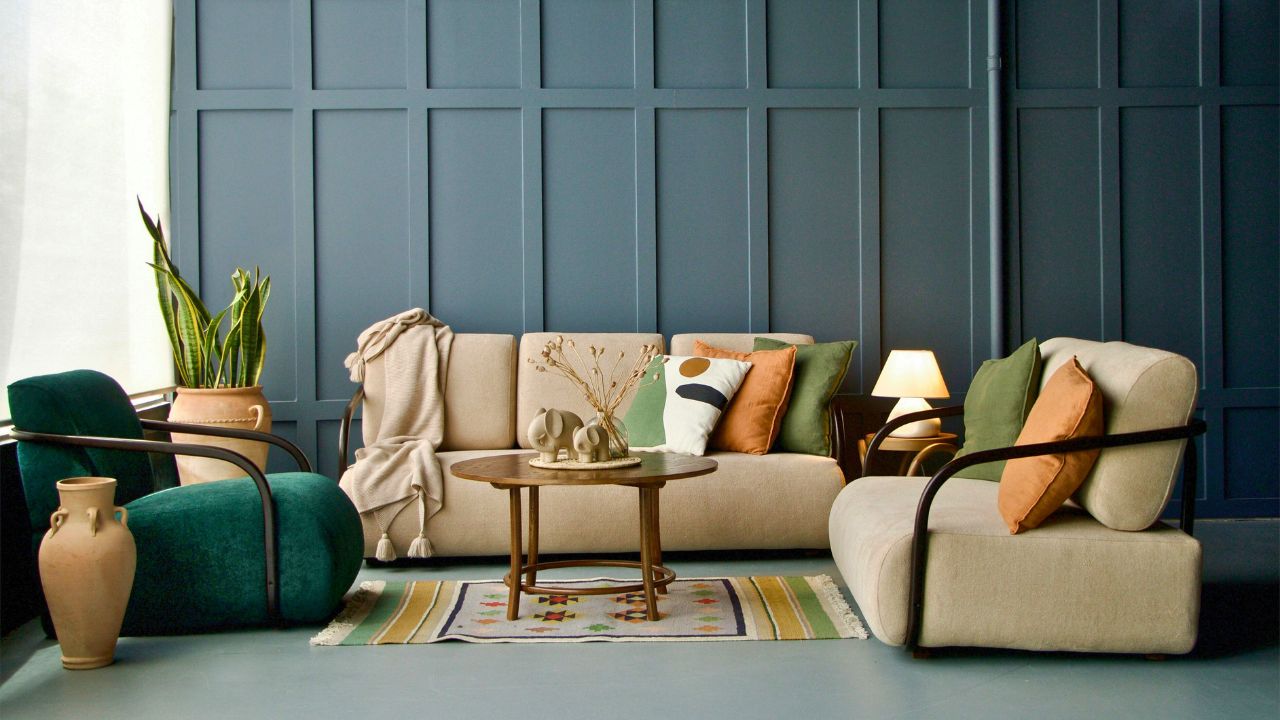
Mix shapes, leg styles, and wood tones that still relate to each other. Keep a couple of things consistent—like metal finish or general color—but let pieces be different. It feels more collected and less “we bought the whole showroom.”
3. “Everything has to be the same color family”
When you try to match every beige, gray, or white in the room, you end up with a flat space that looks like it came in a kit. Real rooms have contrast.
You can keep a simple palette and still use contrast: light walls, medium wood, darker fabrics, black accents. A little depth—darker lamp, black frame, richer rug—instantly reads higher-end than one washed-out color pasted everywhere.
4. “The sofa must go against the wall”
Pushing every piece of furniture to the wall is how you end up with a room that feels like a waiting area instead of a living room. It also makes the center of the room feel empty and unfinished.
If you have the space, pull the sofa away from the wall a bit and float at least one chair. Anchor the seating with a rug that’s big enough for at least the front legs of pieces to sit on. It looks intentional and lets you actually talk to people without shouting down the line.
5. “Curtains should sit right at the window frame”
Short, skinny curtains hung low make ceilings feel shorter and windows feel smaller. That “rule” survives mostly because people copy what they’ve seen, not because it looks good.
You don’t have to go dramatic, but hanging rods a few inches above the window and extending them past the frame instantly stretches the wall. Use panels that at least brush the floor. Even budget curtains look better when they’re the right height.
6. “Every surface needs a décor object”
You do not need a tray, stack of books, and a little statue on every horizontal surface. That’s how you slide from “styled” into “fussy” and “where do I put my drink?”
Leave some surfaces clear on purpose. Style a coffee table or console, then let a side table stay open for a lamp and a coaster. Empty space reads calm and confident, which always feels higher-end than a bunch of tiny things.
7. “The nice stuff is only for company”
Saving your best blankets, dishes, or candles for “someday” is how you end up living with the worn-out stuff while the good things collect dust. It’s also how rooms start to feel halfway done—like they’re waiting on a moment that never comes.
Pick a few things you genuinely like and put them in rotation now. Light the good candle on an ordinary Tuesday, use the pretty bowl for fruit, put the nicer throw on the sofa. A house looks more expensive when it’s actually lived in, not when everything is shrink-wrapped for guests.
Like Fix It Homestead’s content? Be sure to follow us.
- I made Joanna Gaines’s Friendsgiving casserole and here is what I would keep
- Pump Shotguns That Jam the Moment You Actually Need Them
- The First 5 Things Guests Notice About Your Living Room at Christmas
- What Caliber Works Best for Groundhogs, Armadillos, and Other Digging Pests?
- Rifles worth keeping by the back door on any rural property
*This article was developed with AI-powered tools and has been carefully reviewed by our editors.