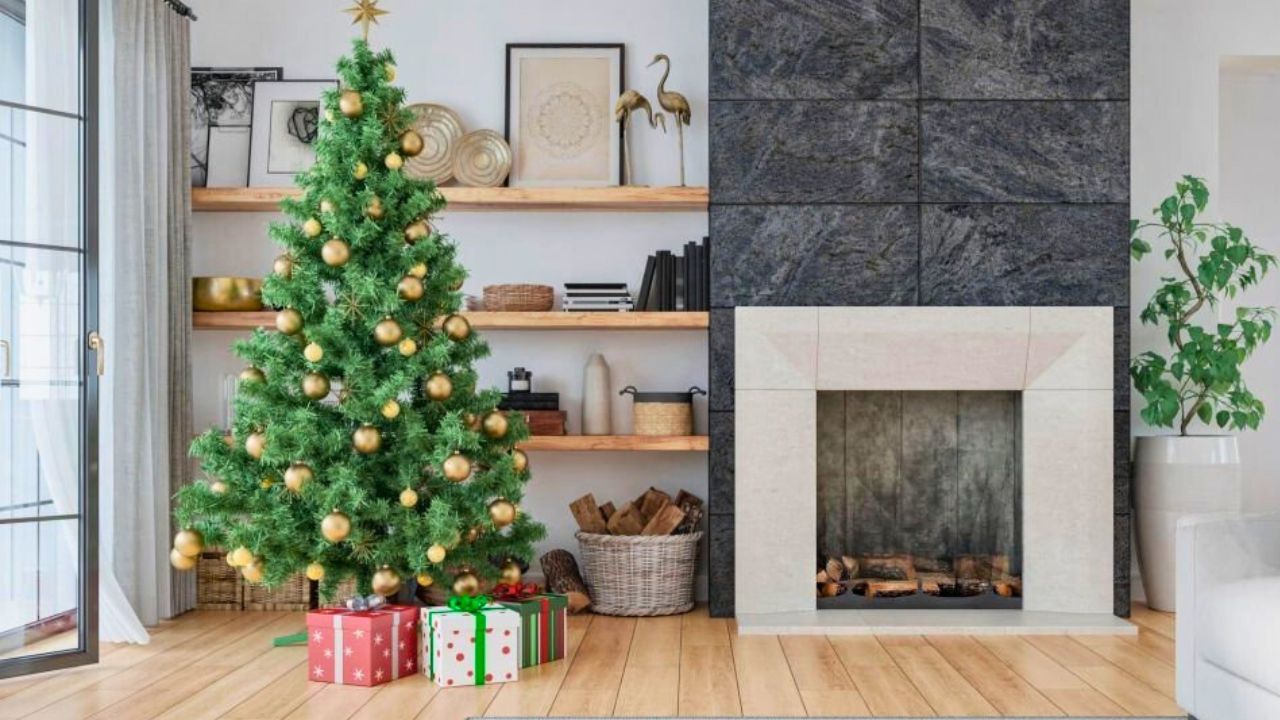
The small space tree solutions that look full without wasting square feet
Photo credit: Gladiathor/istock.com
Small living rooms can make you feel like you have to choose between a Christmas tree and walking through your own house. You want something that feels like “real Christmas,” but you also don’t want to side-step branches every time you carry laundry.
You don’t have to give up the tree. You just have to stop shopping like you’re decorating a big open living room and start working with the space you actually have.
Pick the shape first, not the height
Most people look at height and ignore the footprint. In a tight room, the base width matters way more than whether the tree hits eight feet tall.
When you’re shopping, pay attention to words like “slim,” “pencil,” or “narrow.” Those trees are built to give you that full look straight on without sticking three feet out into the room.
If you love the look of a tall tree, go for height as long as the base diameter fits your space. A tall, skinny tree in the corner can look way more impressive than a short, wide one that makes the room feel cramped.
Use corners and “dead zones” no one really uses
Walk through your living room and pay attention to where people actually walk. There are usually a few spots that don’t get real foot traffic—like a dead corner beside the couch or a weird angle by the TV stand.
Those spots are prime tree locations.
Try:
- A slim tree tucked into a corner behind a chair
- A pencil tree beside a TV console
- A tree set between two pieces of furniture where no one really needs to walk
If the tree’s base fits into one of those zones, you get the visual impact without narrowing the main paths you use every day.
Consider a half tree or flat-back tree against the wall
If your living room is truly tight, look for a flat-back or half tree. They’re literally built to sit against the wall so you only have branches where you can see them.
You can:
- Push a half tree flat against a wall like a tall piece of decor
- Center it between windows or anchor it behind a coffee table
- Use fewer ornaments because you’re only decorating the front and sides
From the front, it still reads as a full tree. You’re not wasting square footage on branches no one ever sees.
Raise a smaller tree instead of spreading a big one
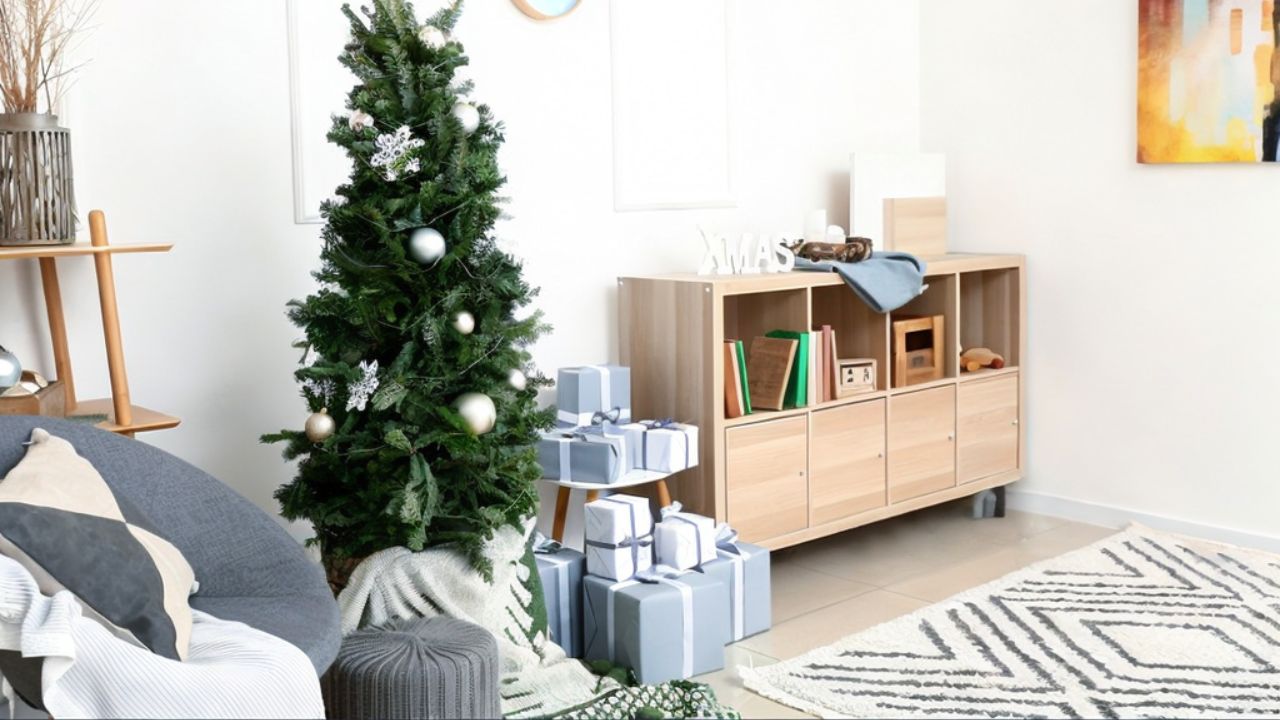
If all you have room for is a small tree, you can still make it feel important. The trick is to get it up off the floor.
Try:
- Setting a 4–5 foot tree on a sturdy crate, basket, or small table
- Wrapping the base with a tree skirt or blanket so the stand disappears
- Letting wrapped gifts sit on the floor around the base stand
Lifting the tree brings the lights and ornaments closer to eye level. It feels more like a focal point and less like something you had to shrink to fit.
Keep the bottom branches light so the room can breathe
In a small space, heavy ornaments all the way down to the floor make the tree feel dense and bulky. You want the bottom area to feel a little more open.
You can:
- Use fewer ornaments on the lowest branches
- Keep larger or heavier pieces higher up
- Let some of the bottom branches stay bare or lightly decorated
Seeing a bit of space under and around the tree helps the room feel less boxed in. It also makes it easier to vacuum and to tuck gifts in without wrestling branches.
Go lighter with decorations instead of bigger
A small tree still looks “full” if the eye has enough to look at, not if every branch is maxed out. Oversized ribbons, giant ornaments, and thick garlands can overwhelm a slim tree fast.
Instead, think:
- Smaller ornaments in one or two main color families
- Thinner garlands or simple bead strands
- Ribbon used in a few spots instead of wrapped from top to bottom
You want the tree to read as full when you step back, not overloaded when you get close. A little breathing room between ornaments actually makes it look more intentional.
Let the lights do more of the work
Lights go a long way toward making a smaller tree feel special. If you keep the rest of the room fairly simple, the tree becomes the main source of sparkle.
Some easy tricks:
- Use plenty of lights for the size of the tree (not sparse, not blinding)
- Wrap lights from the inside of the branches out, so the whole tree glows
- Keep the rest of the room lighting softer in the evenings
When the lights carry the show, you don’t have to rely on tons of physical decor, which helps keep the footprint and visual weight down.
Tie the tree into the room instead of adding more decor
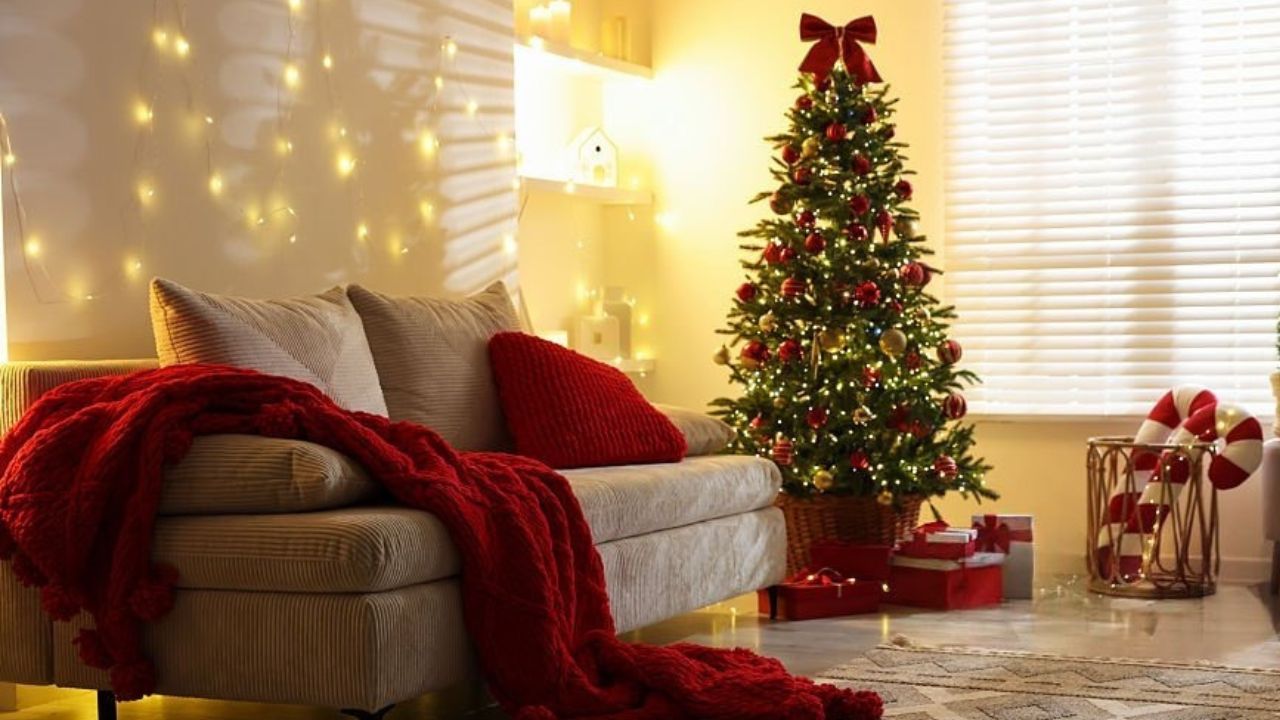
In a small space, the tree might be your main holiday decoration. That’s okay. Let everything else support it instead of competing with it.
You can:
- Swap pillow covers or throw blankets to match the tree colors
- Add a small bowl of ornaments on the coffee table
- Keep other holiday decor minimal so the room doesn’t feel busy
When the tree feels like it belongs with the rest of the room, it looks “full” in a good way instead of “crammed in,” even if the actual floor space is limited.
The tree doesn’t have to be huge to feel special. If it fits your space, doesn’t block your paths, and gives you that “okay, it’s Christmas now” feeling when you flip the lights on, it’s doing its job.
*This article was developed with AI-powered tools and has been carefully reviewed by our editors.