Calibers That Cover Almost Every Pest Problem on a Small Homestead
Photo credit: Jordi Mora/Shutterstock.com
On a small homestead, you can’t buy a different rifle for every critter that shows up. Most of us want one or two setups that handle everything from foxes in the chicken yard to the occasional coyote cutting across the back field. The trick is finding calibers that are flexible without being overkill for close-in shots around buildings.
You’ll never cover every single scenario perfectly, but there are a couple of calibers that pull more than their weight when it comes to day-to-day pest control.
Why it’s smarter to think in “tiers”
Instead of chasing one magic cartridge, think of your needs in two tiers:
- Small pests and close work (inside 75–100 yards, around barns and coops)
- Larger predators and longer shots (coyotes, feral dogs, 150+ yards)
With that in mind, most homesteads can cover 90% of pest issues with one rimfire or small centerfire and one slightly heavier rifle round. You don’t need a full safe of specialty rifles to stay ahead of the problem.
.22 LR or .22 WMR for small, close-in pests
For rats, snakes at close range, and very small pests where overpenetration is a concern, .22 LR is still hard to beat. It’s cheap, quiet, and effective inside reasonable distances with good ammo and shot placement.
If you want a bit more reach and punch without jumping to a full centerfire, .22 WMR (Winchester Magnum Rimfire) gives you higher velocity and more energy, making it more reliable on fox-sized game at closer ranges.
Both shine inside 100 yards for smaller animals, especially when you’re working close to buildings and want to keep noise down.
.223 Remington as the primary “pest rifle”
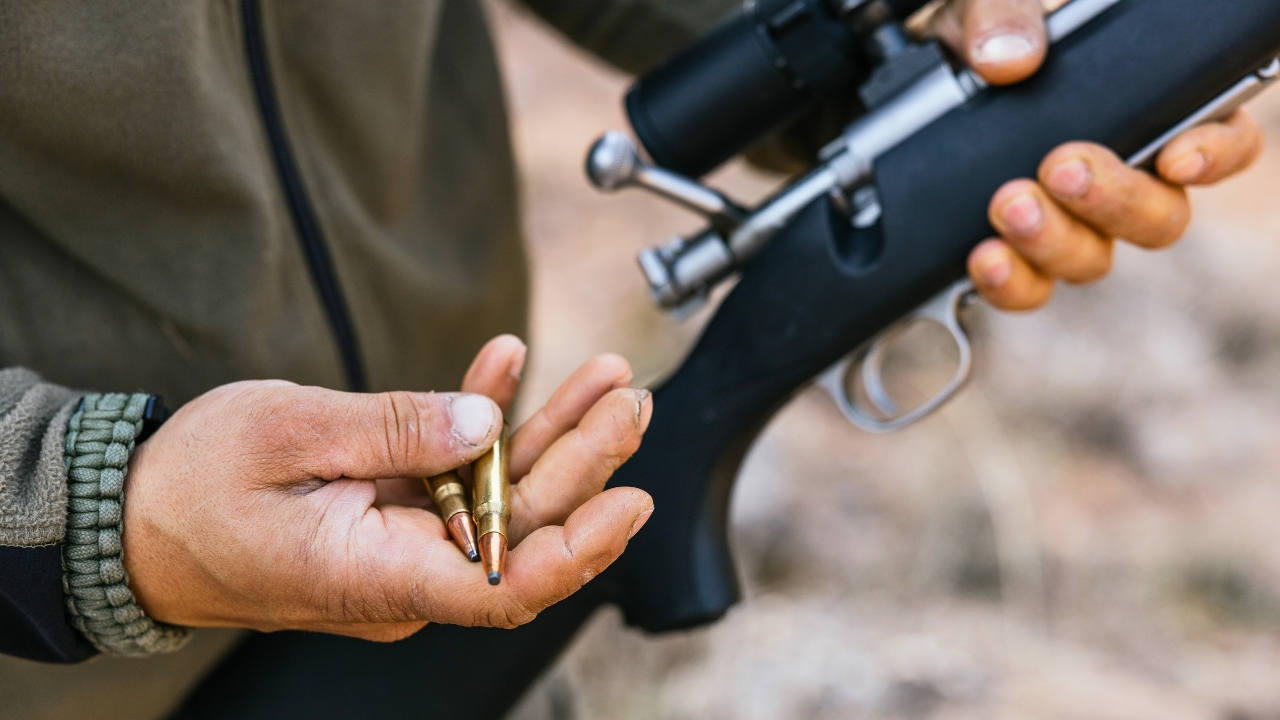
If you only want one true “pest rifle” on a small homestead, .223 Remington is usually the best place to start. It’s widely available, relatively affordable, and extremely versatile for everything from foxes to coyotes with proper bullets.
With varmint loads, it’s flat-shooting and accurate enough for 200-yard shots, but still manageable in recoil for smaller-framed shooters. It also works well in compact, handy rifles that won’t feel like a burden to carry around the property.
When .22-250 belongs in the mix
On some small homesteads, you’ve still got a long line of sight—open hay fields, big pastures, or a clear run down a pipeline. In those cases, .22-250 Remington gives you more reach and wind-bucking ability than .223, at the cost of louder report and more barrel wear.
If your pest problems are mostly within 150 yards, you probably don’t need it. But if you spend a lot of time glassing across big open spaces, it can be the “long gun” that rounds out your pest-control setup.
.243 Winchester as the dual-purpose option
If you hunt deer and also need pest control, a .243 Winchester can cover a lot of jobs: deer-sized game with 90–100 grain bullets, and coyotes and larger predators with lighter varmint bullets.
It’s more gun than you need for skunks by the barn, and you’ll want to be picky about backstops around buildings. But as part of a two-rifle setup (say, .22 LR plus .243), it lets you handle everything from squirrels in the garden to whitetails and big coyotes.
“Quiet but capable” rounds for tight spaces
On small properties with closer neighbors, quieter centerfire rounds like .22 Hornet or .17-caliber centerfires fill an interesting middle ground—more power and range than rimfire, less noise and recoil than big-game cartridges.
They’re great for foxes and similar pests in tighter spaces but come with higher ammo cost and less availability. That makes them better as a “second step” once you’ve already got your basics covered.
Don’t forget shotguns for certain jobs
Even though this article is about calibers, it’s worth saying: for some pests, a shotgun is still the right tool, especially at very close ranges or when shooting up or down steep angles. A 12- or 20-gauge with the right shot size is often safer than a rifle when your backstop isn’t ideal.
For most small homesteads, a rimfire or small centerfire rifle plus a basic shotgun gives you a flexible setup that covers nearly every pest scenario you’ll realistically see.
Like Fix It Homestead’s content? Be sure to follow us.