Rifles that make guarding livestock harder than it should be
Photo credit: Hegshot87/YouTube
Some rifles look impressive and shoot tiny groups from a bench, but they’re awful for the real work of guarding livestock. Too much recoil, too much weight, too much “match gun” and not enough “grab and go” makes simple jobs harder than they need to be.
Here are the types of rifles that tend to get in your way more than they help.
Ultra-magnum calibers that beat you up
Rifles in big magnum calibers like .300 Win. Mag, 7mm Rem. Mag, or .300 PRC sound like “do-it-all” tools, but for guarding goats and calves, they’re usually overkill. Tikka, Browning, and Remington all make great magnum rifles—but the recoil and blast make people avoid practice.
If you’re flinching or hesitating every time you pull the trigger, you’re not going to be confident taking quick shots around the pasture.
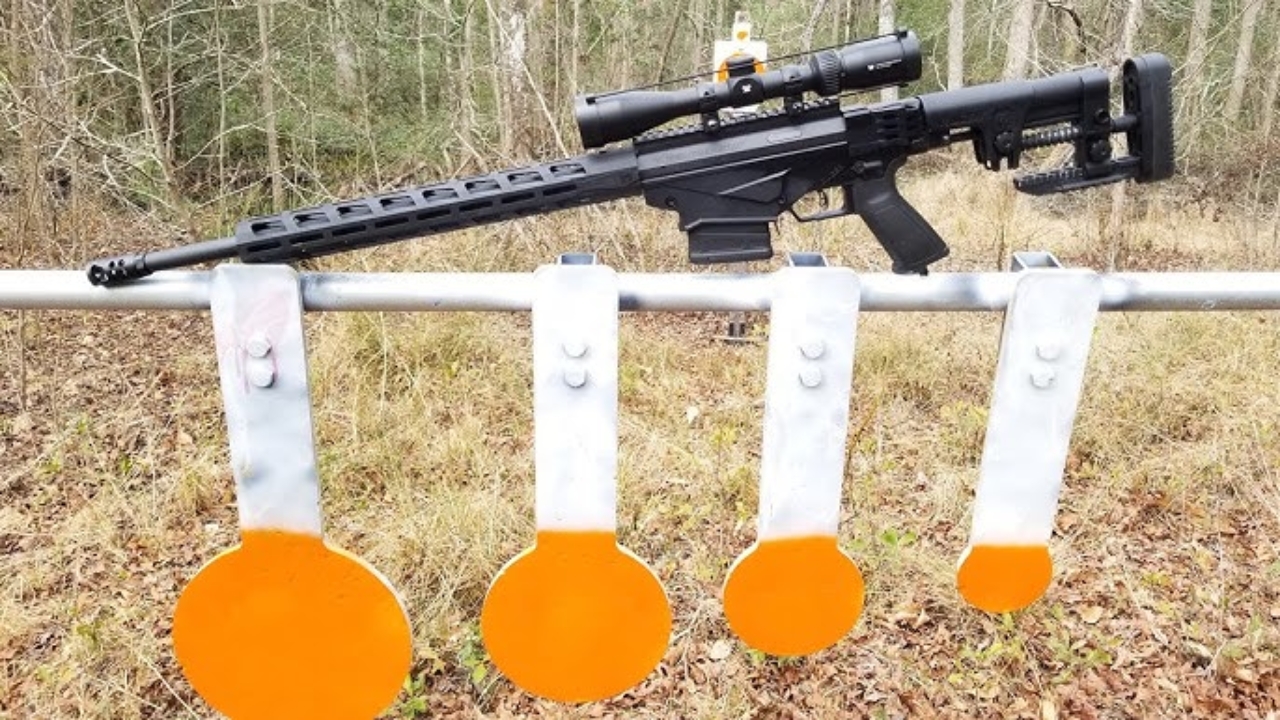
Heavy chassis rifles built for the range
Chassis rifles in 6.5 Creedmoor or .308 (think Ruger Precision Rifle, Savage 110 Precision, or similar) are incredible from a bench or prone mat. But they’re heavy, bulky, and awkward to maneuver around gates, trucks, and pens.
When you’re juggling chores and trying to respond quickly to a coyote, hauling a 10+ pound rifle with a big scope just makes life harder.
Long, bull-barreled varmint rigs
A 26″ heavy-barrel .223 or .22-250 set up for prairie dogs is fantastic on a bench. On a homestead, that extra length and weight feels clumsy shooting from a truck window or over a gate. The long barrel also loves to catch on brush and equipment.
You don’t need a full-on benchrest rig to hit a coyote at 100 yards. A lighter, handier rifle in the same caliber is easier to live with.
Cheap ARs that don’t run reliably
A well-built AR-15 in 5.56/.223 is incredibly practical for livestock protection. A bottom-of-the-barrel AR with questionable parts and no real testing is not. Light primer strikes, feeding issues, or gas problems turn a “good idea” into a headache.
If you’re constantly wondering if it will choke, it’s not helping you guard anything. A slightly more expensive, reliable AR is far better than a cheap one you can’t trust.
Single-shots in marginal calibers
Single-shot rifles in small calibers—say .22 Hornet or similar—can be fun and accurate, but having only one round on tap when multiple predators show up is a big limitation.
On top of that, many break-action singles are light and not set up well for optics or fast mounting. When things get hectic near the pen, they tend to slow you down more than they help.
Rifles with giant high-magnification scopes
Putting a 6–24x or 5–25x scope on a ranch rifle looks impressive, but trying to find a moving predator at close range with too much magnification is frustrating. You end up spending precious seconds zooming out or hunting for the animal in a tiny window.
For livestock work, a simple 1–6x, 2–7x, or 3–9x scope is usually easier and faster. Huge scopes are mostly extra weight and extra hassle.
Pistol-caliber carbines with limited reach
Pistol-caliber carbines in 9mm or .40 S&W can be fun and useful for certain roles, but their effective range on predators is much shorter than a .223 or .243. On open pasture, that limited reach can keep you from taking shots you’d otherwise have with a small centerfire.
They’re not useless—but relying on them as your primary livestock rifle can leave you undergunned when coyotes hang up further out.
Rifles you’re scared to scratch or get dirty
Any rifle—no matter the caliber—that you’re afraid to ding or drag through the barnyard is going to make guarding livestock harder. High-gloss wood, collector editions, and heirlooms make you hesitate at the exact moments you need to move fast and not overthink it.
The best livestock rifles are the ones you’re willing to toss in the truck, set on a fence post, and actually use. If you baby it, it belongs in the safe, not the field.
Like Fix It Homestead’s content? Be sure to follow us.