Rifles that pull their weight when something’s after the calves
Photo credit: WHO_TEE_WHO/YouTube
When something is messing with calves, you don’t want to wonder if the rifle will cycle, if the scope is still on, or if the caliber is enough. You want something you’ve sighted in, carried, and actually trust. The right rifles balance power, controllability, and reliability without being a chore to drag around the pasture.
These are the setups that tend to hold up when there’s more at stake than a chicken feeder.
.223 bolt guns with real soft points
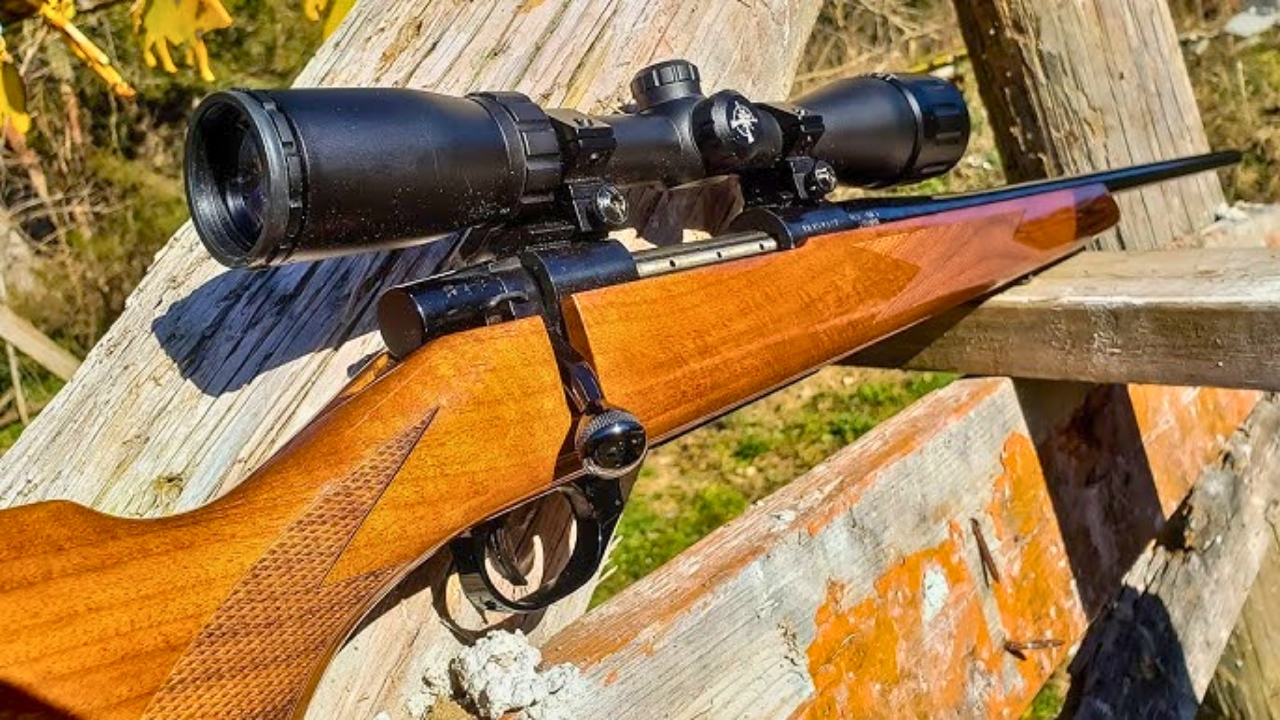
A simple .223 bolt gun—Ruger American, Tikka T3x Lite, Savage 110, or Weatherby Vanguard—in .223 Rem loaded with 55–64 grain soft points is a very practical “first line” rifle. It’s flat enough for longer pasture shots, light recoiling so everyone can shoot it well, and effective on coyotes and stray dogs with good bullets.
You’re not trying to plow through half a cow; you’re trying to put down a predator without overdoing penetration. Good soft points and a solid bolt gun do exactly that in most real homestead distances.
.243 Win for predators and bigger threats
If you want more punch and the option to take deer cleanly, .243 Win in a Tikka T3x, Savage 110, Ruger American, or Browning X-Bolt is hard to beat. With 75–87 grain varmint bullets, it smacks coyotes and larger dogs convincingly. With 95–100 grain bullets, it’s a proven deer round.
Recoil is still manageable, especially in a decent stock with a recoil pad. That makes it a good “family rifle”—enough power to matter without scaring people off the trigger.
6.5 Creedmoor or .308 when shots get longer
On more open ground where you’re looking at 200+ yard shots, rifles in 6.5 Creedmoor or .308 Win start to make sense. Something like a Weatherby Vanguard, Savage 110, Winchester Model 70, or Browning X-Bolt in these calibers gives you heavier bullets that carry energy further.
They do kick more than .223 or .243, and ammo costs more, so they work best when you know you’ll actually use the extra reach and power—for example, if predators like to hang at the far edges of big pastures.
A reliable AR-15 in 5.56/.223 for fast follow-ups
A well-built AR-15 in 5.56/.223 with a 16″ barrel, decent trigger, and mags you trust is very handy when there may be more than one animal in the mix. For example, a small group of coyotes or a pair of problem dogs. With a low-power variable optic (LPVO) or a red dot and magnifier, you can move from up close to midrange without thinking too hard about it.
The key is staying away from bottom-barrel builds. A mid-tier AR that runs cleanly will give you fast shots and easy handling without second-guessing the rifle.
Low-end magnification optics that work in real light
On all of these rifles, optics choice matters as much as caliber. A 1–6x, 1–8x LPVO or a 2–7x / 3–9x scope is ideal for “something’s after the calves” jobs. You can run low power for quick shots in poor light, then dial up if you have time.
Huge 6–24x scopes are clumsy and slow in this context. You’re not shooting tiny groups on paper; you’re trying to find fur fast and see what’s behind it.
Calibers and bullets that balance penetration and safety
When shooting around calves, fencing, and sometimes other cattle, bullet choice matters. In .223, bonded or controlled-expansion 55–64 grain soft points or similar are better than fragile varmint bullets that may break up on the surface—or FMJs that keep going forever.
In .243, 90–100 grain controlled-expansion bullets do the job without acting like a grenade. You want enough penetration to stop the threat, not a bullet that sails through pens and posts with no respect for what’s behind.
Rifles you’ve actually zeroed from real positions
A rifle that’s only ever been zeroed from a perfect bench isn’t fully “proven” for this job. Take your .223, .243, or AR and shoot it from the truck rail, from kneeling, from standing against a post—whatever positions you’re actually likely to use.
If you know where it hits when you’re winded and not perfectly set up, it’ll feel like an extension of you when something’s bawling in the dark and you have to move now.
Light, handy rifles you’re not scared to drag through the pasture
The best rifles for this job aren’t the heaviest, prettiest, or most expensive ones. A 6–7.5 pound rifle with a simple scope, in a synthetic stock you don’t baby, is ideal. That’s where guns like the Ruger American, Tikka T3x Lite, Savage 110, and basic ARs in practical trim really shine.
If you’re willing to toss it in the side-by-side, lean it against gates, and still trust it to be on target, that rifle is actually pulling its weight when something’s after the calves.
Like Fix It Homestead’s content? Be sure to follow us.