Shotguns that blow your pattern wide right when it matters
Photo credit: Honest Outlaw/YouTube
A lot of people assume a shotgun is “forgiving.” Point it in the general direction and the pattern will cover your mistakes. Then the first time you’re trying to deal with a raccoon at the coop, or a coyote slipping the fence line, you realize your pattern is way wider than you pictured—and now you’re either missing clean or tearing up stuff you didn’t mean to touch.
This is almost always a setup + ammo + choke problem, not a “shotgun is inaccurate” problem. These are specific models that commonly surprise people because of how they’re sold and how most folks actually use them on a property.
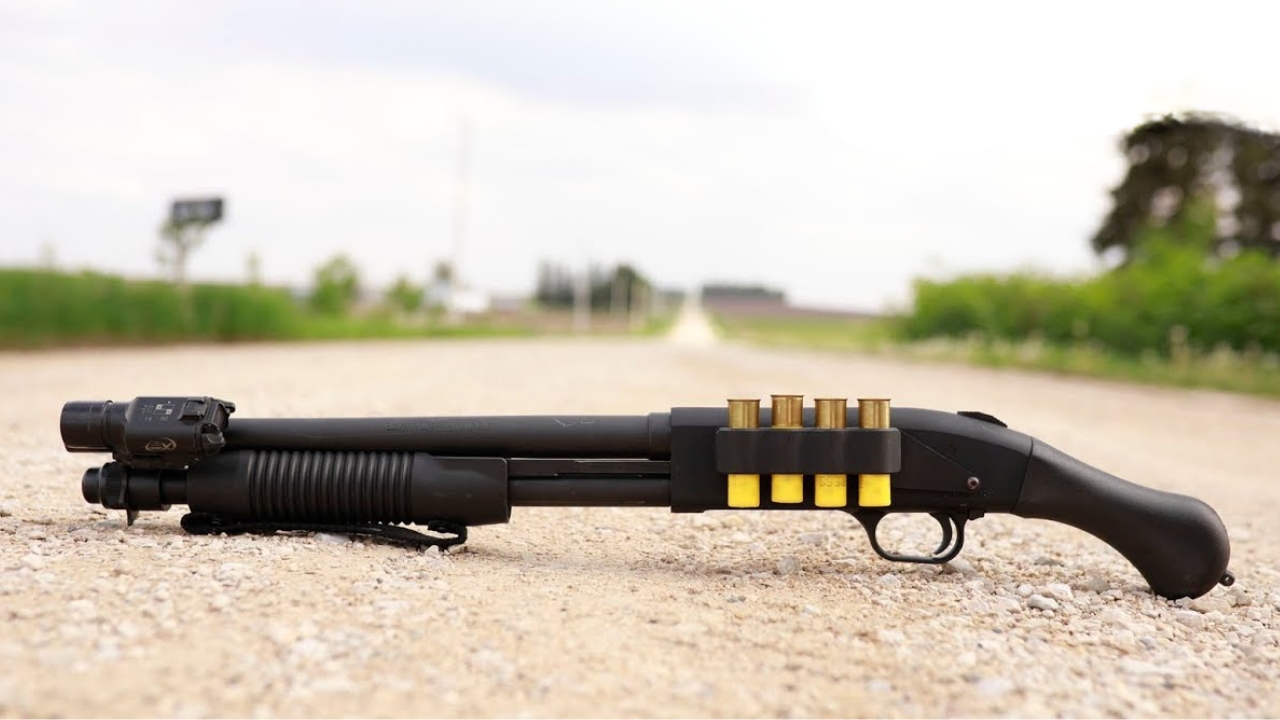
Mossberg 590 Shockwave
Most Shockwaves are basically cylinder bore, and the way people shoot them makes consistency hard. Add buckshot and a rushed, half-mounted shot in the dark, and your “pattern” can be everywhere. It’s not a great recipe when you’re trying to be precise around buildings and animals.
If a Shockwave is what you’ve got, you need to pattern it with your exact buckshot at 7, 10, 15, and 20 yards. A lot of people are shocked how fast it opens up.
Remington 870 Tac-14
Same deal as the Shockwave—short, compact, and usually run with no real stock. Your mount changes shot to shot, and that changes point of impact and how the pattern prints. Then people assume “buckshot spreads anyway,” and they never verify what it’s doing.
If you want something for real property use, a stocked 870 with a simple light and a known load is a safer route than a compact gun you can’t mount the same way every time.
Maverick 88 Security (18.5″)
This is one of the most common “by-the-door” shotguns for a reason, but most owners never pattern it. They just assume any buckshot will behave about the same. With a cylinder bore barrel, some loads print wide fast, and some print off-center depending on how you mount it.
It can be a great working shotgun. The key is actually testing a couple buckshot loads and sticking with the one that prints tight and centered for you.
Mossberg 500 Security (18.5″)
The 500 in a short security setup runs into the same reality: cylinder bore + unknown buckshot = surprises. It’s not rare for someone to think they have a “tight” pattern, then find out at 15–20 yards it’s already wider than they’re comfortable with near outbuildings.
A simple fix is choosing buckshot designed to pattern tighter and confirming it on paper. That one afternoon makes the shotgun way more predictable.
Stevens 320 Security
These get bought as budget property shotguns and often get fed the cheapest shells on the shelf. If you’re running bargain buckshot through a cylinder bore barrel and you haven’t patterned it, your results can be all over the map—especially at the distances people actually shoot around barns and pens.
If you’re running a 320 for real use, pick one good buckshot load and keep it stocked. Don’t assume “buck is buck.”
Stoeger P3000 Defense
The P3000 can be a solid pump, but a lot of folks buy it, toss it behind a door, and never do the boring work. Cylinder bore defensive barrels can pattern surprisingly wide with some loads, and the recoil can make people lift their head and change the mount, which makes patterns look even worse.
Patterning fixes the uncertainty. It also tells you what distance is “clean and safe” for your property layout.
Winchester SXP Defender
SXPs are quick-handling, but that light, fast feel can make people snap-shoot them like a bird gun. With buckshot and a defensive barrel, that can turn into “close enough” aiming—and then the pattern ends up wider than expected when the shot is a little rushed.
If this is your working shotgun, slow down long enough to confirm a load that stays tight at your real distances, then practice mounting it the same way every time.
Mossberg 930 Home Security
Semi-autos like the 930 can tempt people into shooting faster than they should. When you’re sending follow-ups quickly without confirming pattern and hold, you can chew up fences, posts, and anything near the target—especially with wider-patterning loads.
It’s still a viable property shotgun, but it needs a little discipline: pick a load that prints tight, verify it, and don’t assume speed replaces precision.
Benelli Nova Tactical (18.5″)
The Nova is tough, but the tactical versions are often run cylinder bore with whatever buckshot is available. If you’re expecting a tight pattern at 20–25 yards, you might be disappointed depending on the load. A lot of owners don’t find that out until they miss something they thought was an easy shot.
Good news is the fix is simple: pattern it and choose a buckshot load that behaves. You’ll usually find one that’s clearly better than the rest.
Remington 870 Express (18.5″ defensive setups)
The 870 is a classic, but defensive barrels plus random ammo equals random expectations. Some 870 owners also run older, mixed shells that have been sitting around, and those can behave differently than fresh, consistent loads.
If it’s your property gun, keep the ammo fresh, pick a buckshot load that patterns tight in your barrel, and write it down so you don’t reinvent the wheel every season.
Like the article? Make sure to give me a follow!