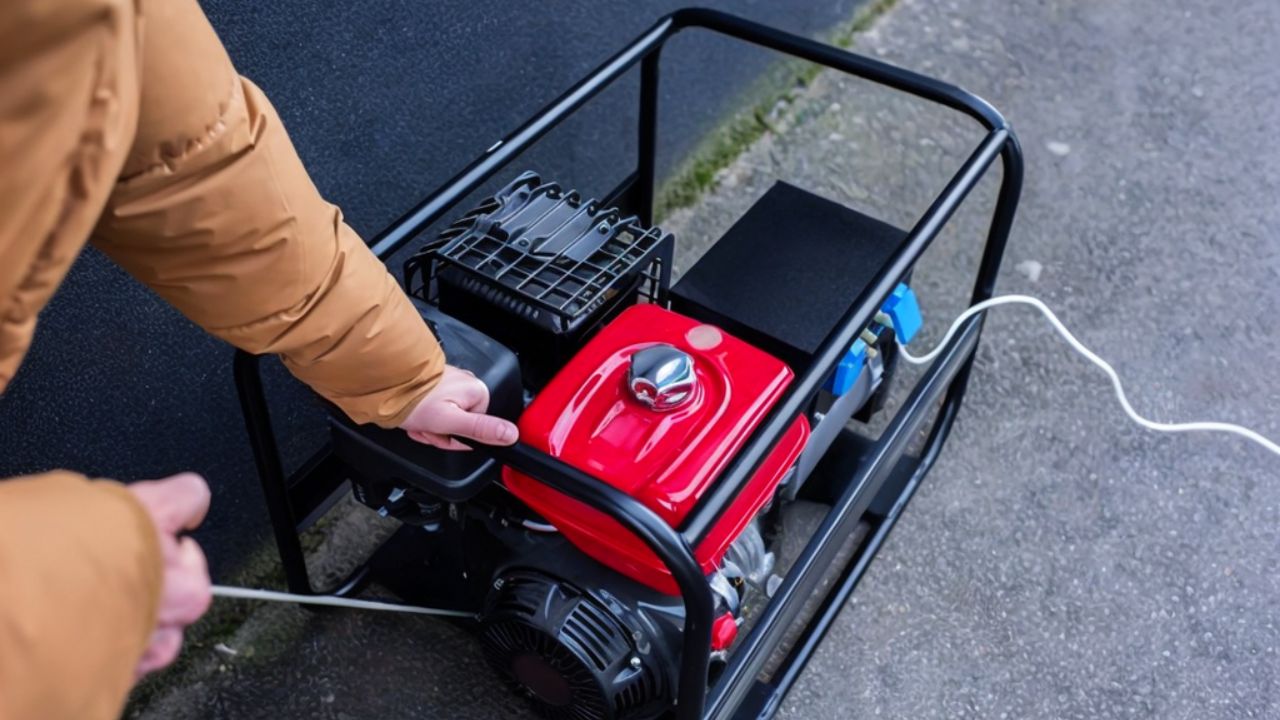
What to do before you start a generator so you don’t trip breakers instantly
Photo credit: LightField Studios/Shutterstock.com
When the lights go out, a portable generator can feel like a lifeline, but if you rush the startup, you can end up staring at tripped breakers instead of restored power. The difference between a smooth handoff and an instant shutdown usually comes down to what you do in the minutes before you pull the starter cord. With a deliberate checklist and the right sequence, you protect your generator, your home’s wiring, and everyone using the power it provides.
Before you ever touch a switch, you need to think about load, wiring, and safety in that order. That means confirming how your generator is connected, deciding which circuits you will power, and making sure nothing on the system is demanding full current the moment the engine fires. Once you build those habits, you dramatically cut the odds of nuisance trips and the risk of damaging equipment.
Confirm the setup: hardware, interlocks, and neutral bonding
Your first job is to make sure the hardware between the generator and your home is actually designed for the way you plan to use it. If you are feeding a panel, that usually means a transfer switch or an interlock kit that physically prevents the utility main and generator breaker from being on at the same time. A detailed guide to an “Easy Generator to Home Hook Up” walks through how to Install Inter Lock on a Panel Cover, including how to Flip the cover and Pre drill the mounting holes, which underscores that the mechanical lockout is not optional decoration, it is the backbone of a safe connection. If you are relying on a “metal slide” in your panel, electricians in one discussion explain that this piece is a lockout that keeps the main and generator feed from being on together, and they outline the actual order of operations you should follow when you switch your house to run off a generator.
Once the mechanical side is sorted, you need to know what kind of neutral you are dealing with, because that choice can decide whether your ground fault protection behaves or trips instantly. Portable units are typically either Bonded Neutral or Floating Neutral Generators, and if you pair a bonded neutral machine with a transfer switch that also bonds neutral, you can create parallel paths that confuse GFCI devices. One technical guide explains that if you have a bonded neutral generator with full GFCI protection, the solution is to use a transfer switch that switches the neutral so you avoid nuisance trips and keep those GFCI circuits from tripping. Before a storm ever hits, you should confirm whether your generator’s neutral is bonded or floating and match it to the right switching gear instead of discovering the mismatch when every protected outlet goes dark.
Start with zero load: why “everything off” matters
The fastest way to trip a breaker at startup is to ask a cold engine to carry your whole house the instant it catches. To avoid that, you want the generator to start into a no load or very low load condition, then bring circuits online in a controlled way. A step by step safety guide on portable units is blunt about this: before starting, disconnect all electrical loads so the generator is not overloaded at startup, advice that is echoed in detailed Starting the Generator instructions. Another safety checklist for backup power stresses the same idea in simpler language, urging you to make sure nothing is plugged into the generator when you fire it up so you do not instantly exceed the power of the unit, a point that is spelled out in guidance that tells you to Make sure nothing is plugged in before you start.
That zero load principle carries over when you are switching a house from utility to generator and back again. In a discussion of generator tripping GFCI breakers in a main panel, one answer lays out the Operation sequence clearly: You shut off all your breakers, because you generally want to switch with no load or low load, Then you shut off the main, connect the generator, and only after the generator is running do you bring selected circuits back on. That same stepwise thinking shows up in a Reddit thread where electricians talk through the starting generator order of operations, emphasizing that the important thing is to avoid slamming the generator with everything on it all at once, advice that is captured in a comment that highlights how you should Turn off all switches before you energize the feed.
Sequence the power-up: from engine start to selective loads
Once you have confirmed the hardware and cleared the loads, the next step is to follow a disciplined sequence that treats the engine, the panel, and your appliances as three separate stages. A detailed Reddit checklist for powering a home on a portable unit breaks this into PRE EVENT and START steps, telling you to PRE EVENT Check oil level and PRE EVENT Pull the generator out of the garage to a safe corner before you ever touch the electrical side, then at START to Turn MAIN BREAKER over the 50A receptacle to ON only after the engine is running and stable, a process that is documented in the Comments Section of that guide. Another thread on proper sequence reinforces the same rhythm: connect the cord to the inlet, start the generator, let it warm up, then close the generator breaker and bring on the big loads first, letting the smaller loads follow, a pattern captured in advice on how to Connect the cord and stage your circuits.
Even if you are not feeding a panel, the same logic applies when you are running extension cords directly from the generator. A beginner friendly video on how to start a generator walks through the basics, from turning the on switch on to setting the choke and pulling the cord, and it shows that you should get the engine running smoothly before you plug in tools or appliances, a sequence that is demonstrated in a Dec tutorial on small portable units. In a separate conversation about whether the generator should be connected to the house when starting, users point out that if you have the interlock, Either way does not matter much for the hardware as long as the main is off, but the safer habit is still to let the engine stabilize before you slide the interlock and energize the panel, a nuance that comes through in a Dec discussion of that exact question.
Match the load to the generator so breakers stay closed
Even with perfect sequencing, you will still trip breakers if you ask a small generator to behave like a whole-house standby. The key is to know your wattage and prioritize what truly needs to run. A detailed explainer on preventing generator overload urges you to use a transfer switch or interlock that is sized for your home’s electrical system and to avoid turning on every high draw appliance at once, advice that is framed as part of broader How to Prevent Generator Overload guidance. Another troubleshooting guide on Why My Portable Generator Tripping focuses on the same fundamentals, telling you first to confirm that your generator is not overloaded and to shed nonessential loads before you assume something is broken, a reminder that if You keep popping the main, the problem may be your expectations rather than the machine, as laid out in a Jun explainer on Why My Portable Generator Tripping.
Real world experiences back up how sensitive generator breakers can be to aggressive loading. In one forum thread, a user describes how the generator main circuit breaker trips even though some loads did not run at startup, prompting others to suggest that What they really need is load shedding equipment that ensures all the loads cannot run at once, a point that is spelled out in an Apr discussion of a tripping main. That same logic applies on a smaller scale in your own home: if the generator stumbles when the well pump, electric range, and central air all try to start together, you need to decide which of those can wait and which truly justify the limited amperage you have available.
Respect protection devices: GFCI, breakers, and safe habits
Sometimes a breaker that trips instantly is not complaining about overload at all, it is warning you about a wiring or grounding problem. Ground fault protection is especially sensitive to how neutrals and grounds are tied together, and if you ignore that, you can chase “mystery” trips for hours. A detailed Q&A on generator tripping GFCI breakers in a main panel explains that the Operation of these devices depends on current returning only on the neutral, and that if You share neutrals or bond neutral in the wrong place, the GFCI will see an imbalance and open, a behavior that is unpacked in a Jan thread on GFCI tripping. That is why the earlier step of matching Bonded Neutral or Floating Neutral Generators to the right transfer equipment is so critical, and why you should never defeat a GFCI just to “make it work.”
Beyond the panel, you also need to think about how you physically handle cords, outlets, and the generator itself. A safety guide on portable units stresses Avoiding Electrical Hazards by managing the flow of electricity carefully, warning that Impro per use of extension cords, backfeeding, or wet connections can put you and others in your home at risk, a point that is spelled out in a Oct section on Avoiding Electrical Hazards. Another set of tips on using backup generators urges you to Follow the manufacturer’s instructions and Read and understand all safety warnings before you operate the unit, because the manual often includes model specific guidance on breaker ratings and startup sequence that can prevent trips, advice that is captured in a reminder to Follow and Read and the instructions carefully.
Like Fix It Homestead’s content? Be sure to follow us.