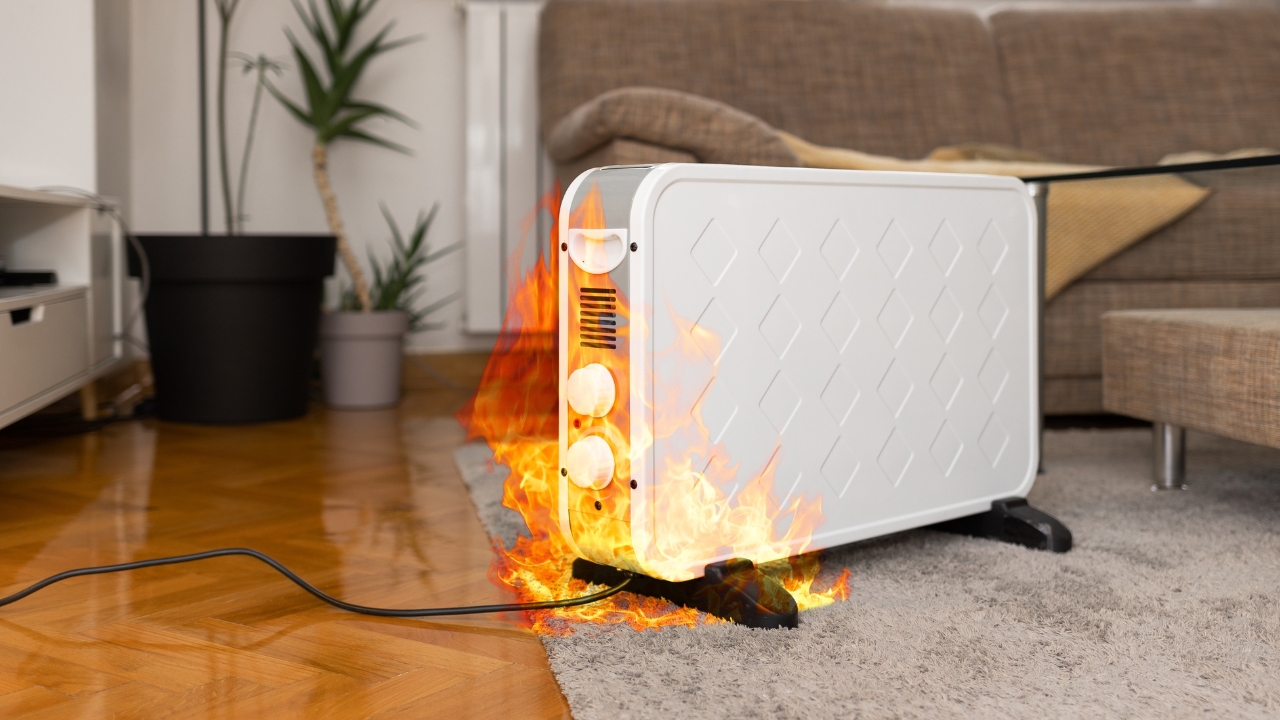
The cold-weather fire risks people create when they panic-heat a room
Photo credit: STEKLO/Shutterstock.com
When the temperature plunges and your furnace struggles or fails, the instinct to “just get the room warm” can push you toward shortcuts that quietly turn a cold snap into a catastrophe. Home heating is already the second-leading cause of fires, and winter is when most household fires occur, so the margin for error is thin even before you start improvising. The real danger is not only the devices you use, but the way panic changes your judgment about where, how long, and how closely you watch them.
Cold-weather fire risk is not an abstract statistic, it is a pattern that repeats every winter as people crowd space heaters, crank up ovens, drag out old extension cords, and even run cars or generators in desperate attempts to stay warm. If you understand the specific mistakes that turn a chilly room into a burn scar, you can still use extra heat when you need it, but you will do it with the same discipline you bring to locking your doors or buckling a seat belt.
Why cold snaps send home fire risk soaring
When the forecast calls for single digits, you are not just facing discomfort, you are entering the season when your home is statistically most likely to burn. Heating equipment is one of the leading causes of home fire deaths, and national data show that nearly half of all U.S. home heating equipment fires, precisely 46 percent, occur in the coldest months, when furnaces, fireplaces, and plug-in heaters are running hardest. Local officials echo that pattern, noting that home heating is the second-leading cause of fires and that winter is when most household fires occur, a warning folded into city guidance on Home Fire Safety.
As Temperatures Drop, the pressure on your wiring, outlets, and fuel-burning appliances rises, and so does the temptation to push them beyond what they were designed to handle. According to the American Red Cross, House Fires Increase sharply in extreme cold, with responders seeing the same pattern around this time each year as people plug in extra heaters, light more candles, and improvise with whatever fuel is at hand. The risk is not just open flames, it is also invisible hazards like carbon monoxide that build up when you close windows and vents to keep precious heat inside.
The most dangerous “panic heat” habits
In the middle of a cold snap, the riskiest decisions often feel like common sense: you move a space heater closer to the couch, you turn on the oven and crack the door, you drag an old kerosene heater out of the garage. Fire officials warn that Chilly weather brings an added danger for a home heating equipment fire when you start using fireplaces, wood stoves, and portable space heaters in ways they were never meant to be used, which is why campaigns on Preventing Winter Heating Fires focus so heavily on behavior, not just hardware. One of the most common panic moves is to crowd anything that can burn, from blankets to cardboard boxes, right up against a heater to “soak up” warmth, even though guidance is crystal clear that you should Keep anything that can burn at least three feet from fireplaces, wood stoves, radiators, or space heaters, a rule repeated in both local advisories and national National Fire Protection Association tips.
Another panic habit is treating your kitchen like a furnace room. Social media campaigns have had to spell it out in blunt terms, with a Jan Safety Reminder from one fire department flatly titled Never Use Your Oven to Heat Your Home, warning that Using a gas or electric range as a room heater can lead to both fire and toxic fumes. National guidance repeats the same point, urging you to Never use a cooking range or oven to heat your home and instead rely on properly installed heating equipment, a message woven into cold-weather advice on how to heat your home safely.
Space heaters: helpful, until you forget the rules
Portable heaters are the workhorses of emergency warmth, but they are also a leading cause of winter fires when you use them as a substitute for a broken furnace instead of a supplement. Fire officials in MUSCATINE, Iowa, speaking through a Nov advisory, stressed that space heaters are helpful for heating small areas but are also a leading source of winter fire risks, which is why they offered 5 space heater safety tips that focus on where heaters are positioned and how closely you monitor them. National campaigns echo that message, urging you to Keep children, pets, and anything that can burn at least three feet away from heating equipment and to Place heaters on a level, hard, nonflammable surface, not on carpets or near bedding and drapes, guidance that appears prominently in cold-weather steps to stay warm.
The most common mistake experts flag is not the heater itself, but the way you power and supervise it. The Dangerous Space Heater Mistake Experts Are Warning About is often plugging a high-wattage unit into an extension cord or power strip that cannot handle the load, which can overheat and ignite, instead of using a wall outlet and a model with certification from UL or ETL, a point underscored in consumer advice on space heater safety. Another set of warnings focuses on Utilizing Unsafe Cords and running heaters in tight or enclosed spaces where vents are blocked, since space heaters draw a significant amount of power that can overload extension cords and need clear airflow, a risk spelled out in a list of 7 dangerous mistakes people make with these devices.
Carbon monoxide: the invisible threat behind improvised heat
When you close every window and door to trap warmth, you also trap whatever your heating equipment produces, including carbon monoxide, which can kill without ever triggering a smoke alarm. Fire and Carbon Monoxide Risks During Cold Weather rise when families turn to drastic measures to heat their homes, such as using charcoal grills, unvented gas heaters, or generators indoors, which is why county fire departments urge you to have fuel-burning appliances inspected annually and to install CO detectors on every level of your home, advice laid out in detailed guidance on Fire and Carbon Monoxide Risks During Cold Weather. State officials reinforce that message, with State Fire Marshal Brian Taylor warning that Improper use of space heaters, candles, and the dangers of carbon monoxide poisoning pose significant risks during cold snaps, and urging families to use heaters with automatic shutoff features and to never run fuel-burning devices in enclosed spaces, a plea captured in a statewide alert on cold weather dangers.
Cold weather increases fire and CO risks in tandem, which is why Kansas Chief Deputy State Fire Marshal Richard Watson has been blunt about the main hazards they see in winter and the need for working detectors, even pointing residents to programs that provide free alarms through GetAlarmedKS.org in coverage that notes how cold weather increases fire, CO risks. Federal regulators have joined that chorus, with the Consumer Product Safety Commission in WASHINGTON, D.C. urging consumers to be cautious when Using generators, furnaces, and space heaters, and reminding you that portable generators should never run inside a home, basement, or garage because of the carbon monoxide they produce, a warning embedded in a national alert to stay warm safely.
How to heat a room quickly without lighting a fuse
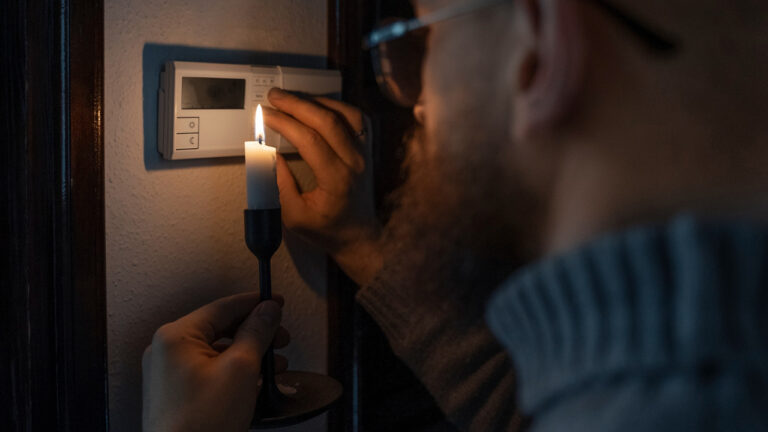
The safest way to get through a brutal cold spell is to plan your “backup heat” strategy before you are shivering in the dark. Fire officials and safety agencies converge on a few simple rules: Keep anything that can burn at least three feet from any heat source, plug space heaters directly into wall outlets, and test your smoke alarms at least once a month, guidance summarized in a federal winter infographic that urges you to Keep clear space around heaters and to have your chimney and vents inspected every year. Local campaigns add practical detail, reminding you that Did you know that heating equipment is one of the leading causes of home fire deaths, and that Keeping a three-foot “kid-free zone” around fireplaces and space heaters, along with annual maintenance, dramatically cuts that risk, as laid out in a city’s guide to Preventing Home Heating Fires During Cold Weather.
Equally important is how you supervise whatever heat source you choose. Unattended heaters pose the highest threat, which is why Red Cross guidance stresses that if you must use a space heater, you should never leave it unattended, never plug it into an extension cord, and always turn it off when you leave the room or go to sleep, advice that sits at the heart of their reminder to practice safe heating options. Restoration specialists add that, However tempting it may be to assume cold weather itself deters fire, the American Red Cross says home fires peak in winter and urges you to inspect cords for broken wires before using them, a point driven home in a discussion of how cold weather affects house fires. If you combine that vigilance with the basic spacing, wiring, and ventilation rules, you can still chase the chill from a room without inviting a fire truck to your front door.
Like Fix It Homestead’s content? Be sure to follow us.
Here’s more from us:
- I made Joanna Gaines’s Friendsgiving casserole and here is what I would keep
- Pump Shotguns That Jam the Moment You Actually Need Them
- The First 5 Things Guests Notice About Your Living Room at Christmas
- What Caliber Works Best for Groundhogs, Armadillos, and Other Digging Pests?
- Rifles worth keeping by the back door on any rural property
*This article was developed with AI-powered tools and has been carefully reviewed by our editors.