The outlet overload sign that shows up right before something fails
Photo credit: Diamond18/Shutterstock.com
Electrical failures rarely arrive without warning. Long before a breaker trips or a fire starts, your outlets and circuits begin sending subtle signals that the system is under strain. If you learn to recognize the one key sign that appears just before things go wrong, you can step in early and keep a minor issue from turning into a dangerous emergency.
That “last chance” indicator is usually heat, either at the outlet itself or in the wiring and devices feeding it, and it often shows up alongside flickering lights, burning odors, or breakers that keep snapping off. By understanding how overloads build, what that heat is telling you, and how it connects to the rest of your electrical system, you can protect your home, your equipment, and everyone who lives there.
Why outlet overload is a slow‑burn problem, not a sudden disaster
When you plug in one more space heater or power strip, it can feel like a small decision, but your wiring experiences it as a surge in demand that may push a circuit past its design limits. An electrical circuit is built to carry only a specific amount of current, and once you exceed that, the extra load turns into heat in the wires, connections, and outlets themselves. Guidance on what happens when a circuit is overloaded explains that this excess current can cause insulation to break down and devices to shut off or restart without warning, long before you see obvious damage.
That slow buildup is what makes overloads so deceptive. You might notice a lamp dim slightly when a window air conditioner kicks on, or a computer that reboots when a vacuum starts, and chalk it up to a quirk of an older house. In reality, those small disturbances are early warning signs that the circuit is already working at or beyond capacity. Over time, that constant stress can weaken connections, loosen terminal screws, and create hot spots that eventually show up as scorch marks or melted plastic. By the time a breaker finally trips or a plug feels hot in your hand, the underlying problem has usually been developing for quite a while.
The outlet overload sign you must never ignore: heat where it does not belong
The clearest sign that an outlet is on the verge of failing is simple to check: it should never feel warm. If you place your hand on a receptacle or wall plate and notice that it is warm or even hot to the touch, that is a direct signal that too much current is flowing through that point. Specialists who focus on dangerous outlet overloads stress that outlets should never feel warm, and that heat can mean damage is already developing behind your walls where you cannot see it.
That surface temperature change is not just uncomfortable, it is physics in action. As current rises, resistance in the metal contacts and wiring converts electrical energy into heat, which then radiates through the plastic faceplate and surrounding drywall. If you ignore it, the plastic can discolor, the insulation on the wires can become brittle, and nearby combustible material can eventually ignite. When you feel that warmth, you are catching the system at the tipping point, right before something fails or a fire starts, which is why you should unplug devices immediately and treat the outlet as unsafe until it is inspected.
Other early red flags: discoloration, flickering, and tripping breakers
Heat is often the last and most urgent warning, but your electrical system usually whispers before it shouts. One of the most common clues is a breaker that keeps snapping off even when you are not running anything unusual. Electricians describe breakers that keep tripping as a top sign that a circuit is carrying more than it should, and that repeated interruption is the panel doing its job to prevent overheating in the wires.
Your outlets and switches can also show visual changes before they fail. Guidance on overloaded circuits notes that warm or discolored outlets and switches are red flags that the wiring behind them has been running too hot, often because of overloads or loose connections. At the same time, you may see flickering lights when large appliances start, since circuits with sockets are typically prioritized over lighting, causing bulbs to dim or flutter when the line is stressed. None of these symptoms should be treated as harmless quirks, because together they paint a picture of a system that is already under strain.
How overloaded outlets feel, sound, and smell right before failure
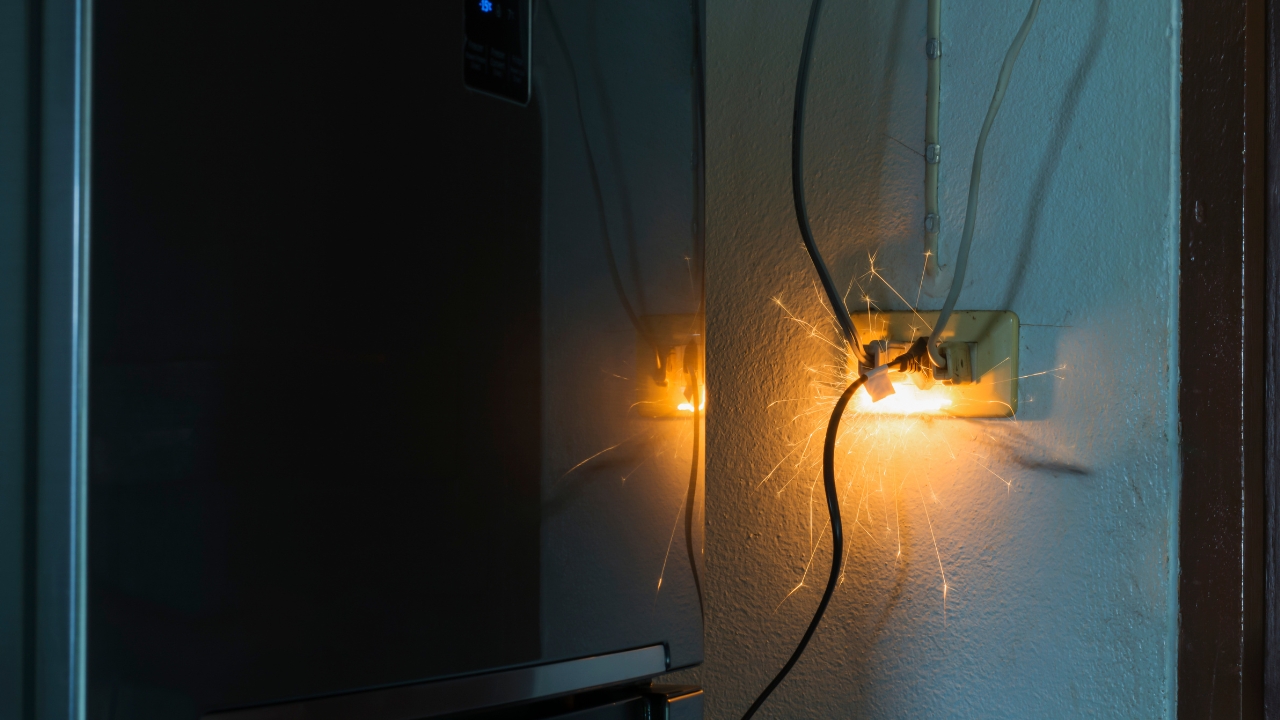
As an outlet approaches its breaking point, your senses give you more than one way to detect trouble. You may feel a plug that is unusually loose or hear a faint buzzing or crackling when you turn on a device, both of which suggest arcing at the contact points. Detailed checklists of signs of an overloaded outlet also highlight frequent tripping, outlets that spark when you plug in an item, and faceplates that feel hot as indicators that the receptacle is being pushed beyond its safe rating.
Smell is just as important as touch and sound. Fire safety officials warn that arcs, sparks, and a vague smell of something burning are among the potential warning signs and hazards that should prompt you to call the fire department immediately. Utilities have echoed that message, noting that a burning odor coming from outlets or wall switches can indicate an overloaded circuit, and that there are actually a LOT of problems that can show up at once when a circuit is overstressed. If you ever notice that acrid, plastic-burning smell, you should shut off power to the affected area and get professional help rather than waiting to see if it goes away.
Why your panel and breakers matter as much as the outlet itself
It is easy to focus on the outlet you can see and forget that it is only the last link in a chain that starts at your electrical panel. Your panel is the hub that distributes power throughout your home, and if it is overloaded, every downstream outlet is at greater risk. Experts explain that your electrical panel is the heart of your system, and that an overloaded electrical panel occurs when the demand for electricity exceeds what the panel can safely handle, which can shorten its lifespan and compromise performance for years to come.
Your breakers are designed to be the safety valves in that system, cutting power when a circuit draws more current than it should. When a circuit breaker overloads, it trips to protect your home, but repeated trips are a sign that the underlying load problem is not being addressed. Guidance on what happens when a circuit breaker overloads notes that warning signs include frequent tripping, buzzing sounds from the panel, and a breaker that feels hot to the touch. If you reset a breaker and it trips again quickly, you should treat that as a serious overload warning rather than a minor annoyance.
How overloaded circuits behave under everyday loads
Even when nothing looks wrong at the outlet, the way your devices behave can reveal that a circuit is already stretched thin. Appliances with motors, such as refrigerators, vacuums, and portable air conditioners, draw a surge of current when they start, which can cause lights on the same circuit to dim or flicker. Detailed breakdowns of electrical circuit overload signs, dangers, and prevention point out that devices with electrical motors seem harmless on their own, but when you add up their wattage, a typical 15 amp circuit at 120 volts can be pushed close to 1,700 watts, leaving little margin for anything else.
As that margin disappears, you may notice electronics shutting off unexpectedly, computers rebooting when another device starts, or smart speakers losing power for a moment and then coming back. These are the kinds of main indicators of an overloaded circuit that professionals highlight, along with buzzing outlets and odors from switches. If your home office setup, for example, includes a gaming PC, dual monitors, a laser printer, and a space heater all on one outlet strip, the circuit may be operating at its limit even if the breaker has not yet tripped.
Why power strips and “temporary” fixes make overloads worse
One of the most common ways overloads develop is through well‑intentioned attempts to add more capacity where there is none. Plugging a multi‑outlet power strip or cube into a single receptacle does not magically increase what that circuit can handle, it simply makes it easier to exceed the safe limit. Safety campaigns about overloaded electric outlets emphasize that the warning signs often appear when you daisy‑chain power strips, rely on cheap extension cords for permanent use, or plug high‑wattage appliances into adapters that were only meant for low‑power electronics.
Wall plates are designed to protect you from live parts, but they cannot protect you from the heat created by too much current. Co‑ops that warn members not to overload their outlets point out that dangerous signs of an overloaded outlet include a warm or hot outlet and wall plates that are discolored or cracked. If you are using a single receptacle to feed a television, game console, streaming box, soundbar, and a space heater through a power strip, you are stacking loads in a way that can quickly push the wiring past its rating. The fact that everything is still working is not proof that it is safe, it may simply mean the system has not yet reached the failure point.
When an overloaded outlet becomes a fire risk
The reason all of these signs matter is that overloaded outlets and circuits are a direct pathway to electrical fires. As heat builds in the wiring, it can char the insulation and nearby wood framing, eventually reaching the ignition point. Fire safety guidance lists arcs, sparks, and burning odors among the potential warning signs and hazards that should never be ignored, and recommends calling the fire department immediately if you see or smell them. That advice reflects the reality that by the time you notice smoke or visible charring, the fire may already be smoldering inside the wall.
Professionals who diagnose overloaded circuits add that burning smells or scorch marks around outlets and switches are reasons to shut off power and contact a licensed electrician without delay. Detailed descriptions of the symptoms of an overloaded circuit emphasize that these visual and olfactory cues are late‑stage warnings, not minor cosmetic issues. If you reach the point where plastic has melted or the wall is stained, the outlet has already been running dangerously hot, and the only safe response is to stop using that circuit until it has been inspected and repaired.
How to respond when you spot overload warning signs
Once you recognize that an outlet or circuit is overloaded, your first priority is to reduce the load and eliminate immediate hazards. Unplug high‑wattage devices like space heaters, hair dryers, and portable air conditioners from the affected outlet, and avoid using power strips or extension cords as a workaround. Guidance on early warning signs of circuit overload underscores that continuing to reset breakers or ignore flickering and random shutoffs only increases the risk that something will fail catastrophically.
Next, treat any heat, discoloration, or burning odor as a reason to shut off power at the breaker to that part of the house and call a professional. Electricians who focus on identifying overloaded electrical circuits recommend redistributing appliances across different circuits, upgrading old wiring or panels that no longer match your home’s demand, and installing additional dedicated circuits for heavy‑draw equipment. In some situations, especially after severe weather, you may also be dealing with hidden damage from water or debris. Power companies caution that in the aftermath of a hurricane where heavy flooding has occurred, there may be hidden electrical hazards, and you should have a professional proceed with repair work rather than trying to restore power yourself.
Like Fix It Homestead’s content? Be sure to follow us.
Here’s more from us:
- I made Joanna Gaines’s Friendsgiving casserole and here is what I would keep
- Pump Shotguns That Jam the Moment You Actually Need Them
- The First 5 Things Guests Notice About Your Living Room at Christmas
- What Caliber Works Best for Groundhogs, Armadillos, and Other Digging Pests?
- Rifles worth keeping by the back door on any rural property
*This article was developed with AI-powered tools and has been carefully reviewed by our editors.