The detector placement mistake that leaves sleeping kids less protected
Photo credit: Andrey_Popov/Shutterstock.com
Most parents assume that if a smoke alarm is chirping away in the hallway, their sleeping children are protected. The uncomfortable truth is that a common placement choice, keeping detectors outside bedrooms instead of inside them, can leave kids far less likely to wake up in time. To keep your family safe, you need to think not just about having alarms, but about how sound, doors, and children’s brains interact while everyone is asleep.
Fire safety standards have quietly shifted toward a tougher message: hallway alarms alone are not enough for sleeping rooms, especially for children who are harder to rouse. When you understand how smoke moves, how sound is blocked, and how kids actually respond at night, the case for rethinking where you mount each detector becomes impossible to ignore.
Why hallway-only alarms fall short for sleeping kids
You are told for years to put a smoke alarm in the hallway and check the batteries, so it is easy to believe that one device outside the bedrooms covers the whole sleeping area. In reality, that layout assumes bedroom doors are open, sound travels freely, and children wake easily, none of which is guaranteed in a real fire. When a blaze starts in a child’s room or nearby, seconds matter, and any delay in detection or audibility inside that room can erase the escape window.
Guidance built around installing and maintaining smoke alarms now stresses that alarms belong inside each sleeping room as well as outside them, precisely because hallway-only coverage leaves gaps. Research on notification has found that if a residence only has a smoke alarm in the hallway outside a bedroom, or if the alarms are not interconnected, there can be a significant reduction of the sound from the closed door, which directly affects whether a child hears it in time to react, a problem highlighted in detailed door messaging strategies. The mistake is not owning too few alarms, it is trusting a hallway device to do a bedroom’s job.
What the National Fire Protection Association actually recommends
If you want to know what “right” looks like, you have to start with the standards that professional fire services use. The National Fire Protection Association, often shortened to NFPA, has spent years refining its rules for where alarms should go, and those expectations are stricter than the old hallway-only norm. The organization’s own guidance on Guidelines and Rules About Smoke Detector Placement explains that proper smoke alarm placement is essential for early warning and that The National Fire Protection Association standards call for alarms on every level, in every sleeping room, and outside each separate sleeping area.
Local documents echo that message in plain language. A bulletin on Recommended locations for Smoke Alarms notes that The National Fire Protection Association, or NFPA, recommends one Smoke Alarm on every floor, in every sleeping area, and in every bedroom, and adds that alarms should be AC powered and interconnected so that when one sounds, they all sound. When you compare that to a home with a single unit in the corridor, the gap between minimum compliance and best practice becomes obvious.
Local codes are already treating bedrooms as high-risk zones
National standards eventually filter into local law, and you can see that shift in how cities now write their fire codes. San Francisco, for example, has tied its requirements for sleeping areas to a series of specific rules, treating bedrooms as distinct risk zones rather than just another part of a hallway cluster. The city’s Reference to San Francisco Ordinance 165-16, San Francisco Ordinance 077-21, the 2025 SFFC, and Section 1103.7.6.1, which aligns with 2025 NFPA 72, spells out that sleeping area fire alarm requirements are not optional extras.
Those rules even carve out narrow exceptions, such as when the remaining sleeping rooms are served by a single notification appliance, and they specify that low Frequency audible appliances are acceptable, a nod to research on how different tones wake people. The fact that San Francisco codified details like the figures 165, 077, and 7.6 into its Ordinance and SFFC framework shows how seriously regulators now treat bedroom coverage. If your own home still relies on a single hallway unit, it is already behind what modern Section based standards expect for sleeping spaces.
How smoke and sound actually move through your home at night
Even if your alarms are technically present, their performance depends on physics that do not care about checklists. Smoke rises, pools at the ceiling, and then spreads horizontally, which is why experts emphasize that detectors should go high and in the path of that flow. Guidance on Ideal Smoke Detector Placement Height and Position explains that Smoke detectors belong on the ceiling, ideally at least several inches away from walls, and that wall mounting is only a second choice when ceiling placement is not possible.
Sound behaves differently, and doors are its enemy. Research on door messaging strategies has shown that if a residence only has a smoke alarm in the hallway outside a bedroom, or if the alarms are not interconnected, there can be a significant reduction of the sound from the closed door, which means the signal that reaches a sleeping child is much weaker. When you combine that muffled tone with the fact that kids are already harder to wake, the common practice of relying on a corridor alarm for a closed bedroom becomes a clear vulnerability rather than a safety net.
The science of why sleeping children often do not wake up
Parents tend to assume that any loud noise will jolt a child awake, but sleep research keeps proving the opposite. Children spend more time in deep, slow wave sleep, and their brains filter out background sounds more aggressively, which is why they can snooze through thunderstorms and ringing phones. Analysis of how sleeping children and smoke alarms interact notes that children’s brains interpret and respond differently to stimuli than an adult’s when asleep, particularly in NREM3 slow wave sleep, which makes them less likely to wake to standard alarm tones.
That vulnerability shows up in hard numbers. A study highlighted in a report on how common smoke alarms do not wake nearly half of young children found that a typical high pitched alarm failed to rouse a large share of kids, which is why experts urge families to make a plan in case a smoke alarm does not wake younger children and to practice how adults will reach them and get them out. When you layer that reality on top of a hallway-only detector, you are asking a muffled, less effective sound to wake the hardest sleepers in the house.
Frequency, voice, and the search for alarms kids actually hear
Once you accept that not all sounds are equal for sleeping children, the next question is which tones work better. Traditional devices rely on a shrill, high pitched signal, but research has zeroed in on lower frequencies and familiar voices as more effective triggers for kids’ brains. One investigation into how Standard alarms perform noted that Standard smoke alarms have a frequency of around 3,000Hz, while a prototype used a lower pitch of 520Hz to which young children are more likely to respond, and that change in frequency significantly improved wake up rates.
Voice based alerts go a step further. A study summarized in a release on Smoke Alarms Using Mother’s Voice found that children were more likely to awaken and escape a nighttime home fire when the alarm used a recording of their mother’s voice instead of a high pitch tone, and the researchers concluded that improving the ability of a child to wake up and leave the bedroom could save lives. A broadcast segment titled “Mother’s Voice Makes Best Alarm” reinforced that a working smoke detector can save lives but that studies have found children are such deep sleepers that they are not waking up for anything, which is why a mother’s voice can be more effective than a standard tone. None of that science helps, however, if the device is sitting in the hallway instead of inside the child’s room.
Placement mistakes that quietly blunt your alarms
Even when you buy the right technology, small placement errors can undercut its performance. Mounting a detector too low on the wall, too close to a vent, or in a dead air pocket near a corner can delay when it senses smoke, which is especially dangerous if the fire starts in a bedroom. Guidance on Ideal Smoke Detector Placement Height and Position stresses that Smoke detectors should be on the ceiling, at least several inches from the wall, and that if they must be on a wall, they should be placed a specific distance below the ceiling to avoid stagnant air where smoke may not reach quickly.
Other documents spell out similar rules in practical terms. A checklist that asks whether there are Smoke Detectors in each bedroom and in the hallway outside explains that Smoke Detectors may be placed on walls, but must be higher than any opening into the room, such as doors or windows, and should be placed between 4 and 12 inches from the ceiling, and it warns against units that simply plug into an outlet at floor level. When you combine poor height, bad location, and a hallway only strategy, you end up with alarms that are late to detect and hard for children to hear, exactly the opposite of what you need at night.
Closed doors, cooler rooms, and the false sense of security
Firefighters increasingly urge families to sleep with bedroom doors closed, because a solid door can keep heat and smoke out long enough to preserve survivable conditions. Demonstrations using thermal imaging cameras have shown that During the demo, a thermal imaging camera showed heat glowing as the temperature jumps to more than 200 degrees in the room with an open door, while the closed room stays dramatically cooler, a contrast captured in a report on how a life saving closed door message was omitted from some fire safety materials. That 200 degree difference can mean the gap between life and death for a child inside.
The catch is that the same closed door that blocks heat also blocks sound. Research on door messaging strategies makes it clear that if a residence only has a smoke alarm in the hallway outside a bedroom, or if the alarms are not interconnected, there can be a significant reduction of the sound from the closed door, which means the child may never hear the alarm that is protecting the rest of the house. The safest setup is to pair the closed door habit with an alarm inside the bedroom and interconnected units elsewhere, so you get the thermal protection of the barrier without sacrificing the early warning your child needs.
How to audit and upgrade your home for real nighttime protection
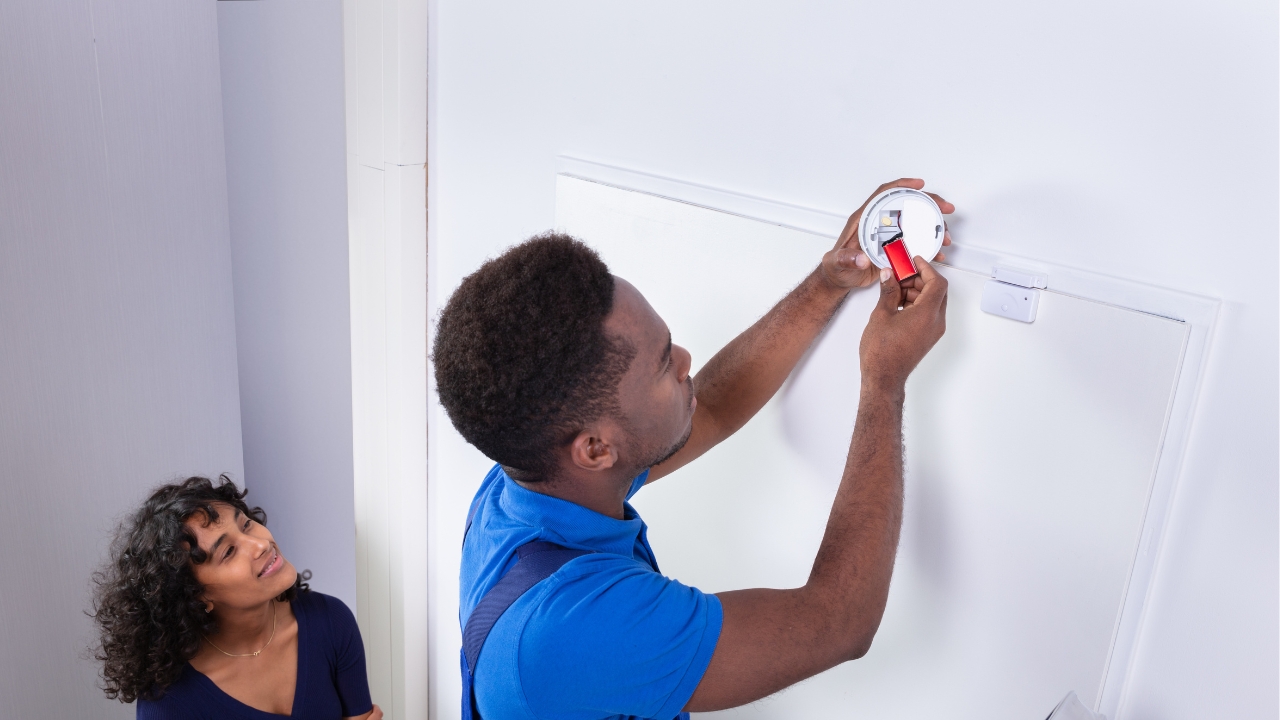
Fixing these vulnerabilities starts with a simple walk through. Stand in each bedroom, close the door, and ask yourself where the nearest alarm actually is, how high it is mounted, and whether it is interconnected with the rest of the system. Guidance on Smoke alarms from federal fire officials notes that you should have alarms inside every bedroom, outside each sleeping area, and on every level of the home, and it encourages you to contact your local fire department’s non emergency phone number for more information if you are unsure.
Local and national materials give you a practical roadmap for upgrades. A guide on Installing Smoke Alarms in Single Family Residences explains that for minimum security you should install one alarm on each level, but that for better protection you should add units in every bedroom and in every hallway leading to sleeping areas, and it warns that alarms should not be installed where temperatures exceed 100 F (38° C). Another section of the same document on Proper Placement for Maximum Coverage stresses that Positioning detectors correctly heightens your safety, especially when you combine bedroom units with hallway coverage. When you add in advice on Hallways that notes Because sleeping areas are often located furthest from the exits of a house, it is important that smoke alarms be installed in the hallways and stairways that lead from the sleeping areas, you end up with a layered system that gives your children multiple chances to hear and escape.
Why the details matter more than the hardware on the ceiling
It is tempting to treat smoke alarms as a box to check, especially when packaging and marketing promise broad protection. Yet consumer advocates keep reminding homeowners that the real safety gains come from how and where you use the devices, not just from owning them. A consumer safety expert, John Drengenberg, has emphasized that it is a fact that Smoke alarms save lives, but he also warns that the ceiling is the best place for a smoke alarm and that putting one in the wrong place, such as near a draft or too low on a wall, can compromise its performance, a point underscored in guidance on how to get maximum protection from your alarms.
Investigative reporting has also shown how slowly the market has adapted to what researchers know about children and alarms. Coverage of how More than a decade has passed since WISN 12 News launched an investigation into smoke detectors that led to federal recommendations for an alarm with a low frequency, yet many homes still rely on older high pitched models. When you put that lag together with hallway only placement, you see why the detector placement mistake that leaves sleeping kids less protected is not just a technicality, it is a gap you can close only by deliberately rethinking how your alarms are chosen, mounted, and connected.
Like Fix It Homestead’s content? Be sure to follow us.
Here’s more from us:
- I made Joanna Gaines’s Friendsgiving casserole and here is what I would keep
- Pump Shotguns That Jam the Moment You Actually Need Them
- The First 5 Things Guests Notice About Your Living Room at Christmas
- What Caliber Works Best for Groundhogs, Armadillos, and Other Digging Pests?
- Rifles worth keeping by the back door on any rural property
*This article was developed with AI-powered tools and has been carefully reviewed by our editors.