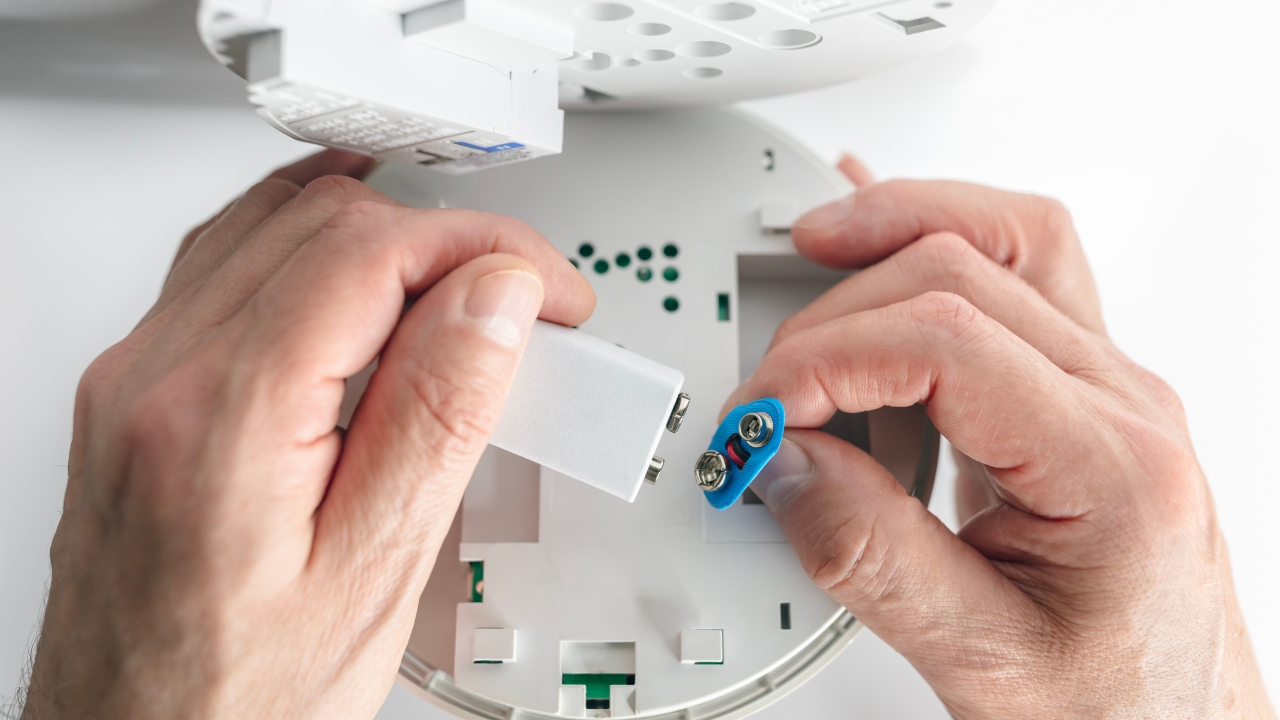
The battery choice that makes alarms more reliable in winter outages
Photo credit: Brian A Jackson/Shutterstock.com
When the power fails on a subzero night, your alarms are only as trustworthy as the batteries hiding behind their plastic covers. The chemistry you choose can decide whether a smoke detector screams in time or sits silently while the house grows colder and darker. If you want your alarms to stay dependable through winter outages, you need to think less about brand labels and more about how different batteries behave in the cold.
That means looking past the cheapest pack on the shelf and weighing how temperature, discharge rate, and shelf life intersect with the way you actually live. The most reliable choice for winter is not always the one your alarm shipped with, and once you understand how modern lithium cells outperform traditional options in freezing conditions, you can upgrade your backup power before the next storm tests it.
Why winter blackouts expose the weak link in your alarms
Cold snaps tend to arrive with the same pattern: heavy snow or ice, a grid failure, and then hours or days when your home runs on whatever backup power you prepared in advance. In that window, your smoke alarms, carbon monoxide detectors, and security panels stop drawing from household current and lean entirely on their internal batteries. If those cells were already half drained or never designed for low temperatures, their voltage can sag just when you need them to sound, turning a routine outage into a safety risk.
Temperature is the quiet saboteur here. As the section titled What Happens To Batteries In Cold Weather explains, cold slows the chemical reactions inside a cell, which cuts the current it can deliver and makes it harder to supply sudden bursts of power. That effect hits older or cheaper chemistries hardest, so a battery that seemed fine in autumn can stumble once your hallway drops toward freezing. If you want alarms that behave the same in January as they do in June, you need a chemistry that shrugs off that slowdown instead of amplifying it.
How cold actually drains different battery chemistries
Not all batteries lose their nerve at the same temperature. Traditional alkaline cells, the kind you still find in many wall clocks and TV remotes, suffer a steep drop in capacity as the mercury falls, which is why flashlights powered by alkalines dim so quickly on winter camping trips. Lead based designs, including the Sealed Lead Acid units used in some alarm panels, also see their available energy shrink in the cold, even though they tolerate it better than alkalines.
By contrast, modern lithium chemistries hold on to more of their rated capacity and voltage in freezing conditions, which is why you see them recommended as the best battery for cold weather in applications that cannot afford sudden shutdowns. Lithium Iron Phosphate, often shortened to LiFePO4, is singled out for its ability to deliver power reliably at low temperatures while avoiding the plate damage and freezing failures that plague some older chemistries. When you translate that into alarm duty, it means a lithium cell is far more likely to keep a siren blaring at full volume even if the room around it feels like a walk-in freezer.
Inside your alarm: the batteries you already rely on
Before you can upgrade anything, you need to know what is already inside your devices. Many standalone smoke alarms and carbon monoxide detectors use replaceable AA or 9 volt cells, while hardwired security panels often hide a larger sealed pack in a metal cabinet. As one guide to Different Types of Batteries Used in Alarm Systems notes, manufacturers mix chemistries, from basic alkaline to more advanced lithium, depending on cost targets and expected service life, and they warn that performance can suffer when it is extremely cold or hot.
Some of the most robust alarm cells use Lithium Thionyl Chloride, often abbreviated as LiSOCl2, which is designed for long life and stable output in demanding environments. The same guide highlights Lithium Thionyl Chloride batteries as a reliable choice for critical security systems because they combine high energy density with a very low self discharge rate. If your alarm sensors or control panel already use this chemistry, you are starting from a stronger baseline for winter reliability than if they rely on generic alkaline cells that were never engineered for harsh conditions.
Lithium’s cold weather edge over lead and alkaline
When you compare chemistries head to head, lithium’s advantage in the cold is not subtle. Analyses that pit lithium battery vs lead acid batteries in the Cold Weather show that lithium maintains higher usable capacity, delivers stronger voltage under load, and recovers better after repeated cold cycles. Lead Acid designs, including AGM variants, can work in winter but lose a larger share of their capacity and are more prone to sulfation and long term damage if they are repeatedly discharged in low temperatures.
That pattern holds when you look at consumer facing advice on what is the best battery for cold weather in off grid or RV setups. Lithium packs are consistently recommended because they keep more of their rated amp hours available and can be paired with low temperature protection circuits that prevent charging damage. For your alarms, that translates into a battery that still has the headroom to drive a siren or wireless transmitter after hours of cold standby, instead of one that quietly slips below the voltage threshold and leaves your system dark.
Why LiFePO4 and LiSOCl2 stand out for winter alarms
Within the broad lithium family, two chemistries are especially relevant if you care about winter outages: LiFePO4 for larger backup packs and LiSOCl2 for compact, long life cells. Guidance on Lithium Iron Phosphate (LiFePO4) batteries explains that they are less prone to failures caused by freezing temperatures and can be engineered with low temperature cutoffs that protect them during charging. That makes them well suited for alarm control panels or whole home backup systems that sit in unheated basements or garages where the ambient temperature can swing widely.
On the sensor side, LiSOCl2 cells give you a different kind of resilience. The section that describes LiSOCl2 batteries as a reliable option for important security systems points to their very long shelf life and ability to deliver consistent voltage over many years. That is exactly what you want in a wireless door contact or outdoor motion sensor that you might not touch for a decade. In a winter outage, those cells are far more likely to keep reporting to your panel than a bargain alkaline that has been slowly self discharging since you installed it.
What alarm pros still like about Sealed Lead Acid
Despite lithium’s technical edge, many residential alarm panels still ship with Sealed Lead Acid packs, largely because they are inexpensive, familiar, and predictable. Installers know how a 12 volt SLA behaves, how to size it, and how often to replace it, and that predictability matters when you are supporting thousands of systems. A common recommendation when you ask What is the best backup battery to use with my residential alarm system is a Sealed Lead Acid (SLA) Alarm Batteries model such as the Casil CA series, which is built to match the float charging circuits inside many existing panels.
Lead Acid also has a long track record in cold climates, particularly in automotive and telecom backup roles, and some variants like AGM are tuned specifically for low temperature performance. A review of Batteries That Work Best In Cold Weather notes that while LiFePO4 batteries offer better cycle life and energy density, AGM Batteries can still be superior for certain cold climate uses because they tolerate high current draws and can be charged in subfreezing conditions. If your alarm panel is already built around an SLA pack, you can still improve winter reliability by choosing a high quality replacement and testing it regularly, even if you are not ready to retrofit the system for lithium.
Lessons from outdoor cameras, RVs, and backup power banks
If you want a preview of how batteries behave when the weather turns hostile, look at devices that already live outdoors. Manufacturers of exterior security cameras emphasize that you demand reliable operation from equipment that sits in the rain and snow, and they point to the Benefits of Lithium Batteries in Outdoor Security Cameras, including fewer replacements and less downtime. That same expectation should apply to the sirens and sensors that protect your home’s interior, especially if they are mounted in drafty stairwells or unheated attics.
Off grid communities and RV owners have also become real world test labs for cold weather performance. Advice on How To Choose The Best Battery For Cold Weather and Why Ionic Lithium Is The Best Cold Weat for boondocking far from campsite hookups highlights how lithium packs keep lights, heaters, and inverters running when temperatures plunge. Guides to top backup batteries for winter power outages in cold weather similarly focus on Lithium LiFePO4 Batteries, explaining that they do not get damaged when temperatures drop and can be configured in 12V, 24V, 36V, and 48V systems. If lithium can keep a cabin powered through a blizzard, it can certainly keep a low draw alarm panel alive until the grid comes back.
Practical steps to winter proof your alarm batteries
Once you accept that chemistry matters, the next step is to audit and upgrade. Start by opening every smoke alarm, carbon monoxide detector, and security device you own, and write down the battery type and size. For AA powered units, consider swapping generic alkalines for premium lithium cells that are explicitly marketed as Energizer AA Lithium Battery products, which are described as Batteries for Long Life and Cold Climates and are recommended for extreme cold weather climates. Those cells cost more up front but deliver steadier voltage and far longer shelf life, which is exactly what you want in a life safety device.
For plug in alarm clocks that double as wake up failsafes during outages, you can apply the same logic. A guide that urges you to Pick lithium batteries for alarm clocks argues that lithium cells help you wake up on time and get more done because they hold their charge longer and are less likely to fail unexpectedly. If your security panel uses a plug in transformer and internal backup pack, ask your installer whether a LiFePO4 retrofit is compatible, or at least schedule a replacement of the existing SLA before it ages out. The goal is to enter winter with fresh, cold capable batteries across your entire alarm ecosystem, not just in the devices you see every day.
How to shop smart and avoid cold weather pitfalls
When you are ready to buy, the packaging and product pages can tell you more than the marketing slogans. Look for explicit references to low temperature performance, shelf life, and operating range, and be wary of cells that only advertise high capacity without mentioning how they behave in the cold. Some lithium products, especially those designed for fast charging or high drain gadgets, may still need low temperature protection circuits to avoid damage if they are charged below freezing, so you should match the battery’s design to the way your alarms actually use it.
Online listings can help you compare options quickly. A search result that highlights a specific product will usually list chemistry, voltage, and recommended uses, which you can cross check against your alarm’s manual. If you are investing in larger LiFePO4 packs for a panel or whole home backup, look for models that mention features like Smart Bluetooth monitoring or Low Temp protection, similar to the 12V 50Ah TM Smart Bluetooth | Low-Temp and 12V 100Ah Group24 smart units described in guidance on Smart Bluetooth Low Temp designs. Those features make it easier to verify that your batteries are healthy before the next storm hits.
The battery choice that makes alarms more reliable in winter outages
When you pull all of this together, a clear pattern emerges. For the small cells that power individual alarms and sensors, high quality lithium batteries, including LiSOCl2 and premium AA lithiums, give you the best odds that your devices will still scream and chirp when the temperature plunges. For larger backup roles, LiFePO4 packs outperform traditional SLA in cold weather, especially when they include low temperature protection and smart monitoring, while Sealed Lead Acid remains a workable option if you choose reputable models like the Casil CA series and replace them on schedule.
The practical takeaway is simple: if you want alarms that stay trustworthy through winter outages, you should favor lithium based chemistries that are explicitly rated for cold climates, test them regularly, and avoid stretching any battery past its intended service life. Whether you are ordering a compact pack with Fast Free Shipping on $150 or more in The US from a site that explains Why Ionic Lithium Is The Best Cold Weat, or picking up a two pack of Batteries for Long Life and Cold Climates at a local retailer, the chemistry you choose today will decide how your alarms behave on the coldest night of the year.
Like Fix It Homestead’s content? Be sure to follow us.
Here’s more from us:
- I made Joanna Gaines’s Friendsgiving casserole and here is what I would keep
- Pump Shotguns That Jam the Moment You Actually Need Them
- The First 5 Things Guests Notice About Your Living Room at Christmas
- What Caliber Works Best for Groundhogs, Armadillos, and Other Digging Pests?
- Rifles worth keeping by the back door on any rural property
*This article was developed with AI-powered tools and has been carefully reviewed by our editors.