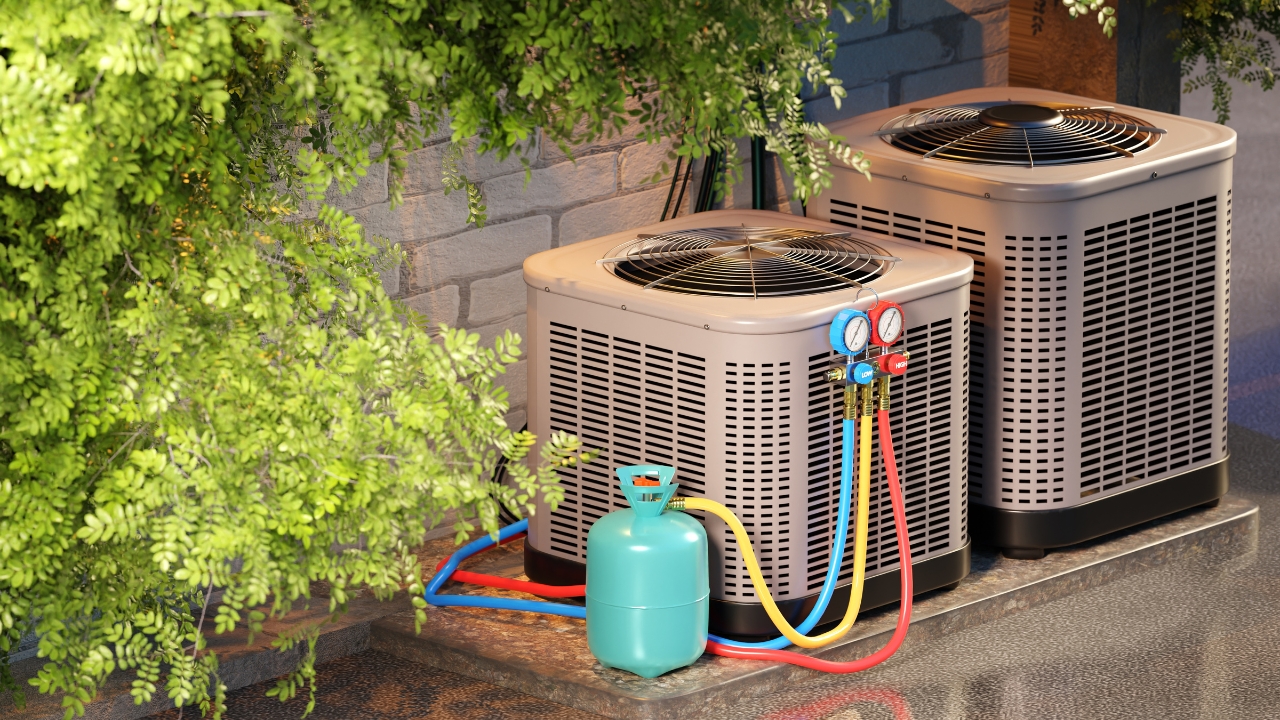
What the refrigerant change means for repairs and availability, not just install price
Photo credit: Andrey_Popov/Shutterstock.com
The refrigerant rules changing around 2025 are often framed as a simple bump in new system prices, but the real story runs through your future repair bills, how long you can keep an older unit alive, and whether parts and refrigerant will even be available when you need them. As R‑410A and other legacy blends are reduced in favor of lower‑GWP options, you are stepping into a split market where your existing system and any new equipment will be governed by different economics. Understanding that split now helps you decide whether to repair, retrofit, or replace before scarcity and higher service costs start making those choices for you.
1. What is actually changing with refrigerants in 2025
The core shift is that manufacturers are being pushed away from high global warming potential blends like R‑410A and toward a new generation of refrigerants with a lower climate impact. Industry guidance explains that R‑410A is not being yanked out of service overnight, but it is part of a broader Refrigerant Being Phased Out trajectory that will limit how much can be produced and imported as the decade goes on. In practical terms, that means new central air conditioners and heat pumps, especially in regions like Ohio where R‑410A has been standard for years, will increasingly ship with alternative refrigerants that meet tighter environmental rules.
Those alternatives are described as the next generation of refrigerants, designed to deliver similar comfort with less global warming impact than R‑410A, but they are not simple drop‑in replacements for older equipment. As the phase down ramps up, the supply of R‑410A will tighten, which is expected to push up its price and gradually shift the market toward systems built around the new blends. Service companies in Ohio already warn that as the Refrigerant Being Phased Out moves through its schedule, you should expect a clear divide between legacy systems that rely on R‑410A and newer units engineered for the updated refrigerants, each with its own cost and availability profile backed by How Will the R‑410A.
2. What the phase down means for the system you already own
If you already have a central air conditioner or heat pump using R‑410A, you are not being forced to replace it in 2025, and you can continue to operate and service your existing system under the new rules. Major manufacturers emphasize that for Current HVAC Systems, the key point is Repair, You can still have leaks fixed, components swapped, and refrigerant topped off as long as technicians can source the right materials. That reassurance matters because many homeowners worry that a regulatory change automatically makes their equipment illegal, which is not the case here.
At the same time, the economics of keeping an older unit running will slowly shift as R‑410A becomes more expensive and as parts for legacy models are produced in smaller volumes. Guidance aimed at homeowners notes that while you can keep repairing an older system, the transition is not without its challenges, especially as you weigh whether another repair is worth it on equipment that may already be near the end of its typical lifespan. Industry FAQs explain that HVAC systems, on average, can last for a decade or more, but the later years often come with rising repair costs and harder‑to‑find components, a pattern that the refrigerant phase down is likely to intensify according to Impact on Current HVAC Systems.
3. Why repair costs are likely to climb before you replace
The most immediate impact you will feel from the refrigerant shift is not at the showroom but on the invoice when your existing system needs work. As the supply of R‑410A is reduced, service companies expect the price of the refrigerant itself to rise, which directly affects the cost of leak repairs and recharges. One analysis of How Will These Changes Affect HVAC Prices notes that the reduced availability of R‑410A will inevitably drive up its price, and that homeowners who keep older systems running may face inflated costs as prices increase for both the refrigerant and the labor required to handle it safely.
There is also a broader inflationary effect tied to the cost of materials and the complexity of servicing mixed fleets of old and new equipment. A separate guide on How the 2025 Refrigerant Mandate Affects You The explains that as older refrigerants are phased down, it becomes more expensive to service existing systems, not only because of the refrigerant itself but also because technicians must maintain specialized tools, training, and inventory for multiple refrigerant types. That layered cost structure tends to show up in higher diagnostic fees, premium pricing for emergency calls, and surcharges when a repair requires significant amounts of R‑410A, all of which you will feel long before you are shopping for a brand‑new unit backed by How Will These Changes Affect HVAC Prices.
4. Availability of parts and service as older refrigerants fade
Beyond price, availability is the other pressure point that will shape your repair options over the next several years. As manufacturers pivot to low‑GWP refrigerants, they gradually reduce production of components tailored to R‑410A systems, from compressors and coils to expansion valves and control boards. Industry briefings on the Refrigerant Changes, What You Need, Know About the New Government Mandates warn that availability of parts and service will tighten as older refrigerants are phased down, which can translate into longer wait times for repairs or the need to source aftermarket or remanufactured parts when original equipment is no longer stocked.
Commercial guidance on the 2025 R‑410A Phase, Out, What the EPA Refrigerant Rule Means for Your Facility makes a similar point for larger buildings, noting that the HVAC industry is undergoing a major transition that affects both refrigerant supply and the service ecosystem that supports legacy systems. If facilities managers are being told to plan ahead for parts scarcity and to budget for more proactive replacements, the same logic applies at the residential level, where a single failed component on an older R‑410A unit could become the tipping point that makes replacement more practical than waiting weeks for a hard‑to‑find part backed by Availability of parts and service.
5. Why you cannot just drop new refrigerant into an old system
One of the most persistent misconceptions is that you can simply swap out R‑410A for whatever new refrigerant your neighbor’s brand‑new system uses. Technically and legally, that is not how these systems are designed to work. Detailed homeowner guidance answers the question Can I Put the New Refrigerant in My Old AC System with a clear Unfortunately, no, explaining that existing R‑410A systems are engineered around specific pressures, lubricants, and components that are not compatible with the new blends. Attempting a field conversion without a full redesign can damage the equipment, void warranties, and violate safety codes.
Broader technical overviews of System Compatibility, New refrigerants emphasize that new refrigerants are not always backward‑compatible, and that using them often requires equipment modifications or outright replacements. That incompatibility is why you see such a sharp line between “repair” and “replace” decisions in the refrigerant conversation: you can maintain an R‑410A system with R‑410A, or you can invest in a new system built for the updated refrigerant, but there is no simple middle path where a technician pours a different chemical into your existing unit and calls it a day according to Can I Put the New Refrigerant.
6. How refrigerant prices and refill costs are already shifting
Even before you factor in parts, the raw cost of refrigerant has become a major line item in repair quotes. One Texas contractor notes that the cost of refrigerant is up over 400% since 2020, a spike captured in a blog that bluntly states Things are changing for homeowners who need AC service. That kind of increase means a leak that might once have been a relatively minor expense can now rival the cost of a car repair, especially if your system loses a large charge during peak cooling season when demand is highest.
More detailed pricing breakdowns show how this plays out at the service level. A guide on The Complete Guide, Air Conditioner Freon Refill Cost explains that in 2025, the air conditioner freon refill cost varies widely by refrigerant type, with common modern blends typically running between $50 and $80 per pound and older R‑22 (often called Freon) costing between $90 and $150 per pound due to its own phase out. While R‑410A is not yet at those R‑22 levels everywhere, the same supply‑and‑demand logic applies, and as production is reduced, you should expect per‑pound prices to climb, turning every pound of refrigerant into a more consequential budget decision backed by The Complete Guide.
7. Deciding when repair stops making sense
As repair costs rise and parts become less certain, you need a clear framework for deciding when to stop pouring money into an older system. One widely used benchmark is the $5,000 rule, which is described as a guideline to help homeowners decide whether to repair or replace their HVAC system. Under that rule, You multiply the age of your system by the estimated repair cost, and if the result exceeds $5,000, replacement is often more cost‑effective, especially when you factor in the likelihood of future repairs and the efficiency gains of newer equipment.
That rule of thumb becomes even more relevant in the context of the R‑410A phase down, because the same repair on the same unit will likely cost more in three years than it does today. Guidance on How Does the, Phase Down Affect Homeowners notes that the 2025 phase down of R‑410A refrigerant will impact homeowners in several ways, including higher service costs and more complex decisions about whether to keep repairing or to upgrade. If you are already close to the $5,000 threshold on an older system, the prospect of rising refrigerant prices and shrinking parts availability can tip the scales toward replacement sooner than you might have planned according to $5,000.
8. What new systems and laws change beyond the sticker price
When you do move to a new system, the refrigerant transition changes more than the number on the quote. New EPA rules require that new systems use low‑GWP refrigerants, and that shift affects equipment design, installation practices, and sometimes even the safety classifications of the refrigerants themselves. A detailed explainer on How 2025 New Refrigerant Laws Affect Air Conditioning Systems notes that The EPA now requires new systems to use low‑GWP refrigerants, and that these changes ripple through how HVAC contractors size, install, and service equipment in markets such as Cincinnati, OH.
From your perspective, that means you are buying into a different service ecosystem, one where technicians are trained on the new refrigerants and where parts and refrigerant supply should be more stable over the long term. A homeowner‑focused guide titled How Do, Refrigerant Changes Affect Me explains that in 2025, the HVAC industry is undergoing a major shift as manufacturers adopt new refrigerants with a lower environmental impact compared to R‑410A, and that new installations are being tailored to those blends from the ground up. While the upfront price of a new system may be higher, you are also positioning yourself on the right side of the supply curve, with better access to parts, refrigerant, and rebates for years to come backed by How do 2025 refrigerant laws change HVAC services.
9. How to plan your next five years of cooling and heating
Looking ahead, the smartest move is to treat the refrigerant transition as a planning horizon rather than a crisis. If your system is relatively new and in good shape, you can focus on maintenance, leak prevention, and budgeting for higher refrigerant costs, knowing that R‑410A will be phased down gradually, not banned immediately. A detailed overview of What Is the, Refrigerant Change, Phase, Out and What It Means for Homeowners explains that beginning in January 2025, manufacturers will shift production toward lower‑GWP options, but existing R‑410A systems can continue to operate and be serviced, giving you time to manage costs during the transition.
If your equipment is older or already unreliable, it may be worth getting quotes now and asking contractors to walk you through both repair and replacement scenarios under the new rules. Resources on Preparing for, New EPA Refrigerant Regulations and the Impact, Prices stress that You might have to weigh short‑term savings from another repair against the long‑term benefits of a new system that complies with the new EPA regulations, especially as refrigerant prices and parts availability evolve. Homeowner FAQs from Aug on What the, Homeowners also underline that while you do not have to panic, the transition is not without its challenges, and a proactive plan can keep you from facing a no‑cool emergency in the middle of a heat wave with limited options backed by What Is the.
10. Questions to ask your contractor before you sign anything
As you navigate quotes and service calls in this new landscape, the questions you ask your contractor can protect you from surprises. Start by asking how the R‑410A Phase, Out schedule affects your specific equipment and what they expect refrigerant prices to do over the next few seasons in your area. A commercial‑focused guide on Jul, Phase, Out, What the EPA Refrigerant Rule Means for Your Facility suggests that facility managers press vendors on long‑term serviceability and parts plans, and you can adapt that approach at home by asking whether your contractor anticipates any difficulty sourcing components for your model.
You should also ask how the refrigerant mandate intersects with local incentives, efficiency standards, and your home’s resale value. Guidance on How the, Refrigerant Mandate Affects You The notes that the 2025 refrigerant mandate will significantly impact homeowners and businesses by making it more expensive to service existing systems while potentially increasing your home’s market value if you upgrade to compliant, efficient equipment. Pair that with local experience from contractors who have watched the cost of refrigerant climb over 400% since 2020, as highlighted in the Katy, TX Heating & Air Conditioning Blog where Things are framed as a wake‑up call for planning, and you have a checklist that turns a confusing policy shift into a set of concrete decisions you can manage backed by 2025 R‑410A Phase‑Out.
11. Why the transition is disruptive but manageable for homeowners
For all the complexity, industry voices are clear on one point: homeowners, for the most part, do not have to be concerned about their existing systems being taken away or shut down by regulators. A homeowner guide from Aug titled Commonly Asked Questions About Refrigerant Changes In 2025 explains that What the, Homeowners need to understand is that while the transition is not without its challenges, you can continue to operate and maintain your current HVAC equipment, and you will have time to plan for eventual replacement. That reassurance is important in a market where rumors of sudden bans can lead to rushed, expensive decisions.
At the same time, the transition is a reminder that HVAC is no longer a set‑and‑forget appliance category. As The HVAC industry adapts to new refrigerants and regulations, you are being asked to think more strategically about lifecycle costs, environmental impact, and the timing of major upgrades. Resources that explain How Do 2025 Refrigerant Changes Affect Me and Why Is, Being Phased Out emphasize that R‑410A is being phased out primarily for its global warming potential, and that the new refrigerants are part of a broader effort to reduce emissions from buildings, including HVAC installation in Bozeman, MT and beyond. If you treat that shift as a chance to align your comfort system with where the market is headed, rather than as a one‑time hit to install price, you can turn a disruptive policy change into a manageable, even beneficial, upgrade path backed by Aug.
Supporting sources: Is R-410A Refrigerant Being Phased Out in 2025?, Is R-410A Refrigerant Being Phased Out in 2025?, Homeowner’s Guide to the 2025 New Refrigerant Transition, The 2025 HVAC Refrigerant Changes: What You Need to …, Commonly Asked Questions About Refrigerant Changes In 2025, 2025 EPA HVAC Rules: What Homeowners Should Know – Arlinghaus, 2025 HVAC Refrigerant Changes Explained – Extreme Comfort, What Is the 2025 Refrigerant Change? The R-410A Phase …, Understanding The 2025 R-410A Refrigerant Phase Down, 2025 R-410A Phase-Out: What Facilities Managers Need to Know, The Complete Guide on Air Conditioner Freon Refill Cost in 2025, What Is the $5,000 Rule for HVAC? – J.A. Bertsch Heating & Cooling, How Do 2025 Refrigerant Changes Affect Me?, 2025 Refrigerant Mandate: What You Need to Know | Hometown, Katy, TX Heating \u0026 Air Conditioning Blog | Austin Air Companie, How Do 2025 Refrigerant Changes Affect Me? – Ambient Air Solutions, 2025 HVAC Refrigerant Changes – What to Know, How 2025 New Refrigerant Laws Affect Air Conditioning Systems.
Like Fix It Homestead’s content? Be sure to follow us.
Here’s more from us:
- I made Joanna Gaines’s Friendsgiving casserole and here is what I would keep
- Pump Shotguns That Jam the Moment You Actually Need Them
- The First 5 Things Guests Notice About Your Living Room at Christmas
- What Caliber Works Best for Groundhogs, Armadillos, and Other Digging Pests?
- Rifles worth keeping by the back door on any rural property
*This article was developed with AI-powered tools and has been carefully reviewed by our editors.