The bathroom cleaning routine to use when a stomach bug hits your house
Photo credit: Stock-Asso/Shutterstock.com
When a stomach bug hits your house, the bathroom turns into the front line between one sick person and an entire household going down. Norovirus and similar infections spread quickly, but a clear, methodical cleaning routine can sharply cut the odds that everyone else gets sick. The goal is not perfection, it is breaking the chain of transmission with the right products, the right order of steps, and a routine you can actually sustain for several days.
By focusing on high risk messes, high touch surfaces, and the way you handle laundry and trash, you can turn a chaotic situation into a manageable checklist. A structured bathroom routine, grounded in what infection control experts recommend, helps you protect yourself while you care for the person who is ill and gives the rest of your household a better chance of staying on their feet.
Understand how stomach bugs spread in the bathroom
Before you reach for a bottle of cleaner, it helps to understand why bathrooms are such efficient engines for spreading a stomach virus. Norovirus, which is a leading cause of what people call “stomach flu,” spreads through tiny particles of vomit or stool that can land on toilets, sinks, floors, faucets, and even toothbrushes. Public health guidance notes that the virus is “very contagious” and that if you or someone in your home is sick, you need to focus on the surfaces they touch and the areas where they vomit or have diarrhea to reduce the risk to others, especially in small shared spaces.
Those particles are not limited to obvious splashes. Flushing a toilet can send droplets into the air, and wiping a contaminated surface with the wrong product can smear virus around instead of removing it. That is why experts emphasize that you should disinfect the areas a contagious person uses, including the bathroom, and wear disposable gloves when cleaning surfaces that may be contaminated. Guidance on how norovirus can live on clothes and hard surfaces underlines why your bathroom routine needs to be deliberate rather than casual tidying.
Set up a sickroom bathroom strategy
Your first move is to decide which bathroom will carry the brunt of the illness. If you have more than one, infection control advice is clear that you should designate one bathroom just for the person who is sick, which limits how far the virus can travel and makes your cleaning routine more focused. If you only have a single bathroom, you can still reduce risk by cleaning and disinfecting it frequently and by closing the toilet lid before flushing to cut down on particles that become airborne in the room.
Once you have a plan for who uses which bathroom, post a simple set of rules everyone can follow. That might include keeping a small trash can lined with a plastic bag next to the toilet for used tissues and gloves, asking the sick person to wash their hands thoroughly with soap and water after every episode, and having healthy family members avoid touching their face after they help with cleanup. Guidance on reducing the spread of norovirus in the bathroom stresses that these small habits, like closing the lid and limiting who uses the space, work together with disinfection to keep the virus from circulating through your home.
Stock the right cleaning tools before you start
When a stomach bug hits, you do not want to be improvising with whatever is under the sink. Public health experts recommend building a small “Shopping List” of supplies that are effective against norovirus, including chlorine bleach or other disinfectants that are specifically labeled to kill this virus, disposable gloves, and plenty of paper towels. One infection control guide notes that while convenient, the majority of disinfecting wipes on the market are not completely effective against norovirus, so you should not rely on them as your only line of defense when you are dealing with vomit or diarrhea in the bathroom.
Along with disinfectants, you should have a separate trash bag for contaminated waste, a bucket or basin for mixing bleach solutions, and old clothes or an apron you can wash on a hot cycle. Guidance on cleaning a home when someone has norovirus highlights that paper towels are preferable to reusable cloths for wiping up messes, because you can throw them away immediately instead of carrying virus-laden fabric through the house. Having these tools ready before you start cleaning lets you move through your routine quickly and reduces the chance that you will cut corners because you are tired or overwhelmed.
Handle vomit and diarrhea safely, step by step
The most stressful moments in a stomach bug are the visible messes, but they are also your best opportunity to stop the virus from spreading further. Infection control guidance is clear that you should protect yourself by wearing disposable rubber gloves when cleaning up vomit or diarrhea and that you should avoid splashing or aerosolizing the material. Start by gently covering the mess with disposable paper towels or another absorbent material, then carefully lift and place everything into a plastic bag, taking care not to press or smear it into the floor or fixtures.
Once the bulk of the mess is removed, you should clean and decontaminate the area in two stages. First, wash the surface with a detergent or soapy water to remove any remaining organic material, then apply a disinfectant that is effective against norovirus and leave it on the surface for the full contact time recommended on the label. Detailed instructions on how to clean and decontaminate after someone has vomited emphasize that when cleaning the toilet, you should always lower the seat and lid before flushing and then disinfect the handle, seat, and surrounding floor, because droplets can land in a wider radius than you might expect.
Mix and use disinfectants that actually kill norovirus
Not every household cleaner is up to the job of dealing with a stomach virus, so your bathroom routine needs to lean on products that are proven to work. Experts note that hand sanitizer does not kill norovirus and that you should instead wash hands frequently with soap and warm or hot water, especially after cleaning contaminated areas. For surfaces, guidance recommends cleaning with detergents that can kill norovirus or using a bleach solution mixed to the right strength, rather than relying on general purpose sprays that are not labeled for this virus.
Several public health resources spell out how to prepare these solutions safely. One guide on controlling norovirus advises you to mix a concentration of 1,000 parts per million bleach, which it describes as 1 tablespoon of regular strength bleach in 1 gallon of water, and warns you never to mix bleach with ammonia or other chemicals. Another step by step resource on cleaning contaminated surfaces explains that you should first clean the area with a detergent solution, then apply the bleach mixture and let it sit for the recommended amount of time before wiping. A separate overview of what kills norovirus notes that cleaning surfaces as soon as possible with detergents that can kill norovirus is key, and that you should follow label directions closely when using these products, as highlighted in guidance on how to prevent norovirus.
Clean high touch bathroom surfaces on a schedule
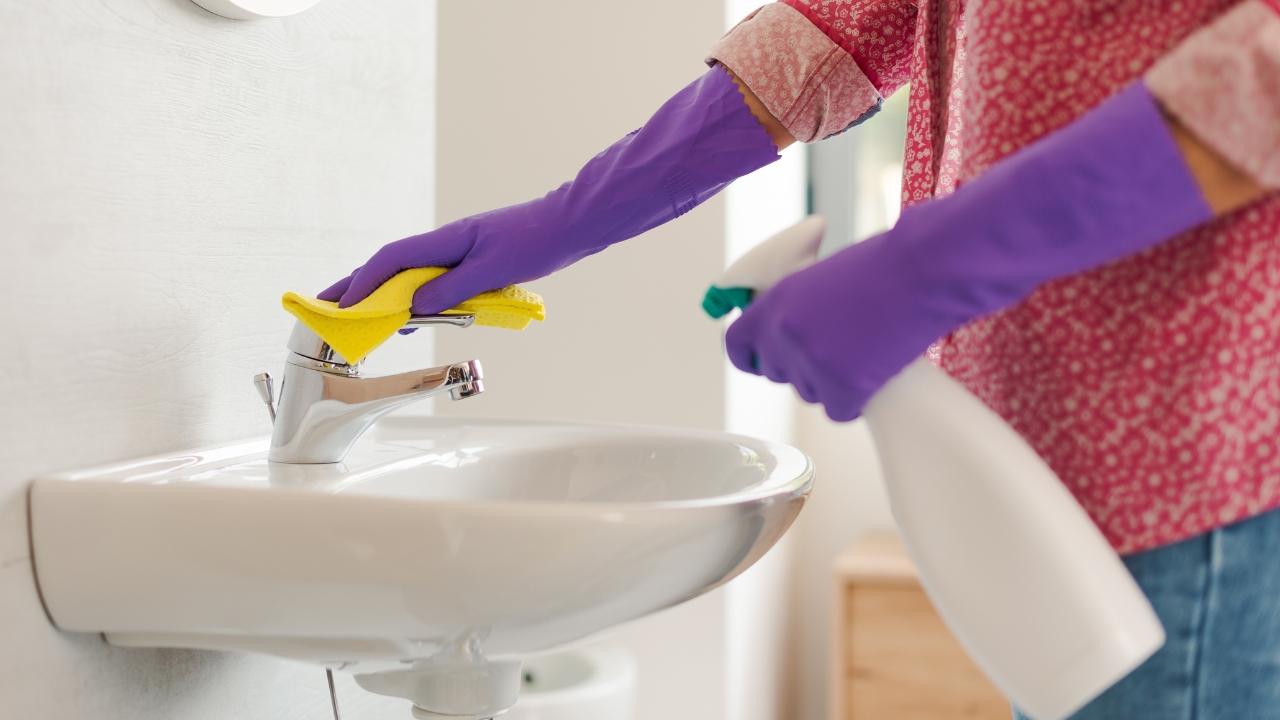
Once the obvious messes are under control, the real work of your bathroom routine is the drumbeat of daily, sometimes hourly, disinfection of high touch surfaces. Public health guidance on norovirus prevention advises you to clean and disinfect surfaces, and to always clean well and disinfect the entire area immediately after someone vomits or has diarrhea, then wash your hands after with soap and water. In a bathroom, that means focusing on toilet handles, flush levers, faucet handles, sink edges, light switches, doorknobs, and any surfaces the sick person grips when they are unsteady.
To keep this manageable, build a simple schedule: a quick wipe down after every episode, and a more thorough clean at least once or twice a day while someone is actively ill. A detailed norovirus cleanup guide notes that following thorough sanitation practices is key to minimizing the risk and spread of the virus and that you should remove any visible vomit or stool before you disinfect. Another resource on step by step norovirus cleanup reinforces that you should work from the least contaminated areas to the most contaminated, changing gloves and paper towels as you go so you are not dragging virus from the toilet to the sink or door.
Do not forget hands, handwashing, and personal items
Your bathroom cleaning routine will not work if hands keep reintroducing virus to freshly disinfected surfaces. Guidance on how to prevent norovirus stresses that you should clean and disinfect surfaces and that after you finish, you must wash your hands with soap and water, because alcohol based hand sanitizers are not reliable against this virus. Another expert source on how to prevent norovirus explains that hand sanitizer does not kill the virus and that you should wash hands frequently with soap and warm or hot water, especially after using the bathroom, changing diapers, or cleaning up vomit or stool.
At the same time, you should pay attention to personal items that live in the bathroom. Toothbrushes, razors, cosmetics, and contact lens cases can all pick up virus if they are stored near the toilet or sink where droplets land. Public health advice on how to say “no” to norovirus in your home suggests that you upgrade your cleaning arsenal with products that are effective against this virus and that you handle laundry with care, which includes items like towels and washcloths that touch faces and hands. Another section of the same guidance, which begins with “Here are practical steps to protect yourself and others” and includes a tip to handle laundry with care, underscores that you should keep personal items separated and wash them thoroughly if they may have been exposed.
Manage laundry, soft surfaces, and hidden reservoirs
Bathrooms are full of fabrics that quietly collect virus, from bath mats to hand towels. Reporting on norovirus spread notes that the virus can live on clothes and bedding and that to properly disinfect, you should wash items in hot water and dry them on the highest dryer setting that is safe for the fabric. That means any towels the sick person uses, washcloths they press to their face, and bath mats they stand on should go into a separate laundry load, handled with gloves and washed promptly rather than left in a hamper.
Soft surfaces that cannot be laundered as easily, like upholstered toilet seat covers or fabric shower curtains, are harder to disinfect thoroughly and may need to be removed temporarily. Public health advice on controlling norovirus recommends that you remove vomit or stool using paper towels or another disposable absorbent material, then double bag and discard the waste, which also applies if a fabric item is heavily soiled and not worth salvaging. The same guidance explains how to mix a concentration 1000ppm bleach for hard surfaces, but for fabrics, your best tools are hot water, a full drying cycle, and, when in doubt, throwing away items that are saturated with bodily fluids.
Protect yourself while you clean and know when to stop
It is easy to focus so much on the sick person that you forget to protect yourself, but your bathroom routine should treat your own safety as nonnegotiable. Guidance on cleaning up diarrhea advises you to wear disposable gloves and to use damp paper towels or wet wipes to wipe up stool off the skin, then put the used paper towels in a plastic bag and throw them away. After you disinfect hard surfaces with diluted bleach, you should wash your hands with soap and hot water, even if you wore gloves, because tiny leaks or slips can still leave virus on your skin.
Experts also caution that many disinfectant wipes are not completely effective at killing norovirus, so you should be aware of their limits and rely on bleach or other proven products instead. A report on how to disinfect after norovirus notes that you should be aware that many disinfectant wipes are not completely effective at killing norovirus and that you should wash your hands with soap and water after handling infected clothing. Another overview on how to disinfect after a highly infectious stomach flu reinforces that you should pace yourself, clean up promptly but not obsessively, and continue your heightened routine for at least a couple of days after the last symptoms resolve, since people can still shed virus for a short time even when they feel better.
Use hospital grade habits without turning your home into one
You do not need a medical degree to borrow some of the habits that hospitals use to keep stomach bugs from spreading. Infection control advice for bathrooms suggests cleaning with chlorine based solutions and wiping down toilet seats, counters, and other surfaces that are frequently touched, which you can do with a simple bleach solution and paper towels. A resource that begins with “Connect with a primary care physician” and goes on to recommend that you clean with chlorine-based solutions and wipe down toilet seats, counters, and other surfaces, shows that the same principles used in clinical settings can be adapted to a home bathroom during a stomach bug.
At the same time, you can lean on broader illness cleaning guidance to prioritize where your effort matters most. A practical overview on how to clean after illness notes that you should hit germs where they live and that when a bug strikes, it is likely to hide out in sneaky places like remote controls, doorknobs, and faucet handles, not just obvious dirty spots. The same guidance on how to clean after illness explains that the CDC recommends bleach to disinfect surfaces and that you can also use hydrogen peroxide based cleaners that are labeled to kill norovirus. By combining these targeted habits with the bathroom specific steps above, you can keep your home feeling like a home, not a ward, while still dramatically cutting the risk that a stomach bug takes down everyone under your roof.
Supporting sources: Cleaning a Home When Someone has Norovirus – USDA NIFA, How to Prevent Norovirus – CDC, How to Clean up and Decontaminate after Someone has …, Step-by-step guide to norovirus cleanup | UMN Extension, What kills the extremely contagious norovirus? – UCHealth, How to say “no” to norovirus in your home | WDG Public Health, What kills the extremely contagious norovirus? – UCHealth, Reduce the Spread of Norovirus in Your Home, Step-by-step guide to norovirus cleanup | UMN Extension, Highly infectious ‘stomach flu’ spreads. How to disinfect after norovirus, Norovirus – CDPH – CA.gov, Tips for Cleaning Up and Disinfecting After Norovirus, How to Clean After Illness – WebMD, Norovirus is on the rise. Here’s how to disinfect your home., Controlling Norovirus – Provider Resources WA, Highly infectious ‘stomach flu’ spreads. How to disinfect after norovirus, 4 Ways to Stop the Stomach Bug From Spreading In Your Bathroom, Cleaning Up Diarrhea | Kaiser Permanente.
Like Fix It Homestead’s content? Be sure to follow us.
Here’s more from us:
- I made Joanna Gaines’s Friendsgiving casserole and here is what I would keep
- Pump Shotguns That Jam the Moment You Actually Need Them
- The First 5 Things Guests Notice About Your Living Room at Christmas
- What Caliber Works Best for Groundhogs, Armadillos, and Other Digging Pests?
- Rifles worth keeping by the back door on any rural property
*This article was developed with AI-powered tools and has been carefully reviewed by our editors.