The Bel-Air “rainforest spa” megamansion is back and it’s $40M cheaper than before
Photo credit: Wallace Lin, CC BY-SA 4.0/Wiki Commons
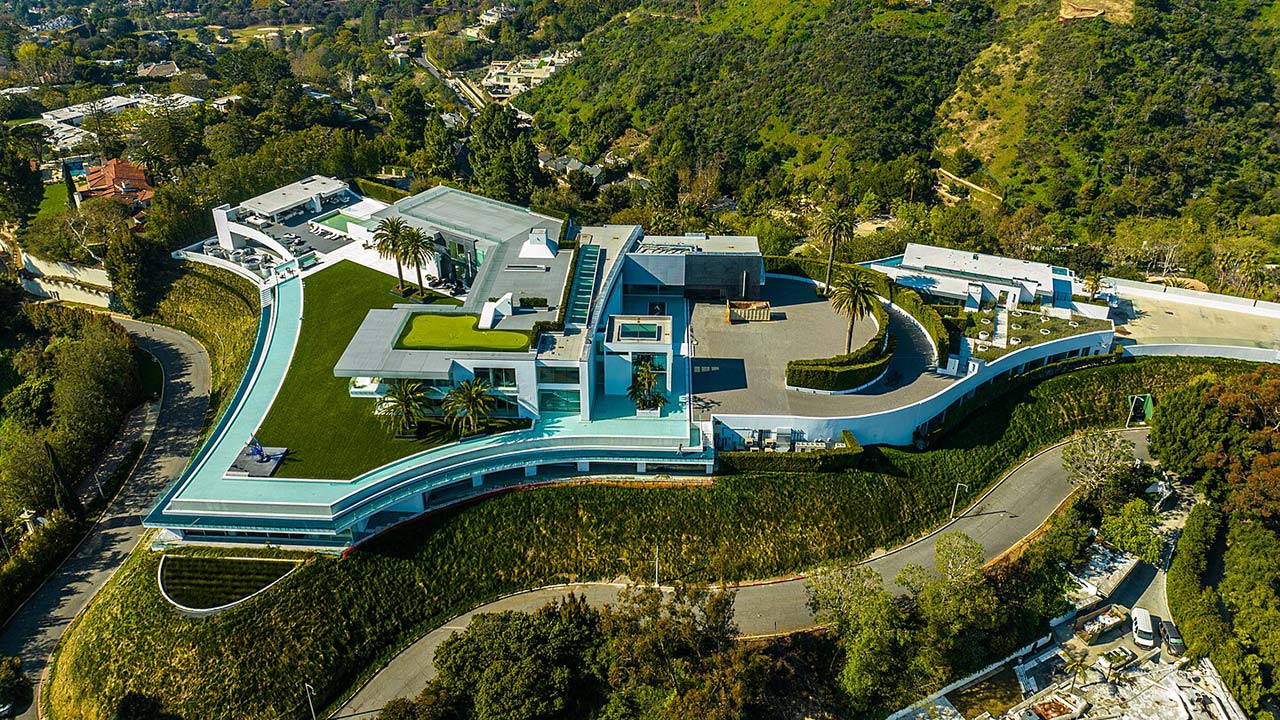
The so-called Bel-Air “rainforest spa” megamansion is back on the market, and this time you are looking at a dramatically different price conversation. After a headline-grabbing reduction of $40 million from its earlier ask, the property has shifted from pure spectacle to a live test of what ultra-luxury buyers are really willing to pay in a slower market.
If you follow trophy real estate, this listing gives you a front-row seat to how pricing power, buyer psychology, and lifestyle marketing collide at the very top of Los Angeles housing. The house still offers an over-the-top wellness fantasy, but the new number attached to it tells you even more about where Bel-Air and the broader luxury segment are heading.
The megamansion’s dramatic $40 million reset
The most striking development is the size of the price cut itself. You are not looking at a routine adjustment meant to freshen a stale listing, but a reset that slices a full $40 million off the seller’s original expectations. In a neighborhood where eight-figure swings can be shrugged off as rounding errors, a reduction of that magnitude signals that even Bel-Air is no longer insulated from changing market conditions.
That shift is underscored by coverage of the Bel, Air Megamansion Sees $40 price cut, which frames the move squarely within a cooling luxury segment. When a seller is willing to lop off that much value in one stroke, you can infer that prior buyer feedback, broker guidance, and macro headwinds have converged. The rainforest spa branding may still be intact, but the financial story around it has been rewritten in a single, very public markdown.
How the “rainforest spa” concept tries to sell a feeling
From your perspective as a buyer, the rainforest spa label is less about a single amenity and more about an emotional pitch. The house is marketed as a private wellness resort, a place where you step out of Los Angeles and into a curated microclimate of humidity, greenery, and soundscapes designed to mimic a tropical retreat. That framing is meant to justify a premium by promising not just square footage, but a daily escape from the city that surrounds it.
In practice, that means you are being sold a feeling of immersion: spa suites that blur indoor and outdoor space, hydrotherapy zones that echo high-end retreats in Costa Rica or Bali, and lighting and acoustics tuned to make you forget you are in Bel-Air at all. The rainforest language is doing heavy lifting, turning what might otherwise be a very large house with a very nice spa into a branded lifestyle product. The price cut does not erase that ambition, but it does test how much extra you are actually willing to pay for a concept that lives as much in marketing copy as in stone and glass.
What the price cut reveals about Bel-Air’s luxury market
When a marquee property in Bel-Air has to be discounted this aggressively, you get a rare, unvarnished look at the limits of the current luxury cycle. The neighborhood has long thrived on scarcity and status, with sellers assuming that global wealth would eventually catch up to almost any asking price. A $40 million reduction suggests that this assumption is being challenged, and that even the most rarefied ZIP codes are now subject to more disciplined buyer math.
That recalibration lines up with broader signals that the luxury market on the Westside is slowing, with high-end listings lingering longer and sellers forced to negotiate more than they did during the frenzy of the last few years. In that context, the rainforest spa mansion becomes a bellwether: if a property engineered to be a conversation piece cannot command its original number, you can expect more quiet repricing across Bel-Air as owners adjust to a world where aspirational pricing is no longer automatically rewarded.
Why ultra-wealthy buyers are suddenly more price sensitive
At this level, you might assume that buyers are immune to sticker shock, but the megamansion’s new ask tells a different story. Even for ultra-high-net-worth individuals, a house is competing with other uses of capital, from private equity allocations to art collections and family offices. When interest rates rise and asset markets turn choppier, the opportunity cost of parking tens of millions in a single residence becomes harder to ignore, and that is when you start to see resistance to the most aggressive luxury pricing.
For you as a potential buyer, that shift translates into a more analytical approach to trophy homes. Instead of simply chasing the most spectacular listing, you are more likely to compare this rainforest spa property to other Bel-Air estates, Malibu compounds, or even international options in places like London’s Kensington or Dubai’s Palm Jumeirah. The $40 million haircut is a tacit acknowledgment that buyers at the top are running those comparisons and are no longer willing to pay any number just because a property has a catchy theme and a Bel-Air address.
How the rainforest spa amenities stack up against rivals
Strip away the branding and you are left with a practical question: how do the wellness features here compare to what you can get elsewhere for the same money. In recent years, Los Angeles has seen a wave of amenity-rich builds, from indoor basketball courts and Dolby-grade theaters to cryotherapy rooms and full medical-grade treatment suites. Against that backdrop, a rainforest spa has to deliver more than a few steam rooms and a plunge pool if it wants to stand out.
For you, the value proposition hinges on execution. If the spa wing integrates serious hydrotherapy, advanced air and water filtration, and flexible treatment spaces that can host everything from Pilates reformers to IV drips, then it can legitimately compete with the wellness infrastructure of a high-end resort. If, instead, it leans on surface-level theming without the underlying technology or thoughtful layout, the feature risks feeling like a gimmick that does not justify a Bel-Air premium, especially now that the market is forcing sharper tradeoffs between spectacle and substance.
What the discount means for sellers across the Westside
Even if you are not shopping for a rainforest spa mansion, the repricing of this property has implications for anyone trying to sell on the Westside. High-profile listings act as reference points, and when one of them is publicly marked down by $40 million, it resets expectations in living rooms and broker meetings from Brentwood to Pacific Palisades. Sellers who once insisted on aspirational numbers may find their agents pointing to Bel-Air and urging a more grounded strategy from day one.
That ripple effect is particularly strong in the ultra-luxury band, where there are relatively few transactions and each one carries outsized signaling power. If a flagship Bel-Air estate has to blink first, you can expect quieter concessions on staging budgets, repair credits, and list prices for other large homes that lack a rainforest spa hook. For you as a seller, the lesson is blunt: the market is no longer rewarding stubbornness, and aligning your ask with current demand early can be less painful than a headline-grabbing cut later.
How you should read the new price as a buyer
From a buyer’s vantage point, the new number on this megamansion is both an opportunity and a caution flag. On one hand, a $40 million discount is a clear invitation to re-engage if you previously dismissed the property as overpriced. On the other, such a steep adjustment raises questions about how the original price was set, how realistic the seller is now, and whether there might be further room to negotiate if you are willing to move quickly and cleanly.
To make sense of it, you should treat the rainforest spa mansion as a case study in disciplined due diligence. That means comparing the revised ask to recent Bel-Air sales on a price-per-square-foot basis, factoring in the replacement cost of the wellness buildout, and stress-testing your own appetite for ongoing maintenance of such a specialized amenity. The headline discount might be dramatic, but your decision should still rest on fundamentals: location, construction quality, long-term livability, and how much you personally value having a resort-grade spa under your own roof.
The psychology of buying a branded lifestyle home
Part of what you are paying for here is not just a house, but a story about yourself. A rainforest spa megamansion signals that you prioritize wellness, privacy, and a certain kind of curated escape, and that narrative can be as powerful a motivator as any spreadsheet. Developers and marketers know this, which is why they lean into evocative labels that turn real estate into a lifestyle brand, whether the hook is a vineyard, a car gallery, or, in this case, a tropical sanctuary in the hills.
The price cut complicates that story. When a branded property has to retreat so visibly on price, it exposes the tension between image and intrinsic value. As a buyer, you are forced to ask whether you are drawn to the rainforest spa because it genuinely fits how you live, or because it photographs well and sounds impressive at dinner. In a slower market, the homes that hold their value are usually the ones where the branding aligns with thoughtful design and daily usability, not just a clever name on a listing sheet.
What this megamansion signals about the next phase of LA luxury
Viewed in isolation, one price cut might look like a blip. Taken in context, the rainforest spa mansion feels more like an early marker of where Los Angeles luxury is heading. You are entering a phase where size and spectacle alone are no longer enough, and where even in Bel-Air, buyers expect a tighter link between asking prices and tangible, livable quality. The market is rewarding homes that balance drama with restraint, and penalizing those that rely too heavily on novelty.
For you, that means the next few years in LA real estate are likely to be defined less by record-breaking asks and more by quiet recalibration. The Bel-Air rainforest spa will still attract attention, but its legacy may be less about its waterfalls and more about the moment it signaled that the ultra-luxury boom had matured into something more sober. If you are buying, selling, or simply watching from the sidelines, that shift is worth noting, because it will shape how every ambitious project on the Westside is conceived, priced, and marketed from here on out.
Like Fix It Homestead’s content? Be sure to follow us.
Here’s more from us:
- I made Joanna Gaines’s Friendsgiving casserole and here is what I would keep
- Pump Shotguns That Jam the Moment You Actually Need Them
- The First 5 Things Guests Notice About Your Living Room at Christmas
- What Caliber Works Best for Groundhogs, Armadillos, and Other Digging Pests?
- Rifles worth keeping by the back door on any rural property
*This article was developed with AI-powered tools and has been carefully reviewed by our editors.