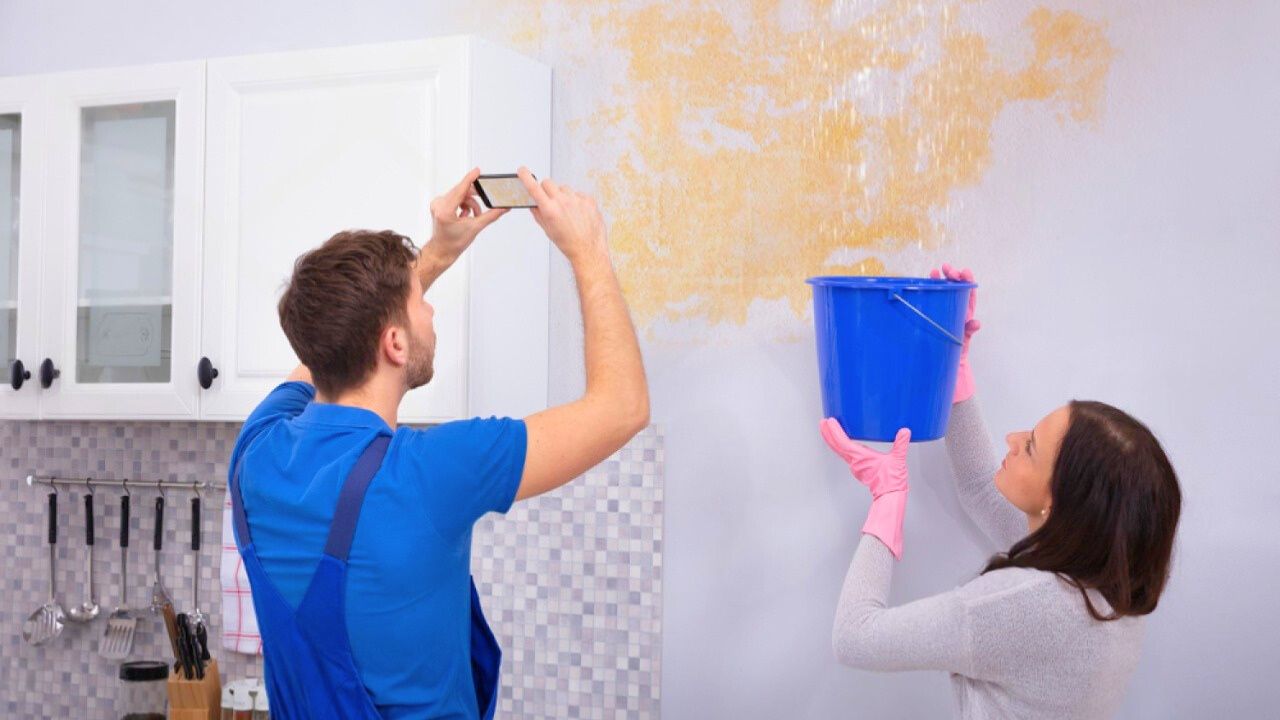
Why water damage claims are spiking even in homes with “new” plumbing
Photo credit: Andrey Popov/Shutterstock.com
Water damage has quietly become one of the most expensive threats to modern housing, even in properties that advertise “brand‑new” plumbing and systems. You might assume that new pipes, fresh drywall, and a recent certificate of occupancy buy you a long break from leaks, rot, and insurance battles. Instead, a mix of rushed construction, climate stress, and hidden design flaws is driving a spike in claims from homes that are barely out of warranty.
If you own or are eyeing new construction, you are not just buying a floor plan, you are inheriting the builder’s choices about materials, workmanship, and risk. Understanding why water losses are rising in supposedly trouble‑free homes is your best leverage for negotiating with builders, reading your warranty fine print, and installing the right protections before a small drip becomes a five‑figure repair.
The quiet surge in water damage claims
Insurers now treat water as a core driver of property losses, not a side issue that only affects older buildings with rusty pipes. Industry data on Water Damage Claims Continue shows that non‑CAT (non‑catastrophe) water incidents, such as burst supply lines or failed fittings, are now a leading cause of everyday property payouts. That trend is not confined to aging stock; it is increasingly visible in new subdivisions where plumbing systems are only a few years old but already failing at joints, valves, and connections. When you zoom out to commercial real estate, water is described as a leading cause of losses across asset classes, with sensor‑based monitoring now marketed as a way to catch leaks before they spiral into major claims, a sign of how central this risk has become to underwriting and risk management.
At the household level, water has been identified as the number one problem affecting homeowners, with Why water damage is so common tied directly to climate pressures that intensify both storms and slow, hidden moisture problems. On the West Coast, California’s cycles of drought and heavy rain can worsen concealed leaks, while in other regions prolonged humidity and sudden downpours push building envelopes and drainage systems beyond what they were designed to handle. When you combine that environmental stress with construction shortcuts and complex modern plumbing layouts, you get a claims environment where “new” no longer equals “safe” from water.
How “new” plumbing still fails
New plumbing systems are often marketed as a selling point that should lower your risk and, by extension, your insurance costs. Some insurers even note that modern homes with updated roofs, plumbing, and HVAC systems are expected to be less prone to major claims. In practice, that promise breaks down when builders rush installations, rely on minimally trained subcontractors, or treat plumbing as a checklist item instead of a critical system. Videos dissecting why new construction homes are falling apart, such as the Sep breakdown of a shower drain being treated like a trash can in Why New Construction Homes Are FALLING APART in 2025, show how careless jobsite habits can leave debris in lines and traps that later clog and overflow inside finished walls.
Inspectors who specialize in new builds repeatedly flag improperly installed piping as one of the most frequent issues, with One of the most common problems being pipes that are not adequately supported, protected, or pressure‑tested. In some cases, fittings are not tightened correctly, or incompatible materials are joined in ways that meet the schedule but not the code. Over time, those shortcuts show up as pinhole leaks in ceilings, slow drips behind vanities, or sudden failures at crimped connections. You may not see anything until a ceiling stain appears, but by then water has often been wicking through insulation and framing for weeks.
Rushed construction and systemic defects
The spike in water damage claims from newer homes is not just about a few bad plumbers, it reflects a broader production model that prizes speed and volume. Commentators dissecting why new construction homes are getting worse, including the Mar analysis in New Construction Homes Are Getting WORSE In 2025, describe inspectors walking into brand‑new houses with gas leaks and walls so out of plumb that “straight walls” are treated as a relic of the past. Legal guides on tract housing warn that large builders often rely on Cost cutting measures, including Cheaper materials that may not perform as expected over time, which can directly affect how well plumbing penetrations are sealed and how moisture is managed around tubs, showers, and exterior walls.
Inspection firms catalog a familiar list of Foundation and Structural New Construction Defects, Roofing Issues, and other systemic flaws that create easy pathways for water intrusion. When your roof is misflashed or your grading slopes toward the house, even a perfectly installed plumbing system will be fighting an uphill battle against moisture. Consumer advocates note that Some builders rush construction to hit deadlines, with Some projects using Materials that are subpar and Workmanship that is stretched thin across too many sites. In that environment, small errors like missing sealant at a shower curb or an unglued vent joint are not outliers, they are baked into the production process, and they often reveal themselves first as water damage.
Plumbing flaws that show up first
When water claims hit new homes, they tend to cluster around a handful of recurring plumbing defects. Inspectors who focus on new builds list New Construction Plumbing Defects That Show Up Most Often, including loose fittings that were not tightened properly, poorly supported drain lines that sag and trap debris, and supply lines that are kinked or routed through unprotected areas where they can freeze. Another set of Common Plumbing Issues in a New Build highlights Leaking Pipes and Water hammer problems that arise when pressure regulators are missing or mis‑set. Each of these flaws can produce slow, almost invisible leaks that soak subfloors and wall cavities long before you see a puddle.
Consumer‑facing guides on new construction defects underline that Plumbing Problems are surprisingly common, ranging from leaky pipes and clogged drains to incorrectly sloped sewer lines that back up into living spaces. Technical advisories to builders stress that in new construction, plumbers and general contractors can be held responsible for settlement costs if they ignore critical considerations for residential systems, including material compatibility and proper support, as outlined in Mar guidance on CPVC installations. When you put those threads together, you get a picture of plumbing that is technically “new” but structurally fragile, with weak points that are almost guaranteed to leak under real‑world use.
Hidden moisture: why small leaks become big losses
Water rarely announces itself loudly at the beginning of a problem. Specialists who explain How Water Damage Begins emphasize that Water almost always starts as a subtle issue, with Most problems developing out of view in wall cavities, under cabinets, or beneath flooring. A tiny drip from a loose supply line can wick along framing, saturate insulation, and feed mold long before you notice a swollen baseboard. In tightly sealed modern homes, that trapped moisture has fewer ways to escape, so it lingers and spreads horizontally, turning what could have been a minor repair into a full‑scale remediation project.
New construction is especially vulnerable because so many systems are layered on top of each other in a short time frame. If a shower pan is not properly flood‑tested, or if a roof penetration is left with a small gap, early rains can drive water into sheathing and framing that are still drying from construction. Legal overviews of Why Water Intrusion Happens in New Homes point to Roof leaks due to missing shingles, poor flashing, or improper installation that allow water to spread into living areas. Once inside, moisture can travel along particle‑based materials that are particularly vulnerable; building engineers warn that Particle board, sometimes used as a less‑expensive alternative to plywood, should never be used as a structural element because it swells and deteriorates quickly when exposed to water. That combination of hidden pathways and moisture‑sensitive materials is a recipe for outsized damage from relatively small leaks.
Climate stress, heat, and municipal failures
Even if your home’s internal plumbing is flawless, external forces are putting more stress on water systems than in past decades. Climate‑driven extremes are a key reason Climate change is cited as a factor in the surge of water damage to homes, with hotter summers, heavier downpours, and more frequent freeze‑thaw cycles all raising the odds that something in the water chain will fail. Insurer briefings on summer claim spikes warn that Water damage is a hidden warm‑weather threat, noting that Water systems inside Your home are the real summer risk, with Non weather‑related water damage claims rising as heat causes pipes to expand, contract, and sometimes burst.
Municipal infrastructure adds another layer of vulnerability that can hit new homes just as hard as old ones. Plumbing experts explain that Temperature Changes Water main breaks are often driven by drastic swings that cause pipes to expand and contract, leading to cracks and eventual failures. When a main line ruptures, pressure fluctuations and sudden surges can stress the service line feeding your house, exposing weak joints or marginal fittings that might otherwise have held. Separate guidance on what happens when the What Causes Main Water Line Leak notes that There are several potential causes, including soil movement and construction damage, and that if proper precautions are not taken, even new lines can fail. The result is that your pristine interior can be flooded or undermined by events that start far from your property line.
Design, grading, and flood‑prone “new” neighborhoods
Water damage in new homes is not limited to what happens inside the walls; it also reflects how the site itself handles rain and runoff. Inspectors who catalog Several common construction defects highlight Improper Grading and Drainage that cause water to pool near the foundation walls, a direct path to seepage, basement leaks, and slab movement. When builders cut corners on swales, downspout extensions, or perimeter drains, even moderate storms can push water against your foundation, where it finds hairline cracks and utility penetrations that were never properly sealed. Once that moisture gets inside, it can saturate insulation, rust fasteners, and feed mold behind finished drywall.
On a neighborhood scale, flood risk is increasingly on the minds of buyers in new developments. Survey data from a major insurer found that over half of new build homeowners believe their property is at risk from flooding, with Nov commentary stressing that Plans to build new homes across the UK are welcomed, but it is vital they do not increase the risk of flooding for existing communities. That warning applies just as much to infill projects and greenfield subdivisions elsewhere, where paved surfaces, undersized storm drains, and altered waterways can concentrate runoff into places that were not historically flood‑prone. If your builder has not designed for that reality, you may find that your “elevated” lot still channels water toward your garage, crawlspace, or lower‑level living areas.
Why warranties and laws are not a complete safety net
Many buyers assume that builder warranties and state protections will fully shield them from the cost of water‑related defects in new homes. In practice, those safeguards are real but limited. For example, New Jersey’s program for new construction requires builders to register and provide a ten‑year warranty that covers certain defects in materials, workmanship, and systems, with The law and regulations provide limited ten‑year warranty coverage against defects of materials, workmanship, and systems in a new home, administered by the warrantor of the home. That sounds comprehensive, but the coverage is tiered, with shorter terms for systems like plumbing and longer terms for structural issues, and it often excludes damage from “maintenance” problems or external events, which is where many water disputes end up.
Legal landscapes are also shifting in ways that can narrow your options. In Florida, for instance, construction defect statutes have been reshaped after Recently, Florida Governor Ron DeSantis signed into law a critical statute that reshapes how and when homeowners can bring defect claims, with an emphasis on resolving issues at the earliest possible juncture. Consumer advocates warn that these changes can shorten the window for discovering and litigating hidden water problems, especially those that take years to surface. At the same time, buyer guides stress that a new home does not automatically mean a flawless home, with Potential for Construction Quality Issues flagged as a core disadvantage of new construction. You are expected to document defects quickly, push the builder to act, and often pay out of pocket for independent inspections and legal advice.
How to protect your “new” home from becoming the next claim
If you treat water as a primary risk rather than an afterthought, you can meaningfully cut your odds of joining the growing ranks of claimants. Start by commissioning a thorough independent inspection before your builder’s warranty walk‑through, with a focus on plumbing, roofing, and drainage. New construction checklists urge you to watch for Your roof’s flashing details, attic ventilation, and any signs of prior leaks, as well as to test every fixture under load. Ask your inspector to run multiple showers and appliances simultaneously, check for pressure drops, and use moisture meters around tubs, showers, and exterior walls. Where possible, open access panels to verify that drain lines are properly sloped and that there are no active drips at traps or supply connections.
Technology can give you an additional layer of protection that builders rarely provide. Construction‑site risk specialists note that water damage is one of the most frequent and costly causes of loss during building projects, and that In fact, water damage is a leading cause of loss, with Sensors playing a crucial role in 2025 by detecting leaks early. You can borrow that playbook at home by installing smart leak detectors under sinks, behind toilets, near the water heater, and at the main supply line, ideally tied to an automatic shutoff valve. In multi‑story homes, consider sensors in laundry rooms and under upstairs bathrooms, where a single overflow can ruin ceilings and floors below. Combined with a clear understanding that Older buildings are also at an increased risk as roofs and piping deteriorate, these tools position you to manage water risk across the full life of your property, not just in its first few years.
Supporting sources: Water Damage Is a Leading Cause of Commercial Real Estate ….