The maintenance item people skip that keeps leading to winter ceiling stains
Photo credit: Tomasz Koryl/Shutterstock.com
Winter ceiling stains rarely start with a dramatic leak. More often, they trace back to a quiet, overlooked chore that lets water creep in long before you notice a brown halo on the paint. The maintenance step most people skip is keeping gutters and roof edges truly clear so melting snow can move off the house instead of freezing into destructive ice ridges. When you ignore that job, you set up the perfect conditions for ice dams, hidden moisture, and the stains that show up weeks later in your living room.
Once those stains appear, you are no longer dealing with a cosmetic issue, you are dealing with a symptom of water getting past your roof system. That moisture can rot wood, ruin insulation, and invite mold long before you see a drip. Understanding how a neglected gutter line and poorly managed roof runoff turn into winter ceiling damage is the key to stopping the problem before it spreads.
How winter ceiling stains really form
When you see a yellow or brown ring on the ceiling in January, it usually means water has been moving through your building materials for some time. As moisture seeps through drywall or plaster, it dissolves tannins, dust, and other particles, which then dry into a visible mark. Contractors who track water stains note that they often appear “out of nowhere” because the leak path is hidden in the attic or between floors until enough water accumulates to discolor the surface.
Those stains can come from several sources, but in cold weather the most common culprits are roof and attic problems rather than plumbing. Roofing specialists who study common causes of ceiling marks point to roof leaks, condensation, and ice dam back‑ups as leading drivers. By the time you notice a mark in winter, the water may have already soaked insulation, rusted fasteners, and weakened framing around the leak path, which is why treating the stain as a structural warning, not just a paint problem, is so important.
The hidden villain: ice dams at the roof edge
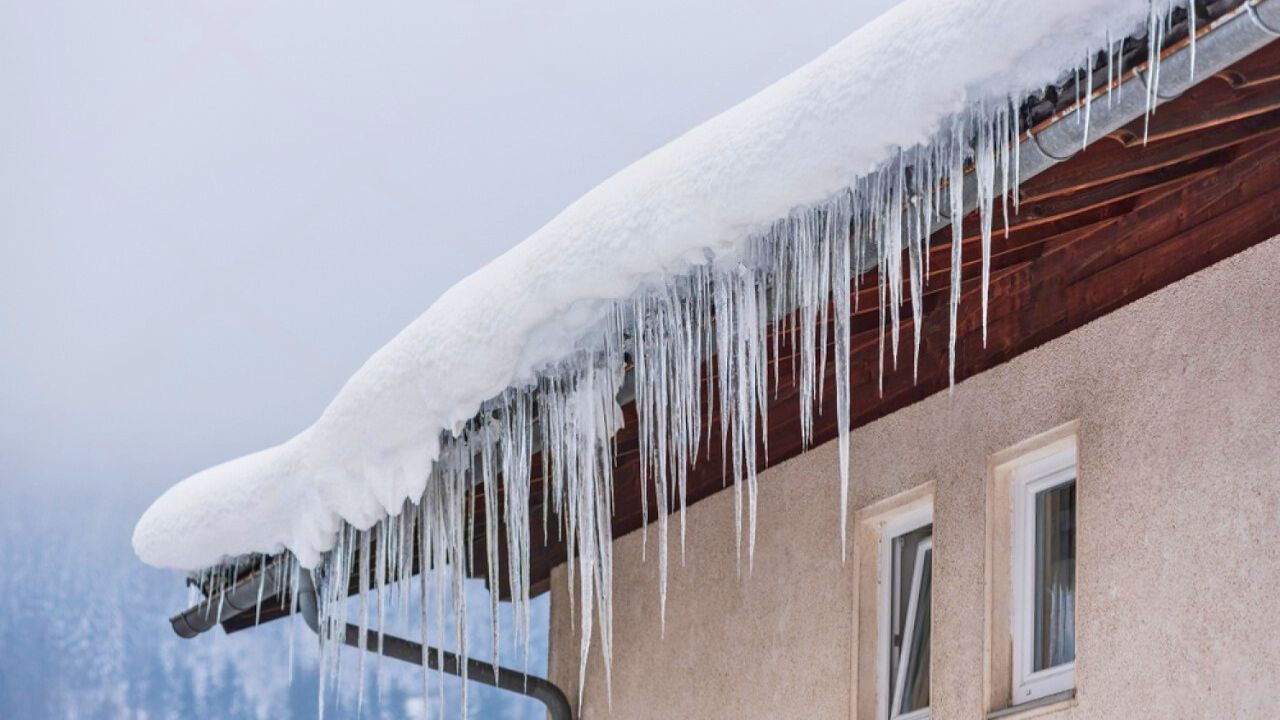
The quiet link between skipped maintenance and winter stains is the ice dam, a ridge of frozen meltwater that forms along the roof edge and traps liquid water behind it. When snow on the upper roof warms and melts, that water flows down until it hits a colder overhang, where it refreezes into a solid barrier. The National Weather Service explains that roof ice dams block runoff, forcing water to pool and work its way under shingles and into the house instead of safely reaching the ground.
Energy and building experts stress that ice dams are not caused by snow alone, they are primarily driven by warm air leaking into the attic that melts the underside of the snowpack. That combination of interior heat, roof snow, and a cold eave creates a freeze‑thaw cycle that repeats all winter. Each time the dam grows, more water backs up under the roofing, and every backed‑up melt event is another chance for moisture to find a nail hole, a seam, or a flashing gap that leads straight to your ceiling.
The maintenance step most people skip
Most homeowners focus on shoveling driveways and salting walkways, but they ignore the one task that quietly controls how winter water leaves the roof: clearing the gutters and downspouts. When leaves, grit, and twigs choke that system, meltwater has nowhere to go, so it sits along the roof edge and freezes into a thick rim that accelerates ice dam formation. The National Weather Service specifically advises that all winter long, keep gutters and downspouts clear so water can drain freely away from the eaves.
Roofing contractors echo that warning in more blunt terms, noting that gutters should be completely empty before winter because when debris blocks the flow, water does not move, it freezes. That frozen mass then locks onto the fascia and shingle edges, turning a simple cleaning chore into a structural threat. By skipping a fall gutter clean‑out or failing to check for mid‑season clogs after a windstorm, you unintentionally build the foundation for the ice ridge that will later feed the ceiling stain in your hallway.
Why clogged gutters and ice dams stain your ceiling
Once a dam forms at the eave, the physics of water do the rest. Meltwater from higher on the roof runs down until it hits the frozen barrier, then pools and looks for any path it can find. Instead of flowing into the gutter, it can slip under shingles, soak the underlayment, and drip onto the cold roof deck. From there, gravity carries it along rafters and joists until it finally lands on the top side of your ceiling, where repeated wetting and drying create the familiar brown halo that signals a leak.
Home repair guides that catalog roof problems list damaged waterproofing, failed flashing, and compromised shingles as common ways that backed‑up water gets inside. Regional roofing experts who study ceiling water stains in cold climates add that ice dams are a frequent trigger, especially where snow loads are heavy and gutters stay packed with debris. In other words, the stain on your ceiling is often the last step in a chain that started with a clogged downspout and ended with water sneaking under frozen shingles.
Attic insulation and ventilation: the quiet accomplices
Even perfectly clean gutters cannot save you if your attic is turning the roof into a patchwork of warm and cold zones. When insulation is thin or uneven, heat from your living space escapes into the attic and warms the roof deck from below. That warmth melts the underside of the snowpack, sending water toward the colder eaves where it refreezes into a dam. Roofing specialists urge you to check your attic insulation and air sealing because a consistent, cold roof surface sharply reduces the risk of having ice dams in the first place.
Ventilation is the other half of that equation. Soffit and ridge vents are designed to flush out warm, moist air so the attic temperature stays close to the outdoor air, but blocked vents or undersized openings let heat build up. Winter roof care guides that focus on why ice dams form emphasize that balanced ventilation, combined with regular snow removal, helps prevent the warm‑roof, cold‑eave pattern that drives dam formation. If you pair that attic work with clean gutters, you dramatically cut the odds that meltwater will ever reach your ceiling drywall.
Early warning signs you can spot from the ground
You do not have to climb onto the roof to see trouble coming. Long, thick icicles hanging from the eaves, especially above known gutter runs, are a classic sign that water is backing up instead of draining. If you notice ice forming behind the gutter line or see ridges of snow that look higher at the roof edge than in the middle, you are likely looking at an ice dam in progress. Winter roof care checklists that focus on when snow melts, runs down the roof, and refreezes at the eaves treat those visual cues as red flags that water is not moving where it should.
Inside the house, subtle changes can warn you before a full stain appears. You might see faint shadows or hairline cracks in ceiling paint, notice a musty smell near exterior walls, or feel dampness around recessed lights that penetrate the ceiling. Restoration specialists who deal with what causes them and how to fix ceiling stains point out that these early signs often show up near roof valleys, chimneys, or bathroom vents where water paths are more complex. Catching those hints and checking the attic above them can help you intervene before the stain spreads across an entire room.
Smart winter maintenance to break the cycle
Preventing winter ceiling stains is less about heroic mid‑storm rescues and more about steady, boring maintenance before and during the season. That starts with a thorough gutter and downspout cleaning in late fall, followed by periodic checks after heavy wind or thaw cycles to make sure nothing has clogged the system. Winter maintenance guides that outline essential steps to preventing ice dams also recommend inspecting the roof surface from the ground, looking for missing shingles, sagging gutters, or damaged fascia that could give water an easy entry point.
On the roof itself, managing snow depth is critical. When accumulations get deep, especially on low‑slope sections, using a roof rake from the ground to pull snow off the first few feet above the eaves can reduce the amount of meltwater feeding any existing ice ridge. Winter roof maintenance advice that highlights regular snow removal as a prevention tool stresses that you should never chip at the ice itself, which can damage shingles, but instead lower the fuel supply by removing loose snow. Combined with good insulation and clear gutters, that routine can keep meltwater moving off the house instead of into your ceiling.
What to do the moment a winter stain appears
When you spot a fresh stain in December or January, your first move should be to limit further damage, not to reach for a paint roller. Place a tarp or plastic sheeting over furniture and flooring below the spot, then use a screwdriver or nail to create a small drain hole in the center of any bulging area so trapped water can escape in a controlled way into a bucket. Restoration experts who explain how to fix them emphasize that controlled drainage reduces the risk of a sudden ceiling collapse and makes it easier to dry the cavity behind the drywall.
Next, you need to track the source, which in winter usually means heading to the attic with a flashlight during or right after a thaw. Look for wet insulation, darkened roof sheathing, or active drips, especially near valleys, chimneys, and exterior walls. Guides that walk through how to fix roof‑related stains recommend pulling back any soaked insulation so the wood can dry and marking leak locations for a roofer to inspect once conditions are safe. Only after the source is repaired and the structure is dry should you patch the drywall and repaint, otherwise the stain is likely to return with the next thaw.
When to call in a professional
Some winter ceiling stains are tied to small, isolated issues you can address yourself, such as a single cracked shingle or a minor condensation problem around a bathroom fan. However, if you see multiple stains, large areas of sagging drywall, or extensive ice buildup along the eaves, it is time to bring in a roofer or restoration contractor. Specialists who investigate what causes ceiling water stains in cold regions often find that widespread staining signals systemic issues like inadequate attic ventilation, chronic ice dams, or aging roofing that has lost its waterproofing.
Professionals can also help you design long‑term fixes that go beyond cleaning gutters. That might include adding heat‑resistant baffles to keep insulation from blocking soffit vents, upgrading to a continuous ridge vent, or installing additional air sealing at attic penetrations so warm air does not reach the roof deck. Energy specialists who outline how to prevent them from forming in the first place stress that these upgrades, combined with disciplined gutter maintenance, are far more effective than relying on temporary electric heat cables or chipping away at ice each winter. If you treat that skipped maintenance item as a core part of your home’s winter defense, you can keep meltwater where it belongs and stop ceiling stains before they ever appear.