Bobby Berk says collectors don’t need less stuff they need a better system
Photo credit: SolStock/istock.com
You are not failing because you like things. You are struggling because your things do not have a clear job, a clear home, or a clear limit. Bobby Berk’s new HGTV series “Junk or Jackpot?” treats overflowing collections less as a moral problem and more as a design and systems problem, and that shift in perspective is exactly what most collectors need.
Instead of telling you to live with less, Berk argues that you need a better framework for what you keep, how you store it, and how it supports your life. If your shelves, closets, and bins feel like they are closing in, his approach offers a way to protect what you love without letting it quietly take over your home.
From ‘too much stuff’ to ‘not enough system’
When you look around a cluttered room, it is easy to blame the volume of objects rather than the absence of structure. Berk’s work on “Junk or Jackpot?” starts from the opposite angle, treating your home like a project that needs a plan, not a lecture. You are encouraged to ask what role each category of item plays, how often you actually use it, and whether your current storage makes that use realistic. The problem is rarely that you own books, vinyl, sneakers, or holiday decor, it is that you have never designed a system that matches the scale of your enthusiasm.
On the show, Berk meets collectors whose belongings have spilled into every corner, yet he resists calling them hoarders and instead focuses on the missing infrastructure around their passions. In coverage of the series, he draws a sharp line between intentional collecting and what he bluntly calls the point where “that is not collecting anymore,” a moment when your things start to control your schedule, your relationships, and your mood rather than enrich them, a distinction highlighted in reporting on how he helps viewers with wrangling your own collections.
Inside ‘Junk or Jackpot?’ and why collectors see themselves in it
“Junk or Jackpot?” is built around a simple but emotionally loaded premise. You watch people who love their stuff, often for very understandable reasons, confront the reality that their homes no longer function. Instead of staging a dramatic purge, Berk walks them through a series of decisions that separate what is genuinely meaningful from what has become background noise. The tension in each episode comes less from whether a dumpster will be filled and more from whether a person can imagine a life where their collections are visible, accessible, and not a constant source of stress.
The series is structured as a Six Episode Season Executive Produced by John Cena, with design expert, television host, and Emmy Award winner Bobby Berk guiding collectors as he turns chaotic collections into dream digs that still honor the memories attached to it all, a format detailed in the official description of the Six Episode Season Executive Produced by Cena. That structure gives you a clear narrative arc to follow, from the first overwhelmed walk-through to the reveal of a space that finally reflects the collector’s taste instead of their backlog.
Why Berk refuses to shame you for loving your stuff
Shame is one of the biggest reasons you avoid dealing with clutter. If you feel judged the moment someone opens a closet door, you are far more likely to shove things into another bin than to sort them. Berk has been explicit that he will not build a show around humiliation. His goal is to help you see the emotional logic behind what you have kept, then decide whether that logic still holds. That stance matters, because it gives you permission to admit the problem without defending every object.
In interviews about “Junk or Jackpot?”, Berk has said that from the very beginning he insisted the series could not be about making people feel ashamed, and that he wanted participants to feel supported as they confronted the stuff that was controlling their life, a point he underlines when he answers “Absolutely” to questions about avoiding exploitation in coverage that quotes him saying, “One of the” key rules was not to humiliate anyone, as described in a profile that highlights his insistence on empathy with the phrase Absolutely. One of the things he demanded. That refusal to shame is not just good television etiquette, it is a practical strategy for you, because it replaces self-criticism with curiosity about why you are holding on.
Collectors versus hoarders, and where your home fits
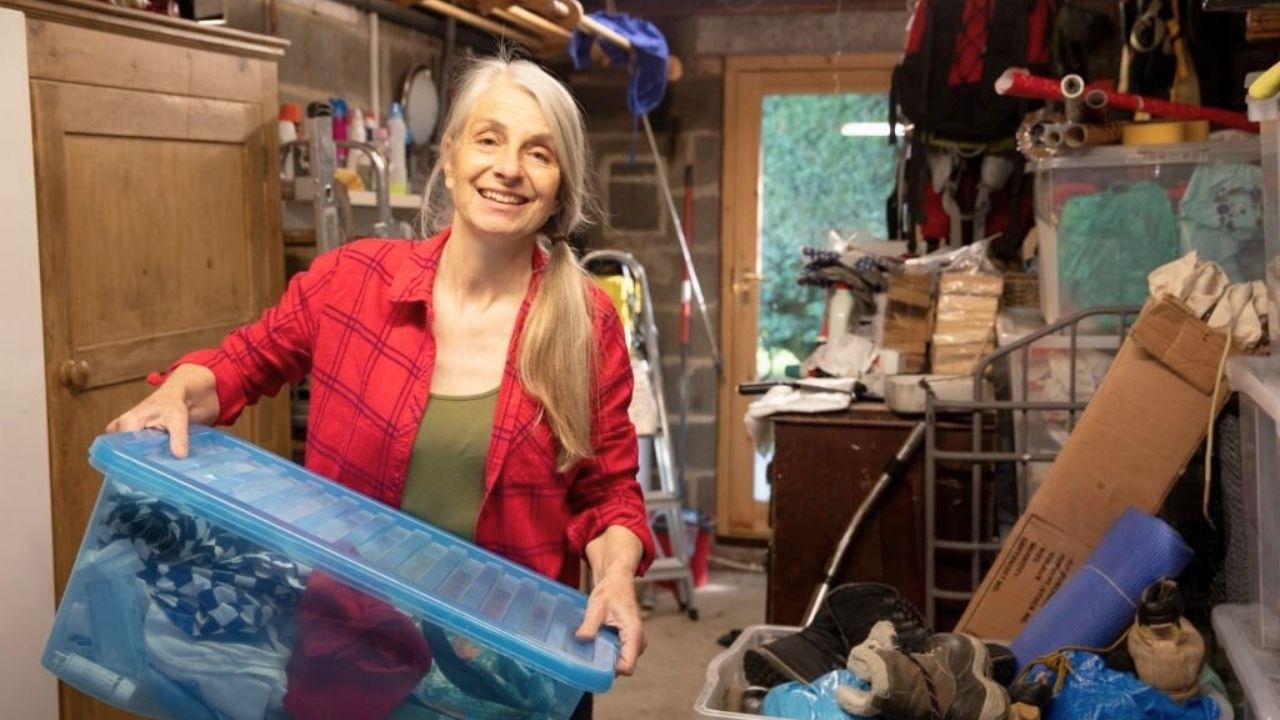
Many collectors quietly worry that they are sliding into hoarding, even when their spaces are still functional. Berk draws a distinction between someone who intentionally curates a category and someone whose belongings have become a barrier to daily life. You can own hundreds of comic books, vintage cameras, or limited-edition sneakers without being in crisis, as long as you can find what you need, move through your rooms, and maintain relationships without constant friction over space. The red flag is not the number of items, it is the way those items interfere with basic routines.
On “Junk or Jackpot?”, Berk and his team deliberately seek out collectors whose collections have gotten a little bit out of control, and he notes that these collections have not only gotten out of control physically but have also taken over the identity of the person, to the point that they have become defined by the piles around them, a pattern he describes when he explains that “we find collectors whose collections have gotten a little bit out of control, and they have not only gotten out of control, they have become” overwhelming, as detailed in an interview about how Dec episodes are cast. If you recognize that shift in your own home, it is a sign that you do not need to abandon your passion, you need to renegotiate its footprint.
The emotional toll of clutter and why systems are an act of care
Clutter is not just a visual problem, it is an emotional one. When every surface is covered, you are constantly reminded of unfinished tasks, unprocessed memories, and money you spent on things you rarely use. That background stress can quietly drain your energy and make it harder to relax in your own home. Berk frames organization as a form of self-respect, a way of giving your future self a calmer environment and a clearer mind. You are not just stacking bins, you are lowering the volume on a constant mental alarm.
In conversations about the show, Berk has described the brutal toll that junk hoarding can take on his clients, but he is careful to emphasize that “Junk or Jackpot?” is not about throwing everything away, and instead he talks clients through the emotional weight of each decision so that by the end they feel the process has been good for them and for the show, a balance captured in reporting on how Berk manages the brutal toll of junk hoarding. When you treat systems as an act of care rather than punishment, it becomes easier to let go of what hurts and keep what genuinely supports you.
Designing a system: visibility, access, and limits
Once you accept that you do not need fewer interests, you need better systems, the next step is design. Berk approaches organization the way he approaches interiors, by asking how you want to feel in a room and then reverse engineering the layout, storage, and display to support that feeling. For you, that might mean turning a chaotic spare bedroom into a dedicated archive, or carving out a single wall for your favorite pieces while the rest are stored in clearly labeled bins. The goal is to make your collections visible enough to enjoy, accessible enough to use, and limited enough that they do not swallow the space.
Berk has shared that on “Junk or Jackpot?” he teaches clients to store and catalog their belongings so that what they love is neatly organized, with each item having a defined place and a clear reason to be kept, a lesson he has echoed in a Dec social clip where he explains that “that stuff was neatly or organized and stored and cataloged because one of the things I taught them” was to show why you love it so much, a point captured in an Instagram reel. When you apply that mindset at home, you stop treating your collections as random piles and start treating them as archives that deserve proper shelving, climate considerations, and thoughtful rotation.
Bobby Berk’s 10-10-100 rule and other number-based hacks
Big organizing projects often stall because they feel endless. Berk’s solution is to shrink the task until it feels almost trivial, then repeat it. His 10-10-100 rule is a good example. Instead of demanding that you clear an entire garage in one weekend, he encourages you to work in small, repeatable units that build momentum. You might decide to sort ten items from ten different spots for ten days, or adapt the numbers to your own schedule, but the principle is the same: you chip away at the mountain until it no longer feels impossible.
In an Instagram video that has been widely discussed, Bobby praises this kind of challenge for breaking a decluttering task into smaller, more manageable chunks so you do not feel like you are climbing the entire way up the mountains in one go, a strategy explained in coverage of the 10-10-100 rule. Other reports describe how Bobby Berk’s decluttering hack using numbers is easy and effective, with organizing pros praising his clever method as a roadmap for anyone who has a lot of stuff and needs a simple structure to move through it, an approach summarized in a feature on how Bobby Berk uses numbers to make progress feel achievable. For you, adopting a numeric rule can turn an overwhelming declutter into a daily habit that quietly transforms your space.
Turning chaos into a fresh start, not a personality transplant
One of the quiet fears many collectors have is that if they let someone help them declutter, they will lose the parts of themselves that their collections represent. Berk’s work pushes back on that fear by framing organization as a fresh start, not a personality transplant. You are not being asked to stop loving vinyl, sneakers, or vintage Pyrex, you are being invited to decide which pieces still tell your story and which are simply taking up oxygen. The result is a home that feels more like you, not less.
Promotional material for “Junk or Jackpot?” emphasizes that the series will help collectors get a fresh start, with Bobby Berk helping homeowners clear clutter and confront emotions so they can turn chaos into dream spaces that still honor their collections, a mission described in detail in a preview that notes the show Will Help Collectors Get a Fresh Start In Junk or Jackpot. When you apply that lens at home, you can treat every edit as a chance to refine your identity, not erase it.
Design that feels good: why organization is about emotion, not perfection
At the heart of Berk’s philosophy is a simple design principle. Your home should make you feel the way you want to feel, not the way a magazine spread looks. That means your systems only work if they support your daily rhythms and emotional needs. A perfectly labeled wall of storage that you never open is less successful than a slightly imperfect setup that you actually use. You are allowed to prioritize comfort, nostalgia, and ease of access over rigid minimalism.
Berk has said that he thinks design is all about the way things make you feel, and that when he designs he asks how a space will affect someone’s mood, a perspective he connects directly to organizing by describing the process as giving someone their life back, an idea explored in a feature on Bobby and his simple tip for getting organized. When you judge your systems by how they make you feel rather than how they look on social media, you are more likely to build a home that supports your real life instead of an imaginary one.
How to start wrangling your own collections today
If the overwhelming collections on “Junk or Jackpot?” look uncomfortably familiar, the most important step is to start small and start specific. Pick one category that matters to you, such as your favorite decade of vinyl, your most used board games, or the camera gear you actually shoot with. Give that category a defined home, a clear limit, and a simple rule for what gets to stay. Once you see how much calmer that one corner feels, you can repeat the process across the rest of your collections without feeling like you are erasing your history.
Guides inspired by the show encourage you to think of this process as wrangling your own collections, not punishing yourself for having them, and they echo Berk’s reminder that when your belongings spill into every surface “that is not collecting anymore,” a warning that appears alongside practical advice on how to sort, store, and display what you love in coverage of Wrangling Your Own Collections. By treating your home like Berk treats his clients’ spaces, you can keep the joy of collecting while finally feeling like you are the one in charge of your stuff, not the other way around.
Like Fix It Homestead’s content? Be sure to follow us.
Here’s more from us:
- I made Joanna Gaines’s Friendsgiving casserole and here is what I would keep
- Pump Shotguns That Jam the Moment You Actually Need Them
- The First 5 Things Guests Notice About Your Living Room at Christmas
- What Caliber Works Best for Groundhogs, Armadillos, and Other Digging Pests?
- Rifles worth keeping by the back door on any rural property
*This article was developed with AI-powered tools and has been carefully reviewed by our editors.