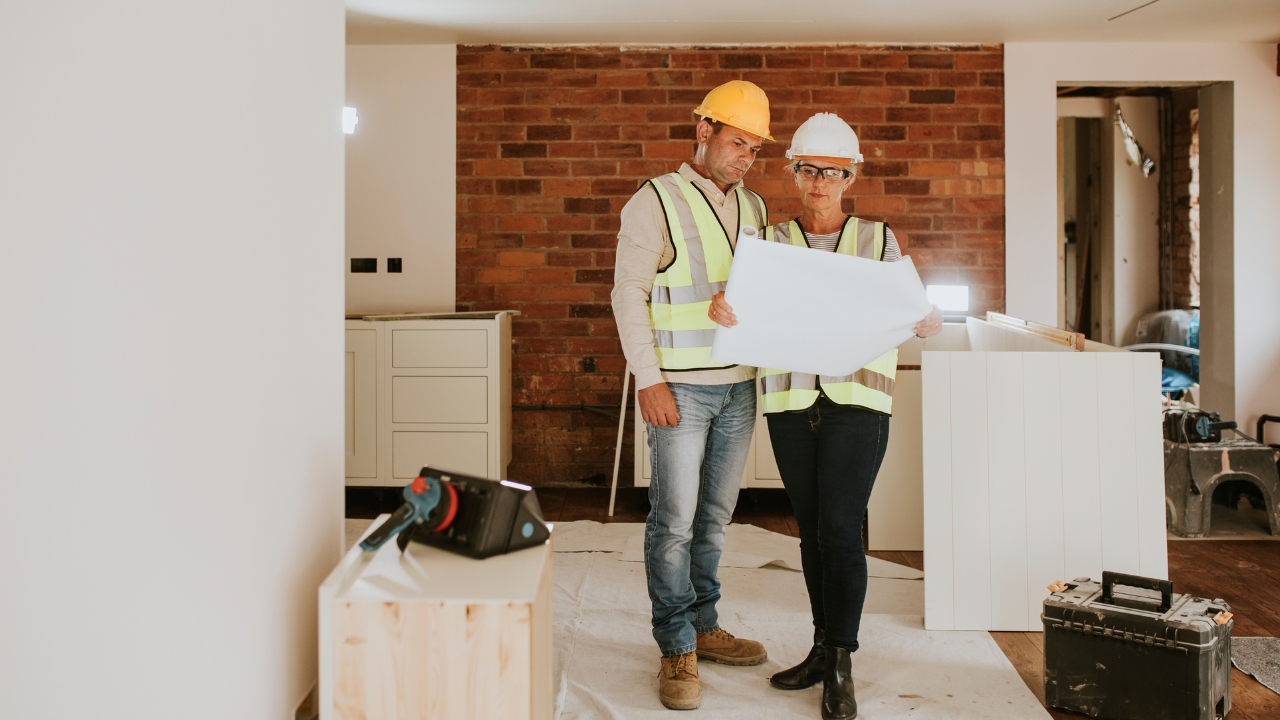
The housing market “stuck” problem that keeps pushing people into renovating instead of moving
Photo credit: Rawpixel.com/ Shutterstock.
Across the United States, you are more likely to hear nail guns than moving trucks. High prices, scarce listings, and stubborn borrowing costs have created a housing market where staying put often feels like the only rational choice. Instead of trading up, you are increasingly ripping out kitchens, finishing basements, and squeezing more life out of the square footage you already own.
This “stuck” dynamic is not just a mood, it is a structural shift that is reshaping how you think about home, wealth, and mobility. Renovation has become both a coping strategy and an investment plan, as you try to adapt your existing space to changing family needs while navigating a market that seems determined to keep you in place.
The mechanics of a housing market that will not budge
When you feel trapped in your current home, it is usually not because you lack imagination, it is because the math no longer works. You might have bought with a relatively low mortgage rate, only to watch borrowing costs climb to levels that make a lateral move unaffordable. Research on homeowner mobility finds that, though prices are high and still rising, higher interest rates have sharply reduced your incentive to sell, because trading into a new loan would raise your monthly payment even for a similar property.
At the same time, you are competing in a market where inventory is chronically tight and new construction has not kept up with demand. Analysts describe a “stuck” environment in which each would-be seller is also a frustrated buyer, so listings never really free up. One assessment of the current “cruel summer” for buyers notes that every local market seems unhappy in its own way, yet all are constrained by the nation’s longstanding housing shortage and a gridlocked chain of move-up buyers who cannot or will not list their homes, a pattern captured in the phrase “housing market is stuck”.
Why higher-for-longer rates lock you into place
The interest rate backdrop is the hinge on which your decision to move or remodel now swings. After a decade when cheap money made trading up feel routine, you are facing a “higher for longer” environment that keeps monthly payments elevated even if home prices only rise modestly. Morgan Research expects house prices to rise by about 3 percent overall in 2025, but the more important detail for your budget is that borrowing costs are not expected to fall back to the ultra-low levels that defined the 2010s.
That shift filters directly into affordability. Bank analysts who track the prospects for affordability note that higher interest rates and elevated prices mean you now need significantly more income to qualify for the same house, and even a move to a comparable property can cost hundreds of dollars more per month. When you run those numbers, the idea of giving up a 3 percent mortgage for one that starts with a 6 or a 7 quickly looks less like a lifestyle upgrade and more like a self-imposed pay cut.
How the “stuck” market fuels a renovation boom
Once you accept that moving is financially punishing, it becomes easier to justify tearing up your kitchen or adding a bedroom instead. Industry data show that you are not alone in that calculation. The The LIRA projects that year over year spending for home renovation and repair will increase by 1.2 percent in 2025, to about 509 billion dollars, even after a period of intense pandemic era upgrades. Another forecast of the Home Remodeling Market estimates that the U.S. sector was valued at USD 498.3 billion in 2024 and is expected to grow at a CAGR of 5 percent to reach 676.4 billion dollars by 2030, driven in part by homeowners who want to modernize and expand without the need for relocation.
On the ground, that growth shows up in the kinds of projects you are likely to prioritize. A detailed Remodeling Industry Outlook for 2025 highlights in-law suites, multi generational layouts, and flexible work from home spaces as some of the strongest growth opportunities, because they let you adapt an existing house to new realities instead of hunting for a larger one. When you combine that with the emotional fatigue of bidding wars and inspection waivers, it is easy to see why renovating feels like the more controlled, if still expensive, path.
Why your home equity is becoming a construction budget
Rising prices have at least given you one advantage: a thicker cushion of equity that can be tapped to fund improvements. Many owners now sit on paper gains that would once have been unlocked by selling and buying again. Instead, you are increasingly turning that equity into a construction budget, often through home equity lines of credit or cash out refinances, because the alternative is paying more for a smaller or similar home. Reporting on how Homeowners are using their equity notes that high home prices and mortgage rates have left you with “no incentive” to sell, so you pour that wealth into renovations instead of chasing a newer, larger property.
That shift changes the psychology of home improvement. Instead of treating a kitchen update as a nice to have, you may frame it as a way to unlock the functionality you would have sought in a move up house. Analysts who track renovation spending argue that this equity fueled approach can be rational if you are confident you will stay put long enough to enjoy the upgrades and recoup some of the cost in resale value. It is the same logic behind the advice in guides like Remodeling vs. Moving in 2025, which stress that in 2025 high mortgage rates and limited inventory often make remodeling the smarter choice, especially if you can boost your home’s value in the process.
The true cost of moving versus staying put
Even if you could stomach a higher rate, the transactional costs of moving are far from trivial. When you add up agent commissions, closing costs, inspections, temporary housing, movers, and the inevitable repairs on both the old and new homes, the bill can easily reach five figures. A breakdown of moving costs notes that you may pay substantial fees just to change addresses, before you even touch a renovation budget in the new place, and that is before you factor in the time and stress of uprooting your life.
By contrast, a well scoped remodel lets you direct that same money into tangible improvements you can see and use every day. Guides that walk through Analyzing Cost of Moving Versus Remodeling emphasize that while construction is disruptive, you retain control over the scope and timing, and you avoid bidding wars and appraisal surprises. When you compare a 25,000 dollar kitchen overhaul that transforms how you live in your home with 25,000 dollars in transaction costs that buy you nothing but a new mortgage, the appeal of staying put becomes clearer.
Millennials, starter homes, and the renovation squeeze
If you are a millennial, the stuck feeling can be especially acute. Many in this cohort bought modest starter homes during the last decade, expecting to trade up as incomes grew and families expanded. Instead, you may now find yourself raising children in a house that was never meant to handle that stage of life, with mortgage rates and prices blocking the exit. Reporting on millennials who are stuck in starter homes describes how that financial reality has pushed many toward renovation as a coping mechanism, with People “getting creative” about carving out bedrooms, home offices, and storage in spaces that were originally designed for single or child free owners.
That creativity often shows up in small but consequential projects. You might convert a dining room into a nursery, finish an attic to create a playroom, or add a half bath to reduce morning bottlenecks. For some, the solution is more ambitious, such as adding a dormer or bumping out the back of the house to gain a few hundred square feet. The same reporting notes that this trend is closely watched by the Joint Center for Housing Studies, which sees it as a symptom of broader affordability pressures rather than a purely aesthetic choice. In other words, you are not just chasing Pinterest inspiration, you are engineering a workaround for a market that has closed off the traditional move up ladder.
How contractors and designers are adapting to your new reality
As you and your neighbors pivot from buying to building in place, the renovation industry is reshaping its offerings around your constraints. Design build firms report a surge in demand for projects that maximize existing footprints rather than add sprawling new wings. The Jan Remodeling Industry Outlook points to in-law suites and multi generational layouts as standout growth areas in 2025, because they let you accommodate aging parents or adult children without entering the brutal competition for larger homes.
Contractors are also adjusting how they talk about projects, framing them less as luxury upgrades and more as strategic responses to a broken housing ladder. You are likely to hear more about return on investment, resale value, and flexibility, and less about purely cosmetic trends. That shift aligns with the guidance in resources like What Makes the Smartest Choice, which encourages you to weigh not just upfront costs but how a remodel can extend the useful life of your home and support future life changes. In practice, that might mean prioritizing structural fixes, energy efficiency, and flexible floor plans over trendy finishes that will date quickly.
Renovation as a macroeconomic force, not just a personal choice
Your decision to renovate instead of move is not only reshaping your own balance sheet, it is also becoming a macroeconomic story. Analysts who compile Key Takeaways on renovation trends argue that high mortgage rates and home prices have kept Americans in place, upgrading their homes instead of trading up, and that this behavior is likely to remain a tailwind for continued spending growth. When millions of households make the same calculation, it supports jobs in construction, design, manufacturing, and retail, even as existing home sales sag.
At the same time, the scale of the shift raises questions about long term mobility and economic dynamism. If you and your peers are locked into homes that no longer fit your jobs or families, it becomes harder to move for better work, to downsize efficiently, or to match housing supply with where people actually want to live. Analysts who study Though home prices are high and mobility trends warn that this can have ripple effects on labor markets and regional growth. In that sense, your kitchen remodel is part of a much larger story about how a high cost, high rate era is rewiring the American dream of housing as a ladder you can climb.
How to decide whether you should move or remodel next
Faced with all these crosscurrents, you still have to make a concrete decision: live with the house you have, reshape it, or try to leap into a new one. A practical way to start is to map your needs over the next five to ten years, not just the next season. If you expect major life changes, such as children, aging parents, or a job that will stay remote, you can then compare the cost of adapting your current home to those scenarios with the cost of buying something that already fits. Guides that focus on Move or Remodel My House? encourage you to get real quotes for both paths, including moving costs, renovation bids, and the impact of a new mortgage rate on your monthly budget.
You should also be honest about your tolerance for disruption. A major renovation can mean months of dust, noise, and temporary kitchens, even if you phase the work. Moving, by contrast, compresses the chaos into a shorter window but may leave you with a longer commute or a neighborhood that feels less familiar. Industry voices like Why This Question Matters More Than Ever in 2025 argue that there is no one size fits all answer, but that in a market defined by high rates, limited inventory, and a robust remodeling sector, you are wise to treat renovation as a serious, strategic alternative to moving, not just a consolation prize.
Like Fix It Homestead’s content? Be sure to follow us.
Here’s more from us:
- I made Joanna Gaines’s Friendsgiving casserole and here is what I would keep
- Pump Shotguns That Jam the Moment You Actually Need Them
- The First 5 Things Guests Notice About Your Living Room at Christmas
- What Caliber Works Best for Groundhogs, Armadillos, and Other Digging Pests?
- Rifles worth keeping by the back door on any rural property
*This article was developed with AI-powered tools and has been carefully reviewed by our editors.