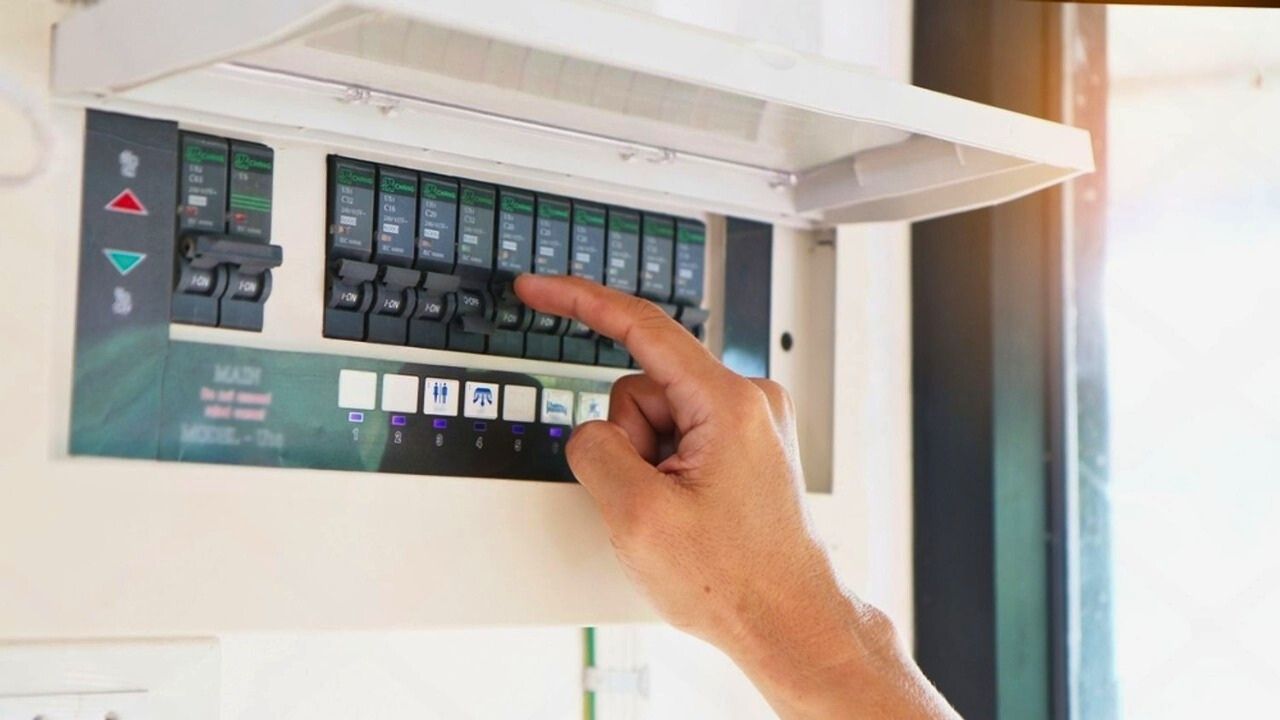
The fastest way to tell if a circuit is already overloaded
Photo credit: Sirikuan07/Shutterstock.com
When a circuit is pushed past its limits, it rarely fails politely. It signals trouble through tripped breakers, hot outlets, and flickering lights, and if you miss those early warnings, the result can be damaged electronics or a house fire. The fastest way to tell if a circuit is already overloaded is to combine those visible and audible clues with a quick check of how much power you are actually pulling.
With a few minutes of focused observation and a basic understanding of how your panel and breakers work, you can usually spot an overloaded run long before it becomes an emergency. Once you know what to look for, you can move from guessing to diagnosing, then decide whether to unplug a few devices or call in a professional.
Why overloads are so dangerous, so quickly
An overloaded circuit is not just an inconvenience, it is a situation where the electrical demand on a run of wire is higher than it was designed to carry. That extra current turns into heat inside the conductors, outlets, and connections, which is why overloaded wiring is a major contributor to residential fires. When you understand that every breaker and cable in your home is sized for a specific maximum load, it becomes clear why ignoring early warning signs is a gamble with your safety and your property.
Electric circuit overloads are described as a condition where the total draw on a circuit exceeds its rating, which is exactly what happens when a 15 amp branch is asked to feed a space heater, a hair dryer, and a microwave at the same time. Without a properly sized breaker, that kind of overload can let the wiring heat up until insulation fails and ignition becomes possible, which is why guidance on Overloaded Circuit Signs You Need to watch for emphasizes that breakers are your last line of defense, not a substitute for smart load management.
The single fastest tell: a breaker that will not stay on
If you want one quick indicator that a circuit is already in trouble, look at the breaker that keeps snapping off every time you reset it. A breaker that trips immediately or repeatedly under the same conditions is reacting to too much current, and that is the clearest sign that the connected wiring is being asked to do more than it safely can. When that happens, you should treat the tripping as a deliberate safety action, not an annoyance to be defeated with tape or a stronger breaker.
Guidance on Signs of Overloaded Circuits notes that the most obvious sign of an electrical circuit overload is a breaker tripping and shutting off power, and that frequent trips are a cue to reduce the load or bring in an electrician. Other experts describe Frequent Circuit Breaker Trips as one of the first things you should look for when you suspect a problem, because a breaker that will not stay on is already telling you the circuit is operating beyond its intended capacity.
Fast visual checks: lights, outlets, and faceplates
Once you have checked the panel, the next quickest way to spot an overloaded circuit is to walk the affected rooms and look closely at what the wiring is doing. Lights that dim or flicker when you turn on a vacuum, toaster, or space heater are a classic sign that the circuit is straining to keep up. Discolored or warm outlet covers, especially around high draw appliances, are another red flag that too much current is flowing through that branch.
Guides on Warning Signs of an Overloaded Electrical Circuit point out that Flickering Lights are a common symptom because Circuits with receptacles are often prioritized over lighting when demand spikes. Other reporting on Visible Signs of overloads notes that People tend to notice scorched outlet covers, melted plugs, or faceplates that feel hot to the touch, all of which are visual cues that the wiring behind them is under stress.
Audible and tactile clues you can check in seconds
Your ears and hands can often confirm what your eyes are already telling you. A buzzing or crackling sound from a receptacle, switch, or power strip suggests that connections are loose or arcing, which can be made worse when a circuit is overloaded. Similarly, if a breaker in the panel is hot to the touch compared with its neighbors, or if a cord or plug feels warmer than you would expect for the device it serves, you should treat that as a sign that the current is too high for comfort.
Guidance on How to Spot Electrical Overloads highlights that in addition to Visible Signs, you should pay attention to Auditory Indicators like humming outlets or panels, which can accompany an overloaded run. Another overview of Recognising the Signs of an Overloaded Circuit explains that buzzing sounds and lights that dim when appliances start up are common when Overloading is present, especially if there are loose connections that heat up under heavy load.
Using simple math to see if you are over the limit
Beyond sensory checks, one of the fastest ways to tell if a circuit is overloaded is to compare what you have plugged in with what the breaker is rated to handle. In a typical home, a 15 amp breaker on a 120 volt circuit is designed for a maximum of 1,800 watts, but for continuous loads you should stay closer to 80 percent of that, or about 1,440 watts. If you add up the wattage of a space heater, a hair dryer, and a gaming PC on the same branch and find that you are well past that number, you can safely assume the circuit is already working too hard.
One explanation of What an Electrical Circuit Overload is notes that an overload occurs when the total electrical demand on a circuit exceeds its capacity, which is exactly what this quick wattage tally is designed to reveal. Another guide on Is Your Circuit Overloaded explains that Here is What You Need to Know about matching appliance loads to breaker ratings, and that when you Know the amperage of your breakers and the draw of your devices, you can often spot an overloaded run on paper before you ever flip a switch.
Fast meter checks: clamp ammeters and multimeters
If you have access to basic test tools, you can move from estimates to measurements in a matter of minutes. A clamp ammeter lets you measure the actual current flowing through a conductor without disconnecting anything, which is ideal for checking whether a branch circuit is approaching or exceeding its breaker rating. A multimeter, used correctly, can also help you identify unbalanced loads between legs in a panel or voltage drops that suggest a circuit is under strain.
Training material on How to Test a Circuit Breaker recommends using a Circuit Breaker Tester such as a Clamping Ammeter in order to diagnose how much current is running through the Circuit and whether it matches the breaker’s rating. Another technical guide on How to Check Electrical Unbalance and Overloads advises you to Use a Multimeter with a targeted approach so you can spot unbalanced phases and overloads early, which allows for Targeted preventative measures before problems turn out worse and lead to high maintenance costs.
Recognizing pattern-based warning signs in daily use
Even without tools, you can often tell a circuit is overloaded by paying attention to how it behaves over days and weeks. If the same breaker trips every time you run the microwave and coffee maker together, or if your bedroom lights dim whenever the window air conditioner kicks on, you are seeing a pattern that points to a branch that is already at or beyond its safe capacity. These recurring combinations are more telling than a one time flicker during a storm, because they show that normal use is too heavy for the wiring.
Advice on Signs Your Circuits May Be Overloaded The experts list Here are some common warning signs to watch out for, including breakers that trip when you plug in one more device and lights that dim when large appliances start. Another overview of How to Tell If a Circuit Is Overloaded notes Four tell tale signs, including a tripped circuit breaker, dimming or flickering lights, outlets that are warm to the touch, and appliances that are buzzing or shutting off unexpectedly, all of which tend to repeat in the same rooms when a circuit is consistently overburdened.
Common causes that push a circuit over the edge
To quickly judge whether a circuit is overloaded, it helps to know which habits and setups are most likely to cause trouble. Plugging multiple high wattage appliances into the same outlet strip, running space heaters on light duty extension cords, or daisy chaining power strips behind a media center are all patterns that concentrate too much demand on a single branch. Older homes that were wired before today’s appliance loads are especially vulnerable, because their circuits were never designed for the number of devices you now expect them to support.
Analysis of Common Causes of Overloading Electrical Circuits explains that Overloading electrical circuits often happens unnoticed because we rarely consider how many devices are sharing a single run until something fails. Another guide on Recognising the warning signs of an overloaded circuit stresses that overloaded outlets, frequent breaker trips, electric shocks, and overheating appliances necessitate immediate attention, because they often trace back to the same root cause, too many high draw devices on one circuit.
When a quick check is not enough and you need a pro
There is a limit to what you can safely diagnose on your own, even with a clamp meter and a careful eye. If you have reduced the load on a circuit and the breaker still trips, or if you see scorch marks, smell burning plastic, or feel significant heat at outlets or the panel, you should stop troubleshooting and call a licensed electrician. Persistent symptoms after you have unplugged nonessential devices suggest that the problem may involve damaged wiring, loose connections, or undersized conductors, all of which require professional repair.
Guidance on Identifying Overloaded Electrical Circuits notes that For starters, the first step in detecting an overloaded circuit is to recognize the warning signs, but that once you do, it is essential we take immediate action to prevent damage. Technical advice on Although resistance checks work well in many instances, there will always be circuits that check OK by resistance but will fail when load tested, which is why load testing is described as the most effective way to diagnose electrical circuit problems, a task that is best left to professionals when household circuits show persistent overload symptoms.
Like Fix It Homestead’s content? Be sure to follow us.
Here’s more from us:
- I made Joanna Gaines’s Friendsgiving casserole and here is what I would keep
- Pump Shotguns That Jam the Moment You Actually Need Them
- The First 5 Things Guests Notice About Your Living Room at Christmas
- What Caliber Works Best for Groundhogs, Armadillos, and Other Digging Pests?
- Rifles worth keeping by the back door on any rural property
*This article was developed with AI-powered tools and has been carefully reviewed by our editors.