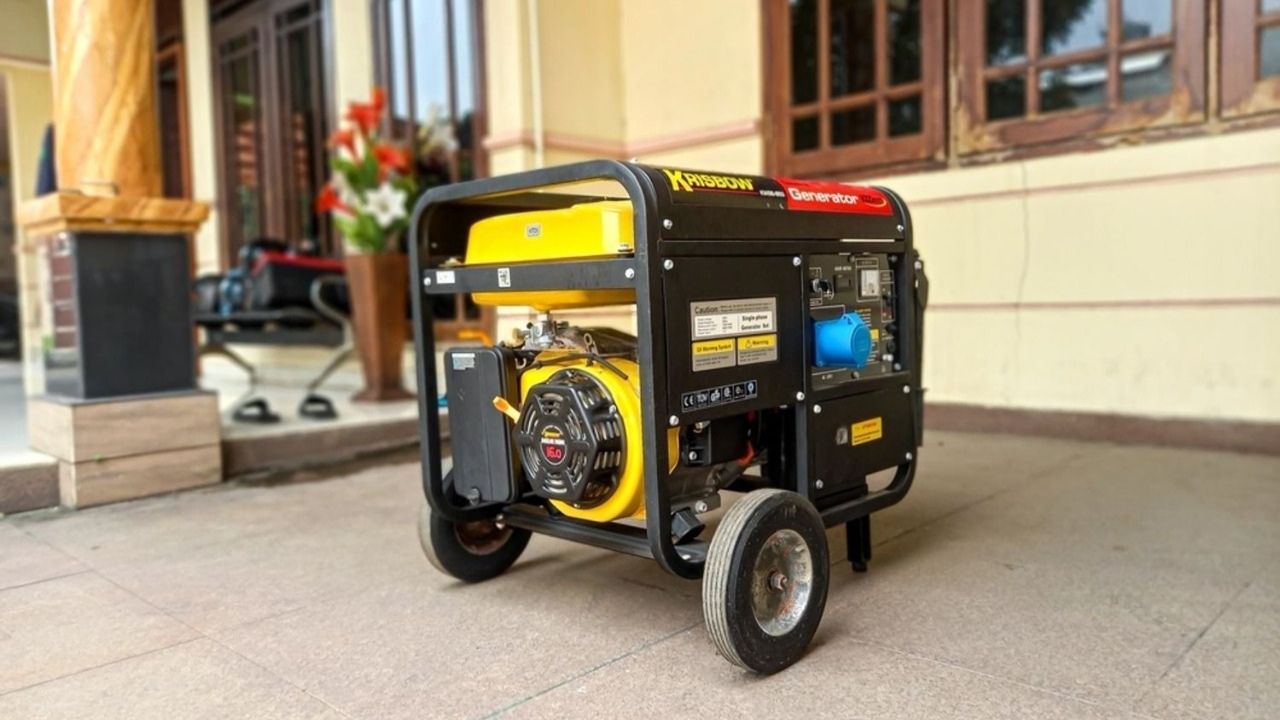
The generator habit that fills a house with fumes faster than you think
Photo credit: Budi Pratama19/Shutterstock.com
When the power cuts out and the house goes dark, it is tempting to drag a portable generator closer, crack a window, and assume a little exhaust will drift harmlessly away. In reality, that habit can fill your home with deadly fumes far faster than you expect, turning a convenience into a life‑threatening risk. Understanding how quickly carbon monoxide builds, and how little “ventilation” it takes to fail, is what keeps a blackout from becoming an emergency room visit.
The danger is not abstract. Portable generators send people to hospitals and morgues every year, often within minutes of being switched on in the wrong place. If you rely on one to keep food cold, medical devices running, or kids warm during an outage, you need a plan that treats carbon monoxide as seriously as fire or live electricity.
The everyday shortcut that turns lethal
The most dangerous generator habit is also the most ordinary: setting the unit just inside a garage, under a carport, or near a back door so you can keep it “out of the weather” and within easy reach. You might leave the garage door open or crack a window, convinced that some fresh air will dilute the exhaust. Instead, you create a funnel that pulls carbon monoxide straight into your living space, where it can accumulate to deadly levels before anyone notices. That is why safety campaigns repeat that using a generator indoors CAN KILL YOU IN MINUTES, even if you think you are being careful.
Federal guidance on What to Know About portable units is blunt for a reason. It labels generators and Carbon Monoxide as a DANGER, warning that Using a generator indoors CAN kill you even faster if it is in a basement, crawlspace, or attached garage. The fumes do not respect cracked doors or box fans, and once they seep into bedrooms or hallways, you may already be too disoriented to escape. Treat any setup that brings the machine under a roof or within a few steps of a doorway as a red flag, no matter how many neighbors insist they “do it every storm.”
Why “just inside the garage” is a carbon monoxide trap
Garages feel like outdoor space, but structurally they behave like part of your house. Warm air rising inside your home creates a slight negative pressure that constantly pulls air from attached spaces, including the garage. When you park a running generator there, even with the big door open, exhaust drifts upward and sideways through door gaps, shared walls, and tiny cracks in drywall or framing. Within a short time, the invisible gas that seemed to be blowing away is circulating through your kitchen and bedrooms instead.
Insurance and HVAC specialists warn that you should Never run a generator indoors, including in garages, and that Heating and ventilation systems can actually help spread fumes once they get inside. Jan guidance for home insurance policyholders stresses that even partially enclosed areas like carports or covered patios can trap exhaust, especially on still days. If you would not idle a car in that spot, you should not run a generator there either, no matter how heavy the rain or snow.
The 20‑foot rule that most people ignore
Safety experts repeat one simple distance rule because it works: keep your portable generator outside, at least 20 feet from the house, and point the exhaust away from doors, windows, and vents. That buffer gives carbon monoxide room to disperse before it can be pulled back toward the structure by wind or your home’s natural air currents. It also reduces the chance that fumes will drift into a neighbor’s open window or a shared stairwell in multi‑unit buildings.
Federal agencies advise you to DO operate portable generators outside only, at least 20 feet away from the home and other buildings, and to direct the exhaust away from any opening. Emergency medical providers echo that guidance, urging you to place the unit on a firm, dry surface where it cannot tip or flood, and to avoid tucking it under low decks or stairwells that can trap gases. If that means buying a longer, properly rated extension cord or having an electrician install an outdoor inlet, that is a small price to pay for keeping fumes out of your lungs.
How fast carbon monoxide builds up inside your home
Carbon monoxide is produced whenever fuel burns, but generators create it in concentrated bursts because they run at high loads for hours at a time. In a closed or semi‑closed space, those emissions can push indoor levels from harmless to fatal in the span of a single TV show. You will not see smoke, and the air will not feel thick. Instead, the gas quietly displaces oxygen in your bloodstream, starving your brain and heart while you keep folding laundry or scrolling your phone.
Health officials describe carbon monoxide as a colorless, odorless, and potentially deadly gas that can accumulate quickly when engines run in or near buildings. Emergency responders warn you to Never run a generator in an enclosed space or indoors, and to Always place it at least 20 feet from the house with the exhaust pointed away. Local disaster guidance notes that you must Avoid Carbon Monoxide Poisoning by recognizing that even a few minutes of operation in a garage or near an open window can be enough for Carbon to reach dangerous concentrations before alarms sound.
The silent killer: why you cannot rely on your senses
Part of what makes generator fumes so treacherous is how ordinary they seem. You might smell a faint exhaust odor at first, then nothing at all, and assume the risk has passed. In reality, your nose is detecting other combustion byproducts, not carbon monoxide itself. The gas has no smell, taste, or color, so your body has no built‑in alarm to warn you that every breath is delivering more poison. By the time you feel unwell, your judgment is already impaired.
Public health campaigns stress that you must Avoid Carbon Monoxide Poisoning by installing detectors rather than trusting your senses. Safety officials remind you that Carbon monoxide is a deadly gas produced by the incomplete combustion of fuel, and that the only reliable way to catch it early is with alarms on every level of your home and near sleeping areas. Video messages that ask, “Are you using a generator?” underline that You cannot smell or see carbon monoxide, and that if it builds up in your home, it can cause sudden illness or death long before anyone thinks to crack another window.
The human toll behind the statistics
Behind every safety bulletin is a pattern of tragedies that follow the same script: a storm knocks out power, someone brings a generator closer for convenience, and family members start feeling sick without realizing why. Federal data show that More than 80 consumers die each year from CO poisoning caused by portable generators, a figure that does not count the people who survive but live with lasting neurological damage. Those numbers stay stubbornly high because the underlying behavior, running engines too close to living spaces, has not changed enough.
Consumer safety officials warn that Using a generator indoors CAN KILL YOU IN MINUTES, and that the victims are often people who thought they were being cautious by cracking a door or window. Local news reports emphasize that Because these fumes are impossible to see, taste or smell, CO can kill you before you are even aware it is in your home, especially overnight during an extended power outage. Health experts explain that the effects of CO exposure range from headache and dizziness to loss of consciousness and death, and that a working CO alarm in your home is often the only reason a family wakes up in time to escape.
Recognizing symptoms before it is too late
When carbon monoxide starts to build, your body gives off subtle distress signals that are easy to dismiss as stress or a mild virus. You might notice a dull headache, nausea, or unusual fatigue, especially if you have been cleaning up storm damage or worrying about food spoiling. As levels climb, symptoms progress to confusion, vomiting, chest pain, and shortness of breath. In severe cases, people collapse without ever realizing they were in danger, which is why early recognition matters so much.
Safety officials describe these as the Signs of a silent killer, urging you to leave the area immediately and call emergency services if multiple people in a home feel sick at the same time while a generator is running. Public health messages repeat that Carbon monoxide is sometimes called the silent killer because it is invisible and odorless, and that you should never ignore flu‑like symptoms that appear suddenly during a power outage. Shortness of breath in children, older adults, or anyone with heart or lung disease is an especially urgent warning that fumes may be building faster than your body can cope.
Safe setup: from cords to electricians
Using a generator safely is not just about where you park it, but how you connect it. Back‑feeding your home through a dryer outlet or improvised wiring can energize utility lines and endanger lineworkers, while also increasing the risk of fire. The safer approach is to run heavy‑duty, outdoor‑rated extension cords directly from the generator to essential appliances, keeping cords out of standing water and away from pinch points like door thresholds. If you want a more seamless setup, a transfer switch installed by a professional is the gold standard.
Experts advise that if you own a portable generator, you should place it outdoors because its exhaust is colorless, odorless, and potentially deadly, and then let an electrician handle any permanent wiring. Guidance on How to safely set up and run your unit stresses using transfer switches instead of homemade connections, and checking cords for damage before every use. Generator Safety Tips on Carbon Monoxide remind you that You know better than to throw water at an electrical outlet or to stick your hand inside a running engine, and that the same common sense should apply to where you run your generator: Leave your generator outside and let qualified professionals design any system that ties it into your home’s circuits.
Smarter alternatives and long‑term habits
If you live in a place where outages are frequent, it is worth stepping back from the scramble of the next storm and rethinking how you power your home. That might mean investing in a smaller, high‑efficiency generator that can sit safely 20 feet away instead of a massive unit you are tempted to tuck under the eaves, or exploring battery‑based systems that do not produce exhaust at all. Some modern portable power stations can keep phones, laptops, and medical devices running quietly indoors, while a fuel‑powered generator outside handles only the heaviest loads through a transfer switch.
Energy experts note that Understanding how CO is formed is only the first step, and that The Hidden Dangers of Improper Generator Use will not disappear until you build safer routines into your storm planning. Guidance from Apr safety briefings explains that even newer models with CO‑sensing shutoffs are not foolproof, and that unfortunately, it is not enough to rely on built‑in features if you still park the unit in a garage or near open windows. By treating distance, ventilation, and alarms as non‑negotiable, and by practicing your setup on clear days instead of in the dark during a crisis, you turn a risky machine into a manageable tool rather than a silent threat.
Federal agencies like the CPSC and health partners have spent years documenting how predictable and deadly generator‑related poisonings are, and they advise consumers to operate portable generators outside only and keep them at least 20 feet away from any non‑basement living space. Detailed investigations into Proper use versus common shortcuts show that the difference between a safe night and a fatal one often comes down to a few feet of distance and a working alarm. Social media campaigns that ask, Are you using a generator? and remind You that you cannot smell or see carbon monoxide are trying to rewrite those habits before the next storm hits.
Comprehensive safety sheets on More generator guidance repeat that Using a generator indoors CAN KILL YOU IN MINUTES and that more than 80 people die each year from these preventable incidents. Local explainers underline that Jan warnings matter Because these fumes are impossible to see, taste or smell, and that the effects of CO exposure can be permanent even when people survive. Technical blogs on The Hidden Dangers of Improper Generator Use stress that Understanding the physics of exhaust does not help if you still wheel the unit into a garage for convenience. Practical guides like Generator Safety Tips on Carbon Monoxide drive home that You must run your generator outside, far from openings, every single time. If you build that discipline now, the next time the lights go out you will reach for distance and detectors as quickly as you reach for fuel.
Like Fix It Homestead’s content? Be sure to follow us.
Here’s more from us:
- I made Joanna Gaines’s Friendsgiving casserole and here is what I would keep
- Pump Shotguns That Jam the Moment You Actually Need Them
- The First 5 Things Guests Notice About Your Living Room at Christmas
- What Caliber Works Best for Groundhogs, Armadillos, and Other Digging Pests?
- Rifles worth keeping by the back door on any rural property
*This article was developed with AI-powered tools and has been carefully reviewed by our editors.