Calibers That Handle Both Pests and Deer So You Don’t Need Two Rifles
Photo credit: WHO_TEE_WHO/YouTube.
You do not need a safe full of rifles to cover everything from groundhogs in the hayfield to whitetails slipping through the timber. With the right cartridge and a sensible setup, you can anchor varmints cleanly, drop deer ethically, and still keep recoil, cost, and complexity under control. The key is choosing calibers that balance flat trajectory and modest kick with enough bullet weight and energy to handle bigger game when the season changes.
Instead of chasing every new chambering, you are better served by a short list of proven rounds that have already earned a reputation for versatility. When you understand how these cartridges behave in the field, and how they compare to one another, you can pick a single rifle that genuinely does double duty on pests and deer without feeling like a compromise every time you pull the trigger.
What “Pest‑to‑Deer” Versatility Really Means
When you talk about one rifle for both pests and deer, you are really talking about managing tradeoffs. Varmints like prairie dogs, coyotes, and groundhogs reward high velocity, light bullets, and minimal recoil so you can spot your hits and shoot often. Deer, by contrast, demand controlled expansion, adequate penetration, and enough retained energy at realistic ranges to break shoulders or reach vitals from imperfect angles. A crossover caliber has to live in the overlap of those needs rather than at either extreme.
That is why cartridges built purely for handguns or deep concealment, such as 380 and 45 in the ACP family, sit on the sidelines for this discussion even though they appear in broad ammo catalogs like Ammo View All Rimfire Calibers. You are looking instead at mid‑bore rifle rounds that can launch streamlined bullets fast enough to stay flat on small targets yet still carry the sectional density and construction needed for deer‑sized animals. Once you define versatility that way, a handful of chamberings consistently rise to the top.
Why .243 Winchester Sits At The Center Of The Conversation
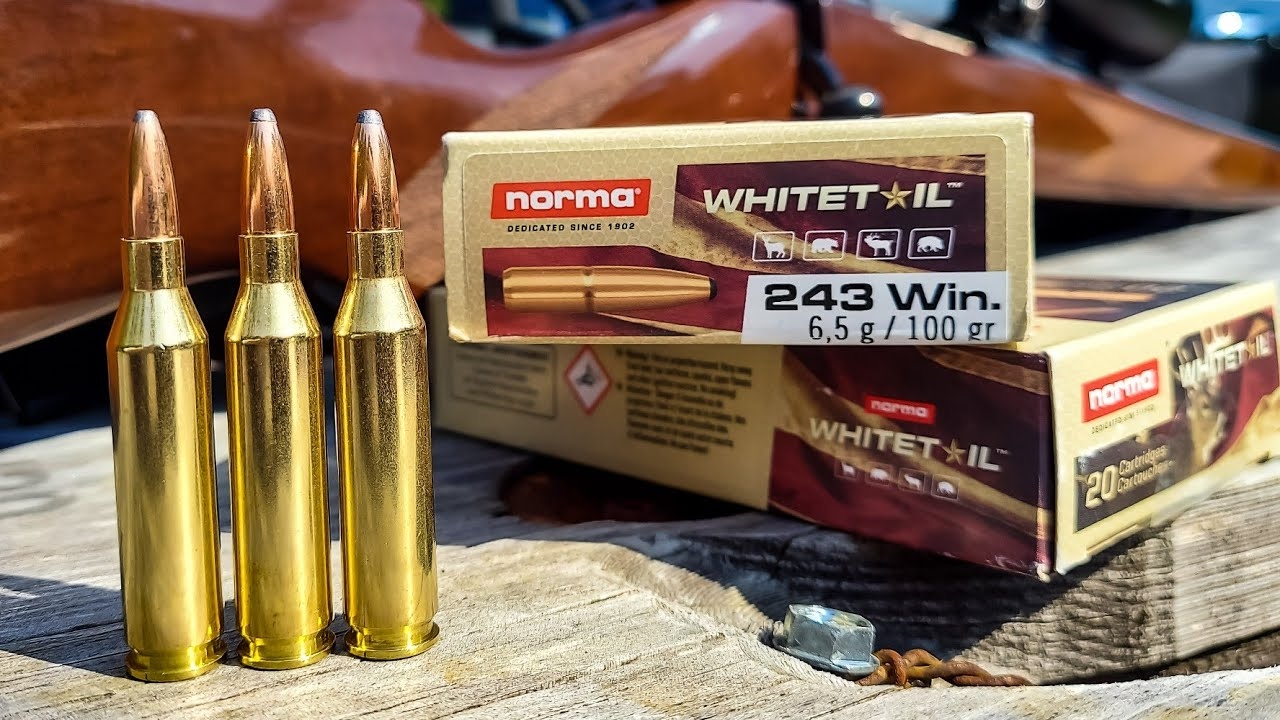
If you want a single rifle that can spend summer on coyotes and fall in the deer stand, the .243 Winchester is often the first recommendation for good reason. It fires relatively light bullets at high speed, which keeps trajectory flat and recoil low enough for new shooters, smaller‑framed hunters, or anyone who values quick follow‑up shots. Expert overviews of deer cartridges repeatedly single out 243 Win as a mild, accurate option that still meets ethical standards for whitetails when you choose appropriate bullets and keep your distances realistic.
That balance is why some writers describe 243 as a classic crossover that can handle varmints with lighter projectiles and still step up to bigger stuff in a pinch when loaded with sturdier hunting bullets, a versatility highlighted in discussions of 243 versatility. When you compare it directly to smaller rounds like 223 Remington, detailed cartridge breakdowns note that the 243 is the better hunting cartridge for deer because it can push heavier bullets with more energy, even though both share similar roots as light‑recoiling options, a point underscored in formal Differences Between 243 and 223 analyses.
.223 Remington And 5.56: Where The Line Really Is
Many hunters already own an AR‑15, so it is natural to ask whether 223 Remington or 5.56 can cover both pests and deer. On the pest side, the answer is almost always yes. Light, fast bullets, minimal recoil, and inexpensive practice ammo make 5.56 a standout for high‑volume varmint shooting, and modern AR‑15 hunting guides describe 5.56 as hard to beat when you are focused on coyotes and similar targets, especially in the “varmint slayer” role highlighted in coverage of best AR‑15 hunting rounds.
On deer, the story is more complicated. While some states allow 223 for whitetails and modern bonded or monolithic bullets have improved performance, detailed comparisons between 243 and 223 emphasize that the smaller round simply carries less energy and uses lighter bullets, which narrows your margin for error on bigger animals. When analysts spell out cartridge specifications and performance, they consistently conclude that 243 is the better hunting cartridge for deer, while 223 remains more at home in the varmint and predator niche, a distinction made explicit in side‑by‑side Win and Rem Cartridge Specifications reviews.
.308 Winchester: The Heavyweight That Still Crosses Over
If you want a single rifle that can handle deer, hogs, and even larger game while still being manageable for pest control, 308 Winchester deserves a hard look. It has become one of the most widely recommended big game cartridges because it offers a strong mix of bullet weight, energy, and availability without the punishing recoil of magnums. Analysts who are forced to pick just one big game round often land on the 308, noting that it meets a broad set of criteria and delivers substantial energy at the muzzle, a case made plainly in arguments that frame 308 as The Pick for all‑around use.
From a versatility standpoint, 308 can be loaded with lighter bullets for coyotes and hogs or heavier controlled‑expansion projectiles for elk and big northern whitetails. Detailed ballistics comparisons between 243 and 308 point out that while 243 shoots flatter and recoils less, the 308 carries more energy and handles heavier bullets, which matters if your deer rifle might also see duty on larger animals, a tradeoff explored in depth in the Ballistics Performance Comparison of 243 vs 308 Cartridges. When you combine that with the widespread availability of factory loads and rifles, 308 Winchester becomes a logical choice if your “pest” category includes hogs or coyotes but your priority is still deer and bigger game.
Classic Deer Rounds That Still Pull Double Duty
Some cartridges were born as deer rounds but have proven flexible enough to handle lighter work when needed. The .30‑30, for example, has seen a quiet resurgence among experienced hunters who appreciate its effectiveness in thick cover and its compatibility with handy lever‑action rifles. Seasoned voices who have spent decades with modern and classic chamberings describe themselves as recent converts to the great old .30‑30 in certain applications, especially when they discuss how some rifles can serve as crossover deer and varmint tools, a perspective that surfaces in detailed notes that begin with the words GETTING STARTED and go on to praise such crossover deer/varmint rifles.
At the heavier end, long‑proven big game rounds like 30‑06 remain fully capable of handling any whitetail or mule deer you are likely to encounter, and they can be pressed into service for elk as well. Analyses of elk and deer crossover cartridges point out that 30‑06 is still a fine choice and that any cartridge considered adequate for elk will also be more than enough for the largest northern whitetail, which can be as heavy as any mule deer, a point made clearly in discussions that open with However and then walk through which magnums are in the running. While these classics are not ideal for high‑volume varmint shooting, they can certainly dispatch the occasional coyote or hog that wanders into your deer woods.
Real‑World Hunter Consensus: What People Actually Carry
Beyond formal ballistics charts, it is worth paying attention to what active hunters are choosing when they want one rifle to do most things. In online communities focused on suppressors and practical field use, you see recurring shortlists that put 308, 6.5, and 270 at the top for suppressed whitetail hunting, with users noting that all of the above work well on deer and pair nicely with modern cans, a sentiment captured in one discussion that begins in Jan and explicitly lists All of the above work well while also mentioning that some shooters still like grabbing the 30‑06.
Broader hunting forums show a similar pattern. When someone asks for deer rifle recommendations, the comments often stack up with familiar names in a rough order of preference, such as 30‑06, 308, 270, 7mm‑08, 6.5 Creedmoor, or 243, reflecting a consensus that these mid‑bore cartridges cover almost every deer scenario and can be adapted to lighter work when needed. One widely shared thread in Sep, captured in a Comments Section that includes the username BeerGunsMusicFood, lays out that exact sequence and reinforces how often 308 and 270 appear near the top of real‑world lists.
Regional Realities: Southern Appalachia To Rifle Counties
Your landscape and local regulations should shape how you think about a dual‑purpose rifle. In the Southern Appalachia region, for example, hunters often face steep terrain, mixed hardwoods, and the possibility of both deer and hogs on the same property. In that context, some shooters planning for 2026 describe 6.5 Creedmoor as absolutely on the table because its moderate muzzle velocity keeps recoil comfortable while still holding energy well downrange, even as they weigh budget constraints and rifle quality, a balancing act laid out in a Jan discussion of a Project 2026 deer/hog rifle where the user zSchlachter talks about not sacrificing quality but keeping it doable.
Regulations also matter. In some states, shotgun‑only or straight‑wall zones are giving way to rifle seasons as wildlife agencies and local advocates review safety and effectiveness data. In Minnesota, for instance, advocates have argued that rifles are the best choice for the state’s future deer seasons and point to counties like Lyon that have already moved in that direction, urging other Counties to follow suit by embracing rifles for 2026 and beyond, a case made in a factual support guide focused on Minnesota rifle hunting. As more areas open to centerfire rifles, the appeal of a single, versatile caliber that can handle both pests and deer on the same farm only grows.
Optics, Effective Range, And Making Your Caliber Work Harder
Even the most versatile cartridge cannot do its job if you cannot place the shot, and that is where optics and realistic range expectations come in. For crossover calibers like 243 Winchester or 6.5 Creedmoor, effective range on deer is often limited more by the shooter and the glass than by raw ballistics. Detailed discussions of popular deer calibers note that a 243 Winchester or a 6.5 can retain enough energy over long distances to remain effective, especially when paired with quality scopes that offer appropriate magnification and holdover references, a point illustrated in guides that list Top Riflescope Options for Deer Hunting Calibers such as the Presido 3‑18×50 MR2 Rifle Scope and describe how The Presidio Riflescope helps with energy retention over long distances.
For pest control, the same optic can be dialed down for a wider field of view and quicker target acquisition, letting you transition from a groundhog at 80 yards to a coyote at 250 without changing rifles. The trick is to zero your rifle for the most demanding shot you expect to take on deer, then learn your holds for closer, smaller targets. When you combine a flat‑shooting caliber like 243 or a well‑balanced round like 308 with a modern scope that tracks reliably, you effectively stretch the usefulness of that one rifle across a much wider set of real‑world scenarios.
Putting It Together: Matching A Caliber To Your Actual Season
Once you understand how these cartridges behave, the choice comes down to your personal mix of pests and deer, your tolerance for recoil, and the distances you actually shoot. If your year is dominated by coyotes, groundhogs, and the occasional medium‑sized whitetail in open country, a 243 Winchester with a good scope is hard to beat, especially given how often experts and hunters alike highlight its accuracy and mild manners in both formal reviews and informal comparisons. If your focus is heavier deer, hogs, and maybe elk, a 308 Winchester or 30‑06 gives you more bullet weight and energy while still being manageable for occasional varmint duty, a balance that shows up repeatedly in both ballistics charts and the way hunters rank 308 and 270 in their go‑to lists.
For many shooters, the sweet spot is a single mid‑bore rifle, chambered in something like 243, 6.5 Creedmoor, 270, or 308, topped with a versatile optic and fed a carefully chosen hunting load that performs on deer but still flies flat enough for pests. Analysts who survey the most versatile hunting cartridges often start with 308 Winchester and note that if you cannot find a rifle chambered in it, you are probably not looking very hard, a wry observation that appears in discussions of 308 Winchester versatility. When you pair that kind of ubiquity with the practical field experience reflected in hunter forums and expert cartridge rundowns, the path to a single rifle that handles both pests and deer becomes far clearer than the crowded ammo shelf might suggest.
Like Fix It Homestead’s content? Be sure to follow us.
Here’s more from us:
- I made Joanna Gaines’s Friendsgiving casserole and here is what I would keep
- Pump Shotguns That Jam the Moment You Actually Need Them
- The First 5 Things Guests Notice About Your Living Room at Christmas
- What Caliber Works Best for Groundhogs, Armadillos, and Other Digging Pests?
- Rifles worth keeping by the back door on any rural property
*This article was developed with AI-powered tools and has been carefully reviewed by our editors.