What Caliber Makes the Most Sense for Snapping Turtles, Beavers, and Water Pests?
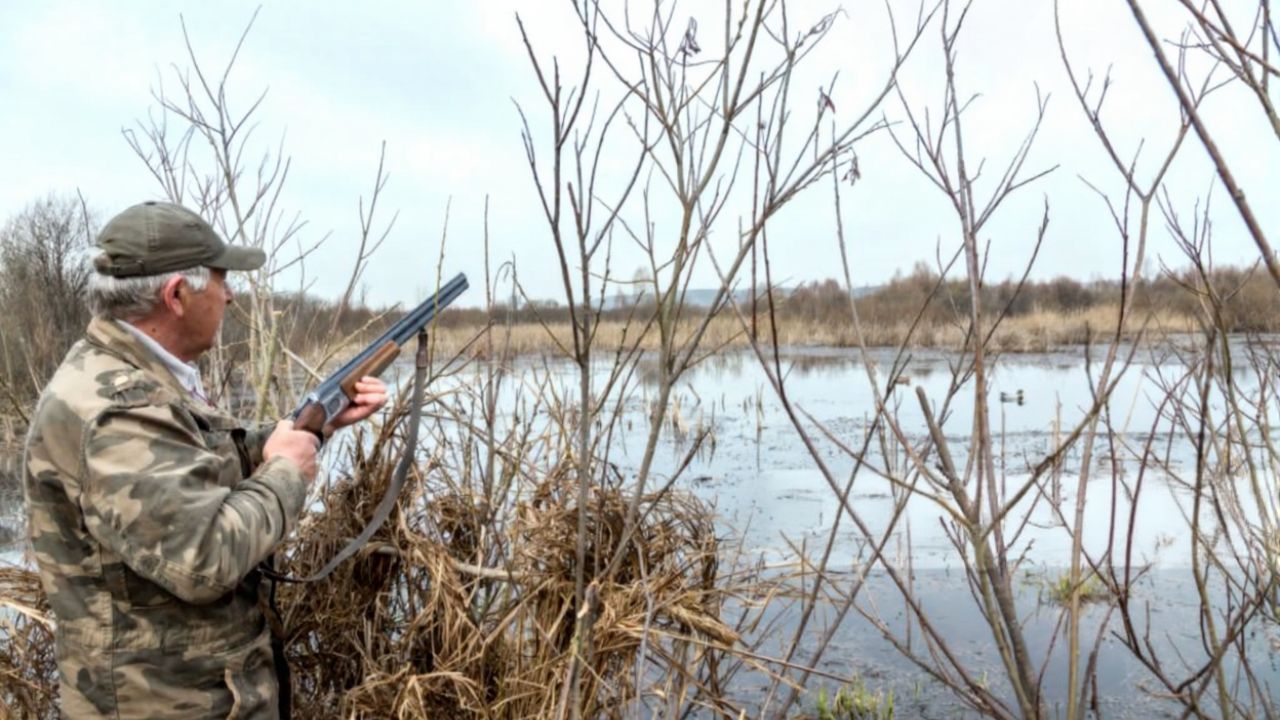
Photo credit: Ohotnik/istock.com
Waterfront landowners eventually discover that snapping turtles, beavers, and other aquatic pests are not just background wildlife, they are engineers and scavengers that can reshape a pond, flood a field, or strip a shoreline of trees. When you decide lethal control is necessary, the caliber you choose determines not only how cleanly you dispatch the animal but also how safely you shoot over water and around homes, livestock, and roads. To make sound choices, you need to match cartridge, platform, and technique to each species’ anatomy and behavior instead of reaching for whatever rifle is already in the truck.
That means thinking beyond a simple “big versus small” debate and weighing penetration, pellet count, and ricochet risk alongside local regulations and your own marksmanship. The most sensible calibers for turtles, beavers, and similar water pests tend to be modest in power but precise in placement, backed by shotguns and buckshot only when ranges are short and backstops are certain. With that framework, you can build a practical, ethical toolkit that fits your shoreline rather than guessing every time a head pops up in the cattails.
Understanding Water Pests and Why Caliber Choice Matters
You face a very different ballistic problem when you shoot into or near water than when you shoot across a dry field. Bullets that miss or exit can skip unpredictably off the surface, so you need cartridges that you can place precisely and that you can keep on a safe trajectory. Guidance on otter control, for example, stresses that a .22 caliber centerfire cartridge such as a .22-250 or .223 is sufficient for medium sized aquatic mammals, but it also warns you to manage the risk of bullets deflecting off water, which is a reminder that your caliber decision is inseparable from your shooting angles and backdrop 250 223. You are not just picking power, you are picking how controllable and predictable each shot will be in a reflective, hard to read environment.
At the same time, the animals you are targeting are tougher than they look. Beavers, for instance, have an aquatic lifestyle and build partially submerged dens under heavy masses of earth and sticks, which gives them natural armor and escape routes that frustrate predators and shooters alike beaver’s aquatic lifestyle. Snapping turtles carry their own bone and shell protection, and invasive rodents like nutria are large, semi aquatic animals that can soak up marginal hits. Caliber choice therefore has to balance enough penetration to reach vital organs through hide, fat, and sometimes shell, without jumping to oversized rounds that increase ricochet risk and meat or pelt damage.
Legal, Ethical, and Safety Ground Rules Before You Load Anything
Before you think about calibers, you need to confirm that you are even allowed to shoot the species in question, at that location, with that firearm. Some states treat beavers as furbearers that require specific permits, and guidance on human wildlife conflicts notes that different States have their own permitting systems for when and how you can legally remove problem animals Beavers States. River otters may be fully protected in your area, which is why some shooters discussing calibers for beaver and otter control emphasize that the otters are protected and that you must know the law before you ever chamber a round The otters are protected up. You also need to factor in local rules on shooting after dark, from boats, or across public waterways.
Ethics and safety overlap here. Basic firearm safety guidance tells you to Never shoot at movement and to make sure you know what is behind your target, and it specifically warns you not to shoot at flat hard surfaces where bullets can ricochet Never. Water behaves like a hard surface at shallow angles, and reporting on ricochets points out that Another way to avoid ricochets is to use frangible bullets, which are not suitable for hunting but illustrate how much bullet construction affects deflection Another Though. When you combine those realities with the fact that beavers can become aggressive if their lodge feels threatened, especially when kits are inside, you have a strong incentive to choose calibers you can place quickly and accurately rather than relying on sheer power to solve a bad angle or rushed shot Beavers can become aggressive.
Why Traps and Non‑Firearm Methods Still Matter for Snapping Turtles
Even if you are comfortable with a rifle, you should treat firearms as only one tool in your snapping turtle control kit. Wildlife agencies that deal with nuisance turtles emphasize that Hoop net traps are the most effective way to remove damage causing common snapping turtles, describing these barrel shaped traps as the primary method for sustained population reduction in ponds and small lakes Title Hoop. Traps work around the clock, do not create noise or stray bullets, and let you relocate or dispatch animals in a controlled setting instead of trying to hit a small head at distance.
Firearms still have a role, but they are best used as a targeted follow up. Technical guidance on turtle damage notes that Shooting can reduce populations of turtles in small ponds and that the technique is most appropriate for basking or surface swimming animals, provided you check regulations before you shoot Shooting technique. Anglers discussing how to catch snapping turtles often echo that view, suggesting that you would be better off building a turtle trap and or shooting them off logs with a .22 only when you have a clear shot and a safe backstop I think you would be. That combination of trapping first and careful shooting second keeps your caliber choices modest and your risk profile low.
Rimfire Realities: .22 LR and .17 HMR on Turtles and Beavers
For many landowners, the default tool for water pests is a rimfire rifle, usually a .22 Long Rifle. There is a reason for that. The .22 LR is widely described as the most popular cartridge worldwide because it is inexpensive, easy to find, and has very low recoil, which makes it easier for you to place a precise head shot on a small target at modest ranges Why Chose It The Long Rifle. Shooters who target turtles from their porches report using a 22lr with great success, and some note that Then they tried a 17 hmr and found it AWSOME for head shots that either drop the turtle on the spot or cause it to float up shortly after Jul Then AWSOME Pop. That kind of anecdotal evidence lines up with the basic ballistics: both cartridges are flat shooting enough for 30 to 60 yard work on small skulls.
The same pattern shows up with beavers. In one discussion, a Family of landowners asked for help with a beaver problem and the shooter considered using a 22lr alongside a 300 caliber rifle, only to be told that a .22 is adequate if you focus on head shots at reasonable distances Jan Family of. Another commenter in that thread suggested that at 30 yards they would probably use a 22 and Just make sure you hit them in the head, while others preferred a .17 HMR or .22 magnum simply because those rounds shoot flatter and carry a bit more energy for marginal angles At 30 yards I’d Just. Canadian shooters dealing with Beaver trouble echo that logic, with one saying a friend uses a .17HMR and another replying that Personally they would go with a .22 mag or .22 Hornet for more authority on body shots Dec Beaver Personally. The takeaway for you is that rimfires work well when you can see the head clearly and keep ranges tight, but they give you less margin for error if the animal is quartering away or only briefly exposed.
When a Shotgun Makes More Sense Than a Rifle
There are times when a shotgun is simply the more practical and safer choice around water, especially at close range. Official beaver control guidance in South Carolina, for example, recommends Use of a 12 gauge shotgun with #4 buckshot as the preferred option for shooting beavers, explaining that larger sizes of buckshot such as 00 or 000 may have too few pellets to reliably hit a small target at night or in brush Use of 000. That advice mirrors predator hunting practices, where Shotguns with a 12 ga and #4 buckshot are popular for close range encounters with bobcats and similar sized animals in thick cover Shotguns. In both cases, the pattern of pellets gives you a little forgiveness on moving targets while still delivering enough penetration at modest distances.
Shotguns also let you tailor loads to your surroundings. In discussions about calibers for beaver and otter, some shooters note that 4 buck would work well for close work in an irrigation ditch, provided you respect the fact that otters may be protected and that you must be absolutely sure of your backstop before firing Apr Sign In SASS Wire Saloon Have. The same logic applies if you ever need to deal with invasive rodents like nutria, which some Floridians call water rat and describe as large semi aquatic rodents that damage wetlands and levees You Some. At very short ranges in dense vegetation, a 12 gauge with appropriate buckshot or heavy shot can be more controllable and less prone to long range ricochet than a centerfire rifle, as long as you keep your shots within the effective pattern distance.
Centerfire Choices: From .223 to Big Game Rounds
Once you move beyond rimfires and shotguns, you enter the world of centerfire rifles, where it is easy to overdo it. Varmint and predator hunters often praise the .223 Remington and 5.56 NATO as the world’s most versatile varmint and predator cartridges, noting that nearly everybody has one and that they offer flat trajectories with manageable recoil for coyotes and similar game Let Remington NATO 223 5.56. The same .223 class of cartridge appears in otter management recommendations, which state that a .22 caliber centerfire such as a .22-250 or .223 is sufficient for dispatching these mid sized aquatic mammals when used carefully over water 22 caliber centerfire. For you, that means a .223 can double as a coyote rifle and a beaver or nutria tool, provided you are disciplined about shot angles and backstops.
On the other end of the spectrum, some shooters consider much larger calibers than they really need. In the beaver caliber discussion, one person mentioned having a 22lr and a 300 class rifle available, which illustrates how tempting it is to reach for a big game round simply because it is already in the safe A 556 with green tip 300. European guidance on wild boar hunting, by contrast, talks about completing a restricted range of suitable and tested calibers for heavy game, listing cartridges like 9,3 × 74 R that are clearly overbuilt for beavers or turtles but appropriate for large, tough animals in dense forests It is necessary to complete. Your goal with water pests is the opposite: stay as light as you can while still guaranteeing a quick kill, because every extra foot pound of energy that you do not need simply increases the risk of over penetration and dangerous ricochets.
Airguns and Sub‑Caliber Options for Small Water Pests
Not every water pest calls for a firearm that burns powder. Modern air rifles have become serious tools for Small Game, and guidance on game and pest hunting notes that Rifles that work well for small game often use multi pump, spring or gas piston, or pre charged pneumatic (PCP) powerplants, with preferred calibers in the .22 to .25 range for reliable penetration on animals like squirrels and similar sized pests Small Game Rifles PCP. A detailed hunting caliber chart likewise lists .177 Pellet and .17 Hornady Magnum Rimfire among the most popular small game options, underscoring how effective tiny projectiles can be when you place them precisely at modest ranges Oct 177 Pellet Hornady Magnum Rimfire. For you, that opens the door to quiet, low risk control of very small pests around barns, docks, and garden ponds.
Airguns are not a cure all, and you should not expect them to perform like firearms on larger animals such as beavers. However, they can be ideal for dispatching small turtles or invasive birds that share the same water as your bigger problems. One shooter with a 5 7 acre pond described shooting turtles from their front deck and paying attention to where each hull landed on the bank, a reminder that even with low powered tools you still need to track your shots and respect your neighbors and livestock Jul I have a 5-7. If you are already comfortable with air rifles for squirrels or pigeons, you can extend that skill set to certain water pests, as long as you stay within the limits of your equipment and avoid using airguns where a clean kill is uncertain.
Real‑World Setups: Matching Caliber to Distance, Light, and Behavior
Once you understand the strengths and weaknesses of each caliber class, you can start matching them to real scenarios on your property. If you are shooting beavers at night, for example, one experienced hunter advises that if you have to stick with a rimfire you should go with either a .22 mag or .17 HMR, because beavers are tough and those cartridges give you a little more reach and authority than a standard .22 LR when you are trying to get rid of them in low light Jan If you have to stick. European ammunition makers also point out that Around the world, regulations differ on what guns are legal for beaver hunting, and that In Sweden for instance, a 3,2 gram bullet from a centerfire rifle can be used effectively because beavers are sturdy and tough creatures that demand solid penetration Around the In Sweden for. Those examples show you how to scale up from rimfire to centerfire as distance and toughness increase.
On the turtle side, forum users who have experimented with multiple calibers report that a .22 LR works well for close shots, but that a .17 HMR can be spectacularly effective when you Pop them in the head at slightly longer ranges, often causing the turtle to either sink immediately or float up dead shortly after I’ve used a 22lr. Anglers who see snapping turtles on logs sometimes suggest that you think in terms of building a trap first and only then consider shooting them off logs with a .22 when you have a stable rest and a clear line of fire Mar. In both cases, your choice of caliber is tied directly to how far you are shooting, how steady you can hold, and how much of the animal is exposed above the waterline.
Building a Practical Caliber Toolkit for Your Shoreline
When you put all of this together, the most sensible approach is to build a small, overlapping toolkit rather than hunting for a single magic caliber. For many landowners, that toolkit starts with a .22 LR or .17 HMR for precise head shots on turtles and close range beavers, backed up by a 12 gauge with #4 buckshot for situations where you need a pattern at very short distances in brush or at night, as recommended in official beaver control guidance that favors #4 over 00 or 000 buckshot for pellet count and coverage 12-gauge shotgun with #4. You can then add a .223 class rifle if you also deal with coyotes or need more reach on larger pests, taking advantage of the cartridge’s reputation as a versatile predator round while still respecting its potential for long range ricochet best coyote caliber.
Finally, you can round out your options with air rifles and traps. High quality PCP airguns in .22 or .25 give you quiet control over very small pests around buildings, while Hoop net traps and similar devices provide continuous, low risk removal of snapping turtles and other aquatic troublemakers Hoop-net traps. If you already own a .22 Winchester Magnum Rimfire or other small game rifle, you can fold it into this system as well, since that WMR round offers considerably more punch than a .22 LR while still being tailored to small and medium game Winchester Magnum Rimfire WMR. The key is to think in terms of roles rather than calibers in isolation, so every firearm and trap you deploy has a clear job and a clear safety plan attached.
Like Fix It Homestead’s content? Be sure to follow us.
Here’s more from us:
- I made Joanna Gaines’s Friendsgiving casserole and here is what I would keep
- Pump Shotguns That Jam the Moment You Actually Need Them
- The First 5 Things Guests Notice About Your Living Room at Christmas
- What Caliber Works Best for Groundhogs, Armadillos, and Other Digging Pests?
- Rifles worth keeping by the back door on any rural property
*This article was developed with AI-powered tools and has been carefully reviewed by our editors.