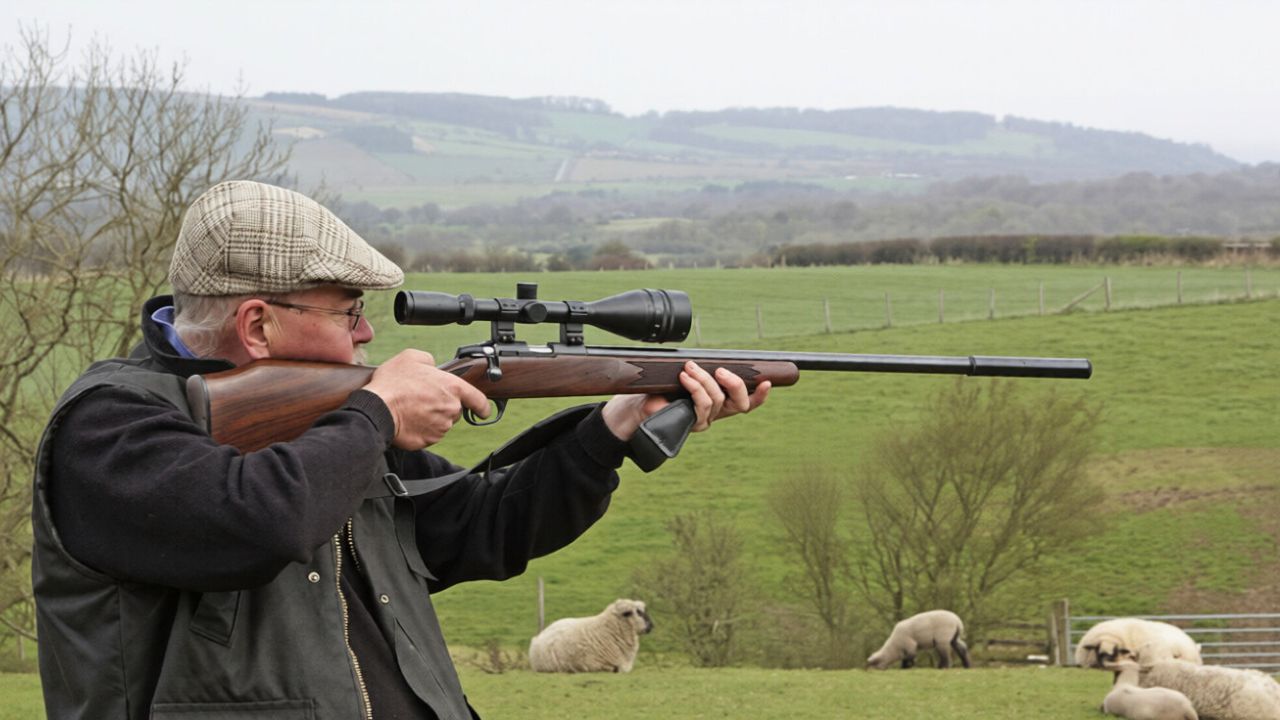
What Caliber to Reach for When Stray Dogs Start Bothering the Livestock
Photo credit: Shank_ali/istock.com
When dogs start harassing your herd, you are not choosing a caliber in the abstract, you are making a fast decision about life, death, and liability on your own land. The right rifle or shotgun is only part of that equation, which also includes local law, animal welfare standards, and your own ability to place a shot under pressure. Before you reach for any firearm, you need a clear plan for when lethal force is justified, what cartridge truly fits the job, and how to keep both your livestock and your legal standing intact.
Start With the Law, Not the Rifle Rack
Your first responsibility is to know exactly when you are legally allowed to shoot a dog that is chasing or attacking stock. In California, for example, state law allows a person to kill a dog that is “found in the act of killing, wounding, or persistently pursuing” livestock, and it also protects “feeder livestock that are worried” by repeated harassment, as summarized in guidance on dogs worrying livestock. That same overview notes that these protections are narrow and fact specific, which means you must be able to articulate what the dog was doing and why you believed your animals were in immediate danger.
Other states go even further in spelling out what you can do and what the dog’s owner must pay. Arizona statute 3‑1311, titled Dogs killing or chasing livestock, allows “any person” who discovers a dog killing, wounding, or chasing livestock to stop the attack and then makes the dog’s owner liable for the value of the animals that were killed or hurt. At the same time, a South Carolina incident involving a man named Todd shows how quickly a property owner can face scrutiny after shooting dogs he said were threatening his chickens, especially when neighbors argue he should have called them first. You are operating in that tension between your right to protect animals and the expectation that you will use restraint.
Local Penalties And Why “Last Resort” Really Matters
Even when the law recognizes your right to defend livestock, it can punish you harshly if you step outside narrow rules. In South Carolina, for instance, proposed changes collected in Section 47‑3‑620 would make certain violations a felony, with fines and potential prison time for people who unlawfully injure or kill dogs. That kind of language is a reminder that you must be able to show that the animal you shot was actively attacking or clearly about to attack, not simply wandering across a fence line.
Law enforcement voices tend to echo that caution. In Central Texas, game warden Christopher Sanchez with Texas Parks and Wildlife has explained that if wild animals are harming your livestock, you may have legal options to kill them, but “none of us like to see animals suffer” and the priority is to act lawfully. Animal law experts note that, Ironically, dogs that chase livestock often face harsher and more immediate consequences than people who neglect them, which is another reason to document what happened and to contact authorities whenever possible before or immediately after you pull the trigger.
Non‑Lethal Tools And Management You Should Try First
Caliber talk can easily overshadow the quieter work that keeps you from ever needing to fire a shot. Trainers who specialize in behavior problems emphasize distance and de‑escalation, noting that “for some dogs, that is a long long ways away” and that you should only move closer when the animal is calm, not reactive, as explained in advice on how to stop dog aggression. On a working farm, that translates into air horns, spotlights, and vehicles used to haze dogs away from stock before they commit to an attack.
Physical infrastructure matters just as much. Local animal keeping policies, such as the Wentworth Shire Council’s PR015 guidelines, stress that the kind of animal you keep must match the size of the yard and that fencing should prevent escape or attack by predators. Livestock guardian dogs, secure night pens, and motion‑activated lights are all part of the same philosophy: you reduce the odds that a stray dog ever gets close enough to force you into a split‑second shooting decision.
When Lethal Force Is Justified, Shot Placement And Firearm Type Come Next
If a dog is already on a lamb or has a calf cornered, your priority shifts to stopping the attack as quickly and cleanly as possible. Veterinary and animal welfare manuals emphasize that rifles are usually the safest and most humane tool when you must shoot from a distance, because they deliver enough energy to penetrate the skull or vital organs reliably, as detailed in research noting that Rifles are the preferred firearm for euthanasia at range. That same guidance points out that a 0.22 magnum or higher caliber is needed for consistent penetration, which is a useful floor when you think about cartridges for problem dogs.
At very close range, a shotgun can be effective, but its limitations are real. National wild dog control standards note that 12‑gauge shotguns loaded with heavy shot such as No. 2, SSG and AAA may be effective only out to about 20 metres. Beyond that, pattern spread and energy loss raise the risk of wounding rather than killing, which is both an animal welfare problem and a legal one if a suffering dog escapes onto a neighbor’s land. You should therefore think of the shotgun as a yard‑tool for emergencies near the barn, not as your primary solution across open pasture.
Predator Calibers That Translate Well To Stray Dogs
Once you move past the question of “if” you can shoot to “how” you should do it, predator cartridges become the logical starting point. Professional pest control guidance recommends Small bore, high velocity, centre fire rifles with telescopic sights for ground shooting of wild dogs, listing options like .22‑250 and .223 that balance flat trajectory with manageable recoil. Those same traits help you place a precise shot on a moving dog without over‑penetrating into a paddock full of cattle.
Hunters who specialize in coyotes and foxes have refined this logic over decades. One detailed comparison of predator rounds notes that the .22‑250 Remington can push a 55‑grain bullet to almost 3,700 feet per second, giving it a very flat trajectory and strong terminal performance on medium‑sized predators. Another survey of classic varmint rounds lists the .243 Win as one of the best predator cartridges of all time, noting that the .243 Winchester was Introduced in 1955 and remains a favorite for those who want a dual‑purpose deer and coyote rifle. For stray dogs that are roughly coyote sized, any of these cartridges will deliver more than enough energy if you do your part behind the trigger.
.223 Remington Versus .22‑250 And Other Mid‑Range Choices
Among working ranchers, the .223 has become the default answer when someone asks what to keep in the truck. Predator specialists describe the .223 as the Best All‑Around Caliber for predators, noting that One of the most popular and versatile options is the .223 Rem. A separate look at homestead defense argues that Why .223 Remington is hard to beat around small livestock, pointing out that for many homesteads a .223 is the most practical “first” rifle because ammunition is widely available and recoil is light enough for most family members to handle.
That does not mean the .22‑250 is obsolete. Predator hunters still rank the .22‑250 Here at the top of their lists, praising its blend of striking power and flat shooting, and noting that it was legitimized by Remington in 1965. The trade‑off is cost and barrel life: you pay more per shot and you burn out barrels faster than with a .223, which matters if you are firing hundreds of rounds a year at coyotes and feral dogs. For most livestock owners, the .223’s practicality wins, but if you already own a .22‑250 and shoot it well, there is no ballistic reason to leave it in the safe when dogs start circling the lambing pen.
Handguns, .357 Options, And Why They Are Secondary
Handguns are tempting because they are easy to carry, but they are rarely the best tool for stopping a dog in motion. Large animal euthanasia guidelines suggest that a .22‑calibre long rifle, a 9 mm, or a 38-calibre handgun can be sufficient for most equids when used at close range with proper shot placement, which shows that pistols can be humane in controlled conditions. In the chaos of a dog attack, however, the shorter sight radius and lower velocity make it harder to guarantee a clean hit, especially with livestock and buildings in the background.
Revolver cartridges like the .357 have their place, but they are still a compromise. Cattle euthanasia guidance from Penn State notes that for larger animals such as mature cattle, a . 357 caliber or nine millimeter bullet is recommended for acceptable results, which underscores that a stout handgun round can deliver enough penetration at very close range. Enthusiasts of the .357 Magnum rifle point out that a . 357 M can handle a wide range of game, but even those advocates frame it as a versatile hunting round rather than a dedicated livestock‑protection tool. If you carry a handgun on the farm, treat it as a last‑ditch option while you work to get to a rifle.
Bullet Construction, Over‑Penetration, And Safety Around the Herd
Once you settle on a caliber, the bullet itself becomes the next critical choice. Varmint bullets are designed to expand very rapidly, almost explosively, on impact with smaller animals, which reduces the risk of a projectile exiting the target and striking something behind it. Ammunition experts explain that When the hunting situation calls for quick expansion on small game, you want to reach for ammunition built specifically for that purpose. For stray dogs, that usually means a light, frangible .223 or .22‑250 bullet rather than a heavy, deep‑penetrating design meant for deer.
On the defensive side, hollow points are the standard for a reason. Self‑defense guidance stresses that All self‑defense rounds should use some type of hollow point, because they have been proven to stop the threat more quickly and reduce the risk to anyone who might be behind the target. The same logic applies when you are shooting toward a fence line that may hide calves or a neighbor’s house. Matching the size of the game to the size of the cartridge, as outlined in a broad Squirrel Hunting Calibers chart that notes Doing so allows for clean kills, is only half the equation; you must also match bullet construction to the environment you are shooting in.
Training, Practice, And The Ethics Behind Your Trigger Pull
Even the perfect caliber is dangerous in untrained hands. Big‑game hunting advice reminds shooters that a Rifle is essential for accurate and safe hunting because it provides the range, power, and accuracy needed to kill any animal cleanly, but that accuracy only comes with regular practice from field positions. Predator hunters who rely on .22‑250 and .223 practice shooting off sticks, from truck hoods, and from kneeling positions so that when a dog breaks from the brush, they can make a calm, deliberate shot instead of a panicked spray of bullets.
Ethically, you should hold yourself to the same standard that veterinarians use for euthanasia. Guidance for working equids notes that a .22‑calibre long rifle, 9 mm, or .38 handgun can be humane when used correctly, but it also stresses the importance of minimizing suffering and avoiding multiple shots, as detailed in the Euthanasia chapter. When you apply that lens to stray dogs, the question is not just “what caliber will stop them,” but “what setup lets you stop them with one well‑placed round while keeping everyone else safe.” If you cannot answer that confidently for a given firearm, it does not belong in your hands when the livestock start bawling.
Building A Protection Plan That Makes Caliber A Footnote
In the end, the best caliber for dealing with stray dogs is the one that fits into a broader, disciplined plan for protecting your animals. That plan starts with understanding local statutes on In addition to state laws, including county ordinances that empower animal control officers to capture or destroy dogs found killing, injuring, worrying, or pursuing livestock. It also means recognizing that in some jurisdictions, as one legal overview notes, Arizona law allows any person, not just the livestock owner, to shoot a dog that is chasing or wounding stock, which can affect how you coordinate with neighbors and local ranch hands.
From there, you layer in guardian animals, fencing, and routines that keep predators at a distance, as highlighted in homestead advice that argues that choosing the perfect guardian dog and consistent routines matter more than caliber. When all of that is in place, your choice between .223, .22‑250, or .243 becomes a technical detail rather than a desperate gamble. You will still need to pick a cartridge, train with it, and stock the right bullets, but you will be doing so from a position of control, not panic, which is ultimately the most important protection you can give your livestock.
Like Fix It Homestead’s content? Be sure to follow us.
Here’s more from us:
- I made Joanna Gaines’s Friendsgiving casserole and here is what I would keep
- Pump Shotguns That Jam the Moment You Actually Need Them
- The First 5 Things Guests Notice About Your Living Room at Christmas
- What Caliber Works Best for Groundhogs, Armadillos, and Other Digging Pests?
- Rifles worth keeping by the back door on any rural property
*This article was developed with AI-powered tools and has been carefully reviewed by our editors.