The Most Budget-Friendly Calibers for Regular Pest Control on the Property
Photo credit: iama_sing/Shutterstock.com
Keeping pests in check on your property is less about raw power and more about choosing tools you can afford to shoot often and accurately. If you are burning through ammunition every week on squirrels, rats, or the occasional coyote, the caliber you pick will decide whether your pest plan is sustainable or a money pit. The most cost‑effective options balance cheap ammo, modest recoil, and enough performance to do the job cleanly without tearing up buildings, equipment, or your budget.
Instead of chasing the latest magnum, you are better served by a short list of thrifty rimfire, airgun, and light centerfire choices that match specific pest problems. From .22 LR and .17 HMR to modern PCP air rifles and small .223 varmint rigs, the goal is the same: spend less per trigger pull while keeping control over the property humane, precise, and neighbor‑friendly.
Defining “budget friendly” for property pest control
When you talk about budget calibers for pest work, you are really weighing three things at once: ammunition cost, rifle and accessory price, and how often you expect to shoot. A cartridge that is cheap per round but requires an expensive, specialized rifle may not be the best fit if you are equipping multiple family members or employees. On the other hand, a slightly pricier caliber can still be economical if it delivers clean one‑shot stops on pests that would otherwise soak up time, fuel, and crop damage.
Rimfire cartridges sit at the heart of this calculation because they combine low recoil with relatively low ammo prices compared with centerfire rounds. Analyses of average ammo costs for .17 HMR and .22 LR, using CCI .17 HMR TNT and CCI .22LR Stinger as examples, show how quickly price per shot adds up when you are shooting pests weekly instead of seasonally. Once you factor in the cost of optics, suppressors, and even air pumps for PCP rifles, “budget friendly” becomes less about the sticker on a single box of cartridges and more about the total system you can afford to run year after year.
.22 LR: the workhorse for small pests
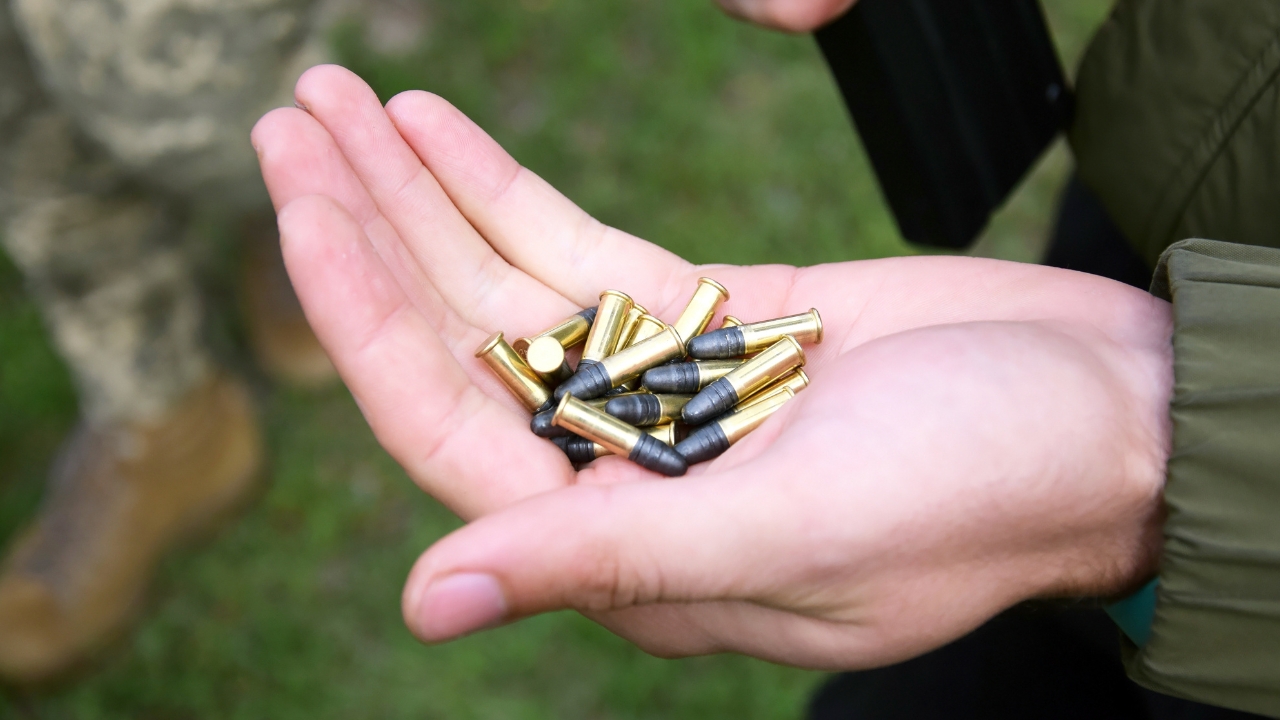
If you want one caliber that can handle most small pests on a tight budget, .22 LR is still the default choice. You can buy bricks of ammunition for far less than comparable centerfire rounds, and the mild report and recoil make it easy to train new shooters or farmhands. Guides on small game consistently note that 22 LR is widely considered ideal for squirrels and similar targets inside typical yard distances, often in the 25 to 75 yard window where most pest shots occur.
Because .22 LR is so common, you can choose from subsonic loads for quiet barn work, high‑velocity hollow points for raccoons raiding the chicken coop, or even shotshells for very close‑range snakes and rats. Traditional hunting writers point out that on rabbits and squirrels the .22 LR has a strong theoretical advantage in terms of energy and trajectory, and one review notes that, Honestly, there are few other choices that cover so much ground for so little money. For a property owner who wants to keep a single rifle behind the mudroom door, .22 LR remains the most forgiving balance of cost, availability, and practical effectiveness.
.17 HMR and .22 WMR: stretching range without breaking the bank
Once pests start appearing at the far end of a pasture or across an irrigation ditch, you may find .22 LR running out of steam. That is where .17 HMR and .22 WMR come in, giving you flatter trajectories and more energy while still staying in rimfire territory. Comparisons of Pricing between .17 HMR and .22 LR highlight that .22 LR remains the more affordable option per shot, but .17 HMR buys you extra reach and explosive varmint performance that can be worth the premium if you are regularly shooting ground squirrels or crows at distance.
When you look at .17 HMR against .22 WMR, cost again becomes a deciding factor. One detailed comparison notes that Price is one of the top motivations for choosing either .22 WMR or .17 HMR, and that many shooters end up picking one or the other based on price and availability in their local stores. Another breakdown of Price & Availability The two cartridges notes that .22 WMR has been around longer, so there are more ammunition options on shelves, yet .17 HMR can often be found for comparable prices. For property pest control, that means you can step up from .22 LR to either of these without entering the much higher cost tier of centerfire varmint rounds.
Air rifles and pellets: ultra‑cheap shots and quiet barns
For many day‑to‑day pest problems, especially inside barns or near neighbors, air rifles are the most economical and discreet option you can use. Modern PCP and spring‑piston guns fire pellets using compressed air instead of powder, which keeps both noise and operating cost low. One overview of precision shooting notes that Air rifles use compressed air or gas to propel pellets, and that this technology has become popular not just for target work but also for pest control and small game.
Entry‑level PCP platforms like the Air Venturi Alpha Magazine in .22 Cal with 10 Rds, which is supported by accessories such as a $16.99 magazine and an Air Venturi G9 Hand Pump rated at 4500 PSI for $139.99, show how you can build a reusable system where your main recurring cost is pellets. Guides on Caliber Compatibility stress that you should Ensure your air rifle matches the pellet size, and that Most commonly you will find .177 and .22 pellets for hunting rabbits and similar pests. A broader hunting caliber chart lists 177 Pellet and 17 Hornady Magnum Rimfire among the most popular small‑game options, underscoring how airguns and light rimfires can share similar roles on a property.
Shotshells and specialty rimfire for close‑quarters pests
Some of the most frustrating pest jobs happen at spitting distance, where a traditional bullet risks punching holes in tin siding or ricocheting off concrete. In those tight spaces, rimfire shotshells and ultra‑quiet cartridges shine. A dedicated guide to CCI pest loads notes that 22 Short CB is Perfect for snakes, rats, and birds in barns or sheds, with Very low recoil, while .22 WMR shotshells offer More power for slightly larger pests yet remain rimfire quiet enough for sensitive areas.
Standard .22 WMR hollow points can also be cost effective when you buy in bulk. One listing for .22 WMR 30 Grain JHP from CCI Maxi Mag TNT shows 500 Rounds priced at $175.00, which works out to 35 cents per round. A separate comparison of .22 LR versus .22 WMR notes in its Cons section that Pricing for .22 WMR ammo is generally more costly than comparable .22 LR, averaging around $0.15 per r, or $0.15 per shot in some contexts, but that extra expense buys a clear increase in energy that can be a sure thing on tougher pests. For you, the question is whether the added performance is worth the higher per‑round cost in the specific corners of your property where you work.
.223 Remington and 5.56 NATO for predators and longer shots
When your pest problem scales up to coyotes, foxes, or feral dogs, light centerfire calibers start to make more sense despite their higher ammunition cost. Predator‑focused guidance points out that for Coyotes and Predators, the 223 Remington / 5.56 NATO is a Standard choice with low recoil and strong accuracy, while .22‑250 and .243 Winchester step up for bigger predators. Another section on Hunting Round Selection The best caliber for hunting coyotes notes that these cartridges are often debated, but .223 remains a practical baseline for many landowners.
From a budget standpoint, .223 has an advantage over larger centerfires because it is produced in huge volumes for both sporting and defensive use. One discussion of affordable rifle calibers highlights 223 Remington & 5.56x45mm NATO as a go‑to answer when shooters ask what is the most affordable, available rifle round for range and defensive use. That same economy of scale benefits you when you are buying bulk varmint loads for predator control, especially if you already own an AR‑15 or bolt gun in this caliber and can avoid investing in a separate rifle just for pests.
Integrating suppressors and noise control on a budget
Noise is an underappreciated cost in pest control, especially if you are working near livestock, tenants, or property lines. Suppressors and subsonic ammunition can keep you on good terms with neighbors and reduce stress on animals, but they add another layer of expense. For many shooters, .22 LR again stands out because rimfire suppressors are relatively inexpensive and dramatically reduce report when paired with subsonic loads.
Guides to rimfire silencers describe Best Inexpensive 22LR Suppressors Often called the gateway into the suppressor world, since they are cheaper than centerfire cans yet can breathe new life into a dusty old .22 rifle. If you combine a modestly priced .22 bolt gun with a budget suppressor and bulk subsonic ammunition, you end up with a system that is quiet enough for nighttime barn work and still cheap to feed. That is harder to achieve with centerfire calibers, where both the suppressor and the ammunition cost more per shot.
When to skip the gun entirely and use repellents
Even if you are comfortable with firearms, not every pest problem on a property is best solved with a trigger pull. Chemical and scent‑based deterrents can push some animals away from gardens, sheds, and ornamental plantings without the legal and safety concerns that come with shooting. One widely available product, described as Bonide Repels‑All, is marketed as an Description that says Use Repels All Animal Repellent from Bonide to rid your yard and garden of pests ranging from deer and rabbits to beavers, racoons, porcupines, birds, groundhogs and more.
For you, the budget angle is straightforward: every animal you deter with a repellent is one less that requires ammunition, time, and potential property damage to address. Repellents also help in areas where discharging a firearm or even a powerful air rifle would be unsafe, such as near roads or occupied homes. By pairing low‑cost calibers for situations where you must shoot with non‑lethal tools like Repels‑All around sensitive zones, you stretch your pest‑control budget further and reduce the number of shots you need to fire each season.
Matching calibers to specific pests and rifles
The most cost‑effective setup on your land will always depend on which animals are causing trouble and what rifles you already own. Practical guides to pest rifles emphasize that you should start with the target species, then work backward to the cartridge and platform. One overview titled Pest control: What to look for in a rifle notes that a Gun in .22 is the popular choice for general vermin, while a Gun in .17 HMR (Hornady magnum rimfire) shell is better when you need flatter trajectories and more precision at range.
Specialized hunting pieces echo that logic, listing specific combinations such as a CZ457 Best for Squirrels Varmint .17 Cal rifle for small game, or recommending that on rabbits and squirrels the .22 LR has a strong theoretical edge in many scenarios. Broader hunting charts show that for squirrels the most popular handgun and rifle calibers include 177 Pellet, 17 HM2, and 17 Hornady Magnum Rimfire, which lines up neatly with the rimfire and airgun options already discussed. On the heavier end, big‑bore PCPs like the Seneca Dragon Claw 500cc combo are marketed as rifles that can humanely and quickly take feral hogs, javelina, coyote, fox, nutria, possum, woodchuck, raccoon, and similar‑sized game on a fill and still do more hunting, giving you a non‑powder option for larger pests if you are willing to invest up front.
Watching the market and keeping your setup affordable
Finally, your pest‑control budget is not static, because ammunition and gear prices move with the broader market. Video commentary on recent trends notes that ammo prices have dropped sharply in some calibers, with one clip titled “Ammo Prices CRASHED! These 10 Calibers Now DIRT …” pointing out in its description that, Nov is when the creator highlighted how those little clicks help a brother out and promised more valuable gun related content as prices shifted. While the entertainment tone is light, the underlying point is serious: if you pay attention to sales cycles, you can stock up on your chosen pest calibers when they are cheapest.
At the same time, you can stretch your dollars by investing in durable platforms and learning from detailed reviews instead of chasing every new release. Long‑form tests of PCP rifles, such as a Enjoy review of the Kalibrgun Cricket air rifle, show how much performance you can get from a single gun once you understand its graphs, shot counts, and fill pressures. For powder‑burning rifles, leaning on proven .22 LR, .17 HMR, .22 WMR, and .223 Remington setups, combined with quieting tools and repellents, lets you build a layered pest‑control plan that is accurate, humane, and sustainable for your wallet over the long term.
Like Fix It Homestead’s content? Be sure to follow us.
Here’s more from us:
- I made Joanna Gaines’s Friendsgiving casserole and here is what I would keep
- Pump Shotguns That Jam the Moment You Actually Need Them
- The First 5 Things Guests Notice About Your Living Room at Christmas
- What Caliber Works Best for Groundhogs, Armadillos, and Other Digging Pests?
- Rifles worth keeping by the back door on any rural property
*This article was developed with AI-powered tools and has been carefully reviewed by our editors.