What Caliber Actually Holds Zero When the Rifle Lives in a Truck or Side-by-Side?
Photo credit: ArtistGNDphotography/istock.com
When your rifle lives behind the seat of a pickup or in the rack of a side-by-side, the real test is not group size on a calm range day but whether the sights still hit where you expect after weeks of vibration, dust, and temperature swings. You are not just choosing a caliber, you are choosing a system that can shrug off abuse and still put a cold-bore shot where it matters. The question is which cartridges and setups actually keep their zero in that rough environment, and which ones quietly drift until you discover the problem at the worst possible moment.
To answer that, you have to think past internet arguments about “stopping power” and focus on how different calibers interact with optics, mounts, and vehicle storage. Some cartridges are naturally forgiving of small shifts, some demand more precise hardware, and some shine only when paired with specific platforms. Once you understand those tradeoffs, you can pick a truck or side-by-side rifle that holds zero, fits your terrain, and stays ready without constant tinkering.
Why “Holding Zero” Is Different For a Truck or Side‑by‑Side Rifle
A rifle that rides in a climate‑controlled safe only has to deal with recoil and the occasional bump on the way to the bench. A rifle that lives in a Ford F‑250 or a Polaris Ranger is hammered by washboard roads, slammed doors, and daily temperature swings that can run from freezing dawn to a hot dashboard by afternoon. That constant vibration can loosen screws, shift optics in their rings, and even let a scope base walk on the receiver if it was not installed correctly. Over time, those tiny movements add up to inches or even feet of shift at 100 yards, which is why a “set and forget” mindset is risky once you start using a vehicle as your gun cabinet.
Instructional work on zeroing emphasizes that you should expect some movement in your point of impact and understand why it happens before you blame the rifle or the caliber. One training video on elevation adjustments at your zero distance explains that ballistic profiles can show an offset even at the range where you think the rifle is “dead on,” because the software is accounting for real‑world variables that change how bullets fly once they leave the barrel, a point underscored in an Oct explanation of why your zero is not as static as you assume. When you add the mechanical stress of truck life on top of those ballistic realities, you start to see why a vehicle gun needs more margin for error than a safe queen.
Caliber Versus Construction: What Really Knocks a Rifle Off Zero
It is tempting to blame a wandering zero on the cartridge, especially when you are shooting something with more recoil, but the real culprits are usually mechanical. Scope rings that are not torqued correctly, bases that are not bedded flat, and stocks that compress under screw tension all create pathways for movement. Guidance on keeping rifles zeroed stresses that you should Torque your stock screws to the manufacturer’s specs, then Check them regularly with a proper wrench. If you skip that step and then park the rifle in a vibrating metal box on wheels, you are almost guaranteeing that something will shift long before the caliber itself becomes the limiting factor.
Mounts and rings are another weak link that shows up faster in a truck gun than on a bench rifle. Companies that specialize in scope hardware point out that Our rings and bases are designed to handle repeat recoil and heavy usage, and They are tested so they will not slip on recoil losing zero. That kind of overbuilt hardware matters more once the rifle is bouncing in a rack or sliding in a scabbard, because every pothole is another impulse trying to twist the optic out of alignment. In that context, the “right” caliber is often the one that lets you use robust, proven mounts and still keep the package compact enough to ride safely in the vehicle.
Light Recoil, Stable Zero: The Case for Rimfire and Mild Centerfire
If your truck rifle is mostly for varmints, pests, or informal plinking, low‑recoil calibers give you a built‑in advantage in keeping zero. A .22 LR or similar rimfire barely moves the rifle under recoil, which means less stress on mounts and less chance that a slightly loose screw will translate into a big shift. One popular example is the Ruger 10/22 Takedown, which is described as simple to operate and virtually without recoil, and The Ruger platform is widely regarded as accurate enough for small‑game work while still being compact enough to stash behind a seat. In a truck or side‑by‑side, that combination of light recoil and modular storage makes it easier to keep the optic undisturbed between uses.
Mild centerfire cartridges can offer a similar benefit while extending your effective range. Advice to new hunters often notes that a . 243, any of the creedmoors (. 22, 6mm, . 25, and 6.5mm) or even a little . 223 would be right at home for typical deer and varmint roles, as one Jan discussion of practical calibers makes clear. Those rounds generate more recoil than a .22 LR but still sit on the gentle end of the spectrum, which means you can run lighter rifles and simpler optics without beating them up every time you pull the trigger. In a vehicle context, that can translate into a rifle that holds zero longer between checks, especially if you are disciplined about how you store and secure it.
Intermediate Cartridges: Where 5.56, 300 Blackout, and 350 Legend Fit
Once you move into intermediate calibers, you gain versatility but also introduce more recoil and heat, both of which can expose weaknesses in your mounting system. The AR‑15 pattern rifle is a common choice for truck duty because it balances power, capacity, and modularity, and advocates point out that One of the reasons it stands out is the availability of Short Barreled Rifles, SBR configurations, and Pistols that keep the package compact. In 5.56 or .223, recoil is still manageable enough that a quality optic and mount can ride out both firing and vehicle vibration without constant re‑zeroing, provided you install everything correctly and verify your zero after any major change.
Other intermediate rounds are gaining favor specifically as “truck calibers” for rural use. In one Jul thread weighing a PCC against . 300 Blackout, a user named TargetOfPerpetuity notes being impressed with the .350 Legend for a rural option, writing that the 350 Legend for woods and field work has real appeal and adding, Granted, they would still grab a different rifle first for some tasks. The . 300 Blackout itself, especially in short barrels, is often paired with compact platforms like the Daniel Defense PDW, and one overview highlights that the Daniel Defense PDW in . 300 Blackout can run a Huxwrx can and a Surefi light while staying short enough to maneuver in tight spaces. In both cases, the calibers are accurate enough for realistic truck‑gun distances, and the platforms are built around robust rails and mounts that help preserve zero despite the abuse.
Big‑Bore Lever Guns: Do 45‑70 and 30‑30 Keep Their Zero?
Lever guns chambered in traditional hunting calibers have been riding in ranch trucks for generations, and their track record is part of why many shooters still trust them to hold zero. Cartridges like .30‑30 Winchester and .45‑70 Government deliver enough energy for big game at moderate ranges, but they also produce more recoil than intermediate rounds, which can stress optics if you mount them carelessly. A detailed Caliber Comparison of 45 and 70 versus 30‑30 notes that the 45‑70 is better suited for large game and heavy brush hunting, while the 30‑30 is generally cheaper and more manageable. Known as classic lever‑gun choices, both rounds are accurate enough for typical truck‑gun ranges, but the heavier 45‑70 recoil makes it more demanding on scopes and mounts if you want the rifle to stay zeroed after a season of bouncing in a gun rack.
One advantage of these rifles in a vehicle is that many owners still run iron sights, which are inherently less prone to losing zero because they are integral to the barrel and receiver. When you do add glass, the key is to treat the mounting system as seriously as you would on a precision rifle, even if the lever gun’s job is “just” to ride behind the seat. Using stout bases, quality rings, and proper torque helps ensure that the rifle’s zero is limited by your shooting and the inherent ballistics of .30‑30 or .45‑70, not by screws backing out after a month of gravel roads. In that context, the caliber itself is less important than whether the rifle’s traditional design is paired with modern mounting discipline.
Platform Matters: ARs, PCCs, and Compact Truck Builds
Caliber is only half the story, because the platform you choose determines how well that cartridge can survive life in a vehicle. Semi‑automatic rifles built on modern patterns, especially AR‑style guns, tend to offer rigid upper receivers with integrated rails, which give optics a solid foundation that resists vibration. One detailed truck‑gun build walks through how a shooter reevaluated their travel rifle during a period of uncertainty and social unrest, ultimately focusing on a compact AR with durable accessories and noting that they had to Sign up for the On The Gun Newsletter to follow the full evolution of that setup. That kind of build typically favors intermediate calibers like 5.56 or . 300 Blackout, which are accurate enough for defensive and medium‑game roles while keeping recoil manageable for optics.
Pistol‑caliber carbines and braced pistols offer another path, especially if you want to share ammunition with a sidearm or keep blast and recoil low in tight quarters. The same online debate that highlighted .350 Legend also weighed the pros and cons of a PCC versus . 300 Blackout for a truck or car gun, with users pointing out that pistol calibers are easier to control but give up range and barrier performance. In a side‑by‑side that spends most of its time on a farm or lease, a 9 mm PCC with a rugged red dot might hold zero just fine for 50‑yard shots, while an AR pistol in . 300 Blackout or 5.56 offers more reach at the cost of more stress on the optic. The right choice depends on how far you realistically need to shoot from the vehicle and how much maintenance you are willing to put into checking and confirming your zero.
Storage, Racks, and Carry Systems That Protect Your Zero
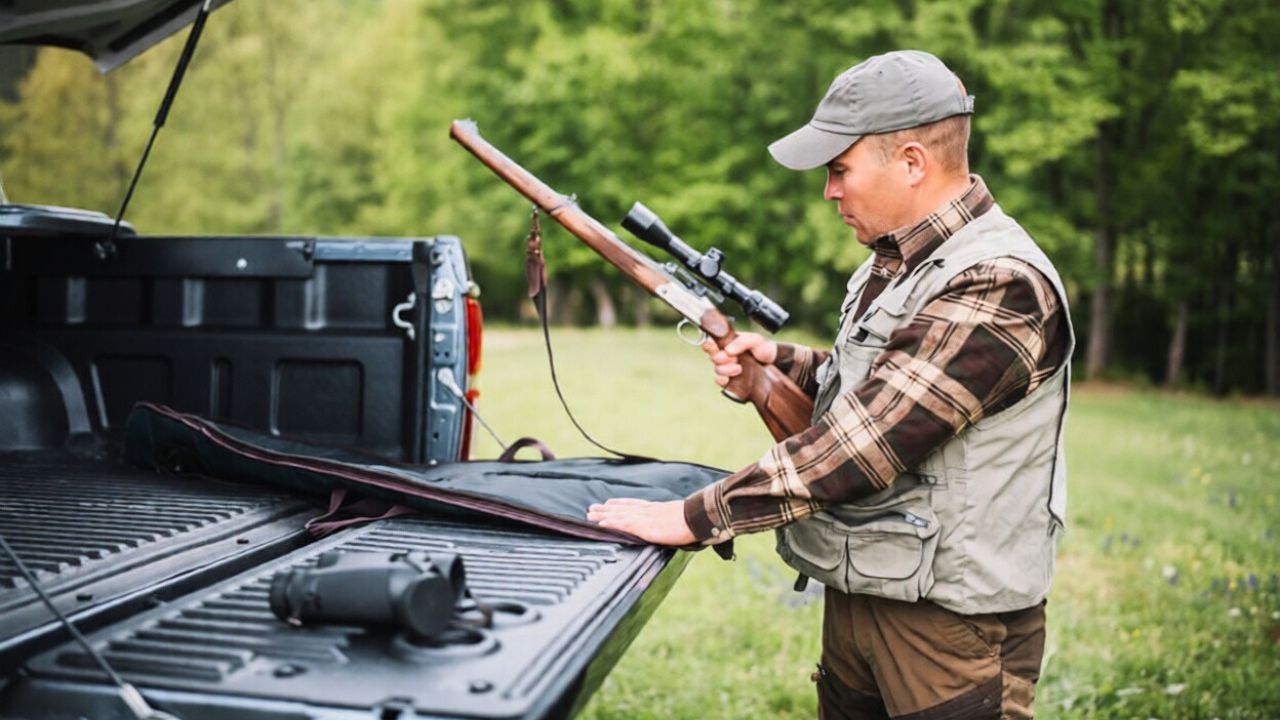
Even the most carefully mounted optic will not hold zero if the rifle is allowed to slam around in the cab or bed. The way you store the gun in your truck or side‑by‑side is as important as the caliber you choose, because every impact is another chance to bend a mount or knock a turret. Creative carry systems, from behind‑the‑seat racks to under‑rear‑seat lockboxes, aim to keep the rifle secure and oriented the same way every time you drive. One video tour of vehicle setups, hosted by the Common Patriot in a Jun segment, shows how dedicated mounts, straps, and discreet compartments can keep a long gun from bouncing or printing while still allowing quick access when you step out of the cab.
Side‑by‑sides introduce their own challenges, because open cabs expose rifles to dust, rain, and direct sunlight that can heat optics and soften adhesives or threadlockers. Scabbards mounted to roll cages, padded clamps on the roof bars, and soft cases strapped to the bed rails all help absorb vibration and prevent metal‑on‑metal contact. The more you can isolate the rifle from direct shock, the less likely you are to see unexplained shifts in point of impact when you finally step to the edge of a field and take a shot. In practice, that means treating the carry system as part of the zero‑holding equation, not an afterthought once you have already picked a caliber and rifle.
Zeroing Discipline: How Often You Should Confirm a Truck Gun
No matter how carefully you choose your caliber and platform, a rifle that lives in a vehicle needs more frequent zero checks than one that sits in a safe. Experienced instructors recommend specific times to verify your point of impact, such as after changing ammunition, swapping optics, or making any adjustment to the rifle’s configuration. One detailed breakdown of zeroing habits lists Times to check zero for carbines and MSRs, including when you switch to a New ammo type, when the rifle has taken a hard knock, or after long storage, and it notes that there is always some shift even if you think nothing has changed. For a truck gun, you can add “after a season of rough roads” to that list, because the vehicle itself becomes a constant source of minor impacts.
Good zeroing technique also matters more when you know the rifle will be riding in a harsh environment. A step‑by‑step video on how to zero a rifle stresses the importance of consistent shooting positions, careful adjustment of turrets, and understanding your chosen distance, with one Jan tutorial reminding viewers that even a perfect bench zero is only the start of the process. If you plan to keep a rifle in the truck, you should document your zero with your chosen load, note any offset you intentionally build in, and then re‑confirm after the rifle has spent time in the vehicle. That habit turns zero from a one‑time event into a maintenance routine, which is the only realistic way to trust a gun that lives on the road.
Safety, Security, and the Ethics of a Dedicated Truck Rifle
There is also a safety and security dimension to parking a rifle in a vehicle, and it intersects directly with how you choose and configure your caliber. A gun that is always within arm’s reach is also always at some risk of unauthorized access, whether from a smash‑and‑grab in a parking lot or a curious passenger who does not understand the controls. Guidance on defensive firearms emphasizes that Safety should always be a priority and that you should Look for robust safety mechanisms and secure storage options that prevent accidental discharge. In a truck or side‑by‑side, that means pairing your chosen caliber with a platform that has clear, positive controls and a storage system that locks the gun away when you are not present.
Ethically, you also have to consider whether your environment truly justifies a dedicated vehicle rifle and what role it is meant to play. If your primary use is pest control on private land, a .22 LR or . 223 in a locked behind‑the‑seat rack may be easy to justify and simple to keep zeroed. If you are carrying a . 300 Blackout SBR or a .45‑70 lever gun in town, you should be honest about the risks if that rifle is stolen or mishandled. The caliber that “holds zero” best is ultimately the one that fits your real‑world needs, can be secured responsibly in your specific vehicle, and can be maintained with the zeroing discipline and hardware support that rough use demands.
Like Fix It Homestead’s content? Be sure to follow us.
Here’s more from us:
- I made Joanna Gaines’s Friendsgiving casserole and here is what I would keep
- Pump Shotguns That Jam the Moment You Actually Need Them
- The First 5 Things Guests Notice About Your Living Room at Christmas
- What Caliber Works Best for Groundhogs, Armadillos, and Other Digging Pests?
- Rifles worth keeping by the back door on any rural property
*This article was developed with AI-powered tools and has been carefully reviewed by our editors.