The old-house plumbing failure that shows up after the first hard freeze
Photo credit: SasinParaksa/istock.com
The first hard freeze rarely announces itself with a gentle warning. It hits overnight, and by morning you may discover that the charming quirks of an old house now include a dead-silent faucet, a bulging ceiling, or water pouring through a light fixture. The failure that shows up after that first deep cold snap is not random bad luck, it is the predictable result of how aging plumbing, marginal insulation, and winter temperatures collide.
If you live in an older home, you are not just managing pipes, you are managing decades of design decisions that never anticipated modern winters, renovations, or heating habits. Understanding where those weak points hide, and how they behave during a hard freeze, gives you a chance to protect your house before the thaw turns a frozen line into a full‑scale flood.
The hidden weak spot in old-house plumbing
In many older homes, the plumbing layout was driven by convenience for the original builder, not by modern standards for freeze protection. That is why you often find supply lines snaked through unheated crawl spaces, tucked into thin exterior walls, or run along uninsulated foundations where cold air can reach them easily. Over time, later remodels and additions tend to layer new fixtures on top of that original layout, which means you may have a mix of newer fixtures fed by very old, vulnerable lines that you never see until something fails.
Contractors who specialize in older properties, such as Jan and other pros who focus on common plumbing problems in old houses, point out that the consequence of frozen water in these hidden runs is not just temporary inconvenience. When water freezes inside a confined pipe, it expands and can create intense pressure between two closed fixtures or valves. In an old system that may already have corrosion, mineral buildup, or hairline cracks, that pressure can turn a minor weakness into a rupture that only reveals itself when temperatures rise and the ice plug melts.
Why the first hard freeze is the tipping point
The first serious cold snap of the season is often when you discover how exposed your plumbing really is. Early in winter, soil and building materials still hold residual warmth, so short dips below freezing may not be enough to chill pipes all the way through. Once you get a prolonged hard freeze, that buffer disappears, and any line that runs through an unconditioned space can drop below 32 degrees long enough for ice to form and block flow. You may notice it first as a trickle at a bathroom sink on an outside wall or a toilet tank that never refills.
Specialists who study the freeze‑thaw cycle in older homes describe how repeated swings around the freezing point are especially destructive. Each time water in a pipe freezes and then thaws, it stresses the metal or plastic, gradually weakening the structural integrity until it fails. That is why you might get through a few light frosts with no issues, then suddenly face a burst line after the first truly hard freeze, even if the temperature on that particular night is not the lowest you will see all winter.
The freeze dilemma: water lines in exterior walls
One of the most common design flaws in older houses is the decision to run water lines through exterior walls to save space or simplify routing. It may look tidy on a blueprint, but in practice those pipes sit just inches from outdoor air, separated only by sheathing and whatever insulation someone added over the decades. When a cold front settles in, that wall cavity can become nearly as cold as the outside, especially behind kitchen cabinets or built‑ins where warm indoor air does not circulate.
Plumbing experts describe this as The Freeze Dilemma for Water Lines in Exterior Walls, and it is a particular problem in older homes that were never air sealed to modern standards. One of the key risks is that you may not realize those lines are in trouble until you wake up to Frozen Pipes and no water at a fixture that worked perfectly the day before. By the time you notice the lack of flow, ice has already formed inside the pipe, and if the wall cavity is poorly insulated, the potential for freezing issues will only grow as the cold spell continues.
How frozen pipes actually burst
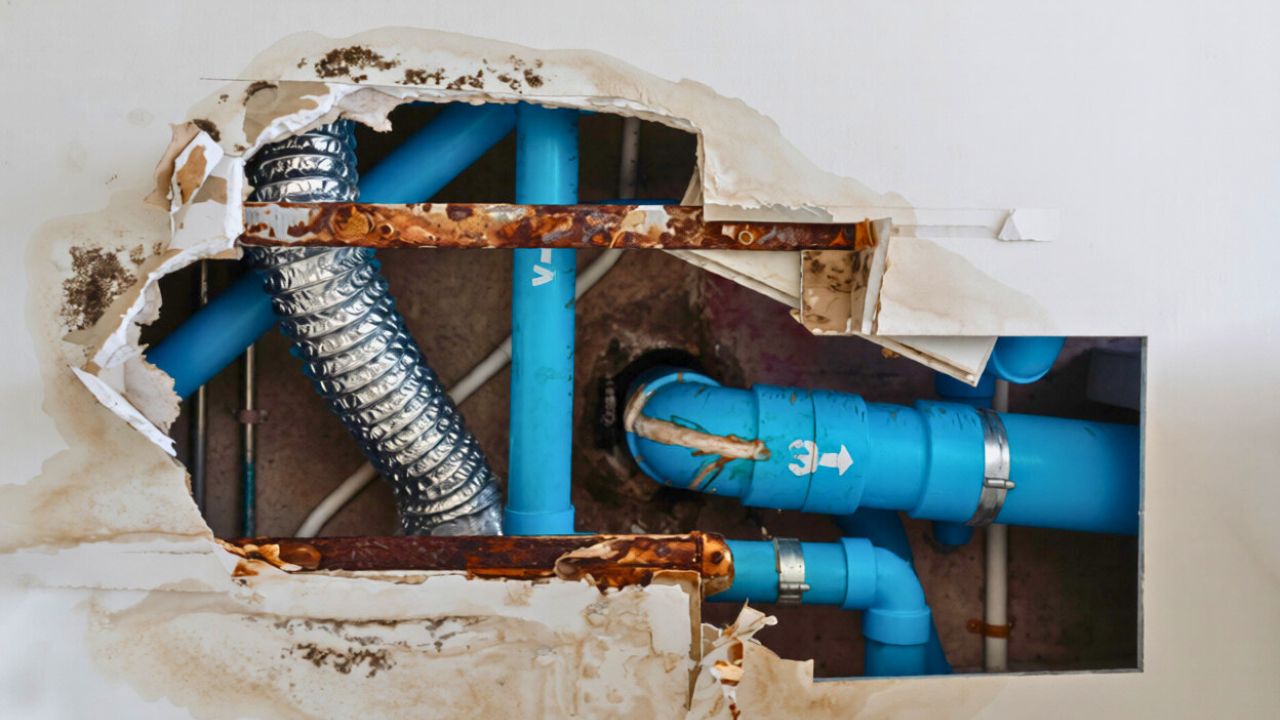
It is easy to picture a pipe splitting exactly where the ice forms, but the failure usually happens in a different spot. When a section of water inside a pipe freezes, it expands and creates a solid plug. As more water in the line tries to move or expand, pressure builds between that plug and the nearest closed valve or fixture. In a long run of pipe, that pressure can spike far from the original freeze point, often at a fitting, elbow, or thin section of metal that was already weakened by age or corrosion.
Cold weather guides that focus on frozen pipes, leaks, and other winter damage explain that once a pipe bursts, the real disaster often waits until the ice melts and water flow resumes. At that point, a small split can act like a pressure‑fed sprinkler inside a wall or ceiling cavity, saturating insulation, drywall, and flooring before you even see a stain. In older homes, where shutoff valves may be buried or inoperable, every extra minute before you isolate the break can translate into very expensive structural repairs.
Why historic and older homes are especially vulnerable
Historic houses and mid‑century homes share a common problem: they were built to different standards, for different heating systems, and often in a different climate reality than you face today. Many rely on plaster walls, uninsulated crawl spaces, and original windows that allow drafts to move freely through the structure. That airflow can carry cold into cavities where pipes run, even if the thermostat reads a comfortable temperature in the main rooms. When you add aging materials and past DIY fixes, the margin for error during a hard freeze gets very thin.
Specialists who work on older properties note that one common issue for historic homes is that pipes can freeze even when it is not below freezing outside, because cold air infiltrates through foundations, basements, and attics. Poor insulation is another major factor, and cold‑climate plumbers list Poor Insulation as one of the leading causes of burst pipes in Freezing Temperatures. Rapid temperature changes are another stressor, especially in older materials that have already expanded and contracted for decades, which is why a sudden cold snap after a mild spell can be so punishing for these systems.
The telltale signs right after the thaw
The irony of a freeze‑related plumbing failure is that the worst damage often appears after temperatures climb back above freezing. As ice plugs melt, water starts moving again, and any split or crack in the line becomes a leak under full pressure. You might first notice a drop in water pressure, a hissing sound behind a wall, or a faint stain on a ceiling that was dry the day before. In some cases, the only early clue is a water meter that spins even when every faucet in the house is off.
Service companies that track common plumbing issues after winter list Frozen Pipes and subsequent leaks as a top complaint once the weather warms. Another red flag is a Water Line Leak that shows up as a damp spot in a yard or along a foundation, a problem that technicians at Benjamin Franklin Plumbing of Eastern Iowa warn can be very expensive to repair if it involves a buried main. Indoors, you may see bubbling paint, warped hardwood floors, or a musty odor in a basement or crawl space, all of which suggest that a hidden line has been leaking since the thaw began.
Emergency steps when a line freezes or bursts
When you suspect a frozen line, your first priority is to protect the pipe and the house while you still have a chance to avoid a rupture. Start by opening the affected faucet to relieve pressure, then gently warm the area where the pipe runs by increasing room heat or opening cabinet doors so warm air can circulate. Safety guidance from the American Red Cross recommends that you Apply heat to the section of pipe using an electric heating pad, an electric hair dryer, a portable space heater kept away from combustibles, or towels soaked in hot water, and to avoid open flames that can start a fire or damage the pipe.
If a pipe has already burst and water is flowing, you need to move even faster. Shut off the main water supply to the house immediately, then open faucets to drain remaining water from the system and reduce pressure on the damaged section. Cold weather repair guides that cover common winter plumbing problems stress that once the flow is stopped, you should document the damage for insurance, remove or protect valuables in the affected area, and begin controlled drying with fans and dehumidifiers to limit mold. If the break is in a hard‑to‑reach location, or if you are dealing with electrical fixtures in wet areas, you should also cut power to the affected circuits until a professional can assess the risk.
When to call a professional instead of DIY
There is a difference between thawing a mildly chilled pipe under a kitchen sink and trying to repair a burst line inside a plaster wall or under a slab. You can safely handle basic prevention steps, such as opening cabinet doors, letting faucets drip, or adding temporary insulation to exposed pipes. However, once you see signs of structural damage, persistent leaks, or contamination of ceilings and walls, the stakes rise quickly. At that point, the risk of hidden mold, electrical hazards, and improper repairs that fail under the next freeze makes professional help the smarter choice.
Cold‑season specialists who focus on Frozen Pipes emphasize that you should call a licensed plumber if you cannot locate the frozen section, if a pipe has already burst, or if you are unsure how to shut off the water safely. They also recommend bringing in a pro when you need to reroute lines, upgrade insulation, or adjust your heating system to maintain consistent indoor temperatures in vulnerable areas. In older homes, where one visible problem often hints at deeper issues, a professional assessment can reveal other weak points before they fail during the next hard freeze.
How to harden an old plumbing system before the next freeze
Once you have survived one winter scare, the goal is to make sure you are not repeating the same emergency every year. That starts with mapping your plumbing as accurately as you can, noting which fixtures sit on exterior walls, which pipes run through unheated spaces, and where shutoff valves are located. From there, you can prioritize upgrades that deliver the most protection for the least disruption, such as adding foam sleeves to exposed lines, sealing obvious air leaks around sill plates and penetrations, and adjusting your heating strategy so vulnerable zones never drop below safe temperatures.
Cold weather checklists that cover Frozen Exterior Pipes recommend paying special attention to metal lines, since metal is an excellent conductor of cold and can transmit low temperatures deep into a building. Guides to Frozen Outdoor Pipes note that Water supply pipes in the ground or along exterior walls can freeze solid and leave you with no water flow at all, so insulating hose bibs, shutting off and draining exterior spigots, and protecting any exposed runs is essential. For interior lines in older homes, resources that catalog Frozen Pipes in Winter and other age‑related issues stress that poor insulation leaves them vulnerable, and that a combination of targeted insulation, air sealing, and, when necessary, rerouting pipes away from exterior walls offers the most durable fix.
Living with an old house and staying ahead of winter
Owning an older home means accepting that some systems will always need more attention, and plumbing in cold weather is near the top of that list. Instead of waiting for the first hard freeze to expose the weakest link, you can treat each fall as an opportunity to test valves, inspect visible lines, and plan upgrades that fit your budget. That might mean replacing a short run of galvanized pipe this year, adding insulation to a crawl space next year, and eventually moving a kitchen supply line out of an exterior wall entirely.
Maintenance guides that list Leaky Pipes as the most common plumbing problem in older homes remind you that slow drips and minor corrosion are not just annoyances, they are early warnings that your system is under stress. When you combine that reality with the Water supply risks that come with deep cold, the case for proactive work becomes clear. By understanding how your particular house responds to freezing temperatures, and by investing in targeted improvements before the next cold snap, you give yourself the best chance of getting through winter without that sudden, soaking reminder of what a single night of hard frost can do to an old plumbing system.
Like Fix It Homestead’s content? Be sure to follow us.
Here’s more from us:
- I made Joanna Gaines’s Friendsgiving casserole and here is what I would keep
- Pump Shotguns That Jam the Moment You Actually Need Them
- The First 5 Things Guests Notice About Your Living Room at Christmas
- What Caliber Works Best for Groundhogs, Armadillos, and Other Digging Pests?
- Rifles worth keeping by the back door on any rural property
*This article was developed with AI-powered tools and has been carefully reviewed by our editors.