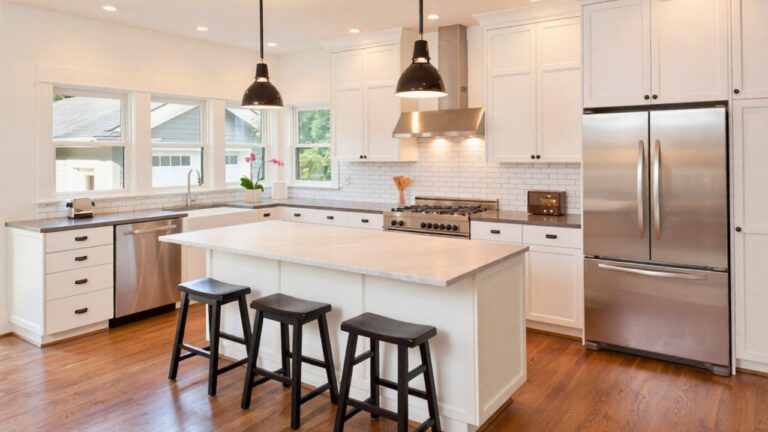
The paint finish people pick out of habit that shows every scuff by February
Photo credit: PeopleImages/Shutterstock.com
The paint finish you reach for on autopilot can quietly sabotage your walls long before spring cleaning. Many homeowners default to the same sheen they grew up with, only to discover by February that every backpack scrape, hallway bump, and shoe mark is suddenly on display. The good news is that once you understand why that “habit” finish misbehaves, you can switch to options that stay calmer, cleaner, and far less scuffed.
The real culprit: the flat and matte habit
If you are wondering which finish is most likely to betray you by midwinter, it is the ultra-low sheen choice you may have been told is “safest” for walls: traditional Flat Paint and its close cousin, Matte. These finishes are popular because they hide surface flaws and give walls a soft, velvety look, so you might instinctively ask for “flat” at the paint counter without thinking twice. Yet that same non-reflective surface that makes Flat Paint look forgiving also makes it vulnerable, since pigment sits closer to the surface and grabs every smudge.
Professional guidance explicitly warns you to use caution with Flat Paint on walls that see any real life, because aggressive cleaning can cause visible burnishing and shiny spots where you tried to scrub away marks, leaving the finish patchy and tired long before the color itself wears out, as detailed in advice on Flat Paint. Matte behaves similarly, with a low sheen and non-reflective quality that can look beautifully calm but will also highlight application flaws and suffer if you have to scrub it, a tradeoff explained in guidance on Matte Finish. When you combine that fragility with a busy household, you get the classic February problem: walls that already look older than the calendar says.
Why flat looks great on day one and terrible by month two
On freshly painted day one, flat and matte walls can feel like a design win, especially if your drywall is less than perfect. The lack of sheen softens shadows, so nail pops, patched seams, and minor waves in the wall disappear into a uniform color field. That is why many pros still reach for flat in low-traffic, low-touch spaces where you rarely brush against the walls, and why you may have been told it is the “designer” choice for living rooms and ceilings.
The trouble starts once real life collides with that delicate surface. As one breakdown of common interior paint mistakes notes, one of the easiest errors is choosing a flat or matte finish for busy areas, because these sheens are harder to clean and more likely to show wear, especially when you use them over anything less than pristine walls, a point underscored in guidance on Avoiding Common Paint Finish Mistakes. Even advocates of flat admit that while it can be recommended for ceilings and some walls, you will end up relying on gentle tools like a magic eraser and still risk polishing the surface so it looks shinier and more uneven, a reality described in a discussion that bluntly notes that flat can look richer but is harder to maintain than eggshell, as seen in the comparison of You. By the time February rolls around, every attempt to wipe away fingerprints may have created a new, more obvious blemish.
How sheen actually works on your walls
To break the habit of grabbing flat by default, you need a quick mental model of sheen. At one end of the spectrum you have very dull, flat or matte finishes that absorb light and hide imperfections but are more porous and prone to scuffs. At the other end, high sheen options like semi-gloss and gloss reflect a lot of light, which makes them easier to wipe clean but also more likely to spotlight every dent, patch, and roller mark if the surface preparation was not meticulous.
Paint educators often frame the choice as a tradeoff between durability and forgiveness, explaining that higher sheen products resist moisture and stains better, while very dull and flat paints are more fragile but visually forgiving, a contrast laid out in a primer on Mar. When you understand that spectrum, it becomes clear why the old rule of “flat on walls, semi-gloss everywhere else” no longer fits modern homes. You are better served by finishes that sit in the middle, where you get enough sheen to clean without turning every hallway into a mirror that shows every drywall flaw.
Eggshell, satin, and low-lustre: the quiet workhorses
If flat is the finish that betrays you by February, eggshell and satin are the ones that quietly save you from yourself. Eggshell offers a subtle, soft sheen that still feels sophisticated but adds a protective layer that stands up better to everyday contact. Homeowners who have tested it in dining rooms and other lived-in spaces often find that it has just enough shine to wipe clean without looking glossy, a balance described in a comparison that highlights how an Eggshell Finish can be easier to maintain than matte while still feeling refined.
Satin, sometimes labeled Eg-Shel or similar, pushes the sheen slightly higher, which increases durability in high-traffic rooms like hallways, kids’ bedrooms, and family rooms. Guidance on paint sheens notes that Satin and Eg-Shel provide a smoother finish that balances durability and elegance, making them ideal for spaces that see constant use and need regular cleaning, as explained in the overview of Satin. You can also look for low-lustre products that sit between eggshell and satin, offering a subtle sheen that adds depth without being overly glossy, while still delivering good durability and easy cleaning in busy areas, a combination described in recommendations for Low. Once you see how these middle sheens behave, the reflex to choose flat starts to feel less like a safe habit and more like an avoidable risk.
When semi-gloss is too much of a good thing
In some homes, the habitual mistake is not flat but semi-gloss, especially in bathrooms and kitchens where older advice insisted on the shiniest possible finish. Semi-gloss is undeniably tough and moisture resistant, which is why it still makes sense on trim, doors, and sometimes cabinetry. Yet on large wall surfaces it can be unforgiving, turning every taped seam, sanding miss, and patch into a highlight reel once the light hits.
Homeowners who have followed that old rule in small baths or narrow halls often discover that semi-gloss walls show every imperfection and even record casual contact, with one discussion of real-world results noting that if you lean on it everything shows, a blunt assessment captured in a thread that calls this “old school thinking” about kitchens and baths, as seen in the comment beginning with But. Instead of jumping straight from flat to semi-gloss, you are usually better off reserving semi-gloss for trim and choosing eggshell, satin, or low-lustre for the walls, which will still handle steam and splashes but look calmer and less clinical.
Color choices that hide (or highlight) every scuff
Finish is only half the story of why your walls look battered by late winter; color plays a quiet but powerful role too. Very light neutrals in flat or matte can be particularly unforgiving, because they combine a non-reflective surface with a high contrast between the wall and any dirt or scuff. That is why some designers steer clients toward slightly deeper tones in busy areas, so everyday wear blends in instead of shouting from across the room.
Rich neutrals like taupe and brown can be especially effective at disguising dings and baseboard scuffs, with one designer noting that Brown, a close cousin of taupe, is a strong option for hiding flaws on walls and trim, particularly when you cannot imagine repainting constantly but still want a polished look, as described in advice on Brown. When you pair these more forgiving colors with eggshell or satin instead of flat, you create a double layer of protection: the hue conceals minor marks, and the sheen lets you wipe away the rest without leaving shiny scars.
Newer scuff-resistant paints that actually hold up
If your home is especially hard on walls, from kids’ scooters in the hallway to rolling luggage in a tight entry, you may want to go beyond sheen and look at paints engineered specifically to resist scuffs. These products use tougher resins and additives to keep marks from bonding to the surface, so you can clean them off with mild soap and water instead of harsh scrubbing that damages the finish. They are particularly useful in mudrooms, stairwells, and commercial-style spaces that see constant contact.
One example is a line of interior latex paints that use patented scuff-resistant technology to outperform traditional two-component coatings, allowing walls to stand up to repeated contact and cleaning with soap and water without losing their finish, as described in the overview of See Scuff. Independent comparisons of scuff paints have also highlighted products like Benjamin Moore Scuff-X and Sherwin Williams Scuff Tuff when asking Who has the best scuff paint on the market, noting that They are relatively new but designed to solve exactly the problem of walls that look beaten up too quickly, as explored in the review that asks Who. If you are repainting a high-traffic corridor or a kid-heavy playroom, it is worth considering one of these specialty formulas instead of relying on sheen alone.
Room-by-room strategy to avoid February regret
Breaking the habit of defaulting to flat or semi-gloss starts with a simple room-by-room plan. For living rooms, family rooms, and bedrooms, eggshell is often the sweet spot, giving you a smooth, elegant finish that works with traditional and contemporary styles while still being easy to clean, a combination highlighted in guidance that describes how Known for its durability and versatility, eggshell is commonly used in various rooms throughout a home. In hallways, kids’ rooms, and entryways, you can step up to satin or low-lustre for extra toughness, especially if backpacks and strollers are part of your daily traffic pattern.
Bathrooms and kitchens benefit from that same middle ground, a point echoed by paint pros like James, who in a discussion about how to pick the right finish even entertains the idea of bathroom paint in flat before steering viewers toward more practical sheens that handle moisture and cleaning better, as seen in the video featuring Nov. Trim, doors, and cabinets can stay in semi-gloss or gloss, where the higher sheen is an asset rather than a liability. Ceilings, which rarely see fingerprints, are still a safe place for flat, so you can keep that soft, non-reflective look overhead without inviting scuff drama at eye level.
Prep, application, and maintenance matter as much as sheen
Even the best finish will disappoint you by February if the surface underneath is poorly prepared. Rushing or skipping steps like cleaning, sanding, and priming is one of the most common interior painting mistakes, and it leaves you with walls that not only look rough but also fail prematurely, a pattern described in guidance on Inadequate Surface Preparation. When you combine that with the wrong sheen, you amplify every flaw: flat paint clings to dust and fingerprints, while higher sheens magnify every dent and patch.
Application technique and ongoing care also shape how your finish ages. Paint educators who walk through sheen choices emphasize that you should think about how much light hits each wall, how often it will be touched, and how comfortable you are with regular cleaning, a nuanced approach reflected in the discussion of so what are the differences between high and low sheen. Once the paint is up, gentle cleaning with mild soap, soft cloths, and prompt attention to fresh marks will keep eggshell, satin, and low-lustre finishes looking new far longer than a neglected flat wall that only sees a desperate scrub once the damage is already done.
How to reset your default before your next paint run
Before you buy your next gallon, pause and consciously reset your default choice. Instead of asking for “the usual” flat or semi-gloss, start by naming how the room is used, how much traffic it gets, and how perfect the walls really are. In many cases, you will find that a mid-sheen option like eggshell or satin, possibly in a slightly deeper, more forgiving color, will give you a better balance of beauty and resilience than the finish you have been choosing out of habit.
If you are still unsure, short videos and guides that walk through sheen comparisons can help you visualize the tradeoffs, from the conversational breakdowns in James explaining house paint finishes to the more technical overview in Mar. For the hardest working spaces, consider stepping up to a dedicated scuff-resistant line like the interior latex options described in the main Untitled product page, or explore low-lustre and specialty finishes that are designed for high-traffic areas. Once you make that shift, you will stop dreading what your walls will look like by February and start expecting them to sail through the season with barely a mark.
Like Fix It Homestead’s content? Be sure to follow us.
Here’s more from us:
- I made Joanna Gaines’s Friendsgiving casserole and here is what I would keep
- Pump Shotguns That Jam the Moment You Actually Need Them
- The First 5 Things Guests Notice About Your Living Room at Christmas
- What Caliber Works Best for Groundhogs, Armadillos, and Other Digging Pests?
- Rifles worth keeping by the back door on any rural property
*This article was developed with AI-powered tools and has been carefully reviewed by our editors.