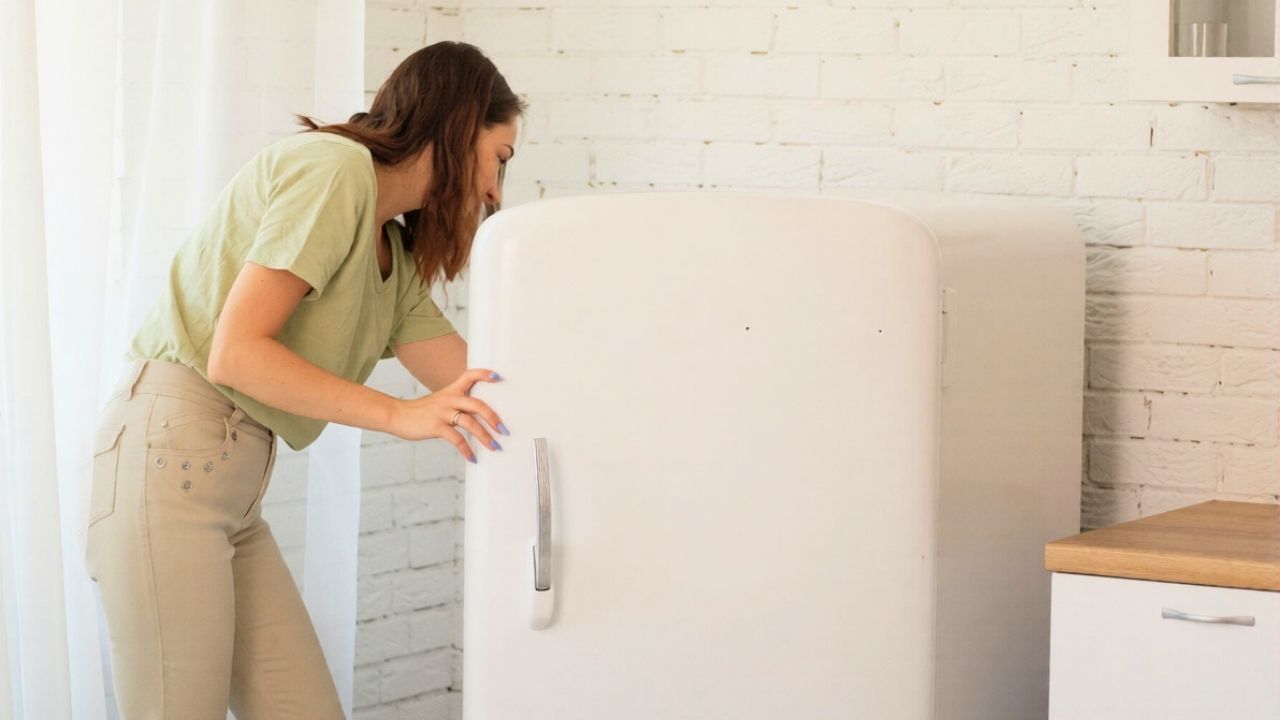
The easiest way to find the model number on appliances without moving them
Photo credit: Irina Kyrmaieva/Shutterstock.com
When an appliance fails, the model number is your shortcut to the right parts, accurate advice, and a faster repair. The good news is that you usually do not need to drag a heavy refrigerator away from the wall or unstack a laundry tower to find it. With a bit of strategy and a clear idea of where manufacturers like to hide labels, you can identify most models from the front, side, or paperwork you already own.
The easiest approach is to work methodically: start with documents, then move to door frames, control panels, and base trim before you even think about moving the machine. By learning the common label locations that brands use across refrigerators, washers, dryers, dishwashers, and ovens, you can turn a frustrating hunt into a two minute inspection.
Why the model number matters more than you think
You feel the importance of a model number the moment something goes wrong, whether it is a refrigerator warming up or a washer refusing to spin. Service departments, parts suppliers, and even online troubleshooting guides are built around that identifier, because it distinguishes one configuration from another that may look identical on the outside. Guides that explain what a model number looks like note that it is usually printed on a sticker or plate, often alongside the serial number, and it can mix letters and digits in ways that matter for every component you order.
Because manufacturers revise internal parts frequently, guessing based on size or color is risky and can leave you with a control board or water filter that simply does not fit. Repair specialists who publish detailed instructions on how to find your appliance model number emphasize that even a single character difference can separate a gas version from an electric one, or an early production run from a later redesign. If you want accurate pricing, warranty checks, or a technician who arrives with the right parts on the truck, taking a few minutes to locate that exact code is far more efficient than improvising.
Start with paperwork before touching the appliance
The fastest way to identify a model, and the one that requires zero bending or lifting, is to check the documents that arrived with the appliance. Service guides that walk you through how to check paperwork point out that user manuals and purchase receipts often list the full model number exactly as the manufacturer records it. If you bought a refrigerator or range from a big box store, the sales invoice, extended warranty contract, or even the delivery checklist may repeat that same identifier, which you can then plug directly into parts diagrams or support chats.
Even if you no longer have the original booklet, you may still have digital records that save you from moving anything. Many retailers email receipts that include the model, and some warranty providers encourage you to upload a photo of the label, then echo the number back in your account dashboard. Guidance on where to find model numbers in owner manuals notes that these documents are usually organized by exact model, so if the cover or first page lists a specific code, you can rely on it without ever opening a door or crouching on the floor.
General rules: where manufacturers hide labels
Once you move beyond paperwork, the key is to understand the patterns manufacturers follow when they place identification tags. Repair references that explain how to locate tags on most brands note that labels tend to sit on cabinet edges, door frames, or kick plates that are accessible from the front. On refrigerators, that often means the fresh food compartment wall or ceiling, while on dishwashers it is usually the inner edge of the door or the tub lip that is visible when you open it.
Across categories, you can assume the manufacturer wants technicians to reach the label without dismantling the machine, which is why you should always inspect door openings, control panel surrounds, and removable toe kicks before considering any heavy movement. Broader guides on how to find appliance model and serial numbers add that some products also carry a second sticker on the back or underside, but that is usually a backup location rather than the primary one. By sweeping the obvious front facing surfaces in a consistent order, you dramatically cut the time spent hunting.
Refrigerators: doors, liners, and toe kicks instead of moving the box
Refrigerators are often the appliance you least want to move, and fortunately you rarely need to. Step one is to open each door fully and scan the inner walls, ceiling, and door frame for a white or metallic label. Brand specific instructions that describe where to find refrigerator model numbers explain that top freezer units often place the tag on the upper left wall of the fresh food section, while side by side and French door designs may use the door jamb or a visible liner panel when the door is opened.
If you do not see anything at eye level, crouch to inspect the base grille or toe kick, which sometimes hides a small sticker on its front or back surface. Parts diagrams that show sample model number tags for refrigerators illustrate how these labels can be tucked into corners or behind a removable kick plate, still reachable without shifting the cabinet itself. Only after you have checked the fresh food and freezer compartments, the hinge side frames, and the lower trim should you consider sliding the unit forward, and even then, a flashlight and a gentle pull are usually enough to reveal any secondary label on the back edge.
Washers and dryers: use the door opening and control panel
With laundry appliances, the door opening is your best ally. For front load washers, open the door and run your hand around the metal or plastic frame, looking for a sticker on the rim or just inside the drum opening. Tutorials that focus on how to locate a washing machine model number advise you to inspect behind or under the door as well, since some designs hide the label on the lower portion of the front panel where it is still visible once the door swings out of the way.
Top load washers and matching dryers often follow a similar logic, placing the tag under the lid, around the tub opening, or along the back of the control console. Guidance that explains how to find your model number on washers and dryers notes that you should look around the door opening, on the back panel, or on the control panel itself, where the model and serial number may appear together. If your units are stacked, you can usually see the label on the front load washer by opening its door, and the dryer’s tag may sit on the door frame or inside the drum, again avoiding any need to unstack the pair.
Brand specific tricks: Bosch, Kenmore, and others
Different brands have their own habits, and knowing them can save you from unnecessary contortions. For example, guidance on where to find Bosch washing machine numbers explains that Bosch washing machines and tumble dryers usually carry the E Nr model code and FD number around the door area or on the front of the appliance, with some additional information on the back. Because the primary label is accessible from the front, you can capture everything you need by opening the door and using a flashlight, even if the machine is boxed in by cabinetry.
Kenmore and similar legacy brands, which often share platforms with other manufacturers, still follow the standard practice of placing labels where a technician can see them without moving the unit. Video walk throughs that show how to find your washing machine model number in Mar repair tutorials highlight the same pattern: open the lid or door, scan the rim and surrounding panel, then check the rear of the control console if needed. Once you know that brands tend to repeat these placements across generations, you can approach any unfamiliar machine with a short checklist instead of trial and error.
When the sticker is worn, missing, or unreadable
Sometimes the label you need is scratched, painted over, or gone entirely, especially on older appliances that have seen multiple moves or renovations. In those cases, you still have options before resorting to moving the unit or giving up. Technical guidance on how to find the model number even when missing notes that the serial number, wiring diagram, or control board part numbers can sometimes be cross referenced to identify the underlying model. A clear photo of the control panel layout and interior configuration can also help a parts supplier match your machine to a known series.
If the sticker is simply hard to read, a smartphone camera can be more effective than your eyes, especially in tight spaces. Take a close up photo with flash, then zoom in to decipher faint characters that are invisible in the dark corner of a cabinet. Some repair guides that present sample model number tags for washers show how the layout of the label itself, including the order of fields and the presence of words like “Model” or “Serial,” can help you distinguish the correct code even when parts of it are smudged. By combining partial information from the label with visible design features, you can often narrow the possibilities enough for a technician or parts database to do the rest.
Reading the code: letters, digits, and what they tell you
Once you have located the tag, you still need to know which string of characters is the model number and how to record it accurately. References that explain sample model number tags point out that model numbers can be made up of numbers alone, such as 1005400, or a combination of letters and numbers, often separated by dashes or spaces. The label usually prints the word “Model” directly before this code, while the serial number appears nearby, sometimes on the same sticker, so you should copy both exactly as shown, including any hyphens.
Understanding the structure of the code can also help you catch transcription errors before they cause problems. Guides that teach you how to recognize a model number emphasize that certain letters may indicate color, fuel type, or revision level, which is why leaving off a suffix can lead to the wrong part. When you enter the code into a website or share it with a technician, double check each character, especially zeros versus the letter O and ones versus the letter I, so the system can pull up the correct diagrams and compatibility lists.
Turn your findings into faster repairs and smarter records
Once you have the model number in hand, you can turn a one time search into a long term advantage. Create a simple home inventory document or note on your phone where you list each appliance, its location, and its model and serial numbers, along with purchase dates if you have them. Service resources that explain how to use model and serial numbers highlight that this information is essential for checking warranty coverage, registering products, and confirming whether a specific unit is affected by a safety recall.
Having those details ready also makes every future service interaction more efficient. When you schedule a visit or order a part, you can provide the exact identifier immediately, allowing the technician to verify common failure points for that model and load the truck with likely replacements. Repair guides that walk through preparing for a service call note that technicians often ask for the model and serial number before they arrive, and some companies will even decline to book complex jobs without them. By investing a few minutes now to locate and record each label without moving a single appliance, you set yourself up for smoother repairs, clearer advice, and fewer surprises when something eventually breaks.
Like Fix It Homestead’s content? Be sure to follow us.
Here’s more from us:
- I made Joanna Gaines’s Friendsgiving casserole and here is what I would keep
- Pump Shotguns That Jam the Moment You Actually Need Them
- The First 5 Things Guests Notice About Your Living Room at Christmas
- What Caliber Works Best for Groundhogs, Armadillos, and Other Digging Pests?
- Rifles worth keeping by the back door on any rural property
*This article was developed with AI-powered tools and has been carefully reviewed by our editors.