The water test mistake that makes results basically useless
Photo credit: LuchschenF/Shutterstock.com
When you test your water, you are trying to answer a simple question: is it safe and what should you do next. Yet a single misstep in how you collect or interpret that sample can make the numbers so distorted that they are effectively meaningless. The most damaging error is not in the lab chemistry, but in the way you handle the water before it ever reaches a test strip or vial.
If you grab water from the wrong place, at the wrong time, or with the wrong container, you can end up chasing phantom problems or missing real ones entirely. Avoiding that outcome starts with understanding how easily a “quick sample” can go wrong, and how a few disciplined habits can turn your results into a reliable guide instead of a false alarm.
The one mistake that ruins everything: a bad sample
The core failure that makes water test results basically useless is a poorly collected sample. If the water in your bottle does not represent what you actually drink, bathe in, or swim in, every number that follows is built on sand. Professionals treat sampling as a critical step, not a formality, because they know that grabbing water from a convenient tap or scooping from the surface of a pool can skew readings far more than any minor testing error.
Specialists who work with home test kits warn that people often open a box, see multiple bottles, and start filling them without reading which tap to use or how long to flush the line, even though Dec instructions are designed to prevent exactly that. In pool care, guidance on avoiding a Water Sample From makes the same point, noting that surface water, corners, and dead spots can all read very differently from the main body of water. If your sample is wrong from the start, the chemistry that follows cannot rescue it.
Why the tap or pool spot you choose matters more than you think
Where you collect your sample is the quiet detail that decides whether your test reflects reality or a local quirk. In a house, a little used basement faucet can hold stagnant water that has been sitting in pipes for hours, while a kitchen tap that runs for a minute will pull fresher water from the main line. In a pool, water near a return jet can be rich in chlorine that has not yet mixed, while a corner behind a ladder can be relatively untreated and full of debris.
Pool care guides spell this out bluntly, warning that taking a Water Sample From can make pH, alkalinity, and sanitizer levels look higher or lower than they really are, because the water near the surface or in smaller pockets is different from the main volume. On social media, professionals like Ben Olliff describe customers who collect water directly in front of jets, then complain that chlorine is “too high” when the rest of the pool is not. The same logic applies indoors: if you want to know what comes out of your kitchen tap, you should not be sampling from a hose bib or a filter bypass line.
Timing, stagnation, and the “Choose WHEN” problem
Even if you pick the right tap, the time you collect your sample can change what you see. Water that has been sitting in pipes overnight can pick up metals and other plumbing related contaminants, while water drawn after a long flush may better represent the supply itself. For some contaminants, you actually want that first draw to see the worst case, but for others you need a stabilized flow, which is why timing is not a trivial detail.
Guidance on how to test a private well stresses that you should Choose WHEN to collect based on what you are trying to measure, noting that Sample The time of day can affect results because Certain plumbing dependent contaminants are highest after water has been idle. If you ignore those instructions and just fill bottles whenever it is convenient, you may either exaggerate a problem or miss it entirely, then make decisions on treatment or resale based on a distorted snapshot.
Technique: how small handling errors contaminate your sample
Once you have the right tap and timing, your technique still decides whether the sample stays clean. Touching the inside of a bottle cap, setting containers on dirty counters, or failing to flush a faucet long enough can all introduce outside material that has nothing to do with your actual water. For microbiological tests, even a tiny amount of soap residue or food can change the result.
Detailed Proper Testing Techniques for wells emphasize that Whether you are using an at home kit or sending bottles to a lab, avoiding contamination is very important, because a stray fingerprint or a reused container can introduce minerals or bacteria that were never in your plumbing. Video guides on Dec sampling walk through common errors like forgetting to fill all the bottles or mixing up which vial is for which test, while social clips highlight that One of the most common mistakes is assuming all bottles are interchangeable when they actually target different contaminants.
Frequency and consistency: why one test is not a trend
Even a perfectly collected sample can mislead you if you treat a single test as the final word. Water quality can change with seasons, rainfall, nearby construction, or shifts in municipal treatment. If you only test once, you have no way to know whether you caught an outlier or a pattern, which makes it risky to invest in expensive treatment or to assume long term safety based on one clean report.
In the aquarium world, where chemistry swings can be deadly, hobbyists are warned that Testing Often Enough undermines stability and that Consistency in weekly records gives a bird’s eye view of trends. The same logic applies to your well or tap: if you only test after a problem, you will never see the slow drift that might have warned you earlier. When a well test fails, professionals recommend you Confirm With a Retest, since Sometimes a failure is simply the result of a bad sample rather than a persistent contamination issue.
Interpreting the numbers: human error after the test
Even when the chemistry is sound, your interpretation can turn solid data into bad decisions. Color based strips and drop kits rely on your eyes and judgment, and it is easy to misread a shade, round a borderline result in the wrong direction, or ignore a parameter you do not understand. In retail settings, staff who are rushed or undertrained can compound the problem by reading results casually or focusing only on the numbers that support a sale.
Pool care brands warn that Incorrect readings can come from unbalanced water, algae, heavy rains, or heavy bather use, but they also note that While those conditions change the water, user mistakes in testing can be just as important. In online groups, professionals like Justin Mcevoy describe customers who get different results from different stores because each person uses slightly different methods or does not care interpreting the results. That variability is a reminder that you should treat any single reading as a data point, not a verdict, and that complex or high stakes questions are better answered by a state certified laboratory.
The lure of “free” tests and why Nothing is really free
One of the most common traps is the promise of a free water test at a big box store or from a door to door salesperson. The pitch sounds helpful, but the goal is usually to sell you a treatment system, not to give you a comprehensive, unbiased analysis. The methods are often limited, the staff may not be trained in sampling, and the results can be framed to make your water look worse than it is.
Online discussions from Aug in a Comments Section include suggestions that You send distilled water just to see what happens, a tongue in cheek way of highlighting how sales driven some of these tests can be. Another thread notes that Culligan was much much better than a free kit, underscoring the gap between marketing tools and professional analysis. Independent labs are blunt about this, stating that Nothing is free and that those free tests are often performed by unskilled individuals using strips or other inaccurate methods, with Most of the effort aimed at convincing you to buy expensive systems.
When to trust home kits and when to call CERTIFIED LABS
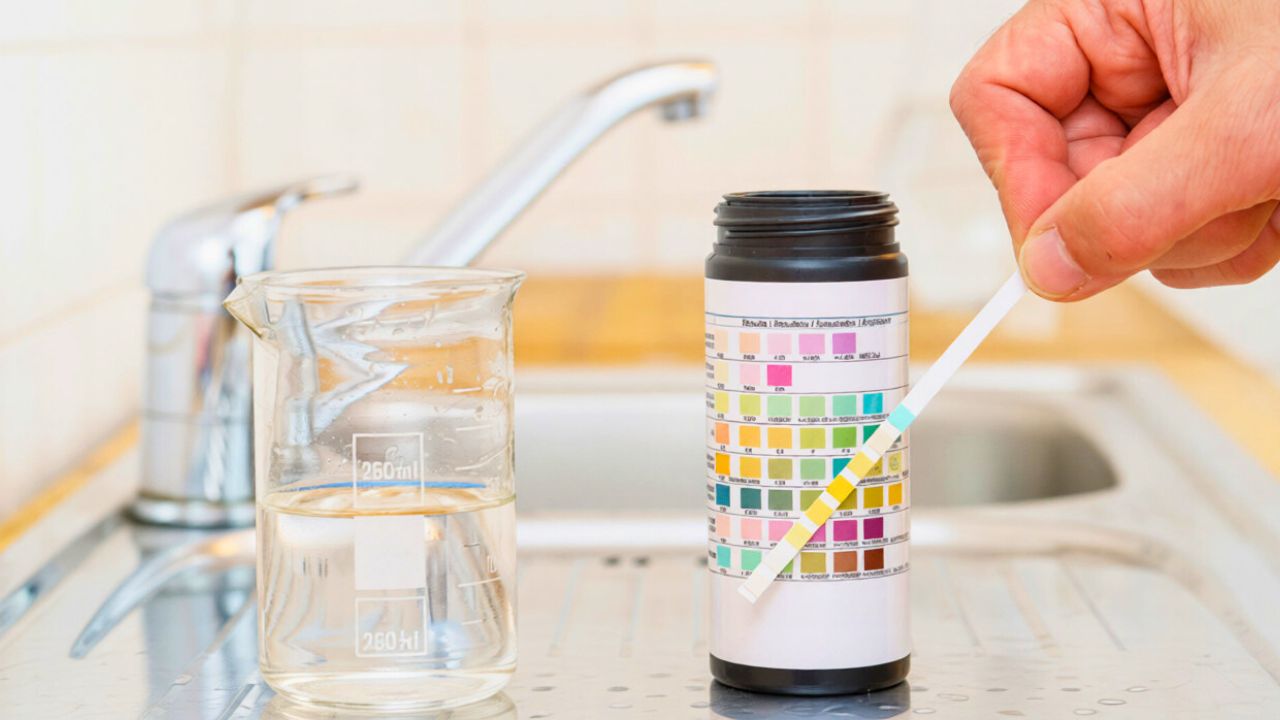
Home test kits have their place, especially for quick checks on hardness, chlorine, or pH, but they are not all created equal. Strips that change color in seconds can be useful for routine pool checks, yet they are not a substitute for a full panel when you are worried about lead, arsenic, or complex organic contaminants. The key is to match the tool to the question you are asking, and to recognize when you need the rigor of a professional lab.
Some mail in kits connect you to CERTIFIED LABS, using a network branded as Tap Score that relies on EPA, NELAC, and ISO state certified facilities to analyze a wide range of contaminants found in drinking water. Federal guidance notes that Often county health departments will help you test for bacteria or nitrates, and that you can also use state certified labs listed through a federal hotline. Independent environmental consultants stress that Whether it is your home, office, school, gym, or a public facility, only a comprehensive test by state certified laboratories can give you reliable results when contamination is a serious concern.
From bad data to bad decisions: real world consequences
When your test results are unreliable, the damage is not just theoretical. You might spend thousands on a softener or filter you do not need, or you might skip treatment because a flawed test told you everything was fine. In some cases, you can even make water quality worse by adding chemicals based on incorrect readings, pushing pH or sanitizer levels into ranges that corrode plumbing or irritate skin.
Homeowners who discover hard water often learn that Testing for Hard water is the only way to confirm or relieve suspicions about scale damage, and that guessing based on soap scum alone can lead to over or under treating. In one video, a family who discovered they had failed a lab test for drinking water quality on Nov responded by installing not one, not two, but three systems to solve the problem, a reminder of how high the stakes can feel when a report says your water is unsafe. Consumer advocates also point out that The trouble with free tests is that these salesman and their briefcases are designed to look scientific while offering little real analysis, which can push you toward expensive equipment based on shaky data.
How to get results you can actually use
Reliable water testing is less about fancy equipment and more about discipline. Start by deciding what you need to know, then choose the right method, whether that is a simple strip for daily pool checks or a full lab panel for a private well. Follow sampling instructions exactly, from which tap to use to how long to flush, and avoid shortcuts like reusing bottles or topping off partially filled vials.
For older homes, online discussions note that Dec advice that You should test if you have an old house because it is easily tested, and that you should Check with your city or county about available programs, can help you tap into local resources. Independent labs and environmental consultants stress that Whether you are testing a home, office, school, gym, or public facility, using state certified laboratories is the surest way to get reliable results. If you keep your sampling clean, your timing deliberate, and your interpretation grounded in professional guidance, your water test stops being a guess and becomes a tool you can trust.
Like Fix It Homestead’s content? Be sure to follow us.
Here’s more from us:
- I made Joanna Gaines’s Friendsgiving casserole and here is what I would keep
- Pump Shotguns That Jam the Moment You Actually Need Them
- The First 5 Things Guests Notice About Your Living Room at Christmas
- What Caliber Works Best for Groundhogs, Armadillos, and Other Digging Pests?
- Rifles worth keeping by the back door on any rural property
*This article was developed with AI-powered tools and has been carefully reviewed by our editors.