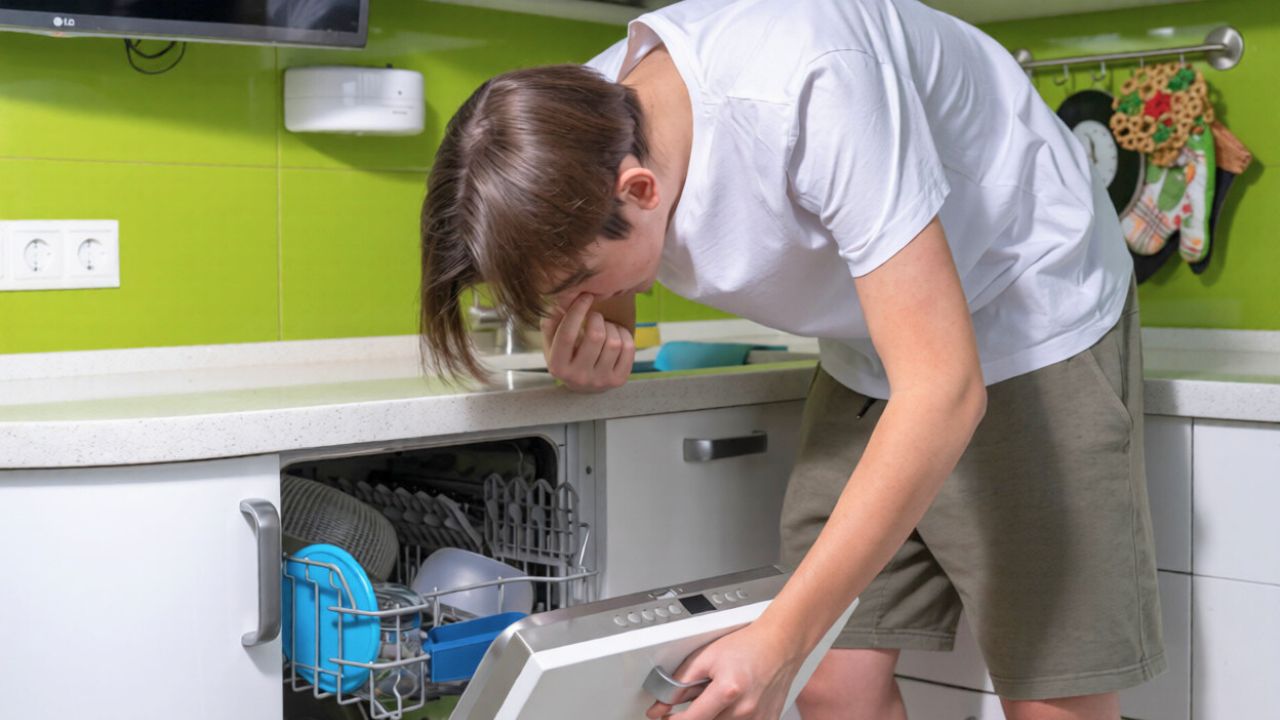
The dishwasher smell cause that’s not your detergent
Photo credit: Elena Gurova/istock.com
When your kitchen suddenly smells like a swamp, it is tempting to blame the detergent and swap brands. In reality, persistent funk from the dishwasher almost always points to something mechanical, biological, or plumbing related, not the soap in the dispenser. If you track the odor type and location, you can usually trace it to a specific part of the machine and fix it without replacing the appliance.
The real work is figuring out whether you are dealing with trapped food, stagnant water, mold, a drain problem, or even something as unexpected as a dead mouse behind the cabinet. Once you know what you are up against, you can clean strategically, adjust how you load and run cycles, and stop the smell at its source instead of masking it with stronger fragrance.
When the smell is not “new plastic” anymore
A faint chemical or plastic odor in a brand‑new unit is normal, especially during the first few hot cycles, and manufacturers note that this early scent should fade as the interior materials off‑gas and you start running full loads. If the only thing you notice is that light “new appliance” aroma and it diminishes over time, you are probably not dealing with a hygiene or plumbing problem at all. The trouble starts when the scent shifts from neutral plastic to rotten food, sewage, mildew, or burning, which signals that something in the system is no longer moving water or air the way it should, regardless of which detergent you use.
Once you are past that break‑in period, any lingering odor is usually tied to how the machine drains and how well it clears debris from the sump, filter, and spray arms. Guidance on why a dishwasher smells emphasizes that a persistent stench points to buildup or standing water, not the brand of pods in your pantry. If you keep swapping detergents without inspecting the interior, you risk letting residue harden in hidden corners, where it can feed bacteria and mold that will keep perfuming your kitchen in all the wrong ways.
Food sludge and filters that quietly turn rancid
The most common non‑detergent culprit is simple neglect of the filter and sump, where food scraps collect after every cycle. Modern machines are designed to trap those bits so they do not recirculate onto clean dishes, but if you never pull the filter and rinse it, that protective feature becomes a compost bin. Over time, fats, starches, and proteins break down into a thick sludge that smells like garbage, especially if you run energy‑saving cycles that use less water and lower temperatures.
Manufacturers list a dirty or clogged filter among the primary reasons a dishwasher smells bad, right alongside a clogged drain and leftover food in the tub. Another brand groups a filthy filter with four other POSSIBLE odor REASONS, noting that if YOUR DISHWASHER SMELLS BAD, the machine may also struggle to clean properly. When you ignore that buildup, you are essentially running dishes through rancid soup, and no amount of citrus‑scented detergent can overpower that.
Standing water, drains, and the sewer‑gas problem
If the odor leans more toward sewage or swamp than spoiled leftovers, your nose is probably picking up on stagnant water or a drain issue. Dishwashers rely on a clear path from the tub through the drain hose to the sink or garbage disposal, and any obstruction along that route can leave dirty water trapped in the bottom of the machine. That puddle becomes a breeding ground for bacteria and can also allow sewer gases to creep back into the tub when the check valve or air gap is compromised.
Guidance on understanding dishwasher odors highlights that poor drainage and leftover moisture are central causes of bad smells, and that clearing the drain path is as important as cleaning the tub. Another support bulletin on Dishwasher Odors notes that dirty water left in the bottom, or a drain hose installed incorrectly by the installer (or plumber), can create a persistent stench that has nothing to do with detergent choice. If you also notice slow draining in the sink, you may be dealing with a broader plumbing issue that needs attention before it damages the pump.
Mold, mildew, and that damp‑towel smell
A different category of odor is the musty, locker‑room scent that hits you when you open the door after the machine has been sitting closed for a day or two. That smell usually points to mold or mildew thriving in warm, damp crevices like the door gasket, the underside of the tub lip, or the insulation around the cabinet. Because these areas do not get blasted directly by hot water, they can stay wet long after a cycle ends, especially if you keep the door sealed tight between runs.
One drain‑care guide explains that a damp, musty smell in the dishwasher is often a sign of mold growth and can also indicate moisture trapped in the drain hose, which may have kinks or damage that prevent full drying, a point raised in advice on why there is a Bad Smell Coming From My Dishwasher. Another cleaning guide notes that Bits of food and soap scum can cling to the walls and racks, feeding that microbial film until, as one how‑to puts it, you open the door and think, “Whoa… You smell that?” Once mildew takes hold, you have to scrub those hidden surfaces, not just run another scented cycle.
Grease, oil, and the fishy‑plate mystery
Few smells are as baffling as opening the door to find every glass and plate carrying a faint fishy or oily odor, even when you did not cook seafood. That scent often comes from fats and oils that have coated the interior over time, especially if you frequently wash heavily soiled pans on cooler, eco‑focused settings. When grease is not fully emulsified and flushed away, it can cling to plastic racks, the door lip, and the sump, where it slowly oxidizes and starts to smell like old fish or rancid fryer oil.
Service pros point to Grease and Oil Accumulation as a major reason Why Your Dishwasher Smells Bad, warning that this film can coat the interior and keep odors circulating even after you clean the filter. Homeowners have traced similar fishy smells to very specific spots, like the bottom lip of the door where water and residue collect, as one user described after saying “I landed here because I have the same exact issue” and then explaining that they Come to find out the problem was that hidden edge. Scrubbing those greasy seams with a degreaser and running a hot, detergent‑free cycle can do more for that fishy haze than any perfumed pod.
When the odor is coming from outside the tub
Not every dishwasher smell originates inside the stainless‑steel cavity. Sometimes the machine is perfectly clean, but something around it is rotting or contaminated, and the odor drifts out every time you open the door or run a hot cycle. Rodents, spilled food, or even moldy insulation behind the cabinet can create a stench that seems like it is coming from the wash, when in reality the tub is just acting like a vent.
One troubleshooting exchange about an awful, rotten smell prompted a blunt suggestion: “Have you pulled the dishwasher out to check for a dead mouse under or behind it?” That advice, shared by a user identified as BILL, came after another person described a stench so strong that “even my cat got sick,” a scenario captured in an Answered thread where Jul and Have and Just appear in the discussion. If you have cleaned every reachable surface and still cannot shake a corpse‑like odor, sliding the unit out and inspecting the floor, wall cavity, and adjacent cabinets is not optional, it is the next logical step.
Burning, electrical, and “hot motor” smells
A different class of odor should trigger more urgency: anything that smells like burning plastic, hot wiring, or scorched rubber. While a faint warm‑metal scent at the end of a sanitize cycle can be normal, a sharp burning smell suggests that something is overheating, rubbing, or shorting out. That could be a failing motor, a piece of plastic that has fallen onto the heating element, or wiring that is carrying more load than it should.
Consumer guidance on what to do when a dishwasher smells like it is burning notes that Opening the door should smell like fresh soap and clean dishes, not like something is melting, and that one of the most common causes is a plastic item that has slipped onto the heating element, creating an unpleasant smell that sticks around, as explained in advice that begins with Aug and mentions Opening your dishwasher. If the odor persists after you remove any stray plastic and run a short test cycle, you should stop using the machine and have a technician inspect the wiring and motor, because no detergent can fix a failing component and continued use could be unsafe.
Cleaning routines that actually work
Once you have identified the likely source, the fix usually involves a mix of mechanical cleaning and better habits, not a different soap. A thorough routine starts with pulling the lower rack, removing and rinsing the filter, and checking the sump for bones, glass, or labels that might be trapped. From there, you scrub the door gasket, the underside of the tub lip, and the spray arms, making sure the jets are not clogged with mineral deposits or food particles that can harbor bacteria.
Step‑by‑step guides on How to Clean a Smelly Dishwasher emphasize that Bits of food are the root of most odors and that you do not have to use your dishwasher as a garbage disposal. Another community post framed as a “Cleaning hack!!” walks through a similar process, starting with “Inspect the drain” and advising you to look “Before you start cleaning your dishwasher,” as described in a thread where Andrew P Lyttle asks, “What am I missing?” in a post dated Dec and titled “Cleaning” and “Inspect the” and “Before.” If you pair that kind of deep clean with regular hot cycles and occasional empty runs using a dishwasher cleaner, you give odors far less to feed on.
How to keep the smell from coming back
After you have done the hard work of de‑gunking the machine, prevention is about airflow, temperature, and what you let into the tub. Scraping plates instead of treating the appliance like a trash can reduces the amount of organic matter that can rot in the filter and sump. Running a hot cycle at least once a week, even if you usually rely on cooler eco modes, helps dissolve fats before they can harden into a greasy film, and cracking the door open slightly after each run lets steam escape so the interior can dry.
Manufacturer care pages on Remove Odors from Your Whirlpool Dishwasher stress that understanding the Causes of Dishwasher Odors is key to keeping an odor‑free and fresh‑smelling kitchen, and that regular maintenance is more effective than chasing smells after they appear. Another brand’s overview of Smelly dishwashers reinforces that a clogged drain and dirty filter are preventable with routine checks. If you build those quick inspections into your cleaning rhythm, you can keep the focus on clean dishes instead of tracking down the next mysterious odor that, as you now know, almost certainly is not your detergent’s fault.
Like Fix It Homestead’s content? Be sure to follow us.
Here’s more from us:
- I made Joanna Gaines’s Friendsgiving casserole and here is what I would keep
- Pump Shotguns That Jam the Moment You Actually Need Them
- The First 5 Things Guests Notice About Your Living Room at Christmas
- What Caliber Works Best for Groundhogs, Armadillos, and Other Digging Pests?
- Rifles worth keeping by the back door on any rural property
*This article was developed with AI-powered tools and has been carefully reviewed by our editors.