Why flippers keep getting this repair wrong in older houses
Photo credit: MikroKon/Shutterstock.com
Walk into a freshly flipped older house and you can often smell the paint before you see the problems. The surfaces are new, the fixtures sparkle, but the repair that actually keeps the building standing is the one most likely to be rushed, improvised, or ignored. When you understand why flippers so often mishandle structural work, you are far better equipped to spot the warning signs before you sign a contract.
The pattern is not about a single bad actor, it is baked into the economics and psychology of fast-turn renovations. Older homes hide expensive surprises, and many investors respond by disguising, minimizing, or deferring the very repairs that matter most to your safety and long term costs.
1. The flip timeline is at war with structural reality
The core reason structural repairs go wrong in older houses is that the calendar, not the building, is in charge. Every extra week a property sits on the market eats into a flipper’s profit, so the financial incentive is to get in and out quickly, even if that means glossing over deeper issues. As one inspector notes, the longer a home sits, the more money the flipper loses, which pushes them to prioritize speed and visible upgrades over slow, messy work inside walls and foundations that buyers cannot easily see in a showing, no matter how carefully you walk the rooms.
That pressure collides with the way old houses actually behave. Historic framing, aging foundations, and layered mechanical systems rarely cooperate with a tight schedule or a rigid budget. When investors underestimate repairs and holding costs, they are more likely to cut corners on the most expensive line items, which are often structural. Analysts who track common flipping mistakes point to holding costs as a constant source of pressure, and others list overpaying and underestimating repairs as foundational errors that ripple through every later decision. When the numbers no longer pencil out, the first thing to be “value engineered” is usually the work you cannot see.
2. Old houses hide problems that quick walk‑throughs miss
Even a conscientious investor can only fix what they know about, and older homes are experts at hiding trouble. Structural loads have often been altered by decades of remodels, and critical elements are buried behind plaster, paneling, or layers of siding. Designers who specialize in historic properties warn that Hidden Structural Issues homes conceal behind their walls only reveal themselves once renovation begins, long after the purchase price and resale projections are locked in.
That is why seasoned pros insist on a deep, methodical assessment before anyone swings a hammer. Consultants who study renovation budgets explain that Why Unforeseen Renovation often comes down to a Lack of a Detailed Initial Inspection. Another advisory aimed at investors in older properties bluntly tells you to Pad the Budget Expensive Repairs When you walk into an older property, precisely because you cannot reliably see the extent of the work from a quick tour.
3. Cosmetic upgrades are cheaper than structural fixes
Once demolition exposes real problems, many flippers pivot to what will photograph well instead of what will last. It is far easier and cheaper to install new vinyl plank and a coat of trendy paint than to rebuild a sagging beam or reframe a buckling wall. Online, buyers vent about walking into “cheap flips” where someone Been house searching in Philly and Took out solid old wood to replace it with flimsy finishes that do nothing to address crooked walls or missing siding.
There is an entire micro‑industry of advice on how to make a tired house look fresh without touching the bones. One guide urges sellers to Update fixtures such as light switches and cabinet hardware to modernize a home and mask cosmetic defects. In social media threads, you can see the same logic at work when someone like Sean Egan points out that They are painting, which is a cosmetic fix that Really has nothing to do with the livability of the home. When you see a long list of surface upgrades with little documentation of structural work, you should assume the budget went to what sells, not what endures.
4. DIY bravado collides with structural engineering
Another recurring problem is overconfidence. Many investors are handy, but that is not the same as being qualified to alter load paths in a century‑old house. Commentators who work with first‑time investors warn that They take the DIY approach even though Many are not experienced general contractors. That mindset is especially dangerous when it comes to beams, bearing walls, and foundations, where a miscalculation can literally bring a house down.
Seasoned investors and educators repeatedly stress that Structural Repairs are the last place for DIY. One training piece describes the familiar scene where a clueless flipper bashes through a load‑bearing wall because it looks like an easy way to open up a floor plan, only to discover that the entire structure relied on that wall. Engineers who consult on flips emphasize that the Cracks in Walls that look minor to an amateur can be critical clues. Vertical Cracks are Generally less concerning, while Horizontal Cracks Could signal serious structural issues. When those distinctions are ignored, the “repair” may be nothing more than joint compound and paint over a symptom of movement that is still ongoing.
5. Structural warning signs get patched, not solved
Because structural work is expensive and disruptive, many flippers focus on hiding the evidence instead of addressing the cause. Inspectors who specialize in flipped homes describe ceilings and walls where Here you see Buckling of the ceiling and warped walls where They tried to “level” surfaces so they would look better, without correcting the underlying movement. Real estate pros also warn that Settling affects Both newer and older houses, and While some cracks are harmless, others are red flags that should never be ignored or simply skim‑coated.
The same pattern shows up on the exterior. Roofs on flipped houses often feature small patched sections of shingles or areas that are badly deteriorated and at the end of their life expectancy, where You can see that Replacing the roof would have been costly, so the investor opted for spot repairs instead. Masonry is another frequent casualty. Specialists in historic brickwork explain that mortar used in is often lime‑based and softer, and if someone repoints with hard modern mortar, it can trap moisture and damage the bricks instead of preserving them.
6. Mechanical systems get swapped or buried without care
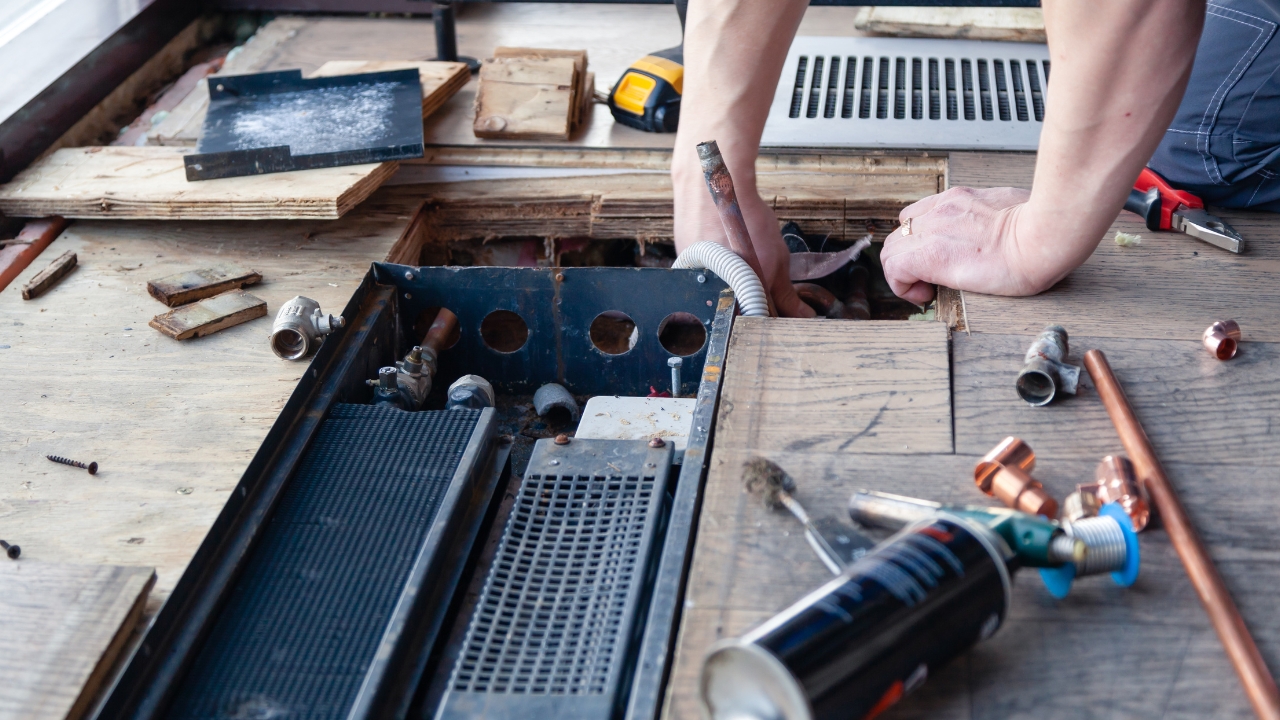
Structural integrity is not just about beams and bricks, it is also about the systems that run through them. Plumbing and HVAC work in older houses is often intertwined with structural elements, and sloppy upgrades can weaken framing or create hidden risks. Inspectors warn buyers to look for DIY Plumbing Because most of it is hidden behind walls, and Things like messy soldering or improper slopes in the basement can signal bigger issues you cannot see.
Even when systems are replaced, the work can be careless. One guide notes that Another possibility in a flip is that the heating system was completely replaced, but the furnace blower fan is clogged with drywall dust because no one protected it during construction, a detail echoed in a second advisory that repeats the same Another warning. Plumbers who work on manufactured housing point out that These issues and a few more are common because of the materials used in plumbing systems and the way they are built into homes, and the same shortcuts often show up when a flipper is racing to close up walls.
7. Permits, planning, and thinking ten steps ahead
Good structural work starts long before anyone orders lumber. It requires a plan, permits, and a willingness to think several moves ahead. Restoration specialists warn that Here are blunders they see repeatedly, starting with Mistake 1, Proceeding Without a Plan. Old homes simply take too much time and money to wing it, yet many flips are assembled on the fly, with structural decisions made in response to whatever the crew finds that day.
Inspectors who see a lot of investor rehabs argue that the most important trait of a great contractor is being able to think ten steps ahead, and that when When that foresight is missing, you run into cascading problems. Legal experts who litigate against bad flips add another layer, warning that danger of failing for electrical and plumbing work is that the home may have uninspected, unsafe systems, and if they are not done correctly, the risks include fire and death. In one roofing case, a video walkthrough notes that the company doing the work was licensed and did pull permits, which is exactly the kind of paper trail you want to see before trusting that structural repairs were done properly.
8. Historic character gets stripped instead of strengthened
Older houses are not just structures, they are systems of materials designed to work together, and flippers often damage that balance in the rush to modernize. Preservation‑minded owners complain that some renovators are Deciding that Getting rid of cast iron radiators to gain more wall space is the right move, only to discover that the new system is undersized and the house is drafty. One commenter calls this the Ultimate mistake, because those radiators were part of how the building managed moisture and temperature.
Engineers who work on historic structures note that Another significant challenge is sourcing materials that match the original construction. Historical buildings often rely on softer mortars, old‑growth lumber, and flexible assemblies that move differently than modern products. When a flipper swaps those out for whatever is cheapest at a big‑box store, the result can be trapped moisture, cracking, or differential movement that shows up as new structural problems a few seasons later.
9. How you can read the structure before you buy
For you as a buyer, the goal is not to avoid every flipped older house, but to learn how to read the structure behind the staging. Start by assuming that if the numbers look too good, something had to give. In one widely shared example, an investor explains that they bought a house $15,000, put $30,000 into the renovation, and listed it at $90,900. That kind of spread is only possible if the work is tightly controlled, and sometimes that means structural repairs are minimized or skipped. Consumer advocates urge you to ask what What Investors did not do, such as addressing rotted wood, termite damage, or other structural concerns that do not show up in listing photos.
On your walkthroughs, look for the small tells. Guides for buyers of flipped homes suggest scanning for patched sections of roof, uneven floors, and mismatched mortar. Pay attention to wall cracks and remember that cracks in the can be signs of movement, not just cosmetic flaws. Ask for permits on structural, electrical, and plumbing work, and verify that licensed contractors, not just a generic company name, handled the job. Finally, hire an inspector who understands flips and older construction, someone who knows that longer the home the more pressure the seller feels, and who can spot when a flipper tried to think 10 steps and when they simply painted over the cracks.
Supporting sources: 10 Common Mistakes.
Like Fix It Homestead’s content? Be sure to follow us.
Here’s more from us:
- I made Joanna Gaines’s Friendsgiving casserole and here is what I would keep
- Pump Shotguns That Jam the Moment You Actually Need Them
- The First 5 Things Guests Notice About Your Living Room at Christmas
- What Caliber Works Best for Groundhogs, Armadillos, and Other Digging Pests?
- Rifles worth keeping by the back door on any rural property
*This article was developed with AI-powered tools and has been carefully reviewed by our editors.