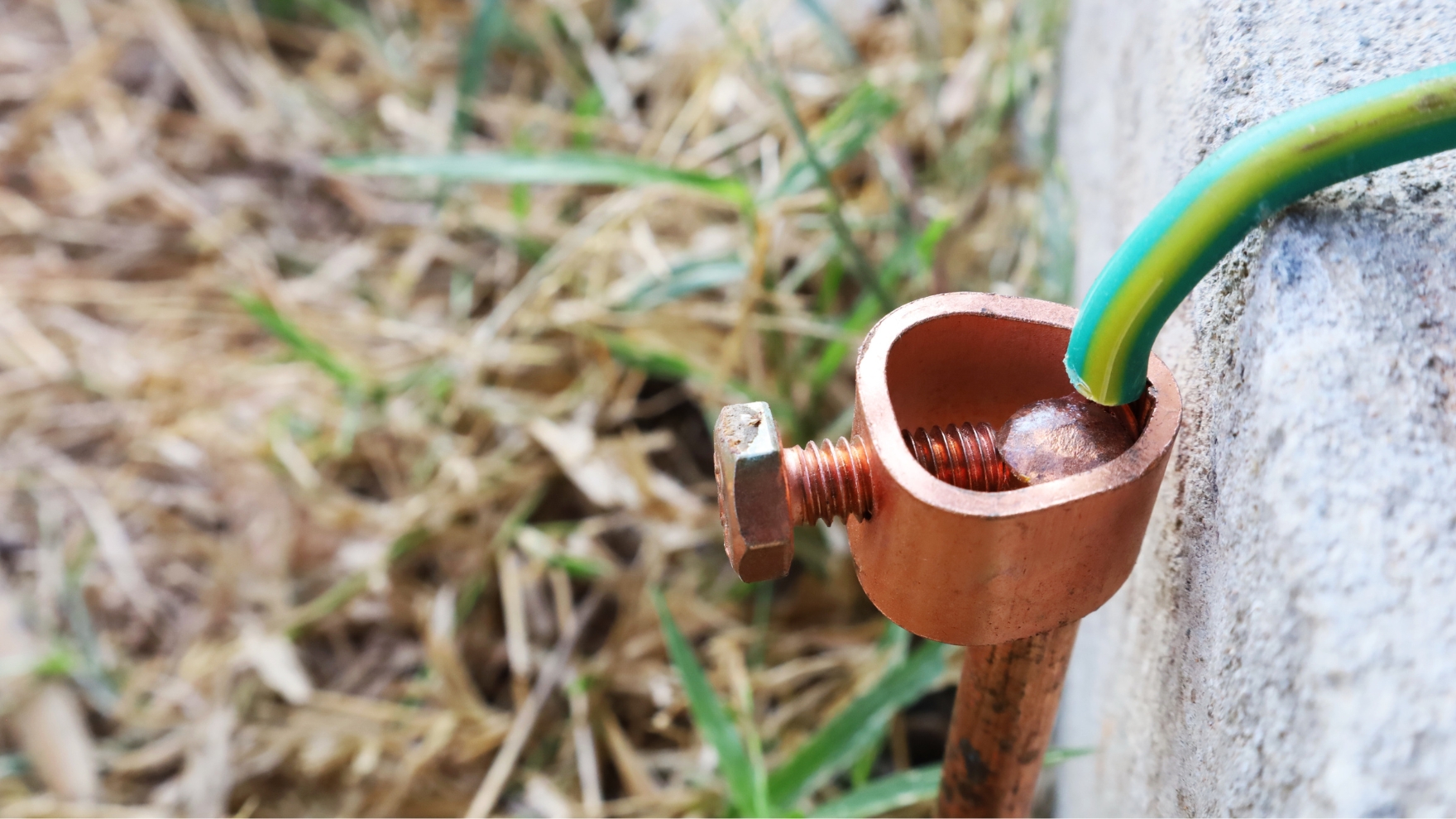
What most homeowners misunderstand about grounding
Photo credit: kaninw/Shutterstock.com
Most homeowners think of grounding as a technical detail that only matters to electricians, yet it quietly decides whether a fault ends in a harmless trip or a house fire. When grounding is misunderstood, you can install the right devices, pay for upgrades, and still be exposed to shocks, damaged electronics, and insurance gaps. Understanding what grounding really does, and what it does not do, is one of the most practical safety upgrades you can make without touching a single wire yourself.
1. Grounding is not about “extra” electricity, it is about fault paths
You are often told that grounding “dumps extra electricity into the earth,” which sounds tidy but misses the point. In a modern home, the ground network is a deliberately low resistance path that gives fault current somewhere better to go than through you or your framing. Under Normal Operation, the Ground Wire sits on Standby, carrying no current at all. It is sized and routed so that if a hot conductor touches metal, the fault current races back to the panel and forces a breaker or fuse to open.
That is why professionals stress that grounding is a safety system, not a convenience feature. Under Under normal circumstances, the grounding system should not be carrying electricity at all, and it only comes alive when something has gone wrong. When that happens, a properly designed fault path keeps the dangerous current on copper and steel instead of on your skin, then shuts the circuit down before heat and arcing can build into a fire.
2. Neutral and ground are related, but they are not the same thing
Because the neutral conductor is intentionally connected to earth at the service, you often hear people use “neutral” and “ground” as if they were interchangeable. That shortcut is exactly how unsafe DIY fixes start. Because the neutral is normally grounded, it is easy to forget that it is a current carrying conductor under load, while the equipment ground is designed to sit at zero volts until a fault.
Video explainers underline that While the two wires may seem similar, the neutral is a defined return path for normal current, and the ground is a dedicated safety path that should only see current during a fault. When you tie them together at the wrong place, such as in a subpanel or a junction box, you can energize metal enclosures and create parallel return paths that are almost impossible to troubleshoot. That is why training materials stress that the neutral to ground bond belongs at one location, the service disconnect, and nowhere else.
3. Ground rods are not magic lightning sinks
Another persistent misunderstanding is that a single ground rod in the dirt will “soak up” any dangerous voltage in your home. Electricians debating the Sep purpose of the grounding electrode system point out that the rod is part of a broader network, not a standalone shield. Its job is to reference your system to earth and help dissipate surges, not to clear routine faults on branch circuits. Those faults still rely on low impedance copper back to the service and the utility transformer.
Technical discussions of Myth 1 about Low earth resistivity explain that even a very good ground rod does not guarantee that exposed metal will stay at a safe touch voltage during a fault. The protective device still needs a solid, low resistance path back to the source so it can see enough current to trip. If you rely on dirt alone to clear faults, you are counting on soil moisture and chemistry to save you, which is not a plan any licensed electrician would sign off on.
4. Your outlets may not be grounded, even if they look modern
One of the most dangerous assumptions you can make is that a three slot receptacle automatically means a safe ground. Inspectors and electricians routinely find homes where the third prong is connected to nothing, or worse, tied to the neutral in a “bootleg” configuration. In one Dec thread, a first time buyer discovered a mix of two prong and three prong outlets and had to ask which ones were actually safe to use with modern electronics.
Professional services warn that Grounded Outlets Are is not a rhetorical question. Older houses often have two pronged receptacles or ungrounded circuits, and While they may still function, they do not provide the fault path that modern appliances expect. If a three prong outlet is not actually bonded back to the panel’s ground bus, a metal case can become energized without any breaker ever noticing.
5. GFCI protection is powerful, but it is not a substitute for a real ground
Ground fault circuit interrupters are one of the most misunderstood safety devices in older homes. You might assume that installing a GFCI receptacle on a two wire circuit “creates” a ground, but that is not how the technology works. Inspectors emphasize that a GFCI outlet or breaker does not actually create a path to ground and does not make an ungrounded outlet grounded. It simply monitors the current leaving and returning, and trips when there is an imbalance that suggests leakage through you or another unintended path.
Guides on Grounding versus GFCI protection spell out What the Difference is. If your home was built before the 1970s, it may not meet modern grounding standards, and retrofitting GFCI devices is a smart interim step, but you should not treat that as the final word on safety. A properly grounded circuit still offers better protection for surge strips, sensitive electronics, and metal cased appliances that rely on that third prong to stay at earth potential.
6. Surge protectors and “fake” grounds can give you a false sense of security
Whole house and plug in surge protectors are marketed as cure alls for power quality problems, yet their performance depends entirely on the quality of your grounding system. If the diverted surge energy cannot find a low impedance path to earth, it will look for other routes, including your electronics. One analysis of surge protection mistakes notes that Not grounding the electrical system properly means Diverted electricity might still arc through insulation or equipment during power events with poor grounding.
That risk is magnified when someone has installed “bootleg” grounds that tie the third prong to neutral at the receptacle. Inspectors warn that if someone plugs a faulty three prong device into that “fake” grounded receptacle, a shock hazard is very likely. Electricity may energize the metal housing and create a touch point from which a person could be electrocuted. In that scenario, the surge strip’s indicator light might still glow green, even though the underlying path to earth is compromised or entirely missing.
7. Grounding decisions ripple into plumbing, panels, and even insurance
Grounding is not confined to your breaker box. In many older properties, metallic water and drain lines were used as part of the electrical grounding system, which means changes to your plumbing can quietly degrade your fault path. One guide notes that Most homeowners associate grounding with electrical systems, But in modern construction, plastic piping and smart devices change how those systems interact. If you replace a section of metal drain with PVC without re bonding, you may unintentionally isolate parts of your grounding electrode system.
There is also a financial dimension. Insurance specialists warn that Many homeowners assume their policy fully protects them until a fire or shock incident exposes code violations. Here is where grounding becomes more than a technicality: if an investigation finds that a non compliant panel bond or missing ground contributed to the loss, you may face coverage disputes. Upgrading your grounding and bonding is not just about safety, it is also about protecting your ability to recover after a worst case event.
8. “No ground is safer than a bad ground” is not just a slogan
Electricians sometimes tell you that a two prong outlet is safer than a three prong outlet with a bootleg ground, and that can sound counterintuitive. A Nov discussion titled Why do american electricians think that having no ground is safer than bootleg grounding features a German electrician pressing exactly that point. The answer comes down to predictability: a known ungrounded outlet can be labeled and treated with caution, while a fake ground invites you to plug in equipment that assumes a safe fault path that does not exist.
Code discussions echo that logic in other contexts. In one Sep thread on station wiring, a commenter notes that Pretty much if it is a subpanel you need a Grounding conductor and it needs to connect to the existing system, citing Art. 250. The principle is the same in your living room as in a ham shack: a single, well defined bond at the service and continuous equipment grounds are safer than improvised jumpers that hide real risks behind familiar hardware.
9. Grounding is creeping into wellness gadgets and DIY fixes, with real risks
Grounding is no longer just an electrical term, it has become a wellness buzzword. Commercial Nov guides on Grounding Mat Dangers focus on Separating Fact from Fiction, explaining that the Main perceived Dangers are often misunderstandings of how these products connect to the earth pin of a receptacle. A companion piece on Grounding Mats stresses that when used correctly, the mat’s cord and internal resistance are designed as a safety feature that routes any fault current away from your body and safely into the earth.
At the same time, EMF conscious homeowners are experimenting with bed canopies and filters that tie into the electrical earth. One product warning notes that As such, grounding a canopy through the earthed electric circuit without a filter runs the risk of unintentionally turning the canopy into an antenna. Even simple accessories can introduce hazards if you treat the ground pin as a universal safety outlet. That is why instructions for electric fencing and mats caution that Then you can use the plugs delivered with the mat to plug in the extension cable and Make sure this cannot be used for electrical devices. Grounding, whether for wellness or wiring, only protects you when you respect what it is actually designed to do.
Like Fix It Homestead’s content? Be sure to follow us.
Here’s more from us:
- I made Joanna Gaines’s Friendsgiving casserole and here is what I would keep
- Pump Shotguns That Jam the Moment You Actually Need Them
- The First 5 Things Guests Notice About Your Living Room at Christmas
- What Caliber Works Best for Groundhogs, Armadillos, and Other Digging Pests?
- Rifles worth keeping by the back door on any rural property
*This article was developed with AI-powered tools and has been carefully reviewed by our editors.