What happens when modern wiring meets old framing
Photo credit: Joserpizarro/istock.com
When you thread twenty first century wiring through a skeleton of century old framing, you are not just upgrading a few outlets, you are forcing two very different building eras to share the same cramped cavities. The charm of plaster walls and thick joists often hides brittle conductors, improvised junctions and insulation that was never designed to live beside today’s power hungry devices. If you own or are eyeing an older house, understanding how modern circuits behave inside that old structure is the difference between a safe upgrade and a slow burning liability.
Why old framing and new loads collide
You experience the clash between eras every time you plug a 1,500 watt space heater or a bank of gaming PCs into a circuit that was sized for a few lamps and a radio. Earlier electrical systems were installed when homes had far fewer outlets and almost no always on electronics, so the framing cavities that carry those wires were never planned for dense cabling or heavy loads. As you add more circuits, recessed lights and smart switches, the original studs and joists can become crowded, which raises the stakes if any of that older wiring is already frayed or loosely supported.
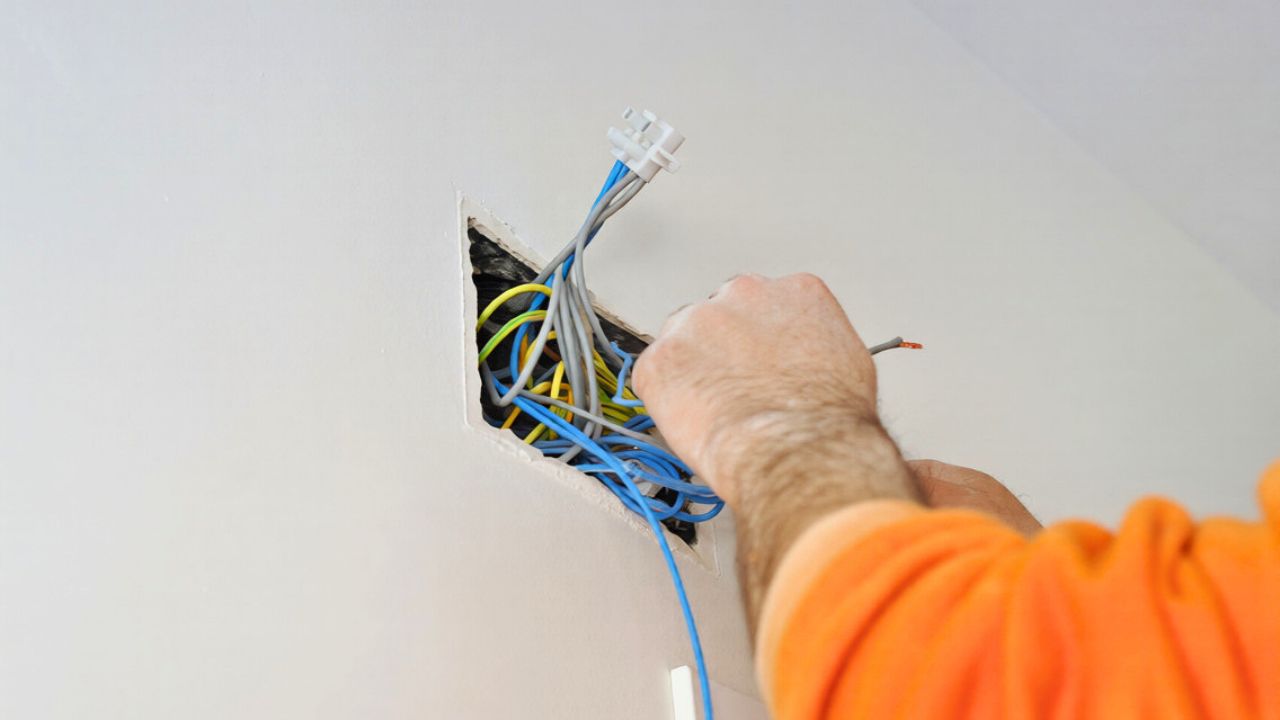
Electricians who work in pre war housing describe opening walls to find a mix of copper, aluminum and Older knob and tube runs all sharing the same bays, sometimes draped over notched studs or resting on metal pipes. That kind of spaghetti makes it harder to route new cable safely and increases the chance that a modern cable will be stapled too close to a brittle conductor or pinched where the framing moves. When you then layer in high draw appliances that, as Today’s guidance notes, often need higher current to operate efficiently, the structural and electrical stresses start to compound.
Knob and tube 101 inside old walls
Much of the tension between modern wiring and old framing starts with knob and tube, the open air system that snakes through many early twentieth century houses. Knob and Tube tube wiring is usually found in homes built more than 50 years ago, and in some cases was even used later in additions, so you may find it threaded through hand hewn studs or early dimensional lumber. The conductors run separately, supported on ceramic knobs and protected where they pass through framing by ceramic tubes, which means the wood itself is part of the routing system.
Because the conductors are suspended in air, the original design relied on open space around the wires to dissipate heat, something that becomes a problem once you start packing those cavities with insulation or new cable. Guidance on Knob and tube explains that if you have it in your home it can lead to dangerous exposed wires and can be a fire hazard around insulation, particularly when modern blown in products bury the old runs. Another overview of Knob systems notes that while they were once standard in early twentieth century homes, they no longer meet today’s safety requirements because of physical wear and heat damage over time, both of which are amplified when you start modifying the surrounding framing.
Fire risks when insulation meets brittle conductors
Once you start tightening up an old envelope with spray foam or cellulose, the relationship between wiring and framing changes from airy to packed, and that is where the fire risk spikes. Electricians like Jan, who warns that the insulation on old cloth covered conductors dries out and cracks, point out that if the insulation fails, electricity can travel through you, your appliances or your home metal pipes, turning every nearby surface into a potential shock path. In a short video, Jan describes how the cloth around knob and tube can crumble so that a simple fold or contact with a nail in the framing becomes a live fault, a scenario that is far more likely once you start pushing new cables through the same holes.
Technical write ups on Deterioration of Insulation explain that knob and tube wiring uses rubber or cloth for insulation, which can become brittle and crack over time, leaving bare copper that can arc to nearby wood. Because these systems lack a ground wire, there is no safe path for fault current, which increases the risk of fire when a conductor touches a stud or lath. Another advisory on Jan’s warning reinforces that if the insulation fails, you, your appliances or your plumbing can become the route to ground, a sobering reality when you are drilling through old framing that may already hide compromised runs.
Modern loads on antique circuits
Even if the framing cavities are intact, the circuits running through them were never designed for the way you use power today. A typical early twentieth century branch circuit might have served a couple of ceiling fixtures and a handful of outlets, while you now expect it to feed a microwave, a phone charger cluster and a smart TV. As one overview of outdated systems notes, Apr guidance stresses that outdated wiring can be incompatible with modern appliances because today’s electronics and systems often require a higher current to operate efficiently, which can overheat old conductors hidden in dry framing.
Specialists who look at how new tech interacts with legacy wiring point out that if your home was built before the 1950s there is a good chance it still has knob and tube, and that the warning signs are more obvious once you start plugging in high draw devices. In one analysis of Days of Knob and Tube, electricians describe how frequent breaker trips, flickering lights and warm outlet covers are all signals that the old conductors inside your walls are struggling. That same source warns about older bathrooms and kitchens that still have receptacles near water sources without GFCI outlets, a combination that becomes more dangerous as you add modern countertop appliances that push those circuits to their limits.
Threading new cable through old studs
Once you decide to upgrade, the practical question is how to route new wiring through framing that was never drilled for today’s cable counts. Professional guides on running new circuits in existing walls recommend a methodical approach: you Drill holes in the studs and in the top or bottom plate, then run the cable from the existing receptacle to the switch box and on to the next device, often fishing through small openings behind baseboards or crown molding. That technique lets you keep most of the plaster or drywall intact, but it also means you are working blind around whatever old wiring is already stapled to those studs.
Homeowners who have tackled basement framing around existing wiring describe a similar dance between structure and safety. In one discussion of a remodel, a contributor explains that the stud the wires bump over can be cut out so the wires can lay flat, then you Scoot all the wires up and frame around them, protecting the runs in notches with nail plates. Another thread on Ideally moving old wires in century homes notes that you should move the wiring either temporarily away or permanently when you reframe, because leaving it haphazard in new stud bays is a missed opportunity to clean up a messy and potentially unsafe layout.
Can you rewire without tearing everything open
Because old framing is often wrapped in plaster or detailed trim, you may be tempted to upgrade wiring with minimal demolition. Electricians acknowledge that Sometimes it is even possible to do the job without removing any drywall or pulling up any flooring, but they stress that this is uncommon and usually limited to simple runs between accessible attics, basements and a few strategically placed boxes. In most cases, you still need to open sections of wall around lights, outlet boxes and switches to drill proper holes and secure the cable so it is not just floating loose in the cavity.
Homeowners trading notes in renovation groups often ask whether they can simply pull new wiring and leave the old in place. One conversation that starts with someone saying Just curious why you would go through the hassle of removing it leads to a consensus that leaving dead cable is usually acceptable as long as it is fully disconnected and clearly abandoned. However, several contributors also note that when you already have walls open, it is smart to pull out obsolete runs so future work is less confusing and there is no risk of someone mistakenly reconnecting a deteriorated line hidden deep in the framing.
Insurance, inspections and the cost of keeping old wiring
Even if your old framing can physically accommodate both legacy and new wiring, your insurer and local inspector may have strong opinions about how that coexistence is managed. Some underwriters either refuse to cover homes with active knob and tube or charge higher premiums unless you can document that the system has been evaluated. One advisory on Modern updates notes that K&T systems can pose fire hazards when trying to insulate around them and that homes with this wiring can have higher premiums for coverage, particularly when the old conductors are buried in combustible framing cavities.
For those willing to insure existing systems, there are usually further safeguards required, such as a certified inspection by a licensed electrician and written confirmation that the wiring is safe and intact. Guidance on everything about knob and tube explains that insurers may insist on documentation assuring the wiring is safe and intact before they will bind a policy. Real estate advice on selling older houses adds that Knob and tube wiring, Common in homes built between the 1880s and 1940s, can complicate a sale because buyers worry about the lack of grounding and the fact that modern insulation around those runs prevents heat from dissipating, both of which are directly tied to how the wiring sits inside the framing.
When to say enough and plan a full rewire
At some point, patching around old conductors in old framing stops being prudent and starts being a false economy. Electrical safety guidance in the United Kingdom suggests that How often should a house be rewired is typically answered with a range of every 25 to 30 years to bring it up to date with current standards, with inspections recommended every five years for landlords. A more detailed guide on Warning Signs That Needed Homes older than 25 to 30 years often need rewiring to keep up with today’s safety standards and the demands of phone chargers or modern kitchen gadgets, which is a polite way of saying that the original circuits inside those studs are outmatched.
When you do commit to a full rewire, you are also making a decision about how your framing will be treated for the next generation. Some electricians argue that old homes are not inherently worse wired, pointing out in one discussion that Jun observations about older construction note that fire risk depends heavily on the equipment plugged into the outlet and the maintenance history. Others, including contributors who answer questions like Aug on replacing knob and tube, stress that the system came from a time before grounding and modern protective devices, so leaving it in place while you add new loads is rarely the safest choice. Another technical answer that begins with There are two big disadvantages to knob and tube highlights the absence of bonding or grounding conductors and the wide spacing of the wires, both of which complicate any attempt to integrate it cleanly with modern cable inside the same framing.
Designing upgrades that respect the structure
Basements, lighting and the last hidden hazards
Like Fix It Homestead’s content? Be sure to follow us.
Here’s more from us:
- I made Joanna Gaines’s Friendsgiving casserole and here is what I would keep
- Pump Shotguns That Jam the Moment You Actually Need Them
- The First 5 Things Guests Notice About Your Living Room at Christmas
- What Caliber Works Best for Groundhogs, Armadillos, and Other Digging Pests?
- Rifles worth keeping by the back door on any rural property
*This article was developed with AI-powered tools and has been carefully reviewed by our editors.