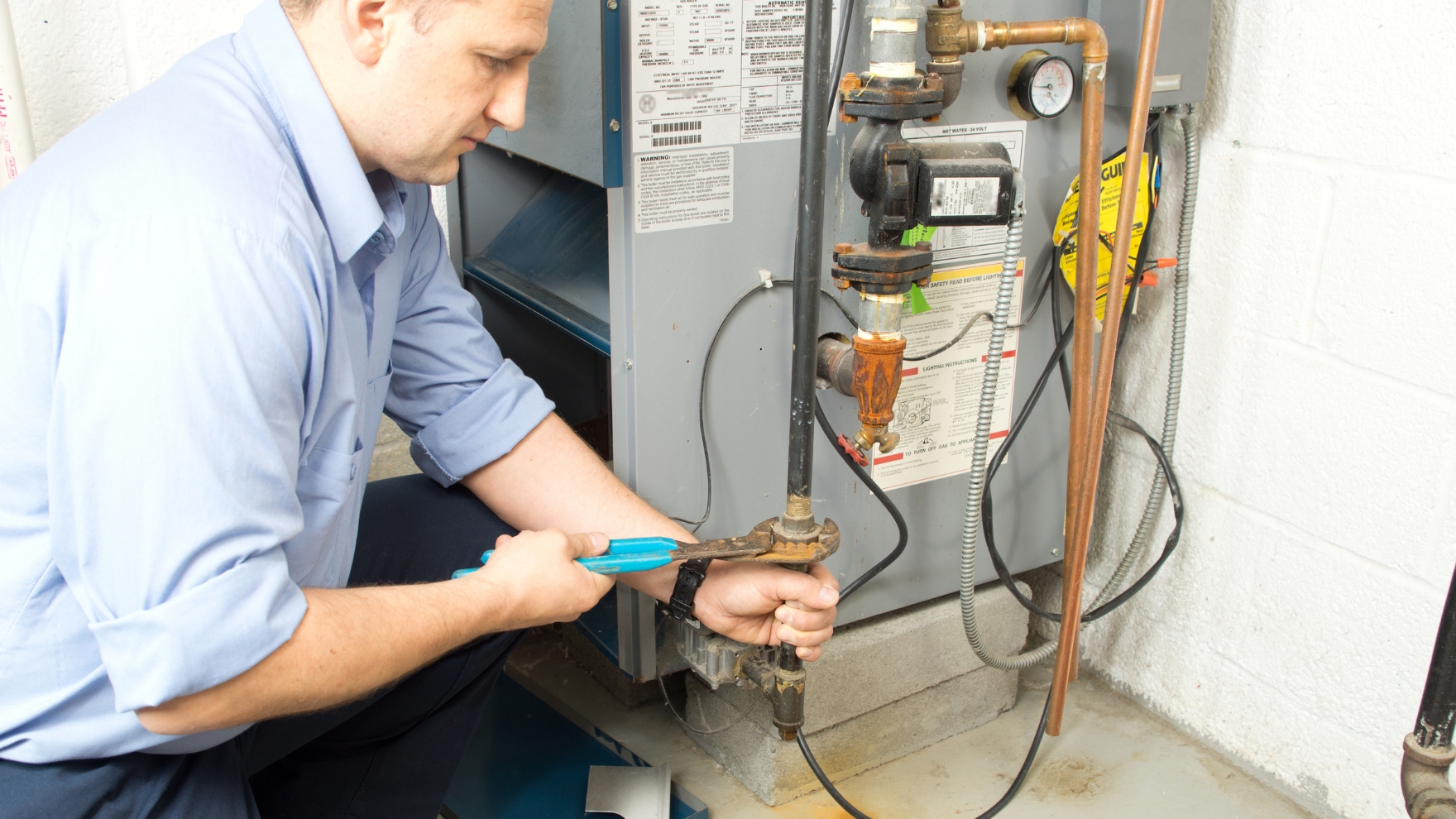
The home feature owners stop noticing — until it fails
Photo credit: Globalphotogroup/Shutterstock.com
You move through your home every day guided by a quiet infrastructure of comfort: water that appears on demand, air that arrives at the right temperature, gutters that whisk away storms. Most of the time, you barely register any of it. The trouble is that this invisible comfort system only stays invisible until one overlooked feature fails, often expensively and at the worst possible moment.
The home components you stop noticing first are usually the ones that have been slowly degrading for years. From Plumbing buried in walls to Your HVAC humming in the background, these systems tend to give off subtle warnings long before a pipe bursts or a furnace dies. If you learn to spot those early signals, you can trade emergency calls for planned upgrades and keep your house from quietly drifting toward failure.
The comfort system you forget you own
The feature you are most likely to ignore until it fails is the network that keeps your home livable: the combination of heating, cooling, ventilation and water delivery that runs mostly out of sight. You notice the paint color in your living room, not the way your ducts distribute air or how evenly your water pressure holds when someone starts a shower upstairs. That invisibility is part of the appeal, but it is also why you tend to postpone maintenance until something breaks loudly enough to interrupt your day.
Professionals point out that Your heating, ventilation, and air conditioning, often shortened to Your HVAC, is designed to keep your home comfortable year round, yet it is easy to forget about it when things are working correctly. The same is true of Plumbing that sits behind drywall, from Sewer and Drain Services to the Camera Inspecti tools used to find Clogged Pipes and Drains before they back up. When you treat this comfort system as background noise instead of critical infrastructure, you set yourself up for surprise failures that could have been prevented with modest, scheduled care.
How homes fail quietly before anything “breaks”
Long before a pipe bursts or a furnace shuts down, your house usually whispers that something is off. You adapt to a faucet that closes less crisply, a pressure change in the shower, or a fan that sounds slightly different, and within a week those changes feel normal. That adaptation is human, but it is also how you end up living with a slow leak in performance that only becomes visible when a bill spikes or a component fails outright.
Analysts who study building performance describe this as the way homes fail quietly, with small shifts that accumulate over time. One account notes that it feels like a sound you stop noticing or maintenance you do slightly less often, and that by the time you see visible damage, the problem is already in a late stage. Those subtle cues often show up first in energy use, with Some home features slowly losing efficiency as they age, leading to drafts, uneven temperatures, or rising utility bills even after you adjust the thermostat. If you treat those changes as background instead of data, you miss the chance to intervene while repairs are still simple.
Plumbing: the hidden network under constant pressure
Few systems illustrate quiet failure as clearly as Plumbing. Pipes run through walls, under floors, and beneath your yard, carrying pressurized water and waste with almost no direct visibility. You may not think about them until a ceiling stain appears or a drain stops clearing, but by that point the underlying issue has often been building for months, if not years, out of sight.
Specialists emphasize that routine attention to Plumbing Services, including Sewer and Drain Services, is one of the most commonly overlooked forms of home care. They highlight how Clogged Pipes and Drains can be prevented through regular Drain Clearing and Maintenance, supported by Camera Inspecti tools that let technicians see inside lines before they fail. When you schedule that kind of inspection on your terms instead of waiting for a backup, you trade a disruptive emergency for a planned service call and protect finishes, subfloors, and even structural framing from water damage that spreads quietly behind walls.
Gutters and drainage: the quiet guardians of your foundation
Water management on the outside of your home is just as easy to ignore as the Plumbing inside. Gutters sit at roof level, out of your direct line of sight, and downspouts often disappear behind landscaping. As long as you do not see water pouring over the edge during a storm, it is tempting to assume everything is fine, even if leaves and grit have been accumulating for seasons.
Contractors repeatedly flag Gutter Cleaning and Maintenance as one of the most commonly neglected projects, even though Gutters play a crucial role in protecting your home from water damage by channeling runoff away from siding and foundations. Guidance that walks you through Gutter Cleaning and Inspection stresses that if Gutters are clogged, water can back up under shingles, soak fascia boards, and pool near your foundation, where it can seep into basements or crawl spaces. When you treat those metal troughs as a first line of defense rather than an afterthought, a simple ladder session or service visit can prevent the kind of slow, hidden moisture problems that are expensive to reverse.
Your HVAC: comfort, cost, and the filters you forget
Inside, Your HVAC system is the workhorse that quietly sets the temperature and air quality for every room. You interact with it mainly through a thermostat on the wall, which makes it easy to forget that the equipment in your attic, closet, or side yard is a complex machine that needs regular care. When you skip that care, the first signs are often subtle: a room that never quite reaches the set temperature, a fan that runs longer than it used to, or a faint smell of dust when the system kicks on.
Property managers list Regular HVAC Filter Changes among the Uncommon Home Maintenance Tasks Landlords Often Forget, even though clogged filters strain blowers, reduce efficiency, and can shorten equipment life. They explain Why Landlords Overlook HVAC Filters, pointing to confusion over who is responsible and the fact that filters are out of sight. At the same time, Your heating, ventilation, and air conditioning system benefits from Seasonal checks that catch small problems, like loose belts, minor gas pressure drift, or thermostat calibration issues, before they become major failures. Technicians who perform those Seasonal inspections report that the result is higher efficiency gains and far fewer midwinter emergencies, which is exactly when you least want to discover that your furnace has quietly been struggling for years.
Small maintenance tasks that quietly snowball
Beyond the big systems, a long list of small, unglamorous chores quietly determines how well your home ages. You probably vacuum the living room or wipe kitchen counters without thinking, but you may not schedule deeper work like washing baseboards, cleaning behind appliances, or clearing lint from dryer vents. Those tasks do not show up in listing photos, yet they influence everything from indoor air quality to fire risk.
Home service providers group these as Important Home Maintenance Tasks You Might Be Forgetting, with Deep Cleaning Interior Spaces singled out as a way to maintain a healthier environment without the extra stress of last minute scrubbing. Another set of experts highlights how Here are some of the most commonly overlooked home projects, including sealing around windows and doors to prevent drafts and energy loss. When you ignore those details, you slowly normalize sticky windows, faint drafts, and dustier rooms, all of which are early indicators that your building envelope and mechanical systems are working harder than they should.
Safety systems: alarms, detectors, and the batteries you ignore
Some of the most critical features in your home are designed to stay silent until something goes very wrong. Smoke alarms, carbon monoxide detectors, and other safety devices sit on ceilings and walls, blinking quietly or not at all. Because they rarely activate, it is easy to forget that they rely on batteries, sensors, and expiration dates, and that a chirping sound is not just an annoyance but a warning that protection is fading.
Home safety guidance stresses that safety devices such as smoke alarms and carbon monoxide detectors need regular testing and prompt battery replacement when a low power signal indicates the batteries are low. Lists of home tasks you should not ignore place these checks alongside Gutter Cleaning and Inspection, arguing that both are simple jobs with outsized consequences if neglected. When you treat that monthly test button as a routine habit, you ensure that the one feature you hope never to use is ready to work on the worst day you can imagine.
Knowing when repair no longer makes sense
Even with diligent maintenance, every home feature has a point where patching it again is no longer the smartest move. You might find yourself calling the same technician every season, replacing another small part, or tolerating performance that never quite returns to what it once was. At that stage, the question is not just whether you can repair something, but whether you should.
Analysts who track long term home costs note that Some home features slowly lose efficiency as they age, and that You may notice drafts, uneven temperatures, or rising utility bills even after multiple service visits. They argue that when windows no longer close as tightly as they once did or when a furnace needs frequent attention, it can be more cost effective to invest in a replacement that restores performance and lowers operating costs. That same logic applies to Plumbing, where repeated fixes on aging lines may signal that it is time to replace a run of pipe rather than keep paying for spot repairs that never address the underlying wear.
When quiet neglect becomes structural risk
Most overlooked maintenance leads to inconvenience and higher bills, but in extreme cases, long term neglect can threaten the structure itself. Cracked foundations, sagging floors, and bowing walls rarely appear overnight. They usually emerge after years of water intrusion, soil movement, or unaddressed load issues that could have been spotted earlier if someone had been looking for them.
Structural specialists explain that when you ask, Can a house collapse suddenly, the answer is that it may feel sudden when a house collapses, but generally houses do not collapse suddenly. Instead, they describe a progression of warning signs, from sticking doors and widening cracks to sloping floors, that give you a chance to intervene if you pay attention. Those same experts urge owners to watch for patterns of moisture, such as repeated damp spots near foundations or chronic gutter overflow, which tie back to the Gutter Cleaning and Maintenance and drainage work that often gets postponed. When you connect those dots early, you can bring in an engineer or contractor before quiet neglect turns into an emergency evacuation.
Turning invisible systems into a visible routine
If the problem is that you stop noticing key features until they fail, the solution is to make those features visible on a schedule instead of waiting for them to demand attention. That starts with a simple calendar: quarterly reminders to change filters, seasonal notes to walk your exterior after heavy storms, and an annual appointment for a full HVAC inspection. By putting those tasks on the same footing as car servicing or tax deadlines, you shift from reactive scrambling to proactive stewardship.
Maintenance guides suggest building a checklist that includes Plumbing Services such as Drain Clearing and Maintenance, Regular HVAC Filter Changes, Gutter Cleaning and Inspection, and Deep Cleaning Interior Spaces, then assigning each task to a month or season. They also recommend pairing that list with professional support where it matters most, from Seasonal HVAC checks that reduce midwinter emergencies to periodic reviews of overlooked projects that can lead to drafts and energy loss. When you treat your home’s quiet systems as assets that deserve regular attention, you keep that crucial feature of modern life, everyday comfort, from disappearing into the background until the day it fails loudly enough to be impossible to ignore.
Like Fix It Homestead’s content? Be sure to follow us.
Here’s more from us:
- I made Joanna Gaines’s Friendsgiving casserole and here is what I would keep
- Pump Shotguns That Jam the Moment You Actually Need Them
- The First 5 Things Guests Notice About Your Living Room at Christmas
- What Caliber Works Best for Groundhogs, Armadillos, and Other Digging Pests?
- Rifles worth keeping by the back door on any rural property
*This article was developed with AI-powered tools and has been carefully reviewed by our editors.