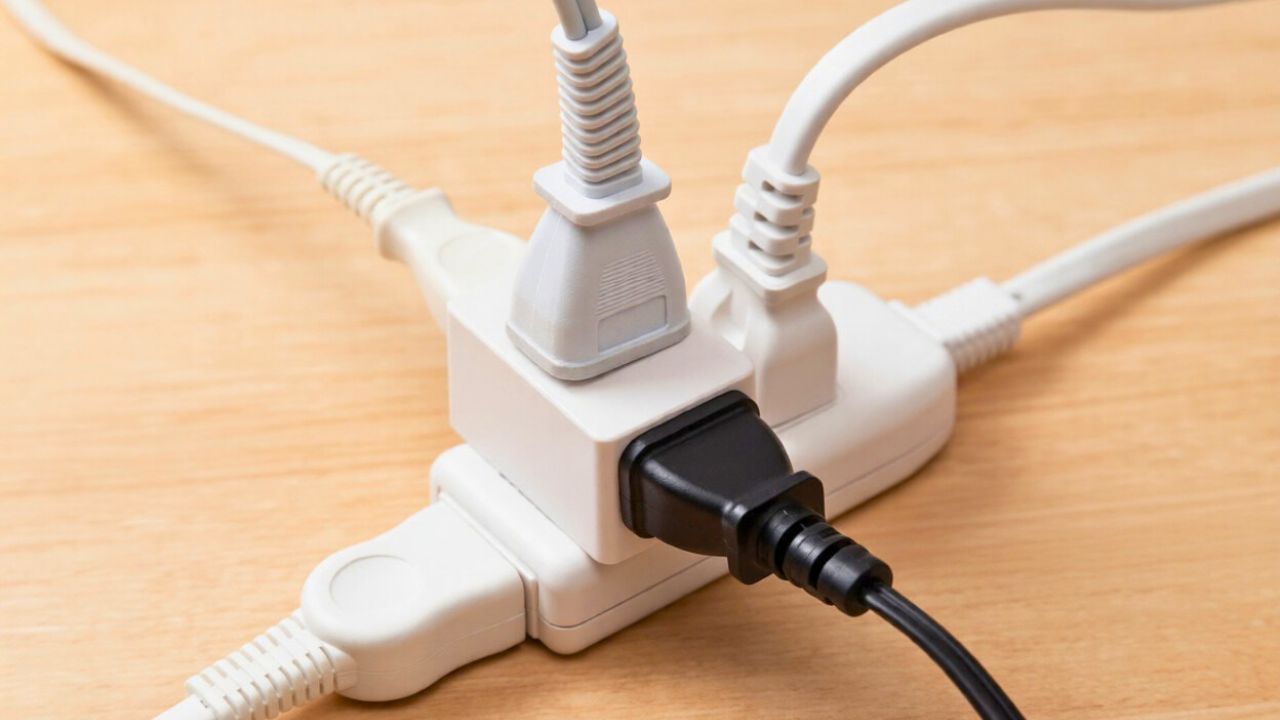
The wrong way to extend a circuit that inspectors flag immediately
Photo credit: Years/istock.com
Home inspectors do not need long to spot a bad circuit extension. The wrong fix leaves a visual trail of extension cords, overstuffed boxes, and improvised splices that signal both code violations and real fire risk. If you are tempted to stretch one more outlet or light off an existing run, the way you do it will decide whether your project passes quietly or gets flagged on the spot.
Understanding how inspectors think, and how the National Electrical Code treats extensions, lets you avoid the shortcuts that fail instantly and focus on upgrades that actually make your wiring safer. Instead of hiding problems behind drywall or furniture, you can extend circuits in ways that respect capacity, protection, and labeling, and that hold up when someone pulls the panel cover.
Why inspectors fixate on circuit extensions
When you extend a circuit, you are not just adding a receptacle, you are changing how that entire branch behaves under load and fault conditions. Inspectors know that many of the worst house fires start where someone tied into an existing run without checking capacity, box fill, or protection, so they treat extensions as a red flag area. Guidance focused on Understanding the most common failures stresses that loose, ungrounded, or incorrectly wired connections are exactly the kind of hidden defect that shows up where circuits have been modified.
That is why inspection checklists put electrical rough work near the top of their failure statistics. One overview notes that Electrical rough is among the most frequently failed inspections, with missing staples, improper box fill, and misapplied GFCI protection all surfacing where homeowners or contractors have extended existing runs. When you add new devices, you are expected to bring that part of the system up to current standards, not simply copy whatever was there decades ago.
The worst “extension” of all: using cords as permanent wiring
From an inspector’s perspective, the most obvious wrong way to extend a circuit is to pretend an extension cord is part of the building wiring. If you snake a cord through a doorway to power a freezer or run a power strip behind a wall-mounted TV because there is no receptacle nearby, you have effectively created a shadow circuit that was never designed into the home. The National Electrical Code is explicit on this point, with section 400.8 stating that flexible cords and cables shall not be used as a substitute for fixed wiring of a structure.
That rule exists because cords are exposed to damage, overloading, and heat in ways that permanent cable in conduit or inside walls is not. Safety guidance on However many dangerous home problems points out that relying on extension cords and power strips can overload circuits and increase the risk of fire, especially when they are daisy chained. Industrial settings see similar issues, with analyses of Industrial Extension Cords in Electrical Lighting Systems tying damaged insulation and overheating to premature failure of lighting components. If an inspector walks into a room and sees cords doing the work that fixed wiring should handle, that alone can derail your approval.
Code rules that quietly govern every circuit extension
Even when you stay inside the walls, extensions are not a free-form exercise. The National Electrical Code treats any new length of cable, junction, or device as part of a regulated change, and local inspectors lean on that framework. Provisions on Modifications to branch-circuit wiring specify that extensions, replacements, or alterations in certain areas must be protected by modern devices, including arc fault and ground fault protection where required.
Specific sections such as Which of the rules on branch circuit extensions or modifications in bedrooms and the broader NEC 210.12(B) requirement for Arc Fault Circuit Interrupter protection in living rooms, parlors, libraries, dens, bedrooms, and sunrooms mean that adding a single receptacle can trigger a requirement for AFCI coverage. Another section, 210.12(D), extends that logic to Branch Circuit Extensions and Modifications in Dwelling Units, Dormitory Units, and Guest Rooms and Guest Suites whenever a new device is installed. If you ignore these triggers and simply tap into an old non‑AFCI circuit, the inspector has a clear basis to fail the job.
Overloading circuits instead of adding Adequate capacity
Another wrong way to “extend” a circuit is to treat it as an infinite power strip. When you keep adding receptacles, lights, or equipment to a run that was never sized for that load, you are not just bending the rules, you are violating the basic requirement for Adequate circuits. Code guidance framed around NEC requirement language stresses that Adequate circuits must be installed to match the electrical load of the space, including dedicated circuits for major appliances, so that the system stays safe and up to current standards.
In practice, inspectors see the opposite in many Homes with older wiring. Summaries of Common Electrical Issues note that Outdated Wiring Systems in Homes are often paired with overloaded circuits and missing modern protection devices that are now mandated. Another review of An overloaded circuit problem points out that frequent breaker trips, dimming lights, or warm cover plates are signs that a circuit is carrying more than it was designed to handle. If you extend a run that already shows those symptoms, an inspector will see your new work as compounding a known hazard rather than solving it.
Box fill, splices, and the temptation to cram “just one more”
Once you open a junction box to extend a circuit, the next wrong move is to stuff in extra conductors and wirenuts without checking capacity. Every enclosure has a rated volume, and every conductor, device, and clamp inside it counts toward that limit. Technical guidance on When an enclosure is stuffed with too many wires explains that inspectors can flag it for unsafe heat buildup or potential damage to insulation, because every conductor inside an enclosure adds to the heat load.
Home inspection reports echo the same concern. One breakdown of By Matthew Steger, ACI with WIN Home Inspection, lists Improper wire junctions and terminations as a top issue, noting that where two or more wires meet, the junction must be made inside an approved box with proper covers and strain relief. Another overview of Overfilled Electrical Boxes describes how Stuffing too many conductors into a small box can lead to overheating, shorts, and even electrical fires, and reminds you that Every electrical box has a capacity rating that must be respected. If your extension relies on cramming extra splices into an already crowded box, the inspector will not need a calculator to know it is wrong.
Panel shortcuts: Double taps and overcrowded wiring
Many do‑it‑yourself extensions start at the panel, where the temptation is to land a new cable under an existing breaker screw instead of installing a new breaker or subpanel. That move creates a Double tap, which is when two wires are connected to one breaker terminal that is only rated for a single conductor. Detailed explanations of Double tapped breakers stress that Double taps are a fire hazard and should be addressed as soon as a homeowner becomes aware of them, because loose connections at the breaker can arc and overheat.
Inspectors and electricians see this pattern so often that it shows up across multiple resources. One social media briefing aimed at homebuyers notes that Inspectors also look for double tapped breakers in panels because they are a common fire risk, while a discussion among electricians points out that There is no DIRECT Code language that uses the phrase, but manufacturer instructions and listing requirements effectively make the practice a Code violation. Broader guidance on Problems with the Electrical Panel also highlights Overcrowded Wiring, noting that Each circuit breaker is designed to hold a certain number of wires and that When you exceed that, you create unsafe conditions that inspectors are trained to flag.
Reversed polarity, Improper connections, and mislabeled protection
Even if your extension looks tidy, inspectors will test whether it is wired correctly and protected appropriately. One of the fastest ways to fail is to reverse hot and neutral on a new receptacle or splice, a mistake that can energize metal parts and defeat safety devices. Safety alerts on Recognizing potential wiring errors emphasize that Reversed polarity is a serious hazard and that Recognizing signs of potential wiring errors is crucial for maintaining a safe electrical environment. Inspectors use simple testers to spot these issues instantly, and video explainers from John of Two Moose Home Inspections in his Inspector Insights series show how often reversed outlets appear in everyday houses.
Beyond polarity, Improper Wiring and Connections are a recurring theme in failed inspections. A guide that starts with Most Common Electrical Code Violations lists Improper Wiring and Connections as a core problem, warning that Improper splices, missing junction boxes, and loose terminations increase fire hazards. Another breakdown of Table of Contents violations highlights Missing or Improper GFCI Protection, Double Tapped Breakers, and Open Splices and Improper Wire Connections as routine findings. Even labeling matters, with checklists of Mislabeled Breakers, No Ground Fault Protection, and No Dedicated Circu circuits reminding you that if your new extension is not clearly and accurately identified at the panel, the inspector may treat it as suspect.
GFCI, AFCI, and the trap of copying outdated wiring
One of the subtler wrong ways to extend a circuit is to match whatever protection exists on the old wiring instead of upgrading to what is required today. If you add a receptacle in a kitchen, bathroom, or exterior location and do not provide ground fault protection, you are effectively freezing the circuit at an outdated safety level. Resources that catalog Missing or Improper GFCI Protection show how often inspectors fail installations where new outlets were added without the required devices, even when the original circuit predated those rules.
The same logic applies to Arc Fault Circuit Interrupter coverage. The National Electrical Code 210.12(B) requirement for Arc Fault Circuit Interrupter protection in habitable rooms means that when you extend a branch circuit in those spaces, the new portion must be AFCI protected. Training material on But there are nuances, such as when you are only replacing a panel versus extending wiring, yet the consistent theme is that adding receptacles or extending branch circuits generally pulls you into the modern AFCI rules. If you ignore that and simply mirror the old configuration, you are setting yourself up for a fail.
How to extend a circuit the right way, so inspectors sign off
Doing it right starts with asking whether you should extend the circuit at all. If the existing run already serves a crowded room with Too Few Receptacles, the answer may be to add a new dedicated circuit rather than stretching the old one. Practical advice on Too Few Receptacles, Too Many Extension Cords From any point along a wall line underscores that modern layouts expect receptacles within reach so that people are not forced into unsafe workarounds. Broader checklists of Loose, ungrounded, or incorrectly wired devices that fail inspections reinforce the idea that a clean, code‑compliant new circuit is often safer than a patched‑together extension.
When you do extend, treat the work with the same discipline as new construction. That means sizing boxes correctly, avoiding Overfilling enclosures, and remembering that Every box has a maximum capacity and that Cramming extra conductors inside is a common mistake. It also means respecting terminal ratings, since training material from There are reminders that most breaker and device terminals are rated for a single conductor and that any multi‑wire use must be verified for the correct rating. If you combine that attention to detail with proper GFCI and AFCI protection, accurate labeling, and a willingness to call a licensed electrician when the scope grows, you turn a potential inspection headache into a straightforward sign‑off.
Like Fix It Homestead’s content? Be sure to follow us.
Here’s more from us:
- I made Joanna Gaines’s Friendsgiving casserole and here is what I would keep
- Pump Shotguns That Jam the Moment You Actually Need Them
- The First 5 Things Guests Notice About Your Living Room at Christmas
- What Caliber Works Best for Groundhogs, Armadillos, and Other Digging Pests?
- Rifles worth keeping by the back door on any rural property
*This article was developed with AI-powered tools and has been carefully reviewed by our editors.