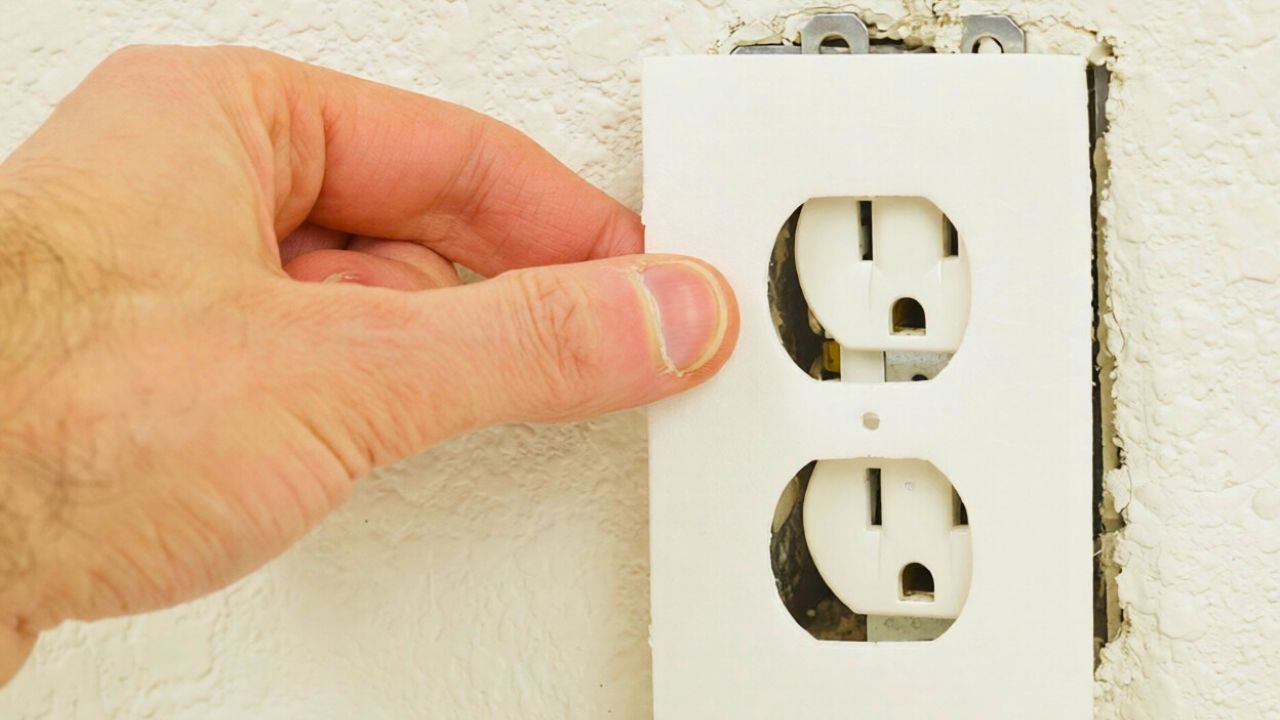
The “brand-new” electrical cover plates that raise the wrong kind of questions
Photo credit: PictureLake/istock.com
Electrical cover plates are supposed to be the quiet part of a room, the hardware you never notice until something goes wrong. Yet a wave of “brand‑new” designs is turning that afterthought into a statement piece, and not always in a reassuring way. When the plate around a live outlet is busy raising questions about safety, taste or basic competence, you feel it every time you reach for the switch.
You now face a market where a wall plate can be a depth extender, a sculptural joke, a slice of art history or a miniature Millennium Falcon, often sold with more attention to aesthetics than to how it actually meets the box in your wall. That shift forces you to look harder at what you are buying, and to ask whether the clever cover in your cart is solving a real problem or quietly creating a new one.
The humble plate that suddenly matters
Once you start paying attention, you realise how much a simple rectangle of plastic or metal controls the visual and physical boundary between you and your wiring. A cover plate is the last line of defense over an electrical box, yet in many homes it is also the first thing guests see when they scan a wall. When that plate is slightly proud of the drywall, cut wrong around the device or decorated with a joke that does not quite land, it stops being background and starts to feel like a design decision you have to justify.
That tension is sharpened by the sheer variety of “solutions” now on offer. You can buy deep switch plates that promise to fix a 1/4 inch, 3/16 inch or 1/8 inch gap behind a switch plate, with options that They say work for everything from a 1‑gang to a 5‑gang layout you may already own. At the same time, you are invited to treat the plate as a canvas for fandom or fine art, which is how you end up with a light switch that looks like a museum piece or a movie prop guarding a very ordinary circuit.
When “fixes” for gaps create new doubts
Behind many of the newest plates is a very old problem: the gap between the finished wall and the electrical box. Renovations, tile backsplashes and swapped‑out devices can leave you with a box that sits too deep or too shallow, and a standard plate that no longer meets the surface cleanly. That is where depth extenders and oversized covers step in, promising to hide the mismatch and restore a flush, safe edge around the outlet or switch.
Some of these products are straightforwardly practical. One set of gap filler wall plate depth extender rings is marketed as a Solution that tells you to Buy deep plates with a deeper edge bevel that reach back farther around the box’s protruding edges, or to stack decorative rings underneath your standard cover. The pitch is that you can correct a misaligned box, including around a GFCI outlet, without opening the wall. Yet every extra layer you add is another place where a screw can loosen or a device can sit crooked, and you are still relying on a cosmetic fix rather than addressing why the box is out of plane in the first place.
Screwless systems and the promise of “clean”
At the higher end of the market, you are told that the answer is not more hardware but less of it. Screwless wall plates promise a seamless look, hiding fasteners behind a snap‑on face so your eye sees only a smooth rectangle. The idea is that you can have a minimalist, gallery‑like wall even when you have a bank of dimmers, smart switches and USB outlets clustered together.
In practice, that aesthetic depends on a surprisingly complex bit of engineering. One major brand describes how Screwless wall plates use a smart, two‑piece design with a sub‑plate that attaches to the device and a decorative plate that snaps on top, with options in both adorne and radiant lines to fit any type of outlet. The radiant collection itself is pitched as a step up from standard wiring devices, with a 3‑gang screwless wall plate that is meant to coordinate with home automation controls and dimmers, as you see in the Legrand Radiant 3‑Gang Screwless Wall Plate. You get a cleaner wall, but you also inherit a system that depends on proprietary sub‑plates and precise alignment, which can be unforgiving if your existing boxes are not perfectly set.
Series plates and the flush‑mount arms race
Alongside screwless designs, manufacturers are racing to sell you on flush mounting as a mark of quality. The promise is that your switches and outlets will sit perfectly level with the wall surface, with no shadow lines or proud edges to catch the light. For anyone who has stared at a crooked plate in a freshly painted room, that is a powerful lure.
That is the context in which the X Series residential wiring devices 1‑gang wall plate decorator is sold, with flush mounting and easy installation as headline features. The same X Series logic extends to multi‑gang layouts, and at the other end of the scale you can buy a 5‑gang wall plate decorator in the same X Series that also touts flush mounting and easy installation. On paper, that gives you a consistent, modern look across a wall of controls. In reality, it can lock you into a specific ecosystem of devices and plates, and it assumes that your wall is flat enough, and your boxes are aligned enough, to make “flush” more than a marketing word.
Decorative plates, from Millennium Falcon to melting clocks
While one part of the market chases invisibility, another leans into spectacle. Decorative outlet covers now come in dozens of themes, from rustic wood to sci‑fi replicas, and they are marketed as a way to “dress up” the most utilitarian parts of your home. You are encouraged to treat the outlet as a miniature stage set, a place where your fandom or sense of humor can peek out from behind the furniture.
Some of these designs are unapologetically niche. One roundup notes that it is not unreasonable to think that you might see an outlet cover like this on the Millennium Falcon, a nod to how far designers will go to turn a standard duplex into a movie reference. Other plates borrow from art history, such as a light switch cover that invites you to Add a touch of surrealism with The Persistence of Memory, or a sculptural piece that lets you Elevate your decor with Michelangelo’s David as a 3D humorous switch plate. Each one turns the act of flipping a switch into a tiny performance, but they also raise practical questions about cleaning, durability and whether a joke that seemed clever online will still feel that way in your hallway at midnight.
When the joke is literally on the outlet
Some novelty plates go further, using the outlet itself as a punchline. You can buy covers printed with punctuation, cartoon faces or faux warning labels, all designed to make you pause before you plug in. The humor is often self‑aware, playing on the idea that electricity is both mundane and slightly intimidating, and that a bit of graphic design can diffuse that tension.
One example is a product sold as Junzan Question Marks, a 5 inch by 3 inch Electric Receptacle Plug Covers Wall Plates 1 Pack Electric Receptacle design that literally prints question marks around the plug openings. It is a visual gag that also, unintentionally, mirrors the doubts many people have about whether a decorative plate affects safety. The more attention you draw to the outlet, the more you invite people to wonder if the underlying wiring and box are as carefully considered as the artwork on top.
DIY confusion and the limits of “easy install”
Marketing copy for modern plates leans heavily on the idea that you can handle installation yourself. Phrases like “easy install” and “no visible screws” suggest that you can swap out a plate in minutes, with no more skill than it takes to hang a picture frame. Yet the reality, especially in older homes or with multi‑gang boxes, can be far more complicated, and the wrong move can leave you with a loose device or an exposed gap that no decorative cover can hide.
You can see that gap between promise and practice in the kind of questions people ask when they hit a snag. In one widely shared thread from Jul, a user admits “I’m not usually this stupid but I can’t for the life of me figure out” how to mount a particular cover, prompting another user, sniper_matt, to explain that you need to punch out the holes in the corner of the cover plate and use the knockouts that came with the box. The advice is sound, but it underscores how even a “simple” plate can hide unfamiliar hardware, and how quickly you can feel out of your depth when the product in your hand does not match the mental model you had from a standard, screw‑through plate.
Tech‑adjacent plates and the circuit‑board aesthetic
As your walls fill up with smart switches, dimmers and USB outlets, it is no surprise that some plates borrow their look from the devices they frame. Tech‑adjacent designs lean into circuitry and geometry, turning the cover into a visual extension of the electronics behind it. The result is a style that feels at home next to a gaming PC or a rack of networking gear, but can look oddly aggressive in a quiet bedroom or a child’s room.
One example is a circuit board outlet cover described as an Eye catching switch or outlet cover plate in the modern deco style for rectangular format switches and other controls. It is designed to work with decorator‑style devices, the same broad rectangle you see in many smart switches and GFCI outlets, and it turns that shape into part of a printed circuit motif. Paired with a multi‑gang layout, such as the 5‑gang X Series screwless plate or a 3‑gang radiant cover from Legrand, the effect can be striking. It also risks turning a functional surface into a visual noise source, especially if you mix multiple decorative themes in the same room.
Ugly on purpose, and the aesthetics of doubt
Underneath all these trends is a broader cultural shift in how you are encouraged to think about “ugly” design. What used to be dismissed as tacky or overdone is now often framed as ironic, subversive or deliberately provocative. A plate that looks too big, too ornate or too on‑the‑nose can be sold as a conversation starter, a way to signal that you are in on the joke about taste and function.
That logic has been dissected in fashion and interiors alike. One analysis notes that a brand’s ability to provoke debate about ugliness highlights the complexity of the ugly trend, and that What starts as a challenge to beauty norms can quickly become a new kind of conformity as these once‑rebellious designs gain viral popularity. Apply that to wall plates and you get covers that are intentionally oversized, aggressively patterned or humorously crude, all justified as “not pretty on purpose.” The risk is that you end up normalising a level of visual and physical clutter around live electrical points that makes it harder, not easier, to see when something is actually wrong.
How to choose plates that ask the right questions
Faced with this flood of options, you are entitled to be skeptical of anything marketed as “brand‑new” in a category that has not fundamentally changed in decades. The first questions you should ask are still basic ones: does this plate fit the device and box I already have, does it sit flush without forcing the device to twist, and does it leave any gaps where fingers or dust can reach the wiring. A deep switch plate that claims to fix a 1/4 inch gap is only helpful if your box is actually that far back, and a screwless system only looks clean if the sub‑plate is properly anchored.
Like Fix It Homestead’s content? Be sure to follow us.
Here’s more from us:
- I made Joanna Gaines’s Friendsgiving casserole and here is what I would keep
- Pump Shotguns That Jam the Moment You Actually Need Them
- The First 5 Things Guests Notice About Your Living Room at Christmas
- What Caliber Works Best for Groundhogs, Armadillos, and Other Digging Pests?
- Rifles worth keeping by the back door on any rural property
*This article was developed with AI-powered tools and has been carefully reviewed by our editors.