The porch lighting choice that makes a house look cheaper at night
Photo credit: Chandlerphoto/istock.com
Porch lights seem like such a small detail that people don’t think twice about them until they pull into the driveway at night and something feels “off.” The house can be clean, landscaping can be decent, and the porch can be styled nicely, but bad lighting can make the whole place look harsher, older, and less cared for than it really is. Nighttime lighting is basically the filter your house wears after dark, and the wrong choice can make siding look washed out, brick look flat, and paint colors look weird. The frustrating part is most people don’t realize the light is the problem because they’re thinking about brightness, not how the light itself looks and where it lands.
The porch lighting choice that makes a house look cheaper at night is using cool, bluish “daylight” bulbs (or super bright, high-Kelvin LEDs) in fixtures that throw that light straight out and down. Cool light tends to feel like a parking lot or a gas station, and it exaggerates textures and shadows in a way that’s not flattering on most homes. It can make white trim look gray, warm paint colors look dull, and it can even make your porch décor look mismatched because nothing looks the same color under that type of light. If you’ve ever looked at a house and thought it felt stark or unwelcoming at night, there’s a good chance the light temperature is the culprit, not the house.
Why cool bulbs make a porch look harsh and “cheap” fast
Cool bulbs are usually labeled as “daylight” and fall somewhere around 5000K to 6500K. They’re popular because they look bright and crisp, and people assume brighter equals safer and better. The issue is that “bright” isn’t the same as “nice.” On a porch, that cool light tends to bounce off siding and concrete in a way that feels glaring. It also makes every little flaw pop, like scuffed paint, uneven texture, or dirt near the entry. If you have warm-toned materials like brick, wood, or stone, cool light can make them look colder and flatter, like the color got drained out of them. That’s not a look most people want when they’re trying to make the front of the house feel welcoming and finished.
There’s also a psychological thing happening. Cool, bluish light reads as commercial and utilitarian because we see it in big box stores, warehouses, and streetlights. Warm light reads as home. So even if your porch is decorated nicely, the wrong bulb temperature can fight against that and make everything feel less intentional. And if your fixture is one of those super exposed styles where you see the bulb clearly, a harsh cool bulb looks even worse because it’s basically a glowing white-blue dot in your face. People blame the fixture and replace it, but a lot of the time the fixture is fine and the bulb is what’s making it feel cheap.
What to use instead so your porch looks finished at night
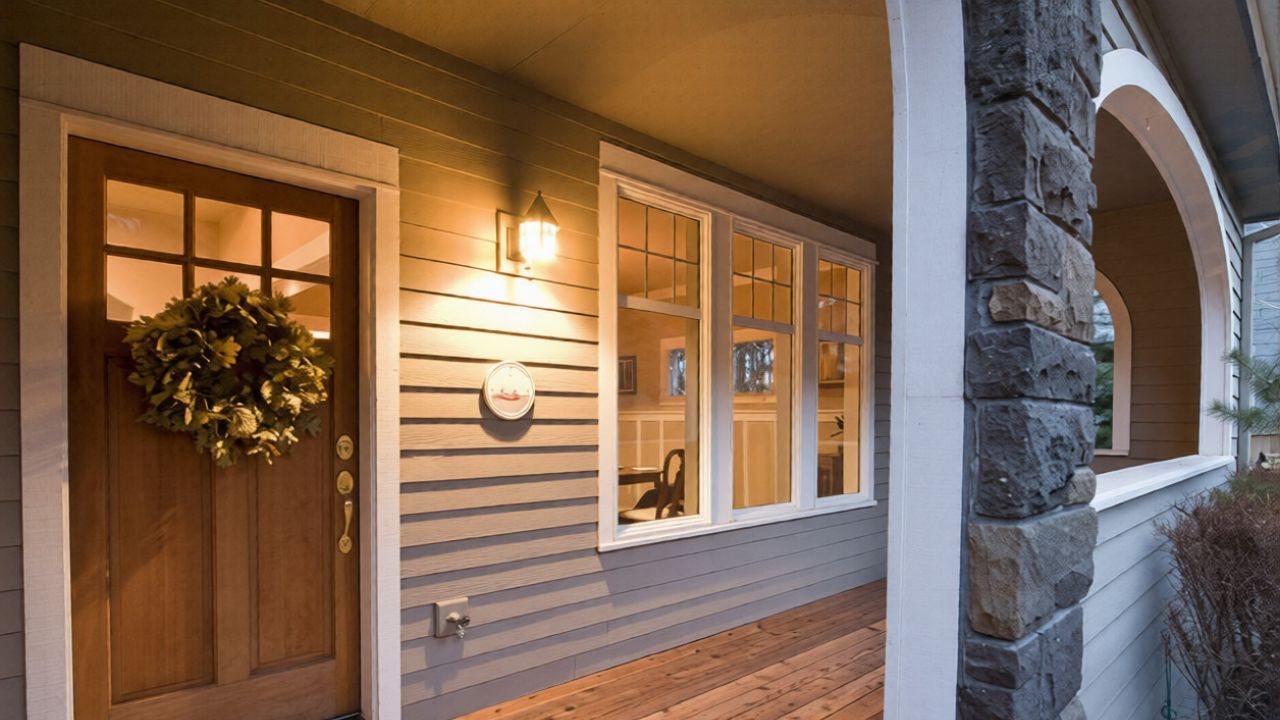
Most homes look best with warm white bulbs, usually in the 2700K to 3000K range. That light is softer, it’s easier on the eyes, and it makes exterior materials look richer instead of washed out. If you want a little more crispness without going cold, 3000K is a sweet spot for a lot of houses because it still feels warm but doesn’t look yellow. That one switch alone can make your front entry feel more expensive because everything looks calmer and more even. It also helps your landscaping and house numbers look better at night, which matters more than people think when you’re trying to avoid the “unfinished” look.
Brightness matters too, but you don’t need stadium lighting. If your porch light is blinding, it can actually make it harder to see into darker areas because your eyes adjust to the bright spot and everything else looks darker. A good approach is using a warm bulb with a reasonable lumen level and letting the fixture do its job, which is directing light where it needs to go. If you need more coverage, adding a second light or a low path light can look more intentional than cranking one porch light into the “laser beam” zone. Motion lights have their place, but a porch light that looks good all the time does more for curb appeal than one that blasts on like an alarm system every time a moth flies by.
Fixture placement and light direction matter more than people realize
Even with the right bulb, porch lighting can still look cheap if the fixture placement is wrong or the light is aimed in a way that creates bad shadows. A single light placed too high can throw harsh downward shadows that make the entry look hollow and uninviting. A light that’s too small for the space can look skimpy and unfinished, like someone grabbed the cheapest option that technically works. And if the fixture is too exposed, you end up staring at the bulb instead of seeing the porch softly lit. You want the light to illuminate the door area, the steps, and a bit of the approach, not just blast the ground right under the fixture.
If you’re choosing fixtures, scale matters. A fixture that’s proportionate to your door and porch will look more polished, even if it’s not expensive. The goal is that the light feels even and intentional, like it was designed for the space. When you combine a properly sized fixture with a warm bulb and reasonable brightness, the porch reads as clean and finished at night instead of harsh and cheap. It’s one of the easiest curb appeal fixes because you’re not tearing anything up, you’re just choosing the right light quality for the job.
Like Fix It Homestead’s content? Be sure to follow us.