You’re washing your siding wrong and it shows by summer
Photo credit: Ungvar/Shutterstock.com
Most people don’t realize their siding looks dirty until the sun hits it a certain way or the greenery starts popping in spring and suddenly the house looks dull by comparison. Then you grab a pressure washer or a bottle of siding cleaner, blast everything down, and feel like you handled it. But by summer, you’re noticing stripes, streaks, algae coming back in the same spots, or even sections that look warped or “wavy” depending on the material. That’s usually not because your house is impossible to keep clean. It’s because the most common way people wash siding is the fastest way to leave behind grime trails, push water where it doesn’t belong, and accidentally damage the surface while still missing what causes the staining in the first place.
The biggest mistake is treating siding like concrete. Siding needs to be cleaned gently and consistently, with the goal of lifting grime off the surface and rinsing it away without forcing water behind it. A lot of homeowners either use too much pressure, spray at the wrong angle, or work in the wrong pattern, which creates that “it looked clean for a week” effect. Summer heat then bakes the remaining residue into the surface, and the streaks become more noticeable. The good news is you can usually fix your approach without buying special equipment. It’s mostly about technique, timing, and understanding what your siding can handle.
Spraying from the bottom up makes streaks and stripes worse
A lot of people start cleaning at the bottom because it feels natural, but it’s one of the easiest ways to create streaks. When you apply cleaner low and work upward without pre-wetting the siding above it, the cleaner runs down and dries in lines, especially on sunny or windy days. Then you rinse and wonder why there are still zebra stripes by the next afternoon. The same thing happens when you spray a strong cleaner on a dry wall and let it sit too long. It doesn’t lift evenly, it dries unevenly, and it leaves behind a film that looks worse once the siding dries fully. If you’ve ever cleaned siding and felt like it looked “patchy” afterward, this is usually why.
A better approach is to work in manageable sections, pre-wet the area, apply cleaner in a controlled way, and then rinse before anything dries. You also want to rinse from the top down, because gravity is going to take water and residue downward anyway, and you want it flowing over already-rinsed areas rather than dragging dirt across clean sections. If you’re using a hose and a soft brush, this still applies. It’s not about power, it’s about not letting dirty runoff dry in place. Cleaning in the shade or on a cooler day helps too, because heat makes everything dry faster and sets streaks before you can rinse properly.
Using too much pressure can force water behind the siding
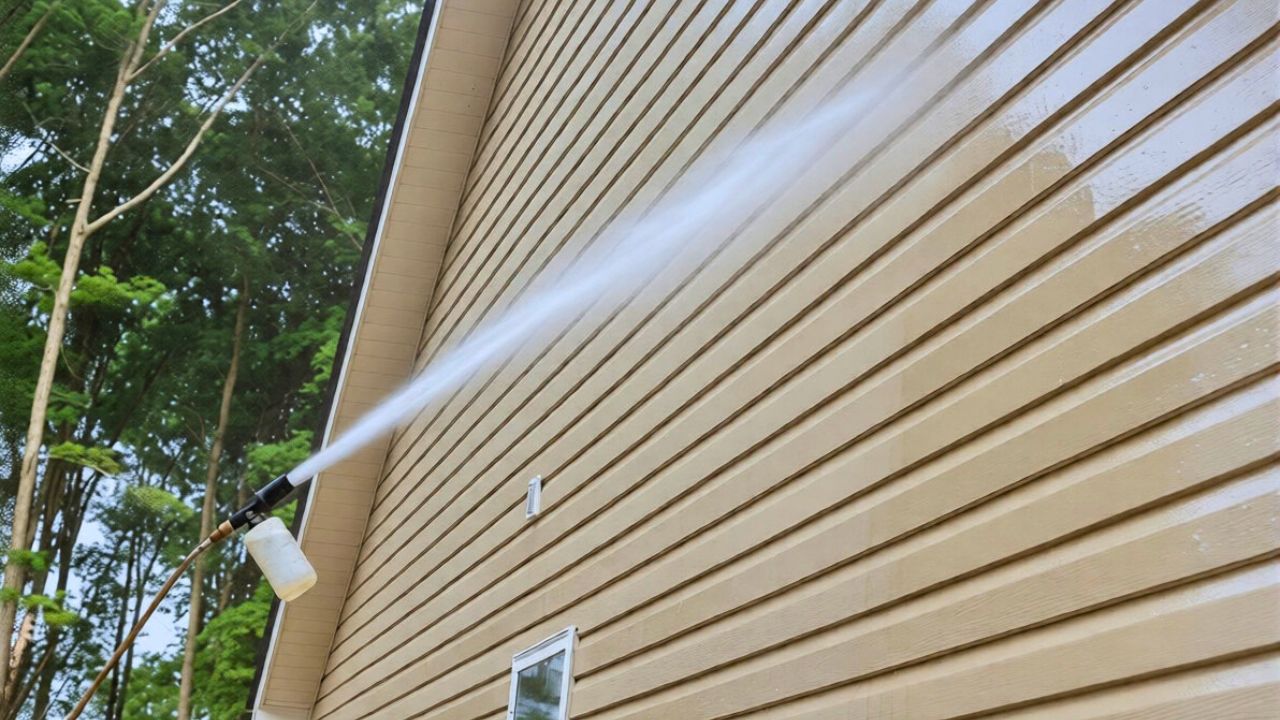
This is the mistake that turns a simple cleaning job into a long-term headache. Vinyl siding, in particular, is designed to shed water from the front, but it’s not designed to handle a high-pressure stream shot upward at the seams. When you spray up under a lap, you can push water behind the siding and into the sheathing or insulation. That moisture can lead to moldy smells, rot, swelling, or stains that show up later. People don’t connect those issues to “that one day I pressure washed,” but it happens more than you’d think, especially on older homes or areas where the siding isn’t perfectly tight anymore.
If you’re going to use a pressure washer, keep the pressure lower than you think you need, use a wider fan tip, and aim the spray downward at a shallow angle rather than straight at the wall. You’re trying to rinse, not carve. If you see siding flapping, flexing, or rattling under the spray, you’re too close or too strong. And if you have fiber cement, wood, or older paint, pressure can do even more damage by etching the surface or lifting paint. In those cases, a hose, a good cleaner, and a soft brush often do a better job without the risk. It feels slower, but it’s faster than dealing with warped vinyl or water intrusion later.
Skipping mildew and algae treatment means it comes right back
If you live in a humid area, have shade on one side of the house, or have trees close by, the green or black staining you see is usually algae or mildew, not just dirt. Blasting it off with water can make it look better for a short time, but it doesn’t always kill it. So by summer, it’s back in the same places and you feel like your siding “never stays clean.” That’s because you didn’t actually treat the growth, you just removed the top layer. The roots or spores are still there, and warm weather brings it right back. It’s especially common on the north side of the house and under eaves where sun doesn’t dry the surface as well.
The fix is using a siding-safe cleaner that’s meant to break down that growth, letting it sit briefly, and then rinsing thoroughly. You don’t want anything so harsh that it damages landscaping or the siding finish, but you do want something that actually treats the stain source. A lot of people also forget to rinse surrounding areas like soffits, corners, and trim lines where grime collects. Those spots can drip dirty water later and create new streaks on clean siding. Once you clean correctly, you’ll usually find you don’t have to do it as often, because you’re not leaving behind residue and you’re not encouraging regrowth with trapped moisture.
Like Fix It Homestead’s content? Be sure to follow us.