You’re shortening your water heater’s life with this storage setup
Photo credit: Allison H. Smith /Shutterstock.com
Your water heater is built to run quietly in the background for a decade or more, but the way you pack items around it can quietly cut that life expectancy in half. Turning the utility room into a storage closet adds heat, stress, and fire risk that the tank was never designed to handle.
Rethinking how you store boxes, paint, clothes, and even cleaning supplies near the tank protects both the appliance and your home. A few feet of clear space and some simple maintenance habits can mean the difference between a reliable workhorse and a premature, expensive failure.
Why your storage habits matter more than you think
Most people think about water heater life in terms of brand, warranty length, or tank size, but the environment around the unit is just as influential. Crowding the heater with boxes, bags, and seasonal gear traps heat, limits airflow, and makes it harder for the burner or elements to operate within design limits. That extra stress accelerates wear on components such as thermostats, wiring, and gas controls, and it can push the tank to cycle more often to keep up with demand.
Beyond that mechanical strain, clutter raises the stakes if something goes wrong. Gas models rely on open space for combustion air, and electric models still generate enough heat that nearby items can dry out and ignite if they sit too close for long periods. Safety guidance for heating equipment repeatedly stresses that you should keep the area so you are not turning a basic appliance into a hidden hazard every time you reorganize a closet.
The hidden fire risk in a packed utility closet
Filling every inch of floor space near the tank with cardboard boxes and plastic totes creates a dense ring of fuel around a constant heat source. Even if the burner never actually touches those items, the radiant heat from a working tank can dry out paper, fabric, and wood until they ignite much more easily. Safety checklists for heating systems call for a 36 inch clearance from combustibles around boilers and similar equipment, and that same distance is a smart baseline for the space around your water heater.
Combustible clutter also makes any small failure more dangerous. If a gas control leaks or a fitting seeps, fumes can build up in a tight, overfilled closet, and a single spark from the burner can ignite both the gas and the surrounding materials. Fire safety guidance warns that anything combustible within 36 inches of can catch fire if the unit malfunctions, which means that stack of moving boxes or old holiday decorations is not just clutter, it is potential kindling.
How blocked airflow shortens your heater’s lifespan
Your water heater needs to breathe. Gas units draw combustion air from the surrounding room, and electric units rely on open space to shed heat from the tank and controls. Pushing storage right up to the jacket chokes off that airflow, which makes the burner run hotter and the tank skin stay warm longer after each cycle. That constant heat bath dries out gaskets, stresses soldered joints, and can warp plastic trim and wiring insulation around the controls.
Heating and cooling guidance for furnaces explains that heating system needs to work properly, and the same principle applies to your tank. Surrounding the heater with totes, luggage, or laundry baskets traps warm air around the shell so the thermostat has to work harder to sense true water temperature. Over time that extra cycling and higher operating temperature can shorten the life of the tank lining and the burner assembly, even if you never see obvious scorch marks on the outside.
The specific items you should never stack near the tank
Some storage choices are worse than others. Paper products, clothes, cardboard, and other light materials ignite quickly and are often piled high in utility spaces. Plumbing safety advice singles out paper products, clothes, as items you should keep away from the water heater because they both burn easily and block ventilation. Boxes of old tax records, a rack of winter coats, or a pile of towels waiting for the washing machine all belong several feet away, not pressed against the tank.
Liquids can be just as risky. Household guidance warns you not to store paint thinner, gasoline, or other flammable liquids near any hot water tank because vapors can travel and ignite even if the container never tips over. Consumer advice on storage near heaters lists paper of any among the top items to relocate. Treating the area around the heater as a no-fuel, no-chemicals zone sharply reduces both fire risk and the chance that fumes will corrode metal parts on the tank.
Clutter, inspections, and why hidden problems get worse
Walling off your water heater behind boxes and bins also walls off your ability to spot trouble early. A slow leak at the drain valve, a bit of rust at the base, or scorch marks near the burner door are all early warning signs you can fix before they turn into a burst tank or a major gas issue. If you have stuff piled right up against the unit, as one plumbing guide warns, you are not only blocking airflow, you are also making it harder to see and fix problems unless you are decluttering every time you want to take a look.
Professional maintenance advice repeatedly stresses that you should clear the area so you or a technician can reach valves, controls, and the anode rod without moving half a garage. One checklist urges you to clear the area because access is part of safety, not just convenience. When the tank is easy to reach, you are far more likely to flush sediment, test the temperature and pressure relief valve, and schedule professional inspections before a minor issue becomes a catastrophic failure.
How sediment and heat work together to age your tank
Even if you never store a single box near the heater, the water itself slowly wears the tank out. Minerals, sand, and silt settle to the bottom and create a thick insulating layer that forces the burner to work longer and hotter to warm the water above. Guidance on maximizing service life notes that sediment buildup can, especially in areas with hard water. When you combine that internal heat stress with external clutter that traps warmth, you effectively double the punishment on the tank shell and internal lining.
The only reliable way to get rid of that sediment is to drain the tank periodically, which is much easier when you can reach the drain valve without crawling over storage boxes. Step-by-step maintenance guides explain that only way to, let it refill, and then drain it again until the water runs clear. Keeping the area around the tank open makes it far more likely you will attach a hose, run that flush once or twice a year, and give the heater a chance to run cooler and last longer.
Why manufacturer-style clearances are not just legal fine print
Clearances around your water heater can feel like abstract code language, but they are based on how hot the unit gets and how much air it needs to operate safely. Safety checklists for boilers and heaters call for a 36 inch clearance from combustibles to reduce the chance of a fire spreading to the building. Respecting that buffer around the tank gives heat a place to dissipate and gives you room to walk around the unit for checks and service.
Professional water heater safety guidance echoes the same idea, urging you to keep the area and to keep combustibles away from the burner and vent. If your heater is in a small closet, that may mean you cannot use that closet for anything else, no matter how tempting the empty shelf space looks. Treating the clearance as non-negotiable code rather than a flexible suggestion protects both the tank and the structure around it.
Real-world examples of storage gone wrong
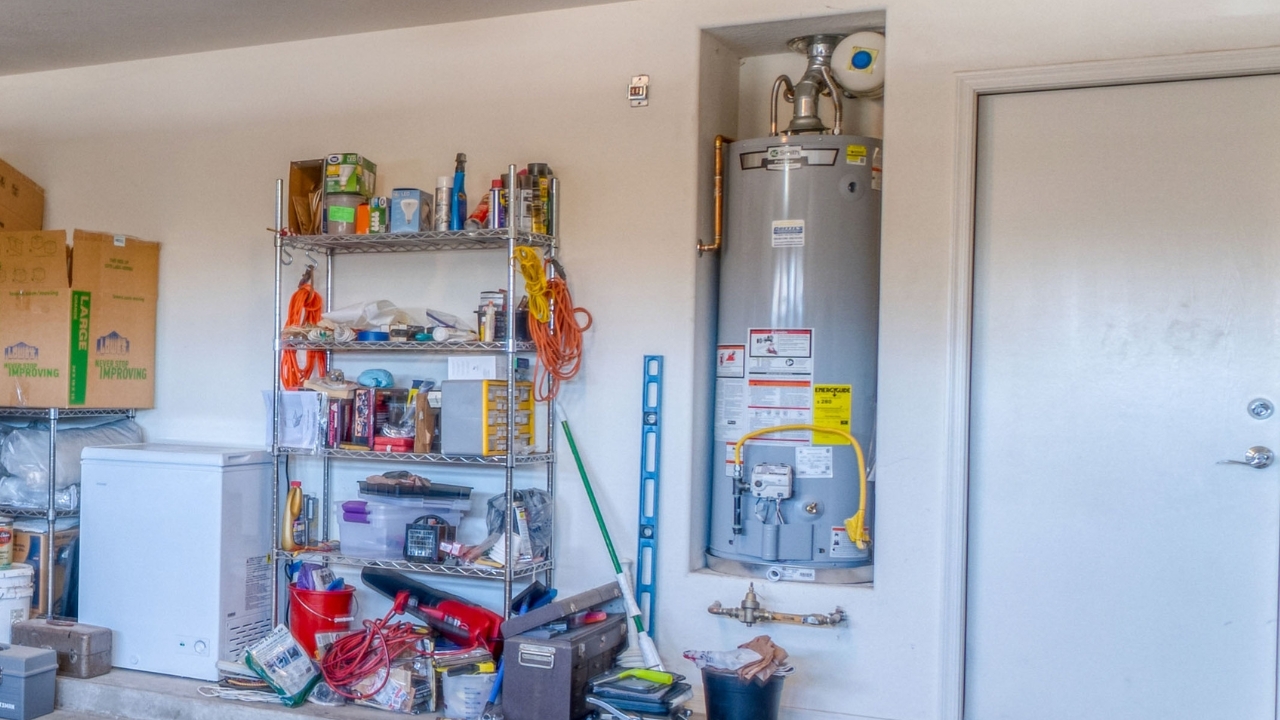
Inspection photos from property professionals show how quickly a water heater closet can turn into a hazard when storage takes over. In one widely shared example, an inspector opened a door to find a tank buried in plastic bags, cardboard, and cleaning supplies, prompting the blunt caption that how to store. That kind of setup does not just look messy; it leaves no way to inspect the burner, the temperature and pressure relief valve, or the gas connections without removing half the contents of the closet.
Local plumbing companies see the same pattern on service calls. Reviews and photos linked from Brian Wear Plumbing and other contractors show tanks surrounded by paint cans, gasoline containers, and piles of clothing, all within a few inches of the burner door. When technicians warn that water heaters, especially gas ones, can ignite nearby materials and that stored items can lead to damage, they are speaking from repeated experience in real homes, not from a theoretical safety manual.
How to reset your storage strategy without losing space
You do not have to give up valuable storage, only relocate it. Start by drawing an invisible circle with a radius of at least three feet around the tank and committing to keep that zone completely clear. Move cardboard boxes and clothing racks to higher shelves or to the opposite wall, and reserve the floor near the heater for access only. If your garage or basement is tight, consider sealed metal cabinets for paints and solvents so they are both off the floor and away from the heat source, instead of stacked next to the burner.
Once you clear that buffer, build maintenance into your routine so the heater can reward you with a longer life. Use the open access to flush sediment, check for leaks, and schedule the kind of strategies to maximize that professionals recommend, from checking water pressure to inspecting the anode rod. Paired with periodic checks of the thermostat and relief valve, using guidance such as the steps on how to extend of your water heater, you give your system the conditions it needs to reach, and often exceed, its expected service life.
Like Fix It Homestead’s content? Be sure to follow us.
Here’s more from us:
- I made Joanna Gaines’s Friendsgiving casserole and here is what I would keep
- Pump Shotguns That Jam the Moment You Actually Need Them
- The First 5 Things Guests Notice About Your Living Room at Christmas
- What Caliber Works Best for Groundhogs, Armadillos, and Other Digging Pests?
- Rifles worth keeping by the back door on any rural property
*This article was developed with AI-powered tools and has been carefully reviewed by our editors.