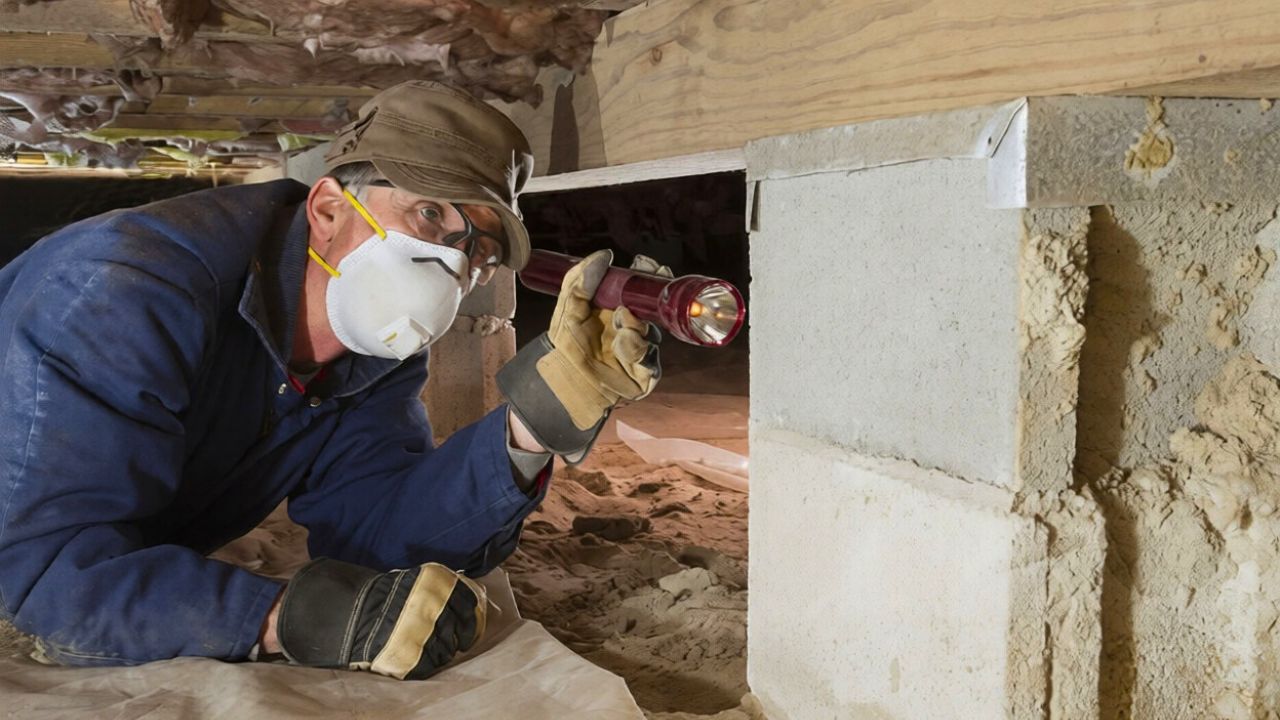
You’re letting humidity win if your crawl space looks like this
Photo credit: SLRadcliffe/istock.com
Humidity does not stay politely under your house. When your crawl space is damp, that moisture rides the air into every room, quietly warping floors, feeding mold, and driving up energy bills long before you see a puddle. If your crawl space already looks stained, musty, or cluttered with soggy insulation, you are letting humidity win and giving it a direct path into your living space.
The good news is that moisture problems in a crawl space are rarely random. They follow patterns you can see, smell, and measure, and once you understand those patterns, you can turn a neglected void into controlled space that protects your home instead of undermining it.
The hidden highway between your crawl space and your living room
You experience your crawl space every day, even if you never crawl under the house. Warm air inside your home rises and escapes through the attic, which pulls replacement air up from lower levels in a stack effect. If the air under your floor is damp, that same dampness is drawn into your living areas, so a wet crawl space quietly becomes a whole-house problem rather than a localized nuisance.
Moisture that collects under your home in summer can raise indoor humidity, make rooms feel clammy, and force your air conditioner to run longer to keep up. Reporting on how summer crawl space humidity affects your entire house explains that this rising air can carry mold spores, musty odors, and even dust and allergens into the rooms where you sleep and work, which is why a seemingly isolated damp patch under the house can translate into higher energy use and persistent comfort complaints upstairs. You are not just dealing with a storage cavity, you are managing a key part of your home’s air supply.
What “too humid” actually looks like under your house
If you picture a problem crawl space as a shallow swimming pool, you miss most of the early warning signs. Excess moisture often shows up first as condensation on ducts, darkened floor joists, or insulation that looks heavy and sagging instead of crisp and fluffy. The table titled Symptoms of High Crawl Space Humidity lays out how clues like wet crawl space insulation, rusting metal, and damp wood signal that humidity is high enough to damage materials long before you see standing water.
Once relative humidity climbs, you might notice black, white, or green patches on wood or masonry, which that same Symptoms of High table links to mold growth and structural risk. You may also see fine white crystalline deposits, known as efflorescence, on foundation walls, which other guidance flags as a warning sign of foundation water intrusion and an indicator that moisture is moving through the concrete. When you walk the space and feel a damp chill in the air or see beads of water on plastic or metal, you are looking at humidity that has already crossed the line.
Numbers that matter: the humidity range you should aim for
Because crawl spaces are out of sight, you need more than guesswork to know if humidity is under control. Relative Humidity levels at or above 60% in the crawl space create conditions for mold and dry rot to thrive, which one crawl space systems guide warns can compromise the structural integrity of your home if ignored. That threshold is not just about comfort, it is the tipping point where moisture in the air starts to behave like a slow leak into wood, insulation, and metal.
Broader indoor air recommendations give you a target zone. The Environmental Protection Agency guidance, cited in advice on the best relative humidity for crawl spaces, recommends keeping most indoor spaces between 30 and 50 percent, while another source that quotes the University of Central Florida states that the best target to maintain indoor relative humidity is between 45% and 55%. When you apply those figures under your house, you want your crawl space humidity low enough to stay below the mold threshold yet close enough to the rest of the home that you are not fighting constant moisture migration from one zone to another. A simple digital hygrometer on a floor joist can tell you whether you are in that safe band or letting the numbers creep into the danger zone.
When your nose and floors warn you before your eyes do
You usually smell a crawl space problem before you see it. Musty odors that linger in hallways, closets, or a first-floor bedroom often trace back to damp air under the house, and one breakdown of crawl space moisture symptoms points to musty odors as one of the first signs of excess dampness in the air. Another overview of signs of crawl space moisture notes that musty or earthy smells, especially ones that do not go away with cleaning, are reliable indicators that mold or mildew is active somewhere below your floor.
Your floors and walls also act as early warning systems. Guidance on damp crawl space signs in the living space describes cupping hardwood floors, where the edges of boards curl upward, as a classic response to moisture being absorbed from below. You might also see baseboards separating slightly from walls, doors that suddenly stick in their frames, or visible mold or mildew along lower walls, which other reporting on signs of moisture under the house links to excess humidity and water vapor moving up from the crawl space. When those clues show up together with a persistent damp smell, your home is telling you that humidity is winning the fight below.
Health stakes: mold, air quality, and your lungs
High humidity under your home is not just a structural issue, it is a health risk. Mold Growth is singled out in one crawlspace moisture and structural damage guide as a direct result of high humidity and standing water, with mold spreading quickly, feeding on wood and other organic materials, and introducing health hazards. The Centers for Disease Control and Prevention explains in its mold frequently asked questions that mold exposure can trigger nasal stuffiness, throat irritation, coughing or wheezing, eye irritation, and in some cases skin irritation, with people who have allergies or asthma at higher risk.
Because the air in your crawl space is constantly pulled into your living areas, mold spores and other biological growth do not stay contained. A technical paper on how moldy and damp crawl spaces affect your health and home notes that your crawl space may be out of sight but plays a big role in indoor air quality, making a home feel stuffy or damp and aggravating symptoms for anyone with allergies or asthma. Another analysis of how crawl space moisture leads to mold and what to do about it explains that as air rises into your living space, it can carry mold particles and moisture that keep humidity high inside as well. When you let humidity build up under your house, you are effectively piping contaminated air into the rooms where you spend the most time.
How water actually gets into your crawl space
To stop humidity from taking over, you need to understand how water is getting under your house in the first place. One practical guide on water in crawl spaces lists common sources that include poor grading around the foundation, clogged or missing gutters, leaking plumbing lines, and groundwater seeping through foundation walls or up through the soil. Even if you never see a dramatic flood, a slow trickle from a pipe joint or a steady drip from a condensation line can keep the soil damp enough to feed high humidity month after month.
Seasonal weather patterns add another layer. Advice on how summer crawl space humidity affects your entire house explains that warm outdoor air entering vents can cool as it moves through the shaded crawl space, which raises relative humidity and can push surfaces to the dew point so water condenses on ducts, pipes, and wood. In areas with high water tables or heavy rain, guidance on detecting crawl space moisture problems early notes that water can enter through small cracks in the foundation, gaps around utility penetrations, or unsealed access doors, then evaporate into the air and seep inside. When you see water stains on block walls, rust on metal supports, or damp soil long after a storm has passed, you are looking at the pathways that keep feeding the humidity problem.
Ventilation myths and why “more air” is not always better
For years, the default advice was to cut more vents into a crawl space and let outdoor air handle the moisture. Current building science has complicated that picture. Guidance that asks what the indicators of a poorly ventilated crawl space are points out that if the air in your crawl space feels damp, stagnant, or foul, or if you see mold, wood rot, or rust on metal components, your existing vents are not solving the problem and may be making it worse by letting in humid outside air without controlling temperature or vapor.
In hot, humid climates, open vents can act like moisture funnels. As outside air enters and cools under your house, its relative humidity rises, which can push it above the 60% threshold that one crawl space systems overview identifies as the point where mold and dry rot thrive. At the same time, unconditioned air moving through the space can increase energy use, since your heating and cooling system has to work harder to counter the temperature swings. When you rely only on passive vents, you are betting that the weather will cooperate with your moisture control strategy, which is rarely a safe assumption.
Encapsulation, drainage, and dehumidifiers: building a real defense
Once you recognize that humidity is winning, your next step is to build a layered defense that deals with water at the source and controls the air that remains. A detailed breakdown of how to keep your crawl space moisture free highlights essentials such as installing proper drainage around the foundation, adding a sump pump where groundwater collects, sealing vents and gaps, laying a continuous vapor barrier over the soil, and using a dedicated dehumidifier. Each piece addresses a different part of the problem, from stopping bulk water to limiting vapor and then managing residual humidity.
Encapsulation, which typically includes sealing walls and floors with a heavy plastic liner and closing off vents, is often paired with mechanical drying. One guide on eliminating water in your crawl space explains that humidity and moisture can lead to musty odors that permeate the living spaces above and contribute to poor air quality, which is why a dehumidifier sized for the volume of the crawl space is recommended after drainage and vapor barriers are in place. Another resource on the benefits of encapsulating crawl spaces notes that excess moisture in these areas can contribute to structural damage costs that can exceed $2 billion annually, a reminder that investing in encapsulation and drying is not cosmetic, it is a way to avoid far more expensive repairs later.
Setting a maintenance routine so humidity never gets the upper hand again
Even a well-encapsulated crawl space can drift back into trouble if you treat the project as a one-time fix and never check it again. Advice on essential steps to keep a crawl space moisture free stresses the value of regular inspections to confirm that vapor barriers are intact, sump pumps are working, and dehumidifiers are draining properly. You can build that into your seasonal routine, the same way you schedule HVAC filter changes or gutter cleaning, so small issues like a torn liner or a tripped pump breaker do not have months to turn into major humidity spikes.
Like Fix It Homestead’s content? Be sure to follow us.
Here’s more from us:
- I made Joanna Gaines’s Friendsgiving casserole and here is what I would keep
- Pump Shotguns That Jam the Moment You Actually Need Them
- The First 5 Things Guests Notice About Your Living Room at Christmas
- What Caliber Works Best for Groundhogs, Armadillos, and Other Digging Pests?
- Rifles worth keeping by the back door on any rural property
*This article was developed with AI-powered tools and has been carefully reviewed by our editors.