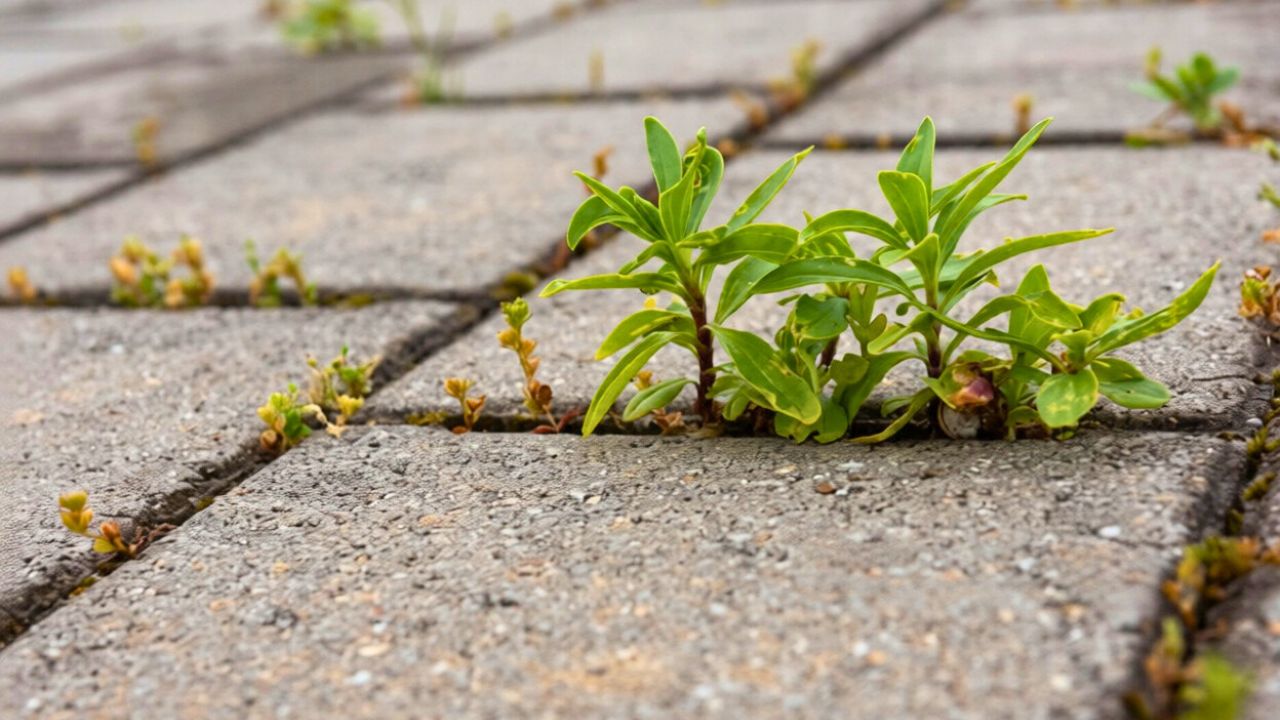
These patio paver mistakes create weeds for life
Photo credit: Herzstaub/istock.com
Weeds between patio pavers are rarely an accident. They are the predictable result of a handful of design and installation choices that lock you into constant hand pulling and harsh treatments year after year. Avoid those structural mistakes from the start and you give yourself a real chance at a patio that stays clean, stable, and low maintenance instead of becoming a permanent weeding project.
The most persistent weed problems usually trace back to how you build the base, set the pavers, and maintain the joints, not to what spray bottle you reach for later. By tightening up those details, you stop creating the perfect seedbed in every crack and turn your patio from a weed nursery into a hard-wearing outdoor room.
1. Ignoring how weeds actually get into your patio
You deal with weeds more effectively when you understand how they arrive. Many homeowners assume weed roots push up from deep below the patio, so they focus on thick plastic liners or aggressive soil sterilizers under the base. Several installers explain that most weeds between pavers actually sprout from seeds that land on the surface, then germinate in the dust and organic debris that collect in the joints, which is why you often see a green haze only after a season or two of fallen leaves and pollen. Guidance on how to stop emphasizes that airborne seeds are the main culprit rather than roots pushing up from below.
Overlooking that basic biology leads you to invest in the wrong defenses. You might pay for a heavy weed barrier fabric that does little to stop seeds blowing in from a nearby lawn, while skipping simple habits like sweeping and joint maintenance that actually interrupt the cycle. Advice on why weeds grow points to the buildup of soil, dust, and organic matter in the joints as the real reason weeds gain a foothold in the first place, which means your design and cleaning routine matter as much as what lies under the stone.
2. Skimping on the base and subgrade
The structure under your pavers is your first line of defense against long-term weed problems. If you lay pavers over a thin, loose, or contaminated base, water will sit in low spots, wash out joint material, and leave gaps that fill with fine soil. Several contractors stress that you should start with a dense, compacted base, not a thin layer of sand over native dirt, and that a thick, quality base is essential if you want to limit movement and weed-prone gaps.
Filling around or under pavers with topsoil is one of the most damaging shortcuts because soil holds moisture and organic matter that weeds love. Guidance on common patio paver singles out backfilling with dirt as a major error, since it settles unevenly and invites roots into every void. When you instead use clean, angular aggregate compacted in thin lifts, you create a stable, well-drained platform that resists heaving and keeps joint sand from washing away and turning into miniature planters.
3. Skipping proper installation details
Even with a solid base, sloppy installation details can set you up for a lifetime of weeding. Rushing the layout, ignoring edge restraints, or leaving wide, uneven gaps creates spaces that collect grit and organic debris. Professional guidance on preventing weeds between stresses that you should start with proper installation, including consistent joint widths and secure edging, so pavers do not migrate and open up joints where weeds can take hold.
Edge details matter as much as the field. If you leave the sides of the patio unrestrained or backfill them with loose soil, the pavers can creep outward under traffic, which widens joints and drags joint material out where it mixes with surrounding dirt. Installers who focus on paver patio weed point out that shifting and settling are early signs that the structure was not built to spec, and once that movement starts, you get both trip hazards and a perfect seedbed along every crack.
4. Using the wrong joint material or installing it badly
Joint material is one of the most common weak points in a patio and a major source of recurring weeds. Rely on plain, loose sand that is not properly compacted and topped up, and it can wash out or blow away, leaving deep crevices that trap soil. Installers warn that patio paver mistakes encourage weeds when you fail to sweep and compact it correctly or ignore manufacturer instructions for specialty products.
Polymeric sand can dramatically reduce weed growth, but only if you install it as directed. If you leave dust on the surface, fail to vibrate it into the joints, or overwater it, you can end up with a weak crust that cracks and peels away. Guidance on applying polymeric sand highlights that it needs to be fully worked into the joints and then activated with the right amount of water so it hardens instead of washing out. When you get that step right, you turn each joint from a loose, organic-filled groove into a firm barrier that is far less welcoming to seeds.
5. Letting debris, moss, and dirt build up
Even a perfectly built patio will start growing weeds if you let dust, leaves, and soil accumulate in the joints. As those materials break down, they form a thin layer of compost that holds moisture and feeds both moss and weed seedlings. Advice focused on preventing weed growth stresses regular sweeping and occasional rinsing so organic debris does not sit in patio cracks long enough to become a growing medium.
Once moss and weeds are visible, you need to remove them completely instead of just tearing off the tops. One practical method is to scrape growth out of the joints with a flathead screwdriver or similar tool, as described in guidance on how to kill, then follow up with rinsing and fresh joint material. If you only break off the tops, the remaining roots and stems can resprout quickly, and the disturbed debris may scatter seeds into nearby joints.
6. Forgetting that uneven pavers invite weeds
Uneven or sunken pavers are more than a cosmetic problem, because every low spot collects water and grit. Over time, those pockets stay damp longer than the rest of the surface, which encourages both staining and plant growth. Analysis of why uneven pavers links persistent weed patches to underlying settlement issues that trap dirt and moisture in the joints.
Ignore those early signs and the problem compounds. Joints in low areas tend to lose sand as water flows through, and the resulting gaps are deeper and more sheltered, which makes them ideal for seeds to lodge and germinate. You can often correct small areas by lifting pavers, adjusting the base, and re-compacting, but if the entire patio is uneven, you may need a more extensive reset to restore proper drainage and stop the constant cycle of dirt accumulation and weed growth.
7. Treating weed control as a one-time job
Many homeowners approach weed control as a crisis response instead of a routine, which guarantees the problem will return. They wait until the patio looks like a patchwork of green, then spend a weekend scraping and spraying, only to watch new growth appear weeks later. Advice on paver patio maintenance emphasizes that light, regular cleaning and inspection are far more effective than occasional heavy interventions, because you remove seedlings before they can set seed and spread.
Part of that routine is choosing removal methods that match your tolerance for chemicals and your climate. Some gardeners in a creative gardening group recommend approaches like salt, white vinegar, or power washing for weed control, while others prefer boiling water, manual scraping, or commercial herbicides. Whatever method you choose, you still need to refill joints and sweep regularly, otherwise you are only treating symptoms while leaving the structural conditions that favor weeds unchanged.
8. Using quick chemical fixes without a plan
Sprays can be part of your toolkit, but if you rely on them without addressing the patio structure, you lock yourself into repeated applications. Some homeowners turn to branded herbicides from companies such as Roundup or Ortho to knock back weeds in tight joints, while others mix household solutions like vinegar, salt, and dish soap. In one discussion, a gardener described a recipe of vinegar 5 percent, one cup of salt, and 2 tablespoons of Dawn dish soap and said it “kills pretty much everything,” although other commenters raised concerns about what strong salt solutions might do to surrounding soil and desirable plants.
Even when a product works, you still need to remove dead material and refill the joints or you will see new seedlings take advantage of the cleared space. Some installers suggest pairing spot treatments with structural upgrades, such as switching to polymeric sand in problem areas or improving drainage so joints dry faster. Suppliers like Astro Aggregates focus on the aggregates and sands that support that kind of long-term fix, while retailers such as Astro Masonry Supply and AstroMasonry highlight that the right joint and base materials reduce your dependence on constant chemical control.
9. Neglecting joint repairs and long-term upkeep
Once you have cleared weeds and cleaned the surface, the most common mistake is to stop there. Leaving joints partially empty or cracked creates perfect channels for new seeds and moisture. Guidance on stopping weeds on recommends refilling joints after you scrape them out and then compacting or sweeping until the sand is fully seated, so there are no deep voids where debris can collect.
In some climates, especially humid regions like Florida, you may also need to refresh polymeric sand or sealers on a schedule to keep joints tight. Advice on Florida paver joints points to polymeric sand as a better choice than traditional sand because it locks together once activated with water and makes it harder for weeds to take root. When you pair that kind of joint repair with regular sweeping and occasional power washing, you protect the investment you made in the patio structure and avoid turning small cracks into permanent weed beds.
Like Fix It Homestead’s content? Be sure to follow us.
Here’s more from us:
- I made Joanna Gaines’s Friendsgiving casserole and here is what I would keep
- Pump Shotguns That Jam the Moment You Actually Need Them
- The First 5 Things Guests Notice About Your Living Room at Christmas
- What Caliber Works Best for Groundhogs, Armadillos, and Other Digging Pests?
- Rifles worth keeping by the back door on any rural property
*This article was developed with AI-powered tools and has been carefully reviewed by our editors.