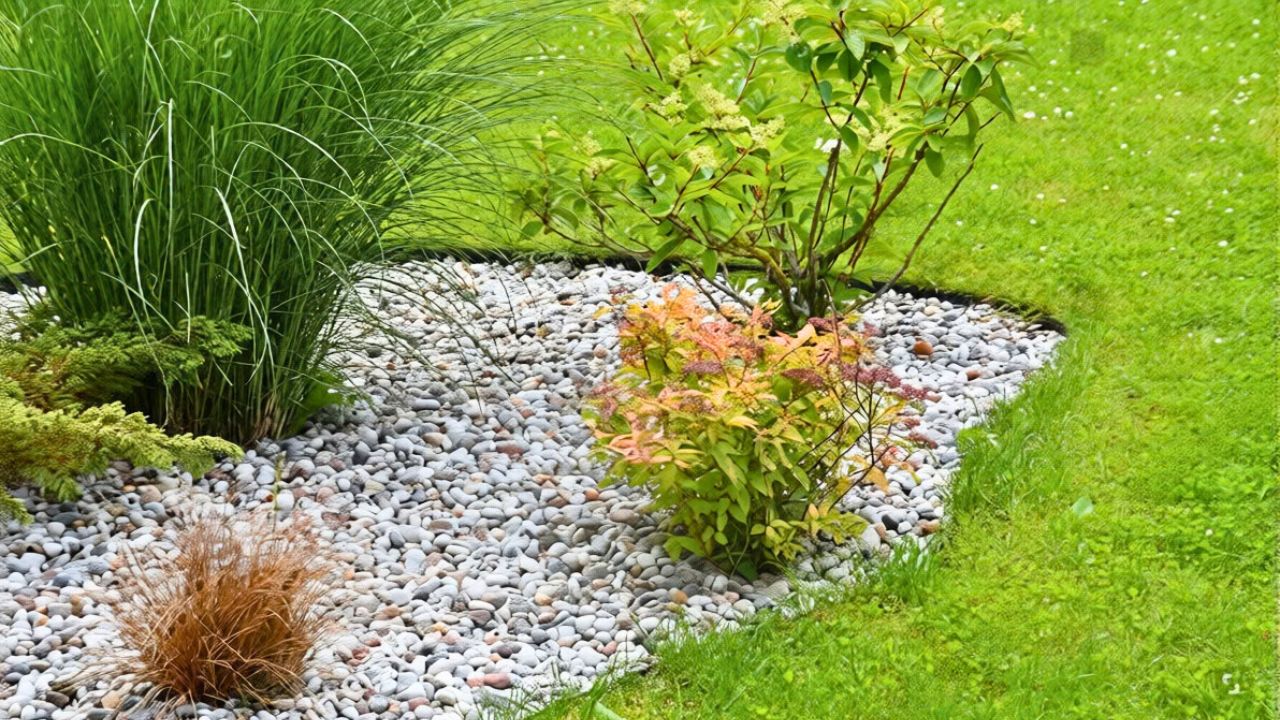
The “nice” landscaping rock that turns into a weed bed
Photo credit: Alexkatkov/Shutterstock.com
Your tidy rock bed looks low maintenance on day one, then a season or two later it morphs into a stubborn patch of crabgrass, dandelions, and mystery seedlings. The same stones that were supposed to save you work instead frame a new chore that never seems to end. When you understand why that happens and how to rebuild the bed correctly, you can keep the clean, minimalist look you wanted without turning your weekend into a permanent weeding shift.
Rather than treating the problem as bad luck, think of your rock area as a system that either blocks light and roots or quietly feeds them. When you get the depth, fabric, and debris control right, the “nice” decorative gravel that became a weed nursery can go back to being the neat, durable surface you meant to install in the first place.
How a clean rock bed becomes a weed factory
Weeds rarely appear in your stones by magic. They either push up from below or settle in from above, and both routes are helped along when you have Insufficient Weed Barrier or None at All Can Cause Weeds to Sprout in Your Rock Landscape One of the most common reasons that you see green poking through gravel is a missing or damaged layer between soil and stone. Once roots discover gaps in that barrier, they follow moisture and nutrients straight into the rock bed and then anchor themselves so firmly that hand pulling barely makes a dent.
Meanwhile, seeds constantly arrive from the sky and from your own yard. Birds, wind, and foot traffic carry them, and they settle in the dust and decomposed leaves that collect between stones. Over a couple of seasons, that thin film of organic material becomes enough soil for annual weeds to germinate. You experience the result as a slow shift from clean rock to a patchwork of sprouts, even if the underlying soil was never disturbed.
Why rock alone never stops weeds
Many homeowners trust the weight of stone to do the job that only layering can handle. You might assume that a thick layer of gravel or river rock will smother anything underneath, yet professionals repeatedly explain that mulch and rock alone do not stop weeds. When you look at why Are Weeds Growing Through Mulch and Rocks, you find that roots simply use the moist, shaded environment beneath the surface as a nursery and then slip through any weak points in the barrier beneath the mulch or rock.
Even if you pour several inches of stone directly on bare soil, you still give perennial weeds a path to the light. Taprooted plants such as dandelions can snake their way around individual rocks, and rhizome spreaders such as quackgrass or creeping Charlie slide horizontally until they find a gap. Without a dedicated layer that separates soil from stone, you are not building a defense so much as a decorative cover on top of a living, growing base.
The hidden role of fabric quality and installation
When you do add a barrier, the material and the way you install it matter as much as the decision to use it. If you pick a cheap roll that feels more like plastic wrap than woven fabric, the material could be low quality, break down easily, tear quickly, or not be installed properly, allowing these invasive plants to slip through. Over time, sunlight at the edges and stress at seams cause small openings, and every opening becomes a target for roots that sense moisture on the other side of the fabric.
To give yourself a real chance, you need to overlap seams generously and make sure there are no gaps in coverage where the fabric meets edging, steps, or foundations, as detailed in guidance on material could be. You also need to pin the material tightly so it does not shift when you walk on the bed or rake debris. If you skip these steps, you still technically have a barrier, but weeds treat it like a maze instead of a wall, and eventually they find a way through.
Depth and stone size: why inches matter
Once you have a solid base layer, the thickness of your rock makes the difference between a bed that shades out most seedlings and one that gives them light. You will want at least 2 to 3 inches of rock to keep weeds at bay, since this depth blocks sunlight and makes it hard for weeds to grow. Some professionals push that to 4 inches in high pressure areas, especially along fences or near neighboring lawns where seeds and runners constantly arrive.
Stone size also affects how much light reaches the soil. Guidance on Basalt and other small stones recommends avoiding large stones because gaps between them let seedlings root in the spaces. Each type of landscaping rock offers different benefits, and advice on Each
What to put under the rock so it actually works
Before you pour a single wheelbarrow of stone, you need to decide what will sit between the soil and your decorative layer. Underneath gravel, many professionals recommend that you lay a geotextile fabric or landscape fabric to prevent weed growth while still allowing water to pass through. Advice on What you put underneath gravel emphasizes that this combination of fabric and rocks gives you a stable and low maintenance gravel surface, rather than a short term fix that fails after the first season.
It is also important not to confuse plastic sheeting with true landscape fabric. Plastic traps water on the surface, which can rot nearby plant roots and encourage shallow weed growth in the stones themselves. Fabric, by contrast, lets water move into the soil, which keeps nearby shrubs and trees healthier and reduces runoff. When you choose a heavier grade fabric and secure it properly, you build a permanent foundation for your rock bed instead of a disposable layer that you will have to replace after a few freeze thaw cycles.
Seeds from above: the problem you cannot bury
Even a perfect barrier and ideal rock depth will not stop the constant rain of seeds that land on top of your stones. Seeds get deposited on top of rocks by wind, bird droppings, squirrels, and many other ways, which means every season resets the clock on potential germination. As leaves, pollen, and dust settle between the rocks, they create a thin layer of compost that holds moisture just long enough for those seeds to sprout.
Gardeners who share their experience in community groups often point out that Sadly there is no way to stop weeds from coming up entirely, because Nature will always find a way and over time regardless of what you put down underneath, something will germinate. You can reduce the volume, but you cannot eliminate it. That is why a rock bed that looked perfect last year can suddenly show a flush of green in spring, even if your barrier is intact and your stone depth has not changed.
Why debris removal is your first maintenance job
Since you cannot control every seed, you have to control the environment they land in. The biggest obstacle to keeping your hardscape of colored gravel and rock is the accumulation of debris, a point reinforced in advice on Removing Debris. When you let leaves, pine needles, and grass clippings sit on the stones, they break down into a thin, fertile layer that holds moisture and insulates seeds from temperature swings, which is exactly what weeds need to get started.
You can stay ahead of this by scheduling light but regular cleanup instead of waiting for a crisis. A leaf blower on low power, a flexible rake designed for gravel, or even a gloved hand sweep around edging can keep organic material from building up. When you combine that routine with occasional spot weeding while seedlings are still small, you prevent the kind of deep rooted infestation that turns your rock bed into a long term project.
Heat, plants, and the tradeoffs of rock mulch
As you plan or renovate your stone areas, you also need to think about how rock affects the microclimate around your plants. Rock mulch contributes to the heat island effect as it reflects and absorbs heat, which increases soil temperature and hurts the plants that have to live there. In a narrow side yard or along a south facing wall, that extra heat can stress shallow rooted shrubs or perennials, even if the rocks are doing a good job of suppressing weeds.
Debris adds another layer of compromise. If your yard has trees that drop a lot of leaves and debris, rock mulch might not be your best choice, as it accumulates and makes maintenance harder. Guidance on rock vs. mulch suggests that in those settings, organic mulch can be easier to refresh and clean. You may decide to reserve stone for areas away from heavy leaf drop or for purely decorative zones where you do not expect to keep shrubs thriving right next to the rock.
When you should call in help instead of fighting alone
There is a point where a weed ridden rock bed stops being a weekend task and becomes a structural problem. If you are pulling the same patches every few weeks or resorting to repeated spraying, you may be dealing with a failed barrier or an installation that never had the right depth or fabric in the first place. In those cases, professional services that focus on Effective Weed Control in Rock Beds and Seasonal Solutions can strip out the old stone, reset the base, and rebuild the bed so it actually performs.
Some companies that specialize in these fixes explain that they start by addressing why Are Weeds Growing Through Mulch and Rocks beneath the surface, then rework the barrier and rock depth so you are not trapped in a cycle of constant herbicide use. You can find that kind of support through local firms that share their expertise on topics like Why Are Weeds, or through regional specialists such as Mesa Turf Masters and Onyx Landscape. When you reach that stage, you are not just paying for labor, you are paying to reset the system so your “nice” rock bed finally behaves like the low maintenance feature you wanted.
Like Fix It Homestead’s content? Be sure to follow us.
Here’s more from us:
- I made Joanna Gaines’s Friendsgiving casserole and here is what I would keep
- Pump Shotguns That Jam the Moment You Actually Need Them
- The First 5 Things Guests Notice About Your Living Room at Christmas
- What Caliber Works Best for Groundhogs, Armadillos, and Other Digging Pests?
- Rifles worth keeping by the back door on any rural property
*This article was developed with AI-powered tools and has been carefully reviewed by our editors.