The fence stain mistake that causes peeling by fall
Photo credit: J.J. Gouin/Shutterstock.com
You put in a summer weekend, buy quality stain, and step back from a fresh fence that looks like a catalog photo. Then by fall, sheets of color start curling off the boards. That early failure almost never comes down to bad luck. It usually traces back to one specific mistake in timing, prep, or product choice that you can control next time.
Understanding how stain actually bonds with wood helps you avoid the misstep that causes peeling by the first cool nights and wet leaves. With a few disciplined checks before you open the can, you give your fence a far better chance of aging gracefully instead of shedding its finish in a single season.
Why fresh fences fail first
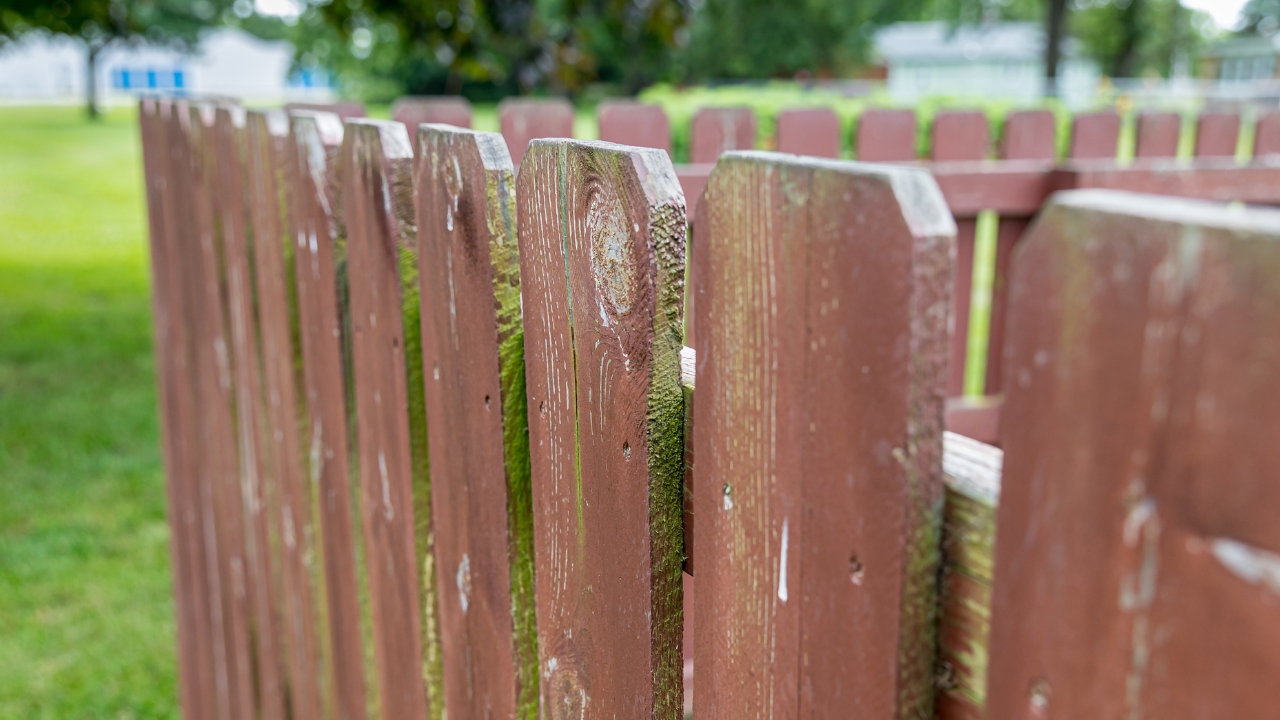
The single fastest way to guarantee peeling by fall is to stain brand new lumber before it is ready. When boards come straight from the yard or a big-box rack, they often still hold mill glaze and internal moisture that block stain from soaking in. You might see the color sit on top like paint instead of disappearing into the grain, which sets you up for a brittle film that lifts as soon as the wood moves with temperature swings.
Professional voices in online forums have flagged this pattern repeatedly, with one contractor named Mar warning that many fences are being stained or painted right after installation and that this is a big mistake on your Contractors side. When you skip the drying period, you trap water inside the boards, then seal the surface so vapor has nowhere to go except through the new coating. As that vapor pressure builds, it pushes the stain off in blisters and flakes long before winter truly sets in.
The timing mistake that ruins adhesion
Even if the fence is not fresh from the sawmill, you can still sabotage adhesion by staining at the wrong moment in the wood’s moisture cycle. Stain is designed to penetrate wood fibers and bond with them, and if the boards are still damp from rain, sprinklers, or pressure washing, that bond never really forms. You might see blotchy, uneven color within days, followed by peeling once sun and wind start to dry the trapped layer from below.
Guidance from fence specialists stresses that Stain must reach into dry fibers to avoid a blotchy, uneven stain that quickly fails. If the wood is wet, the stain simply cannot penetrate the wood properly, which leaves a fragile skin that separates under the first real stress. You protect yourself by checking moisture with a meter or, at minimum, by waiting several clear, dry days after washing or rain before you even think about opening the can.
How poor prep makes peeling almost inevitable
Once timing is right, preparation becomes the next line between a finish that lasts and one that sheds. Most peeling issues trace back to four key causes that start with Poor Surface Preparation. Before anything goes on the wood, you need to wash off dirt, mildew, and gray oxidation, then let the boards dry thoroughly. If you skip cleaning, the stain bonds to a fragile layer of contaminants instead of solid fibers, and that weak base lets the film release in sheets by the time leaves begin to fall.
Deck and fence restoration pros repeatedly point out that the most common reason a finish fails is Inadequate, or even Zero, Prep Work. Wood needs to be cleaned, sometimes sanded, and often brightened to open the pores and neutralize cleaners before you stain. If you rush straight from a quick hose rinse to application, you leave behind invisible residues that interfere with adhesion. By fall, the result shows up as peeling in high traffic or high exposure areas where that weak bond is stressed first.
Product choice: film versus penetration
Even with good prep, the wrong product type can set you up for seasonal peeling. Some stains behave more like paint, forming a solid film on the surface, while others soak in and move with the wood. Water based stains, especially acrylic blends, tend to create a more rigid coating that is prone to cracking and flaking as the boards swell and shrink. Oil based options usually penetrate more deeply and tend to fade gradually instead of lifting in sheets.
Deck specialists explain that Water based stains tend to peel over time, while oil based versions generally fade, and that you will notice the product start to fail anywhere from the first to the third year depending on sun exposure and foot traffic. Fence care firms warn that Peeling and Flaking are especially common with Acrylic and Latex stains on cedar, because as the wood breathes it expands and contracts, stressing that surface film. If you choose a heavy, solid product for a fence that moves a lot with weather, you raise the odds that your beautiful finish will start shedding by the first chilly evenings.
Overapplication: when more stain means more failure
In the push to protect a new fence, you might be tempted to lay stain on thick or add “one more coat” for good measure. That instinct often backfires. Stain is not like clear varnish where building layers can be helpful. On exterior wood, too much product sits on the surface instead of soaking in, and that excess behaves like a brittle shell that cannot flex with seasonal movement. As temperatures drop and humidity rises in fall, that shell cracks and starts to peel away from the wood underneath.
Manufacturers spell this out bluntly, explaining that when you ask What causes deck stains to peel, the answer usually comes down to Over application and poor adhesion. This is simple, they say: too much product on the surface means more is not better. If you apply stain so heavily that it forms a glossy, paint-like film, you have already moved away from how penetrating products are meant to perform, and you have created ideal conditions for early peeling.
Application errors that quietly sabotage your work
Even with a good product and solid prep, small mistakes during application can quietly set up a failure that only shows itself by fall. Working in direct sun on a hot day can cause stain to flash dry on the surface before it has time to penetrate. Skipping the manufacturer’s instructions on cleaners and brighteners can also leave behind residue that blocks absorption. The job might look fine at first, but the weak bond reveals itself as soon as moisture cycles and UV exposure begin to stress the coating.
One detailed breakdown of deck failures notes that Another issue can be incorrect application of the wood cleaner or wood brightener, which regardless of manufacturer will have specific dilution and dwell time instructions. If you rush that step or fail to rinse thoroughly, the remaining chemical film prevents full absorption into the wood. You see the consequences months later as uneven peeling, often starting along edges and fasteners where water lingers longest.
Climate and site conditions that speed up peeling
Your local climate and the fence’s exact location can turn a borderline application into a clear failure by the time leaves start to drop. In warm, humid places, moisture hangs in the air and on surfaces, so boards stay damp longer and dry more slowly. If you stain in that window, you trap extra water under the coating. Fences that sit near irrigation heads, under dense tree canopies, or in constant shade face the same problem, with boards that never quite dry out between wetting cycles.
Regional contractors explain that in warm, humid places like Tennessee, Most peeling issues trace back to a mix of Poor Surface Preparation and environmental stress. Before you stain, you should walk the fence line and look for chronic wet zones, splash back from soil, and boards that stay green or dark long after a rain. Adjusting sprinklers, trimming vegetation, or adding gravel at the base can make the difference between a coating that fails by fall and one that gets through its first few seasons intact.
When you have to strip and start over
If your fence is already peeling by fall, touch ups rarely fix the underlying problem. New stain will not bond well over a failing layer, so you need to remove as much of the loose material as possible and get back to sound wood. That usually means scraping, chemical stripping, and sometimes light sanding to create a clean surface. It is more work than a simple recoat, but it is the only way to break the cycle of annual failure.
Step by step guides recommend starting with How to remove peeling finish using DIY methods, often beginning with Step 1, Scrape, to get rid of loose stain, followed by washing and neutralizing. Another tutorial on fences walks you through Step 1 Using Stripper to break down the old coating before rinsing and brightening. Once the wood is clean, dry, and bare, you can choose a more appropriate stain and apply it correctly, which gives you a far better chance of seeing that finish still intact when the next fall arrives.
Choosing a system that weathers instead of peels
To avoid watching your fence shed its color by fall, you need to think in terms of a system rather than a single product. That system starts with patient timing so the wood can dry, continues with thorough cleaning and brightening, and finishes with a stain that is designed to penetrate instead of forming a rigid film. Semi transparent or transparent products typically highlight the grain and, when they fail, tend to wear away gradually rather than lift in dramatic flakes.
Finish experts point out that Solid deck stains will obscure the natural beauty of the wood and will not allow you to use a transparent or semi transparent stain on top without more stripping, and that transparent stains will not crack or peel in the same way because they soak in instead of building a heavy film. Fence companies add that Superior Protection Against all want comes from finishes that penetrate deep into the fibers, not just sit on top. If you pair that kind of product with the disciplined prep and timing described by long running reviewers who share tips in videos that open with a simple Jan greeting from dexstainhelp.com, you give your fence a realistic shot at staying intact through fall, winter, and beyond.
Learning from other people’s peeling fences
One of the fastest ways to avoid your own early failure is to study what went wrong for others. Homeowners regularly post photos of peeling fences, and the patterns are strikingly similar. You often see stain lifting in long sheets on the sunniest side, heavy flaking near the ground where water splashes, and intact color in the most sheltered sections. Those clues point back to overapplication, moisture problems, and poor prep rather than a single defective batch of product.
In one Comments Section on stain peeling off a fence, the top advice is simply Remove and re stain, followed by questions about what type of stain was used and how the surface was prepared. That same focus on fundamentals shows up in professional groups where Mar and others caution against rushing new fences into stain, and in business listings for companies like PaintPro that highlight how they Prevent Fence Stains from Peeling by controlling prep and conditions. If you pay attention to those recurring themes, you can sidestep the classic mistake that turns your own fresh finish into a peeling mess before the first snow.
Like Fix It Homestead’s content? Be sure to follow us.
Here’s more from us:
- I made Joanna Gaines’s Friendsgiving casserole and here is what I would keep
- Pump Shotguns That Jam the Moment You Actually Need Them
- The First 5 Things Guests Notice About Your Living Room at Christmas
- What Caliber Works Best for Groundhogs, Armadillos, and Other Digging Pests?
- Rifles worth keeping by the back door on any rural property
*This article was developed with AI-powered tools and has been carefully reviewed by our editors.