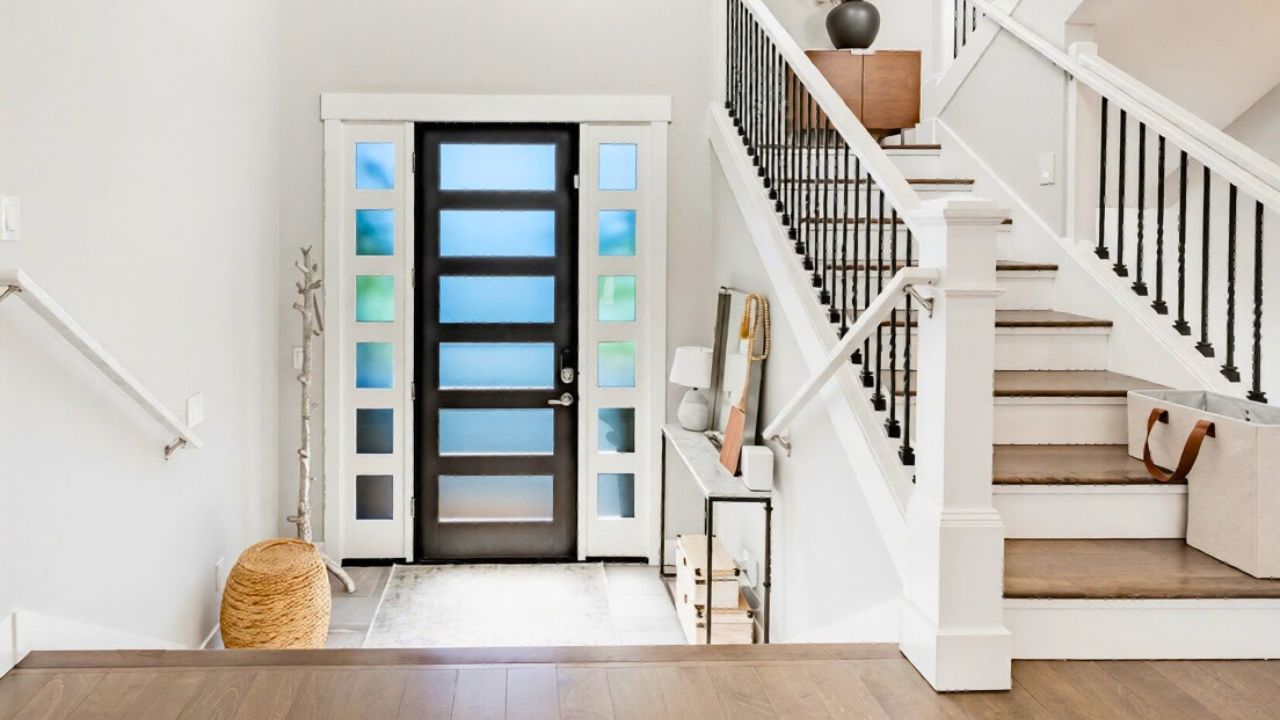
HGTV’s most copied entryway idea is why so many foyers feel cluttered
Photo credit: Sheila Say/Shutterstock.com
Your foyer probably looks more like a storage closet than the serene, styled spaces you see on television, and that is not an accident. One particular HGTV-favorite formula, built around a console table, mirror, and decorative clutter, has been copied so often that it now quietly sabotages how your entry functions. When you repeat that setup without adapting it to your square footage, storage needs, and traffic patterns, you set yourself up for a hallway that feels cramped, messy, and oddly stressful the second you step inside.
If you want an entry that actually works for your life, you have to treat it less like a photo backdrop and more like mission control. That means questioning the standard console vignette, rethinking bulky furniture, and building in real systems for shoes, bags, keys, and coats so your foyer stops swallowing everything that crosses the threshold.
The HGTV formula that took over everyone’s foyer
When you picture a “perfect” entry, you probably see the same scene: a slim console table, a large round mirror, a pair of lamps, a bowl for keys, and a few vases or books. HGTV has helped cement that image by showcasing a nearly identical combination again and again, often pairing a vintage rug with a console, a substantial piece of art, and curated vases to create a welcoming first impression. That look photographs beautifully, which is why you see it repeated across makeovers, mood boards, and product pages until it feels like the only correct answer for a foyer.
The problem starts when you copy that arrangement without asking whether it fits your actual entry. Many homes open directly into a circulation zone where doors swing, kids barrel through, and groceries get dropped. In that context, a decorative console that offers little closed storage becomes an obstacle instead of an asset, and the styling tricks that make sense for a magazine shoot quickly turn into catchall surfaces for mail, masks, and random chargers. You end up with a hallway that mimics HGTV’s visual cues but ignores your day-to-day reality.
Why the “console plus mirror” look creates instant clutter
On television, the console and mirror combo is treated as a quick path to polish, but in a lived-in home it often functions as a magnet for chaos. A narrow table right by the door invites you to unload everything in your hands the moment you walk in, especially if there is no other obvious landing spot for bags or mail. Designers routinely flag “Too Much Clutter” as the first and most common mistake in an entry, and that clutter usually starts on top of decorative furniture that was never designed to hold the volume of stuff you actually carry, from winter hats to reusable shopping bags.
Once that surface fills up, the mess spills down to the floor, where shoes, backpacks, and parcels gather around the console legs and turn your foyer into a tripping hazard. Add a large mirror and multiple accessories and you also create visual noise that makes the mess feel even worse because your eye has to process reflective surfaces, artwork, and piles of belongings all at once. Instead of a calm welcome, you get an overstimulating corridor that broadcasts disorganization before you have even taken off your coat.
Bulky entryway furniture that quietly shrinks your space
If the standard console is one problem, oversized storage pieces are another. You may be tempted to solve clutter with a massive cabinet or bench, but designers warn that “Bulky Entryway Furniture” can instantly date your home and make a narrow hallway feel even tighter. Furniture in an entry should be functional and also fit the proportions of the space, and when you choose deep chests or heavy armoires, you close in the walls, block sightlines, and force people to sidestep around corners just to reach the next room.
That bulk also eats into the negative space your eye needs to read a foyer as open and calm. Instead of one thoughtfully scaled piece that offers storage and breathing room, you might line the wall with multiple large items that compete for attention and invite more clutter to accumulate. If you recognize this pattern in your own home, the fix often starts with editing down to a slimmer profile, then prioritizing pieces that provide hidden storage without visually overwhelming the entry.
When “stylish” decor ignores how you actually live
You are constantly encouraged to treat the foyer as a style statement, which can push you toward choices that look good in photos but fail basic functional tests. Designers regularly point out “Home Entryway Mistakes Interior Designers Always Notice,” including setups that are stylish but not functional and others that are functional but not stylish. If your entryway is dominated by pretty but impractical pieces, such as a sculptural chair no one sits in or an open shelf that displays baskets but does not actually hold daily essentials, you will end up storing real-life items on the floor or in other rooms.
The reverse problem appears when you focus only on storage and forget aesthetics, resulting in plastic bins, overstuffed hooks, and mismatched shoe racks that make the space feel like a utility closet. The goal is to avoid both extremes by choosing furnishings that do at least two jobs at once, such as a closed cabinet that hides shoes while offering a surface for a lamp, or a bench with integrated cubbies that keeps the visual lines clean. When you respect how you use the foyer every day, you can still borrow the best ideas from television without copying the parts that do not serve your life.
How designers say you are organizing the entryway wrong
Professional organizers and decorators tend to agree that your entry is only as calm as the systems behind it. When the space becomes a single, undifferentiated drop zone, everything from gym bags to Amazon boxes lands in the same place and quickly piles up. Experts describe the entryway as the portal between your home and the outside world and stress that you need defined zones for shoes, coats, keys, and mail so that “the stuff” does not overwhelm the passage. Without those zones, even a beautiful piece of furniture will be swallowed by clutter in a matter of days.
Simple tools, like wall hooks at different heights for kids and adults, a tray or shallow drawer for keys, and a lidded basket for mail, can transform how the space feels. Guidance on decluttering the entryway emphasizes that you should treat this area as a functional hub, with labeled spots for each family member and a clear path from the door into the rest of the home. When you build those routines into the design, you reduce the temptation to dump items on the first flat surface you see.
The “cluttercore” trap and what designers really hate seeing
Television and social media often glamorize maximalist styling, which can nudge you toward what some designers call “Cluttercore Decor” in the entry. Layered art, stacks of books, multiple vases, and seasonal knickknacks might feel expressive, but professionals warn that clutter and everyday items interfere with design, especially in tight foyers. When you combine that visual busyness with practical necessities like backpacks and dog leashes, the result reads as messy rather than curated, and the entry loses its sense of purpose.
Experts also point to other pet peeves, such as a lack of ample lighting and overreliance on tiny rugs that do not fully cover the traffic path. Reporting on things designers hate in an entryway highlights how poor lighting and undersized textiles make a space feel smaller and more chaotic, even if you keep it relatively tidy. By trimming back purely decorative objects and investing in a larger, hardwearing rug and a brighter fixture or lamp, you create a backdrop that can handle real-life clutter without looking overwhelmed.
Small entryway, big mistakes: what makes tight foyers feel worse
If your foyer is compact, copying HGTV’s favorite moves can be especially punishing. Designers who focus on small spaces list several storage mistakes they want you to stop making, including lining every inch of wall space with hooks, shelves, and cubbies until there is no visual break. When you pack vertical surfaces this way, the entry feels like a storage unit, and the constant sight of belongings can raise your stress level every time you walk through the door. In a small footprint, you actually need more editing, not more furniture.
Another common misstep is relying on deep pieces that stick out into the walkway, which is a particular problem when you choose Bulky Entryway Furniture in the hope of squeezing in extra storage. In reality, furniture that is too large for the space makes a narrow entryway feel more closed in and can even create safety issues if people have to turn sideways to get past. Slim profiles, wall-mounted solutions, and multiuse pieces like benches with storage underneath for shoes are more effective ways to keep a small foyer feeling open while still providing the function you need.
When you do not have a foyer at all
Many homes open straight into the living room, which can make the HGTV-style console setup feel like the only way to suggest an entry. You are not stuck with that choice. Designers who specialize in open layouts show how you can create the illusion of an entryway by using area rugs, ceiling fixtures, or even a narrow bench to mark a mini zone near the door. One tutorial explains that when you walk into the front door and go right into the living area, you can still carve out a notional foyer with a small mat, a wall-mounted shelf, and a few hooks, instead of defaulting to a full console and mirror.
In these blended spaces, scale and transparency matter even more. A heavy, enclosed cabinet right at the threshold can visually chop the living room in half, while a low bench or open-legged table keeps sightlines flowing. By treating the entry as a subtle shift in function rather than a separate room that must match television images, you can design a setup that respects both the front door and the adjacent seating area without overwhelming either.
How to copy HGTV’s polish without copying its clutter
You can still borrow from HGTV’s most appealing ideas if you start with function and add style on top. Think of your foyer in layers: first, decide where shoes, coats, bags, and mail will live, then choose furniture that supports those needs, and only then add decorative touches. Guidance on Another very important of decorating your entryway is Function, and if you use your entry on a daily basis you should consider benches with storage space underneath for shoes or cabinets that hide everyday items behind doors. Once those workhorses are in place, a single piece of art, a mirror sized to your wall, and one or two meaningful objects can deliver the same visual impact you admire on screen without sacrificing practicality.
It also helps to audit your current setup for the specific mistakes designers call out. Articles on Overlooked entryway mistakes and Mistake #1: Too highlight how quickly decorative surfaces become dumping grounds and how seasonal gear around Thanksgiving and Christmas can overwhelm a small space if you do not plan for it. Similarly, designers who list things they hate seeing in an entryway warn against Cluttercore Decor and poor lighting that make foyers feel chaotic. When you use those critiques as a checklist, you can keep the elements that give HGTV entries their charm while stripping away the habits that leave your own foyer feeling cluttered.
Simple swaps that make your foyer feel calmer immediately
You do not need a full renovation to reset a chaotic entry. Start by clearing every surface, then decide which items truly belong near the door and which can be stored elsewhere. Replace an overflowing console with a slimmer cabinet that has closed doors, or swap a narrow table for a storage bench that offers both seating and hidden compartments. Advice on small entryway storage suggests that even one well chosen piece can solve plenty of problems if it is scaled correctly and used intentionally.
Like Fix It Homestead’s content? Be sure to follow us.
Here’s more from us:
- I made Joanna Gaines’s Friendsgiving casserole and here is what I would keep
- Pump Shotguns That Jam the Moment You Actually Need Them
- The First 5 Things Guests Notice About Your Living Room at Christmas
- What Caliber Works Best for Groundhogs, Armadillos, and Other Digging Pests?
- Rifles worth keeping by the back door on any rural property
*This article was developed with AI-powered tools and has been carefully reviewed by our editors.