The $50 maintenance step that protects against $5,000 damage
Photo credit: PongMoji/Shutterstock.com
You face a constant tradeoff between spending a little on prevention and risking a lot on repairs. A single neglected system in your home, car, or financial life can quietly move from “fine for now” to a four-figure emergency. A focused $50 maintenance step can be the difference between a small, predictable cost and a $5,000 hit that wrecks your budget.
When you treat maintenance like an investment instead of a chore, you give yourself options. You can decide where a $50 outlay will actually shield you from big-ticket damage and where you are just buying peace of mind you do not really need. The goal is not to insure or service everything, but to target the spots where a small, regular expense reliably blocks a catastrophic bill.
How a $50 habit turns into $5,000 in avoided damage
You protect yourself best when you think in terms of failure chains instead of isolated repairs. A clogged line, a worn gasket, or a missing bit of coverage rarely fails in a vacuum. One small weakness tends to trigger damage to floors, walls, electronics, or even your neighbors’ property, which is where the $5,000 range suddenly appears. A disciplined $50 habit, whether it is a service call, a deductible, or a policy rider, interrupts that chain before it reaches the expensive parts of your life.
Maintenance professionals describe this as shifting from reactive fixes to planned care. Guidance on why preventative maintenance lays out how regular inspections, testing, and tune ups are designed to catch the cheap problems early. When you follow that approach, a modest outlay can prevent a $5,000 repair later because you are paying to keep the system within safe limits instead of waiting for a breakdown that damages everything around it.
The hidden flood risk in your basement plumbing
Your plumbing is a perfect example of how a quiet system can turn into a financial disaster. A sewer or water backup does not just leave a puddle on the floor. It can soak insulation, ruin drywall, and contaminate anything it touches. Guidance on sewer and water explains that this type of event is different from a simple pipe leak because it involves water or waste reversing direction and coming up through drains, toilets, or floor openings.
That distinction matters because standard homeowners policies often treat a backup as a separate peril. In the detailed breakdown of what it is, you see that sewer and water backup insurance is structured to handle damage from an overwhelmed line that has “given up the fight” and pushed water back into your home. Without that add on, you can be left paying for remediation, replacement of finishes, and potential mold treatment on your own, which is where a $5,000 bill becomes very realistic.
Why a small sewer rider can save your renovation
When you finish a basement or upgrade a first floor, you quietly raise the stakes of a backup. New flooring, built in storage, and electronics all sit at the lowest level of your home, exactly where a failed line sends water first. A relatively low cost rider that covers sewer and water backup can function as your $50 guardrail that protects a renovation worth tens of thousands. The premiums for that coverage are typically modest compared with the cost of rebuilding a finished space from the subfloor up.
The same guidance that explains backup coverage also highlights how these policies focus on cleanup, repair, and sometimes even damaged personal property. When you weigh that against the out of pocket cost of ripping out saturated carpet, disinfecting surfaces, and replacing furniture, the logic of a small recurring payment becomes clearer. You are not just buying a piece of paper. You are pre funding the response to a worst case scenario that would otherwise drain your emergency fund and possibly your credit lines.
Your car’s $50 shield against surprise repairs
Your vehicle is another place where a $50 decision can shape whether a breakdown is a nuisance or a crisis. If your car suffers a major mechanical failure, you can be looking at a repair bill that rivals the car’s value. Some vehicle protection plans are built around a fixed deductible, so you pay a small portion and the plan absorbs the rest. One promotion explains that a vehicle protection plan can cover the costs of breakdowns and repairs for only a $50 deductible, which effectively caps your immediate outlay when something expensive fails.
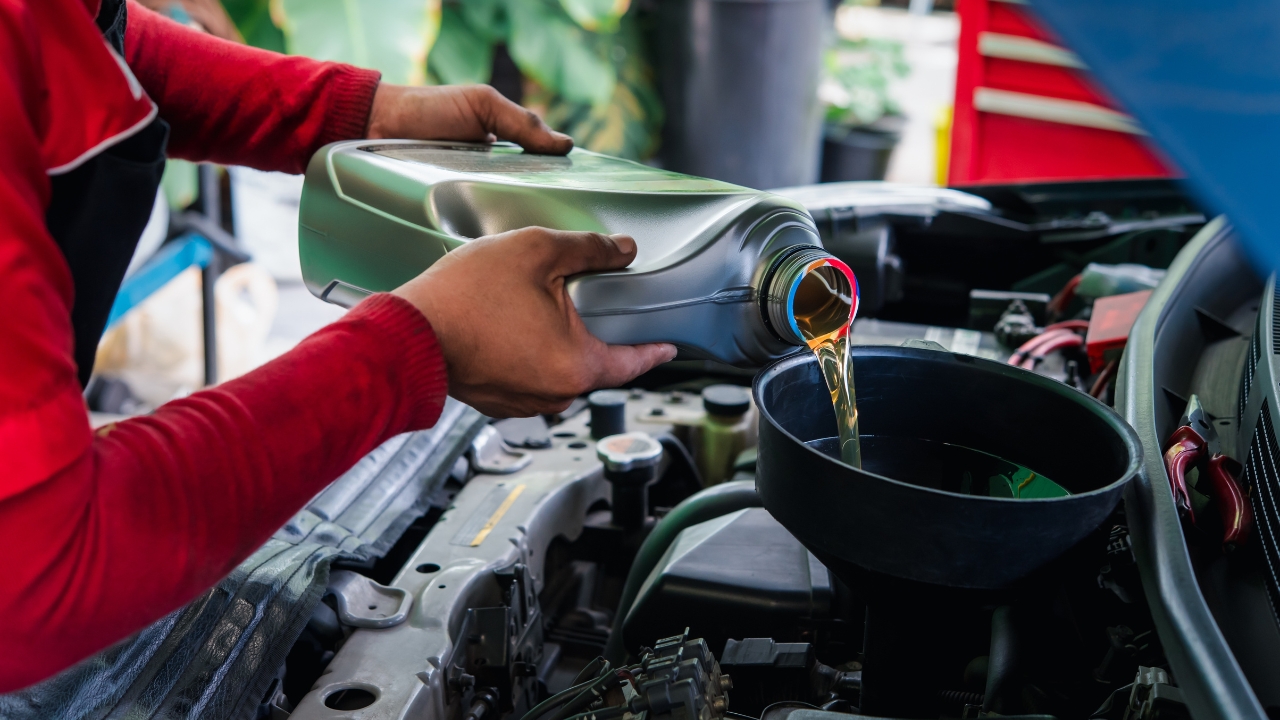
You still need to pair that kind of coverage with basic mechanical care. Regular oil changes, brake inspections, and fluid checks are your first line of defense because they reduce the odds that you will need a claim at all. When you combine a disciplined maintenance schedule with a low deductible plan, you are essentially paying to keep the car in a narrow band where parts wear out in predictable, affordable ways instead of catastrophic ones. That structure turns a potential $5,000 engine or transmission failure into a manageable event that you budgeted for in advance.
The $50 jewelry rider that saves a $10,000 heirloom
Your risk is not limited to pipes and engines. A piece of jewelry can carry both financial and emotional weight, and it is often more vulnerable than you assume. Standard homeowners or renters coverage usually caps jewelry payouts at relatively low amounts, especially for theft or mysterious disappearance. Specialized jewelry coverage is priced to be accessible, with guidance indicating that for most people, jewelry insurance will cost 1 to 2 percent of the item’s value, which works out to roughly $50 per year a $5,000 ring.
That ratio is what turns this into a textbook example of a small payment preventing a huge loss. If you own an engagement ring or heirloom necklace worth several thousand dollars, a dedicated policy or rider can cover loss, theft, or damage that would otherwise come straight out of your savings. One detailed guide on diamond ring insurance explains that coverage can be more affordable than you expect, especially when you compare the annual premium with the replacement cost of a custom setting or a high quality stone. By treating that $50 as part of the ring’s ongoing cost, you turn a fragile asset into something you can carry and wear without constantly worrying about a five figure setback.
When $50 insurance is smart and when it is wasted
Not every $50 product or rider deserves a place in your budget. You need to separate the protections that meaningfully cap a large risk from those that simply duplicate existing safeguards. A clear example comes from credit card loss. Federal law already limits your liability if your card is stolen, and some guidance on Understanding Credit Card explains that your maximum exposure is typically $50, and many issuers waive even that. Buying a separate policy to cover the same $50 risk does not change your financial outcome in any meaningful way.
You can use that same lens on other add ons that crowd your bills. Extended warranties on inexpensive electronics, travel insurance for fully refundable tickets, or duplicate roadside assistance can quietly drain cash that would be better spent on higher impact protections. When you evaluate a $50 option, ask whether it covers a risk that could realistically reach $5,000 and whether you already have similar coverage through another channel. If the answer to both questions is no, you are probably better off redirecting that money toward the maintenance steps that genuinely protect your net worth.
Building a preventive maintenance routine that actually sticks
For your $50 efforts to pay off, you need a routine that you will actually follow. Preventive maintenance guidance stresses the value of structure, with recommendations for daily visual checks, weekly or monthly walkthroughs, and annual performance tests. When you apply that thinking at home, you can create a simple checklist that covers plumbing, heating and cooling, roofing, and vehicles. Each item gets a cadence and a budget, so you know when to schedule a service call and how much you expect to spend.
Career resources that explain what preventive maintenance describe it as a planned process of inspections and minor fixes that keep equipment running within safe parameters. You can borrow that mindset by tracking filter changes, drain cleanouts, and tire rotations the same way you would track work tasks. When you treat maintenance as a recurring appointment instead of a reaction to noises and leaks, your $50 steps stop feeling like random expenses and start functioning as part of a deliberate strategy to avoid four figure surprises.
Thinking like a profit center, not a cost center
You get better results when you stop viewing maintenance as a sunk cost and start seeing it as a profit preserving function. Industrial operations have made this shift explicitly, with experts arguing that maintenance is not a cost center but a profit center because it keeps revenue producing assets online. One analysis of how maintenance supports profit points out that every avoided outage or major repair directly protects income and margins.
You can apply the same logic to your personal finances. A $50 sewer rider protects the value of your finished basement and your ability to use it. A $50 jewelry policy preserves the resale and sentimental value of a ring that might otherwise be irreplaceable. A $50 vehicle deductible keeps your car available for work, school, and family obligations instead of sidelined for weeks. When you frame these decisions as ways to protect your household’s earning power and quality of life, you become more selective about which small expenses are actually investments and which are just noise.
Putting your own $50 strategy into action
To turn all of this into action, you can start with a simple inventory. List your biggest assets: your home, your car, and your most valuable possessions. For each one, identify the top two or three ways it could suffer a $5,000 level hit, such as a basement backup, a transmission failure, or the loss of an engagement ring. Then map those risks to specific $50 levers, such as a sewer and water backup rider, a low deductible protection plan, or specialized jewelry insurance, and compare the annual cost with the potential damage.
Next, layer in your routine maintenance. Use the preventive frameworks that emphasize regular inspections and testing to schedule your own recurring tasks, and attach a modest budget to each. When you combine targeted coverage with consistent care, you are no longer hoping that nothing goes wrong. You are actively engineering your financial life so that when something does fail, it fails on your terms, within limits you chose, and at a price that looks a lot more like $50 than $5,000.
Like Fix It Homestead’s content? Be sure to follow us.
Here’s more from us:
- I made Joanna Gaines’s Friendsgiving casserole and here is what I would keep
- Pump Shotguns That Jam the Moment You Actually Need Them
- The First 5 Things Guests Notice About Your Living Room at Christmas
- What Caliber Works Best for Groundhogs, Armadillos, and Other Digging Pests?
- Rifles worth keeping by the back door on any rural property
*This article was developed with AI-powered tools and has been carefully reviewed by our editors.