Full gutter replacement costs now reaching $600 to $1,500
Photo credit: Radovan1/Shutterstock.com
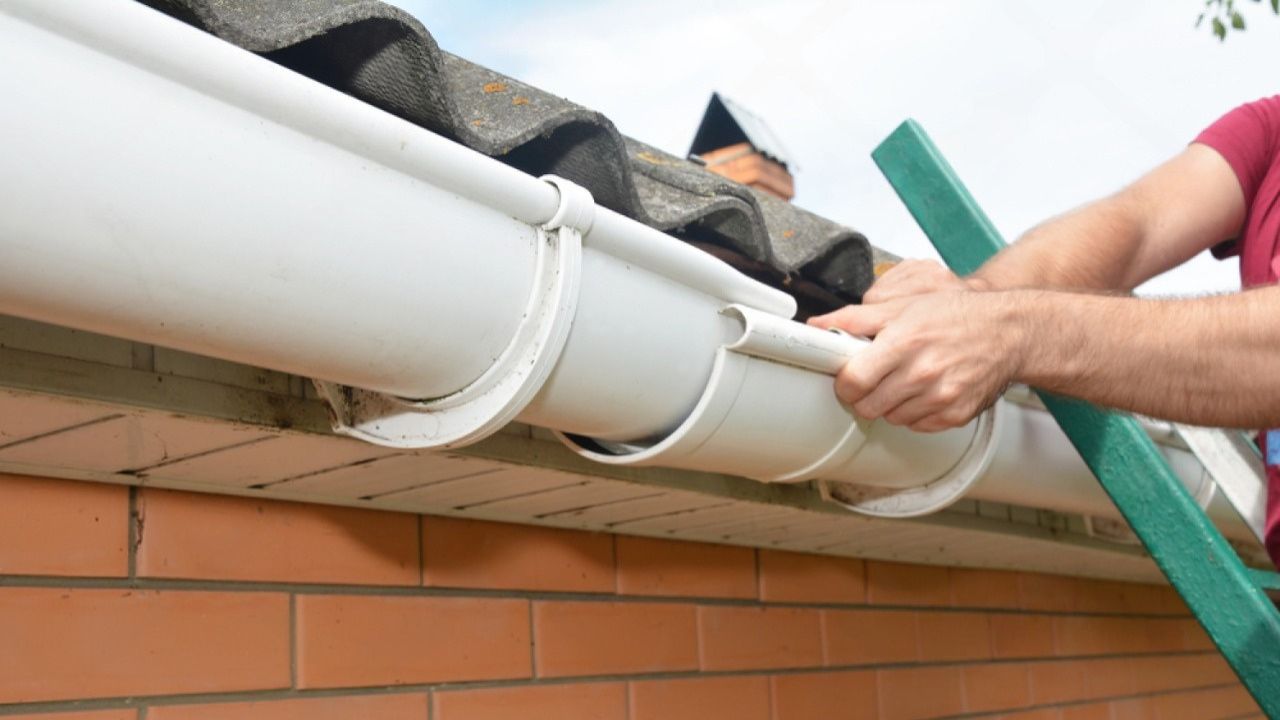
Full gutter replacement is quietly turning into a four-figure line item for many homeowners, with typical projects now running from about $600 on the low end to $1,500 or more for a standard single-family home. That jump becomes most obvious when you compare it with what you might have paid a decade ago, especially once labor, materials, and disposal fees are all folded into a single invoice.
If you are planning exterior work in 2025 and 2026, gutters now have to be treated as a real budget decision rather than an afterthought. The good news is that you can still keep costs closer to $600 than $1,500 if you understand how pricing works by material, home size, and installation complexity, and if you shop quotes with the same discipline you would bring to a roof or siding project.
Why full gutter replacement is landing in the $600 to $1,500 range
When you hear that full gutter replacement now often falls between $600 and $1,500, you are really hearing a shorthand for several moving parts that stack together. Material prices per linear foot, labor rates in your region, and whether your installer needs to remove old hardware or repair fascia all feed into that band. For a small single-story house with simple rooflines, you might sit closer to the $600 mark, while a larger or more complex home with premium materials can nudge you well past $1,500.
Broad national ranges for new systems show how quickly costs climb once you add length and complexity. Installing gutters on a home that does not yet have a system can run from about $2,000 to $5,500, which helps explain why a straightforward replacement on a modest home naturally settles into the lower four figures. If you opt for a seamless system, national data shows that Seamless gutters alone average about $1,150, with a typical range between $650 and $1,700, which lines up closely with the $600 to $1,500 window you are likely hearing from local contractors.
How material choice pushes your project toward the low or high end
Material is the single biggest lever you control if you want to stay closer to $600 than $1,500. Entry-level Vinyl gutters are usually the cheapest, with typical installed pricing in the range of $3 to $7 per foot according to detailed Vinyl gutters cost breakdowns. Aluminum generally lands in the middle, around $4 to $15 per foot, while Steel and Copper can climb from $6 to $20 and $25 to $40 or more per foot, respectively, which is how a standard job suddenly turns into a high-end exterior investment.
Those per-foot differences matter once you multiply them by the 150 to 300 linear feet that are common on a detached home. One detailed pricing guide notes that Vinyl, Aluminum, Steel, and Copper all sit on a spectrum where Vinyl is the most budget friendly and Copper is a design-forward luxury choice that can easily push you beyond $1,500 for a full perimeter. Another source that focuses on the Average Cost of in 2025 pegs Vinyl Gutters at roughly $3 to $6 per linear foot and Aluminum Gutters at $5 to $12 per linear foot, reinforcing the idea that your material decision largely decides whether your total invoice sits near the bottom or top of the current range.
Why home size and height matter more than you might expect
Even if you pick the same material, a small single-story ranch and a tall two-story colonial will not share the same bill. Longer rooflines simply require more linear footage, and taller walls demand more labor time, ladders, and safety setups. One detailed Oregon-focused guide on Why two-story homes cost more explains that installers have to move slower, use more equipment, and often bring extra crew members when they work at height, which all shows up in your quote.
That same resource breaks down the Average Cost by Home Size and shows how typical linear footage and common materials scale from a small single-story home to a large or two-story property. A compact townhome or ranch might only need around 120 to 160 feet of gutters in Aluminum, while a large or two-story home can reach 230 to 320 feet in Aluminum, Steel, or Copper, which roughly doubles your material line item before you even factor in higher labor rates. That is why a modest single-story project can still land near $600, while a bigger two-story home with the same material climbs toward or above $1,500.
Labor, removal, and fascia repairs that quietly inflate your bill
Material prices are only part of the story, especially when you are replacing an older system. Your installer has to remove and haul away the existing gutters, which can add a noticeable surcharge. One detailed 2024 cost breakdown notes that Removal and Disposal your old gutters need to be taken down and disposed of, this can add a few hundred dollars to your project, and not every contractor includes that line item automatically in the first estimate.
Once the old channels come off, any hidden damage to your fascia or soffit also comes into view. If you have rotted wood behind the old runs, you may need new boards before the replacement can be hung. One fascia-specific guide points out that Vinyl fascia is more resistant to moisture and rot and is typically priced around $3 to $8 per linear foot, which can quickly add up if a long stretch of your roof edge needs attention. When you combine that with the labor hours required to detach old sections, repair or replace trim, and then install the new system, you can see how a project that looked like a $600 job on paper ends up closer to $1,500 once the crew is finished.
Sectional versus seamless: where design and cost intersect
Beyond material, you also choose between sectional gutters that come in shorter pieces and continuous seamless runs that are custom formed on-site. Seamless systems reduce the number of joints where leaks can form and often look cleaner along the roofline, but they come at a premium. National pricing data shows that Seamless gutters cost around $1,150 on average, with a typical range between $650 and $1,700, which is essentially the same band that defines the current full replacement conversation.
For a small home with simple rooflines, sectional Vinyl or Aluminum can keep you toward the lower half of the $600 to $1,500 span, especially if your installer can work with standard lengths and off-the-shelf fittings. On a larger property, the labor savings and performance benefits of seamless runs often justify the higher upfront cost. When you factor in fewer joints to maintain and a cleaner appearance along your fascia, you may decide that spending closer to the $1,150 midpoint is a better long-term decision than chasing the absolute lowest bid.
How add-ons like gutter guards and downspouts change the math
Once you are already paying for replacement, you will face a series of upsell decisions that can shift your total in either direction. Gutter guards are one of the most common add-ons, marketed as a way to cut down on ladder trips and clogs. One detailed installation guide that asks Gutter Guards Worth explains that these screens sit over your gutter runs to block leaves and debris, which can reduce how often you need to clean your gutters but also adds material and labor costs to your project.
Downspout upgrades and extra runs also shift your final bill. Many people upgrade their gutters at the point of installation by adding gutter guards when having new aluminum gutters placed on their homes, and that same source notes that getting guards installed can dramatically alter cost. If you add more downspouts to improve drainage or switch to larger-diameter pipes to handle heavy rain, you will pay more for fittings and labor. These changes might only add a few hundred dollars, but on a project that already sits near $1,200, they are often what nudges you toward or above $1,500.
Why Vinyl keeps showing up as the budget anchor
If your priority is staying as close as possible to the $600 mark, Vinyl is your ally. One Madison-focused comparison explicitly labels Vinyl Gutters as The Most Budget, Friendly Option, underscoring how this material consistently comes in at the bottom of the price ladder. That aligns with broader cost guides that show Vinyl gutters at $3 to $7 per foot, which is significantly cheaper than Aluminum, Steel, or Copper for the same length of roof edge.
Vinyl also benefits from manufacturing economies that show up in other exterior categories. One siding guide describes Vinyl as low-budget and low-maintenance and points out that Cheap vinyl, ranging from $3.00 to $8.00 per square for installation, is the primary selection in siding for Portland homeowners. That same dynamic carries over to gutters, where Vinyl offers acceptable performance for many climates at a fraction of the cost of premium metals. If your goal is to keep a full replacement under $1,000, Vinyl combined with simple rooflines and minimal extras is usually how you get there.
Using cost calculators and quote platforms to sharpen your budget
Because so many variables shape your final price, you gain a lot by running your project through online tools before you start calling contractors. One national calculator that focuses on the Install New Gutters cost lets you plug in home size, gutter style, and material so you can see how quickly the total shifts as you move from Vinyl to Aluminum or from sectional to seamless. That kind of pre-planning helps you walk into contractor meetings with a realistic sense of whether your project should land near $600, $1,000, or $1,500.
When you are ready for real numbers, quote platforms can connect you with local installers in a structured way. One widely used marketplace explains that Thumbtack allows you to search for contractors based on your specific needs and location so you can receive quotes from multiple professionals and choose the best fit for your project. That structure encourages installers to itemize materials, labor, gutter guards, and removal costs, which makes it easier for you to compare apples to apples and push back if a bid seems out of step with the $600 to $1,500 norms for homes similar to yours.
Treating gutters as a long-term protection investment
When you begin to budget for your project, you will quickly find that the material you choose is the primary driver of the gutter replacement cost, but the decision is about more than a single invoice. One detailed guide on When you start planning frames gutters as both an investment in your home’s protection and a contributor to its aesthetic. In practice, that means you are weighing the risk of foundation damage, basement leaks, and landscaping erosion against the extra few hundred dollars that a higher quality system may cost today.
You also have to remember that insurance and broader renovation costs often intersect with gutter decisions. One roof repair guide notes that According to ClaimsMate, a good public adjuster like PACC Solutions can increase your home insurance payout by 300% to 500%, which shows how significant exterior damage claims can become when water management fails. If you are already undertaking a larger renovation, such as replacing siding or roofing, coordinating gutters at the same time can reduce labor overlap and help you lock in a more favorable per-foot rate. In that context, spending somewhere between $600 and $1,500 on a system that protects your roof, walls, and foundation for decades starts to look less like a frustrating expense and more like a strategic piece of your home’s long-term health.
Like Fix It Homestead’s content? Be sure to follow us.
Here’s more from us:
- I made Joanna Gaines’s Friendsgiving casserole and here is what I would keep
- Pump Shotguns That Jam the Moment You Actually Need Them
- The First 5 Things Guests Notice About Your Living Room at Christmas
- What Caliber Works Best for Groundhogs, Armadillos, and Other Digging Pests?
- Rifles worth keeping by the back door on any rural property
*This article was developed with AI-powered tools and has been carefully reviewed by our editors.