Pricing by linear foot now running $0.95 to $2.25 nationwide
Photo credit: Douglas Cliff/Shutterstock.com
Pricing that used to be buried in contractor spreadsheets is now front and center for homeowners, and nowhere is that clearer than with services billed by the linear foot. For gutter cleaning alone, you now face national rates running from $0.95 to $2.25 per foot, a range that can swing your bill by hundreds of dollars depending on your roofline. When you understand how that per‑foot math works across gutters, baseboards, and fences, you put yourself in a much stronger position to budget, compare bids, and push back on quotes that do not add up.
Rather than treating linear‑foot pricing as a mysterious contractor formula, you can break it down into labor, materials, and access, then track how those pieces shift from one project to another. Once you see how a pro builds a price from the first foot to the last, you can forecast costs for your own home and decide where to spend, where to save, and when a higher rate is actually justified.
Why so many home services now price by the foot
Linear‑foot pricing is everywhere because it gives contractors a simple way to scale their labor and materials from a small job to a large one without rewriting the entire estimate. Whether you are cleaning 60 feet of gutter or installing 260 feet of fence, the same per‑foot figure lets a pro cover ladders, trucks, insurance, and crew time inside a single number. For you, that can be helpful, since you can multiply the rate by your own measurements and sanity‑check any quote before you sign.
That flat price per foot, however, hides a lot of nuance that directly affects your bill. A straight run of ground‑level gutters on a ranch home is not the same job as a steep roof over a walkout basement, even if both measure 120 feet. Sources that break out gutter cleaning cost show how height, debris level, and roof complexity all sit behind that simple per‑foot figure. When you understand that, you can ask better questions about why your rate is at the low or high end of the $0.95 to $2.25 band.
How the $0.95 to $2.25 gutter cleaning range actually works
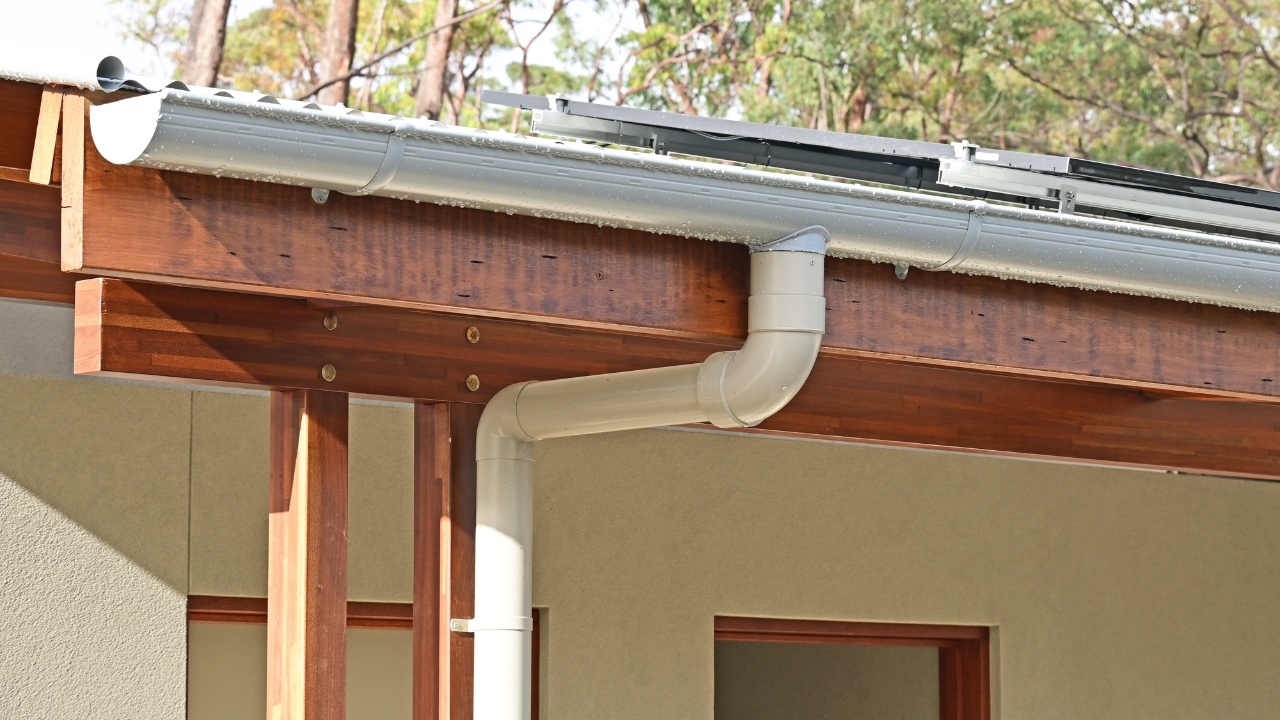
When you hire a cleaner, you are usually paying for two things: the length of your gutters and the difficulty of the job. According to Key Facts Gutter, cleaners typically charge $0.95 to $2.25 per foot for their service, with $2.25 per foot sitting at the top of that typical range. The lower end often applies to single‑story homes with easy access and light debris, while the higher end reflects multi‑story work, heavier buildup, or situations that require extra safety gear and cleanup time.
Another way to understand that range is to look at what a full visit costs once those per‑foot rates are applied. One contractor breakdown notes that, Nationally, the average gutter cleaning cost is about $168 per visit, and also repeats that figure as $168 when explaining how Wet seasons can turn small clogs into major overflows that demand more frequent service. When you combine that national visit cost with the $0.95 to $2.25 per foot range, you can quickly estimate how your own roofline and climate push you toward one end of the spectrum or the other.
Why pros obsess over “Length of Gutters” when quoting
Every gutter cleaner you talk to will eventually come back to the same phrase: Length of Gutters. That measurement is the backbone of the quote because it tells the crew how long they will be on ladders, how many bags of debris they may haul, and how much risk they are taking on your roof. One national guide explains that Gutter cleaning pros by the linear foot, which means your total cost rises directly with the total run of metal attached to your fascia, especially on a multi‑story home.
For you, that means measurement accuracy matters more than you might think. If you underestimate by 30 feet on a large house, the gap can easily add $30 to $70 to your final bill inside the $0.95 to $2.25 band. Some homeowners walk the perimeter with a tape measure, while others pull dimensions from a site plan or appraisal report, but in every case you should compare your own figure with the one on the written estimate. If a contractor lists 220 feet where you only have 180, you have a clear, factual basis to ask for a correction before work begins.
From cleaning to installing: how gutter pricing shifts
Cleaning is only one part of the story. When you install new gutters, the same linear‑foot logic applies, but materials and fabrication suddenly matter as much as labor. A national calculator that tracks gutter installation costs explains that contractors quote installation in linear feet as well, but the per‑foot figure now needs to cover aluminum or steel stock, hangers, downspouts, end caps, and sometimes custom forming on site. That is why a new system can feel far more expensive than a cleaning visit, even if the total length is identical.
You also see the same pattern in other gutter pricing guides that walk through a Homeowner Price Breakdown. One detailed overview notes that, Based on average gutter prices, a homeowner can expect to pay between $960 and several thousand dollars for a full replacement, with $960 cited as the low end of a typical project. When you divide that kind of total by the length of your system, you get a clear sense of whether your own per‑foot quote is in line with national averages or drifting into premium territory that demands an explanation.
Baseboards: another quiet example of linear‑foot math
Once you start looking, you see the same pricing logic inside your walls. Trim installers routinely quote baseboard projects by the foot, then convert that into a total that includes cutting, coping, nailing, and caulking. One national guide spells out that the Average cost to install baseboard runs from $400 to $1,500 total cost for 100 to 150 linear feet, which anchors the range of typical projects. In that breakdown, Average cost to is tied directly to Labor, which includes both the time to work around corners and doors and the skill to create tight joints that protect against water damage and mold.
If you translate those figures into a per‑foot price, you see how quickly small rooms add up. A 100‑foot job at $400 works out to about $4 per foot, while 150 feet at $1,500 jumps to roughly $10 per foot, a spread that reflects differences in profile complexity, paint or stain, and site conditions. Other cost databases that track Price and Costs for baseboard installation in 2026 confirm that labor rates are updated continuously from contractor bids, which means your local market can sit above or below those national averages. When you compare your quote against that context, you can see whether your installer is charging a fair rate for the linear footage involved.
How fence installers use per‑foot pricing to frame your budget
Fences are another area where you live and die by the linear foot. Whether you are enclosing a small city yard or a large rural lot, your installer will typically start with a per‑foot figure that reflects materials like wood, vinyl, or chain link, then add premiums for gates, corner posts, and removal of old sections. A detailed 2026 guide on Average Cost Per in the USA explains that the Data behind those figures helps you when Planning a fence installation, since you can plug your own footage into the national averages before you ever invite bids.
A regional breakdown on Average Cost of notes that some materials, such as chain link, can range widely per linear foot depending on height and coating, while decorative options can climb much higher. When you combine those per‑foot figures with your total length, you can quickly see whether a new privacy fence is a $3,000 project or a $13,000 one. That clarity also helps you decide where to compromise, perhaps shortening a run along a side yard or choosing a simpler design to keep your budget in check.
Labor, not just materials, drives per‑foot pricing
Across gutters, baseboards, and fences, labor is the hidden engine behind every linear‑foot quote. Materials certainly matter, but the time it takes to set up, cut, install, and clean up often dominates the final figure. One cost database focused on 2026 Installation Labor Rates for baseboard trim explains that its Costs come from a proprietary U.S. construction Price database that is updated continuously from contractor bids, which shows how quickly labor conditions can shift in response to local demand and inflation.
You see the same emphasis on labor in flooring and other finish work. A 2025 breakdown of engineered wood installation notes that modern estimating tools use up‑to‑date, localized data to give you a realistic estimate of what you can expect to pay for materials and labor, and that these tools provide an unbiased estimate based on industry‑standard methods. That analysis of labor cost install is not billed per foot in the same way as gutters, but it shows how contractors lean on the same data‑driven approach when setting rates. For you, that means a higher per‑foot price may reflect not only better materials but also a tighter labor market or a more skilled crew.
How inflation and seasonality push prices up or down
Even if your house never changes, your per‑foot prices do, because they are tied to broader economic forces and seasonal swings. Inflation data from the Consumer Price Index release on Discovered Blog Archives shows how categories like shelter, services, and commodities move over time, and contractors feel those shifts in fuel, insurance, and payroll. When their costs rise, they often adjust their per‑foot rates rather than adding separate surcharges, which is why you might see gutter cleaning at $1.15 per foot one year and $1.35 the next even if your home is exactly the same.
Seasonality adds another layer. The same gutter cleaning analysis that pegs the national average at $168 per visit points out that Wet seasons amplify small clogs into real overflow problems, which can force you into two visits per year instead of one. During peak fall and spring periods, crews are busier, and some raise their per‑foot rates or add minimum charges to manage demand. If you schedule cleaning during a slower period, you may land closer to the $0.95 end of the range, while last‑minute bookings after a storm can nudge you toward the $2.25 per foot ceiling.
Using linear‑foot data to negotiate and plan smarter projects
When you walk into a negotiation with real numbers, you change the conversation from vague impressions to concrete math. If a gutter cleaner quotes you $2.25 per foot for a simple single‑story home, you can reference the national range from gutter cleaning pros and ask why your job sits at the very top. Maybe the answer is a steep roof pitch or difficult access over a deck, which can justify the premium, or maybe the contractor is simply testing what the market will bear. Either way, you are no longer guessing.
The same approach works with other trades. When a trim installer hands you a lump‑sum bid, you can ask how many linear feet of baseboard it covers and compare the implied per‑foot rate with the $400 to $1,500 range for 100 to 150 feet described in the Discovered How Much guide. If a fence contractor quotes a price that implies $60 per foot on a basic design, you can point to national and regional averages for The Average Cost of Fence Installation and ask whether a different material or layout would bring the figure back in line. Over time, you start to treat linear‑foot pricing not as a mystery, but as a shared language that lets you and your contractors build fair, transparent projects together.
Like Fix It Homestead’s content? Be sure to follow us.
Here’s more from us:
- I made Joanna Gaines’s Friendsgiving casserole and here is what I would keep
- Pump Shotguns That Jam the Moment You Actually Need Them
- The First 5 Things Guests Notice About Your Living Room at Christmas
- What Caliber Works Best for Groundhogs, Armadillos, and Other Digging Pests?
- Rifles worth keeping by the back door on any rural property
*This article was developed with AI-powered tools and has been carefully reviewed by our editors.