10 Things That Clog Gutters in Spring and Cause Real Damage
Photo credit: Ziggy1/istock.com
Spring rain exposes every weak spot in your home’s defenses, and your gutters are often the first system to fail. When they clog, water stops moving where it should and starts finding its way into your roof, walls, and foundation instead. By understanding what actually fills those troughs each spring, you get a clear checklist of what to watch for and what to clear out before the damage gets expensive.
The trouble is that clogs rarely come from a single obvious source. Instead, you deal with layers of leaves, seed pods, grit, nesting material, and even live pests working together to block the flow. If you know the ten biggest culprits and how they translate into real-world problems, you can plan your spring maintenance around prevention instead of emergency repairs.
1. Leftover Fall Leaves And Winter Tree Debris
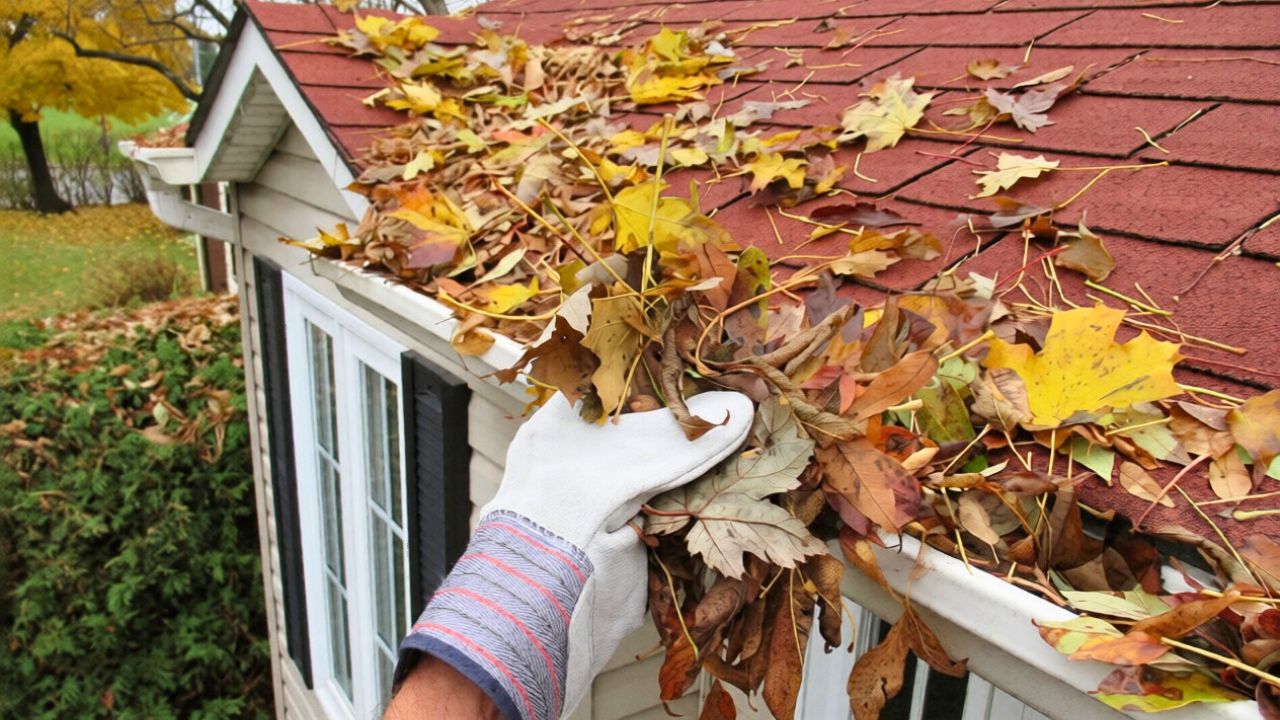
By the time spring storms arrive, your gutters are often still holding what fell in autumn. Leaves, twigs, and small branches that collected in late fall tend to settle, compact, and freeze in place through winter, then turn into a dense mat as temperatures rise. As water hits that mat, it pools and spills over the sides instead of flowing to the downspouts, which is why you often see the first signs of trouble as streaks on your siding or erosion below the eaves. Several gutter specialists point out that falling leaves and remain one of the primary reasons your system needs the most intensive cleaning efforts.
When that organic layer blocks the channel, water has to go somewhere. It can back up under shingles, soak roof decking, and eventually reach insulation and drywall, which is how a simple leaf clog turns into roof leaks and interior stains. One gutter damage overview explains that when rain gutters become blocked, water ends up spilling over the sides and can lead to costly water damage repairs along the roofline and walls if you ignore the warning signs of blocked gutters. If you have mature trees near your house, assume that leftover leaves are still sitting in your gutters when spring begins, even if you cleared them once in late fall.
2. Spring Seed Pods, Catkins, And Blossoms
Once trees wake up for the season, your gutters face a new wave of debris that behaves very differently from dry leaves. Seed pods, catkins, and flower petals are smaller, more flexible, and often sticky when wet, which lets them slip through gaps in your guards and collect in corners and at downspout openings. Contractors who focus on seasonal maintenance warn that seed pods in particular can wedge together, trap moisture, and even accelerate corrosion forming on the gutters themselves when they stay damp against metal for long periods.
This type of clog usually shows up as a slow gutter, not a dramatic overflow at first. Water may move along the run but start to sheet over the front lip near the corners where pods have formed a plug. Over time, that repeated overflow can wash out mulch, damage plantings, and leave dirty streaks on siding. A detailed explanation of seasonal cleaning stresses that spring gutter cleaning is often required for homes with certain types of trees around the property precisely because of this surge of seed pods and blossoms. If you live under maples, oaks, or ornamental flowering trees, plan a follow-up cleaning after the heaviest drop of spring debris, even if your gutters looked clear in early March.
3. Shingle Grit And Roof Granules
Not every clog is made of leaves. As your asphalt shingles age, they shed the protective mineral granules that give them their color and UV resistance. Heavy spring rain washes that grit down the roof and into the gutters, where it settles in low spots and around outlets. Over time, those granules mix with dirt and organic matter to form a heavy sludge that is harder to flush or scoop out than dry leaves. Roofing and remodeling experts list shingle granules right alongside leaves, pine needles, and small branches as part of the clogs that accumulate in the channels and prevent proper drainage.
That sediment does more than just sit there. It gradually reduces the effective depth of your gutters, so even a moderate rainfall can cause them to overflow. The added weight also strains hangers and seams, which can lead to sagging sections and leaks at the joints. One breakdown of hidden gutter issues notes that debris accumulation through autumn and winter often includes grit and fine material that you do not see from the ground, which is why a close inspection for debris accumulation is critical in early spring. If you find a thick layer of granules, that is also a sign your shingles may be nearing the end of their service life, so the gutter clog is telling you something about the roof above it.
4. Pine Needles, Small Twigs, And “Gutter Gardens”
Evergreen trees and wind-blown branches create a different kind of problem. Pine needles are long, thin, and slightly flexible, which lets them weave together into a dense mat that acts like a filter. Small twigs and bark chips then catch in that mat, and before long you have a fibrous block that water can barely penetrate. Roofing specialists describe how leaves and tree of all sizes, including needles and branches, combine to cause significant blockages that keep water from flowing to the downspouts.
Once dirt and decomposed organic matter collect around that tangle, you essentially start growing a “gutter garden.” Seeds carried by the wind or dropped by birds land in the damp, nutrient-rich debris and sprout right there in the trough. One detailed look at what ends up in gutters explains that much of the dirt and debris that lands on the roof eventually washes into the channels, where it can build up enough to support gutter-gardens if it is not cleared. As those mini gardens expand, their roots can trap even more debris, and the added weight can twist or pull gutters away from the fascia. If you ever see green shoots poking over the edge of your gutters in spring, you are already dealing with a long-neglected clog that needs prompt attention.
5. Nests, Rodents, And Insects Moving In
Once debris sits undisturbed, it becomes a building material and a hiding place. Birds, squirrels, and mice all see your gutter troughs as convenient ledges for nests, especially when they are already lined with leaves and grass. A review of common gutter problems notes that gutter debris is a perfect nesting place for rodents, birds, and other small animals, and that squirrels, mice, and larger birds can start families right in those protected corners. Their nests act like dams, and their activity can chew or scratch at nearby wood, which opens new paths for water intrusion.
Insects are just as attracted to the damp, sheltered environment. Standing water in clogged gutters provides ideal breeding conditions for mosquitoes, while decaying wood and constant moisture invite ants and other pests. One analysis of gutter-related damage explains that clogged gutters can for various insects and pests that threaten both your health and your property. If carpenter ants find softened, wet wood near the roofline, they can move from the gutter area into structural elements. Information on carpenter ants highlights that these insects excavate wood to build their nests, which means that a moisture problem at the gutter can eventually become a structural problem inside your walls.
6. Dirt, Roof Runoff, And The Start Of Gutter-Gardens
Even if you do not live under large trees, your gutters still collect fine material every time it rains. Dust, soil, and pollutants that settle on the roof get washed down with stormwater and end up in the channels. Over time, that sediment can be surprisingly thick, especially in low spots where the slope is imperfect. A closer look at how gutter gardens start explains that much of the dirt and debris that ends up in gutters began as particles on the roof that were carried into the system by runoff, then trapped by existing gutter-gardens or minor obstructions.
Once that dirt layer is deep enough, it retains moisture like a sponge. That keeps the metal or vinyl surface wet long after a storm passes, which speeds up corrosion and mildew growth. If water cannot move quickly through the system, it tends to spill over the front edge, where it can wash away mulch and topsoil and leave bare patches in your landscaping. One breakdown of spring gutter issues notes that when gutters overflow, the water can pour directly onto beds and walkways, which leads to erosion and, over time, contributes to structural instability in the surrounding soil. If you see plants thriving in your gutters or notice a line of soil along the bottom when you scoop them out, you are looking at the long-term result of roof runoff that has been ignored for several seasons.
7. Ice, Standing Water, And Hidden Structural Damage
Spring clogs often start with winter ice. When gutters are already partially blocked, melting snow has nowhere to go and refreezes at the eaves, forming ice that can creep up under shingles. As temperatures fluctuate, that ice expands and contracts, loosening fasteners and opening tiny gaps. An overview of seasonal risks explains that ice can build up when gutters are clogged and that when it does, you could find yourself replacing entire sections of wood, insulation, and drywall because of the water that eventually finds its way inside.
Once spring arrives, that damage does not disappear just because the ice melts. Instead, you are left with sagging sections, separated seams, and low spots where water now pools after every storm. Standing water adds weight, which can pull gutters further out of alignment and create a cycle of worsening performance. A detailed look at what happens when you do not clean your gutters points out that when they stay clogged, water can wash away mulch, severely damage flowers, shrubs, and trees, and even encourage mold that only grows in damp places, as described in a list of problems that result. If you see staining on soffits or notice icicles hanging from the middle of a gutter run in winter, assume that hidden structural damage is already forming and plan a careful inspection once the weather warms.
8. Overflow, Foundation Stress, And Landscape Damage
Every clog, no matter its source, eventually shows up as water where it does not belong. When gutters overflow in spring, you often see sheets of water pouring directly off the roofline instead of through downspouts. That concentrated flow can gouge channels in soil, flatten delicate plants, and splash mud onto siding and windows. One breakdown of gutter overflow explains that debris accumulation in the channels and outlets leads to water that spills over, erodes soil, and presents structural instability around the home if it is not addressed.
The more serious problem sits below the surface. When water repeatedly dumps near the foundation instead of being carried several feet away, it can seep down along the walls and into any small cracks. Over time, that added moisture can cause basement leaks, heaving, or settling. One explanation of what happens if you do not clean your gutters notes that a properly functioning system will channel water away from your home, while clogged gutters allow moisture to enter and cause foundation problems. Another detailed look at gutter gardens warns that when those mini landscapes trap water, the overflow can contribute to erosion and cracks in the foundation, which ties the seemingly harmless plants in your gutters directly to serious structural risk. If you notice standing water near your foundation after every storm, your first move should be to check for clogs along the roofline.
9. How To Stay Ahead Of Spring Gutter Clogs
Like Fix It Homestead’s content? Be sure to follow us.
Here’s more from us:
- I made Joanna Gaines’s Friendsgiving casserole and here is what I would keep
- Pump Shotguns That Jam the Moment You Actually Need Them
- The First 5 Things Guests Notice About Your Living Room at Christmas
- What Caliber Works Best for Groundhogs, Armadillos, and Other Digging Pests?
- Rifles worth keeping by the back door on any rural property
*This article was developed with AI-powered tools and has been carefully reviewed by our editors.