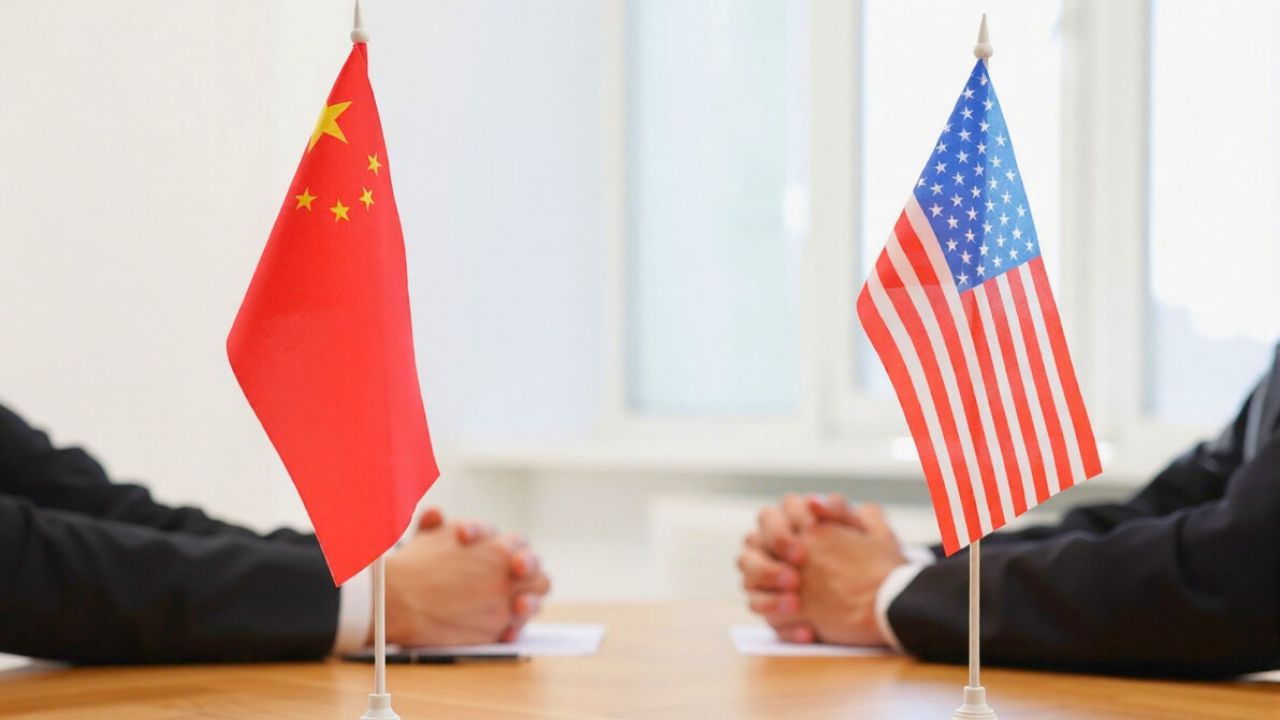
U.S. and China trade officials preparing for high-stakes talks ahead of Trump-Xi summit
Photo credit: New Africa/Shutterstock.com
American and Chinese trade negotiators are racing to lock in progress on tariffs, market access and industrial policy before President Donald Trump and President Xi Jinping sit down for a high-stakes summit in Beijing later this month. The working-level talks, expected in mid March, are meant to clear enough obstacles that the leaders can point to concrete economic deliverables rather than another vague ceasefire.
Both sides are entering the discussions under pressure from slowing growth, volatile markets and a relationship that officials on each side have described as the worst in decades. Hanging over the Paris meetings is the question of whether technocrats can craft a narrow trade package that stabilizes ties, even as deeper strategic mistrust persists.
Trade chiefs line up Paris meeting before leaders gather
According to people familiar with the planning, senior United States and Chinese trade negotiators are slated to meet in mid March in Europe, with Paris emerging as the chosen venue for what one account describes as U.S./China trade talks set for mid March as the Trump/Xi summit nears. The timing is calibrated so that any breakthroughs, or breakdowns, can directly shape the agenda when Trump arrives in Beijing at the end of the month.
The working session is expected to bring together Trump’s top trade lieutenant, identified in some reports as a lead negotiator with a history of bilateral talks, and China’s veteran economic planner He Lifeng. It is being framed as a last chance to narrow differences on tariffs, industrial subsidies and agricultural access before the two presidents confront the remaining gaps face to face.
Planning for the leaders’ encounter has not been smooth. Reporting from Beijing describes summit preparations that have faltered at points, with Chinese officials unsettled by what they see as shifting U.S. demands and gaps in summit organizing principles. Even so, a separate update from the same news group says preparations for the high stakes summit scheduled for later this month have entered the final stage, a sign that both capitals are now committed to making the meeting happen.
Key players and their leverage
The talks are unfolding under the shadow of the two leaders who will ultimately bless or reject any package. On the U.S. side, the political center of gravity remains firmly with Donald Trump, whose personal approach to tariffs and dealmaking has repeatedly reset expectations for U.S. China economic ties. Across the table, Xi Jinping has tied his leadership to a promise of national rejuvenation that includes resisting foreign pressure on core industrial policies.
Below the leaders, the cast of economic envoys reflects both technocratic expertise and political clout. On the Chinese side, veteran planner He Lifeng has emerged as a central figure in managing economic ties with Washington and is identified as a key participant in the Paris talks. In earlier planning rounds, He Lifeng was reported to be working directly with U.S. counterparts to shape possible summit deliverables.
On the American side, financier Scott Bessent has been cited as playing a role in shaping the U.S. economic strategy toward China, including the decision to pursue mid March talks in Paris. Trade lawyer Jamieson Greer, who has experience in high profile trade disputes, is also associated with the current approach to negotiations.
For Beijing, leverage comes from China’s role as a manufacturing hub and critical buyer of U.S. goods such as aircraft and soybeans. For Washington, it rests on control over advanced technologies, the dollar system and a tariff structure that already includes measures branded as a fentanyl tariff on certain Chinese products.
Agenda items: tariffs, aircraft, soybeans and fentanyl
Early bargaining lists for the Paris meeting suggest a tightly focused agenda. One detailed account of the planning says aircraft, soybeans and fentanyl tariffs have emerged as early bargaining chips, with negotiators looking for tradeoffs that can be translated into clear wins for both leaders.
On aviation, U.S. officials are seeking commitments that would benefit American manufacturers such as Boeing, which has faced delivery delays and regulatory scrutiny in China. Chinese negotiators, for their part, are likely to press for fewer restrictions on their own aviation and aerospace firms, along with assurances that export controls on key components will not tighten further.
Agriculture is another central pillar. Access for U.S. soybeans has been a recurring flashpoint in earlier trade rounds, and the mid March talks are expected to revisit Chinese purchase commitments in exchange for tariff relief or regulatory clarity. Any new deal that boosts shipments of U.S. soybeans, corn or pork into Chinese markets would be marketed by the Trump administration as a direct gain for farmers in states that depend heavily on exports.
The fentanyl tariff is both a trade and law enforcement issue. After the last Trump Xi encounter in Busan, a detailed legal analysis recorded that the United States agreed to reduce the fentanyl tariff on Chinese goods from 20 percent to 10 percent and postponed additional measures on related products. That temporary easing came alongside Chinese steps to tighten controls on chemical precursors, and the Paris talks are expected to revisit whether that arrangement should be extended, deepened or reversed.
Learning from Busan and earlier summits
Both delegations are keenly aware of how previous Trump Xi meetings have played out. A careful reconstruction of the Busan encounter described how the story beyond the spectacle involved a mix of modest trade concessions and larger unresolved issues. Analysts pointed out that Trump and Xi were able to calm immediate tensions but left structural disputes over subsidies, technology transfer and security driven export controls largely untouched.
In that Busan meeting, Trump and Xi agreed to a limited truce that paused escalation and set up working groups, including the fentanyl tariff adjustment and a suspension of some new measures for one year. Current planning suggests a similar formula may be in play: a targeted package on tariffs and purchases, combined with promises of further dialogue on more complex questions.
Chinese officials appear wary of repeating what they see as a pattern of temporary truces followed by renewed pressure. Reporting from Beijing describes concern that summit preparations have been unsettled by gaps in U.S. planning and by domestic political dynamics around Trump. That unease helps explain why Beijing has pushed for more detailed pre summit agreements in Paris, rather than relying on leader level improvisation.
Domestic politics and global stakes
The Paris talks are also shaped by domestic politics in both countries. In the United States, Trump faces pressure from manufacturers, farmers and security hawks who have sharply different views on how hard to press China. Trade advisers such as Jamieson Greer must navigate demands from business groups that want predictable access to Chinese markets and from lawmakers who prefer to keep tariffs high as leverage.
In China, Xi Jinping must balance the need for stable external ties with a narrative of self reliance and resistance to foreign pressure. Economic planners like He Lifeng are contending with slower growth, property sector strains and the risk that a prolonged tariff war could further dampen investment. That context gives Beijing an incentive to seek at least a partial easing of trade frictions, provided it can do so without appearing to concede on core industrial policies.
The stakes extend well beyond bilateral trade flows. A mid March breakthrough in Paris could ease pressure on global supply chains, support commodity prices and calm investors who have grown accustomed to sudden tariff announcements. Conversely, a collapse of the talks would raise the risk that Trump arrives in Beijing ready to threaten new measures on sectors such as electric vehicles, batteries or advanced chips.
What to watch as negotiators head to Paris
Several indicators will signal whether the working level talks are on track. First is whether both sides can agree on a clear list of summit deliverables, including specific figures on agricultural purchases, defined changes to the fentanyl tariff and concrete steps on aircraft orders. Second is whether negotiators can outline a process for tackling longer term disputes over subsidies and technology controls, even if those are not fully resolved this month.
Like Fix It Homestead’s content? Be sure to follow us.
Here’s more from us:
- I made Joanna Gaines’s Friendsgiving casserole and here is what I would keep
- Pump Shotguns That Jam the Moment You Actually Need Them
- The First 5 Things Guests Notice About Your Living Room at Christmas
- What Caliber Works Best for Groundhogs, Armadillos, and Other Digging Pests?
- Rifles worth keeping by the back door on any rural property
*This article was developed with AI-powered tools and has been carefully reviewed by our editors.